Is Food Safety an Act of Loving Your Neighbor?
A Christian Perspective on Health and Hospitality
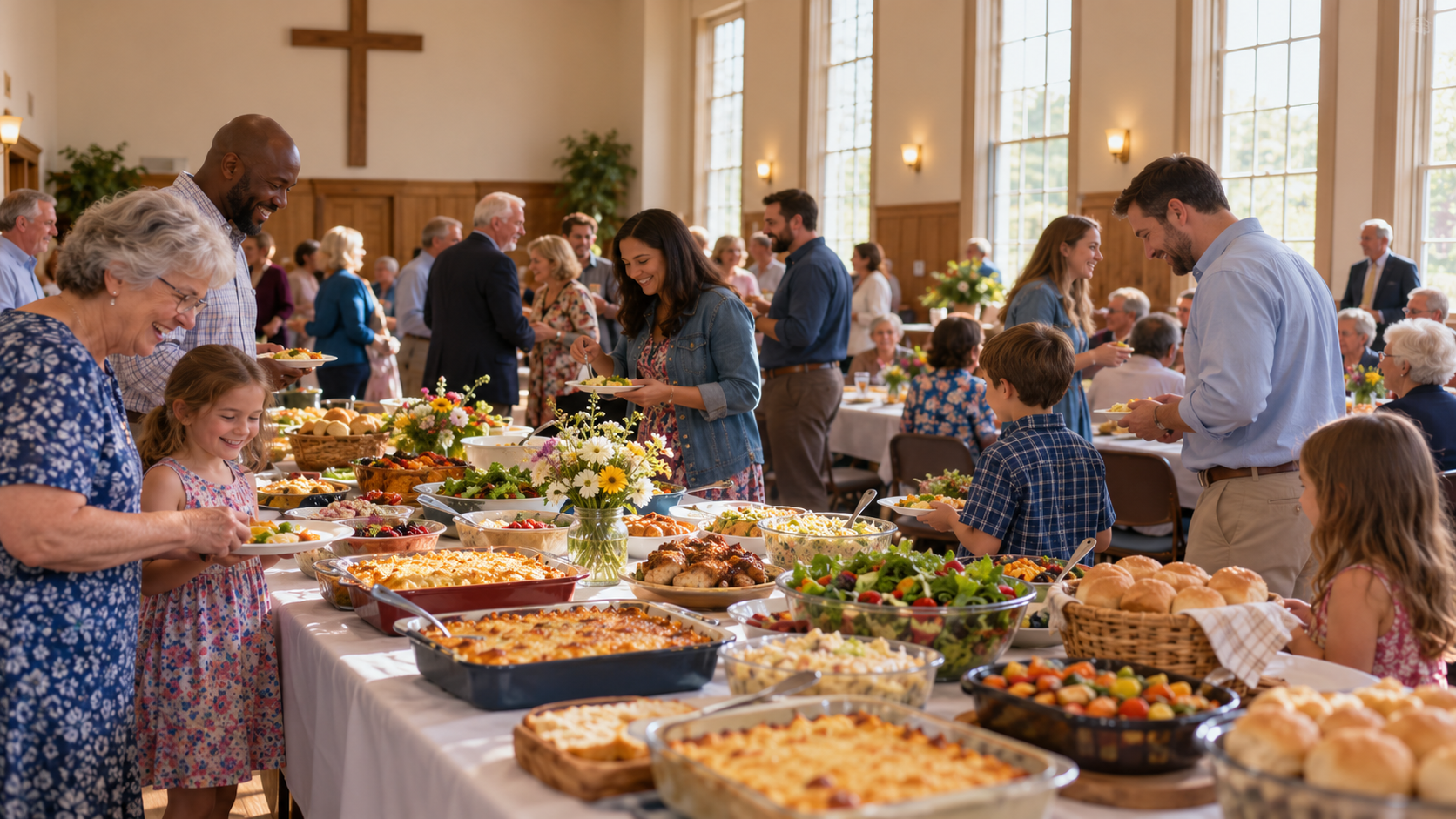 Church members and families gather in a warm fellowship hall after Sunday service to enjoy a shared potluck meal. The scene highlights the joy of community, hospitality, and intergenerational connection around a table full of homemade dishes.
From Sunday potlucks to family dinners, the way we prepare and share food can reflect our faith and our care for the people around us.
There is something special about sharing a meal after Sunday worship. Families gather around tables, children hurry to find their favorite dishes, and church members catch up on one another’s lives. Someone brings a homemade casserole, another family brings a fresh salad, and volunteers move between the kitchen and the fellowship hall to make sure everyone feels welcome. These moments are about much more than food. They are times of friendship, encouragement, and Christian fellowship.
This past summer brought a reminder that ordinary food can carry hidden risks. In 2026, the United States saw the largest outbreak of cyclosporiasis on record. An intestinal parasite traced to contaminated iceberg lettuce sickened 12,883 people across 21 states, sending 570 to the hospital and causing two deaths. Most of the people affected did nothing wrong. They simply ate a salad.
That raises a question worth asking: could preparing food safely be one small but meaningful way to love our neighbors?
The Bible does not give modern food-handling instructions. But its teaching on caring for others offers a helpful lens for the everyday decisions we make, including the ones we make in the kitchen.
Loving Our Neighbors Starts with Thinking of Them
Paul writes, “Look not every man on his own things, but every man also on the things of others” (Philippians 2:4, KJV). Hospitality is one of the clearest places to live this out. Peter urges believers to “use hospitality one to another without grudging” (1 Peter 4:9, KJV).
We often think of hospitality as generosity: cooking something delicious, setting a welcoming table, and making sure no one goes hungry. But genuine hospitality also considers the well-being of the people we serve. If food is stored poorly, undercooked, or handled carelessly, a gathering meant to bring people together can end up making them sick.
The risk is real. The CDC estimates that about 48 million Americans get sick from foodborne illness each year, about 128,000 are hospitalized, and about 3,000 die. These widely cited figures come from a 2011 study and represent estimated yearly illness, not confirmed cases in a single year. Most people recover without complications, but some develop severe dehydration, kidney damage, or other serious problems.
Think about who comes to a typical church potluck. Some guests are young children. Others are older adults. A few may be pregnant, going through cancer treatment, or living with conditions that weaken the immune system. These neighbors face a greater risk of serious illness from contaminated food. A dish that gives one person a mild stomachache could put someone else in the hospital. We rarely know the health of everyone at the table, which is exactly why careful preparation is a form of love.
Why Everyday Meals Can Carry Hidden Risks
Food poisoning happens when we eat food contaminated with harmful bacteria, viruses, parasites, or toxins. Common culprits include Salmonella, harmful strains of E. coli, norovirus, and Cyclospora. They can come from raw or undercooked meat, poultry, and eggs, unpasteurized dairy, contaminated produce, or the hands of someone who is sick.
Two things make foodborne illness hard to spot. First, contaminated food usually looks and smells normal. A fresh salad or a carefully refrigerated casserole can still carry germs. Second, symptoms do not always appear right away. With Cyclospora, for example, illness often begins about a week after exposure, so people rarely connect it to the meal that caused it.
Contamination can also happen long before food reaches our kitchens, during growing, processing, shipping, or storage. The lettuce outbreak this summer is a reminder that food safety is a shared responsibility among farmers, companies, public health officials, and all of us who prepare meals. It also does not mean lettuce or fresh produce is unsafe to eat. Rinsing produce under running water is still a good habit, though it may not remove every contaminant.
Four Simple Habits for Safer Shared Meals
Food safety does not have to be complicated. Federal food safety agencies sum it up in four simple steps.
Clean. Wash your hands with soap and water for at least 20 seconds before preparing food and after handling raw meat, poultry, seafood, or eggs. Clean utensils, cutting boards, and countertops too. In a church kitchen where several volunteers cook at once, a simple handwashing reminder posted by the sink can make a real difference.
Separate. Raw meat and poultry can spread germs to foods that will not be cooked. Picture someone cutting raw chicken on a board and then using the same board, unwashed, to chop lettuce for a salad. The chicken will be cooked, but the lettuce will not. Using separate cutting boards for raw meat and ready-to-eat foods prevents this. And there is no need to rinse raw chicken before cooking it; rinsing can splash germs around the sink and counter.
Cook. Food can look done before it is hot enough inside to kill harmful germs. The USDA recommends using a food thermometer. Poultry should reach 165°F; ground beef and pork, 160°F; and fish, 145°F. Whole cuts of beef, pork, and lamb should reach 145°F and then rest for at least three minutes. Leftovers and casseroles should be reheated to 165°F.
A simple instant-read thermometer is one of the most useful tools for a church kitchen, especially when cooking for a crowd. It takes the guesswork out of the numbers above. (Affiliate link: the author may earn a small commission if you make a purchase. As an Amazon Associate I earn from qualifying purchases.)
Chill. Food left out on a buffet table is where many problems begin. Keep hot food at 140°F or above and cold perishable food at 40°F or below. Perishable food should not sit at room temperature for more than two hours, or more than one hour when it is above 90°F, as it often is at summer picnics. Use warming trays for hot dishes and set cold dishes over ice. Refrigerate leftovers promptly in shallow containers, and eat them within three to four days.
Churches that serve meals regularly should also follow their local health department’s rules for food service. The goal is not to turn every fellowship meal into an inspection. It is to let generosity and responsibility work together.
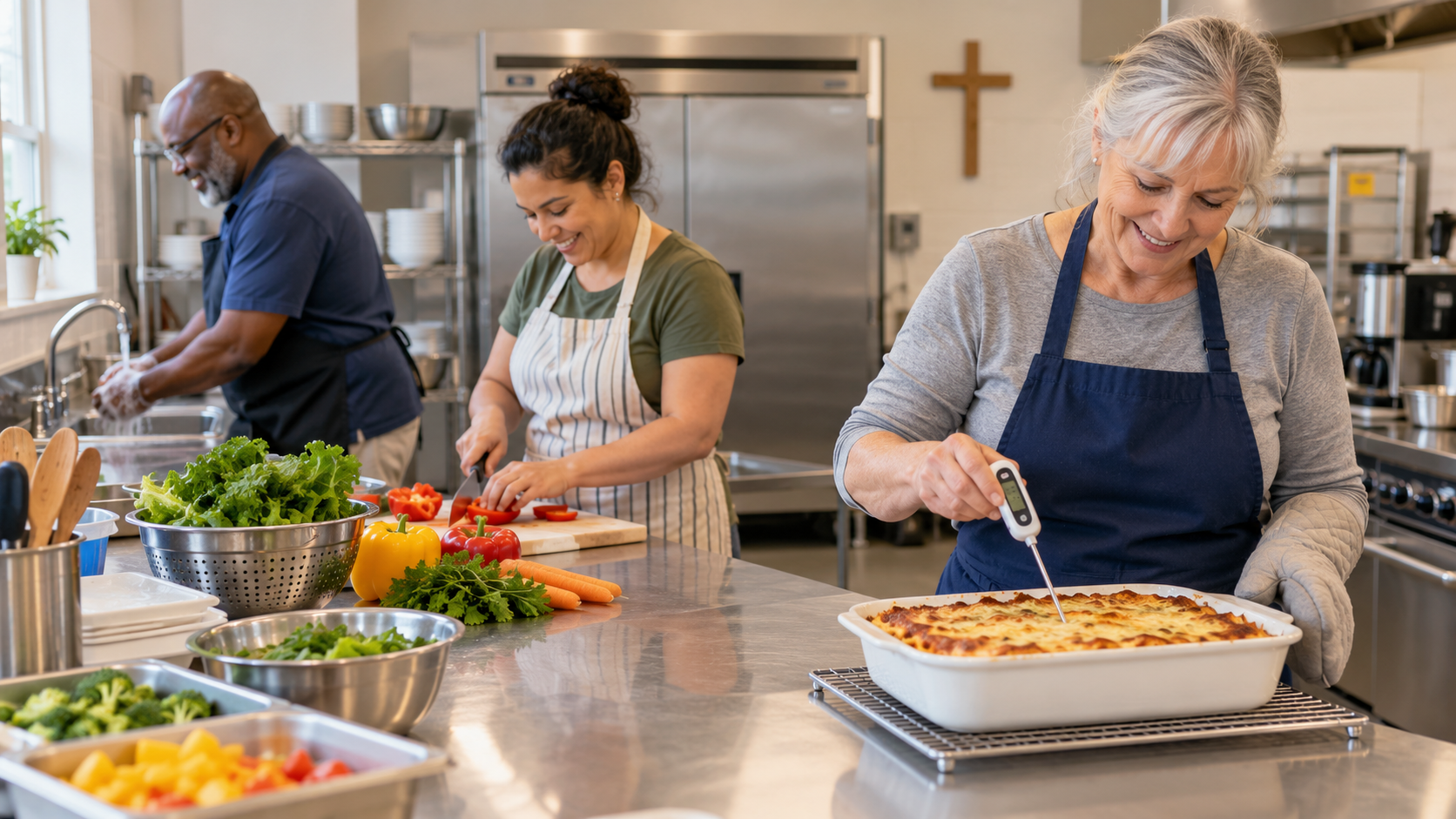 Volunteers prepare food safely and thoughtfully in a bright church kitchen before a shared meal. The image emphasizes teamwork, cleanliness, and good food-handling practices as part of serving the church community.
Don’t Forget Food Allergies
Caring for our neighbors at the table also means thinking about food allergies. For some people, a small amount of peanuts, tree nuts, milk, eggs, wheat, soy, fish, shellfish, or sesame can cause a serious reaction within minutes. At a potluck, guests often have no way of knowing what is in a dish.
A few simple practices can help:
- Place a small card beside each dish with its name and any major allergens.
- Set allergen-free dishes apart, and give each dish its own serving spoon.
- Ask about allergies when planning meals for children’s ministry or small groups.
These small steps tell a guest with allergies that they were thought of before they arrived. That is hospitality at its best.
Sometimes Loving Others Means Staying Home
Church members serve in many ways: cooking in the kitchen, leading small groups, caring for children, and organizing events. When someone scheduled to serve wakes up sick, it is natural to feel guilty about canceling.
But sometimes stepping back is the more loving choice. Norovirus, the leading cause of foodborne illness in the United States, spreads very easily through food, hands, and surfaces. The CDC advises people sick with norovirus not to prepare or handle food for others until at least 48 hours after their symptoms stop. Washing hands with soap and water is especially important, because alcohol-based hand sanitizer does not work well against norovirus.
Imagine a volunteer waking up on Sunday morning with vomiting or diarrhea. Instead of pushing through to keep a commitment, that person can let the ministry leader know and allow someone else to step in. The church can respond with understanding instead of disappointment.
Paul writes, “Bear ye one another’s burdens, and so fulfil the law of Christ” (Galatians 6:2, KJV). Sometimes bearing a burden means taking someone’s place when they are too sick to serve. A healthy church is one where people can ask for help and rest when they are ill, without feeling that their worth depends on how much they do.
Faith, Prayer, and Medical Care Can Work Together
When illness comes into a family or church, Christians naturally turn to prayer for healing, comfort, and strength. At the same time, seeking medical care is never a sign of weak faith.
In the parable of the Good Samaritan (Luke 10:25-37), the Samaritan did more than feel sorry for the injured traveler. He bandaged the man’s wounds, brought him to a place where he could recover, and paid for his continued care. The parable is not a medical guide, but it reminds us that compassion often takes practical form.
For food poisoning, that practical care often begins with fluids. Vomiting and diarrhea drain the body of water and electrolytes. Small, frequent sips of fluid can help with mild symptoms, and oral rehydration solutions are useful when fluid loss is significant.
The CDC advises seeing a doctor for:
- Bloody diarrhea
- Diarrhea lasting more than three days
- A fever above 102°F
- Vomiting so frequent that fluids cannot stay down
- Signs of dehydration, such as urinating very little or feeling dizzy when standing
Young children, pregnant women, older adults, and people with weakened immune systems may need care sooner. Medication also needs care: for certain E. coli infections, antibiotics and some anti-diarrheal medicines can raise the risk of complications, so treatment should be guided by a healthcare professional.
We can pray for healing while also helping someone get the care they need. And we should never suggest that someone’s illness reflects weak faith or God’s displeasure. Illness can strike anyone, even people who take every precaution. Health itself is not a measure of faith. Our calling is not to judge those who suffer, but to care for them.
Conclusion: Love Can Be Served at the Table
Christians sometimes picture faithful living as dramatic sacrifice or extraordinary service. But much of discipleship happens in ordinary moments, and some of it happens in the kitchen.
Washing our hands, checking a thermometer, labeling a dish for guests with allergies, refrigerating leftovers on time, or telling a sick volunteer to stay home may not feel spiritual. These acts do not measure anyone’s faith. But they can be quiet expressions of a heart that seeks the good of others.
Paul writes, “Whether therefore ye eat, or drink, or whatsoever ye do, do all to the glory of God” (1 Corinthians 10:31, KJV). This does not make every kitchen decision a spiritual test. It reminds us that faith is not confined to Sunday worship. How we treat people in everyday life matters, including how we feed them.
The next time you cook for your family, host friends, or volunteer at a church meal, remember that a delicious dish shows generosity, a welcoming table creates belonging, and a safely prepared meal shows care for the people who eat it.
May our homes and churches be places where food is shared with gratitude, hospitality is offered with sincerity, and the well-being of every guest is treated as precious.
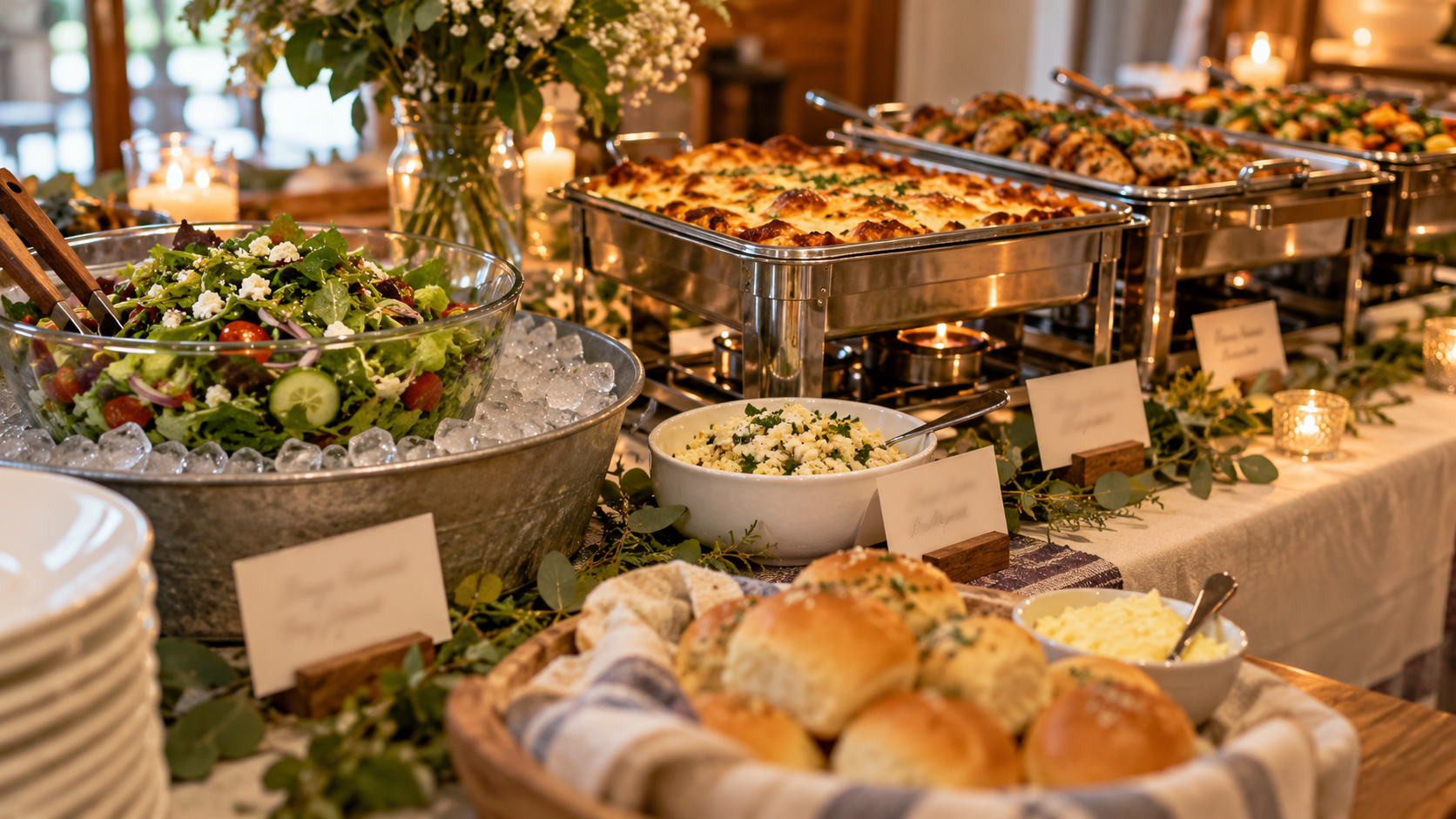 A thoughtfully arranged potluck buffet offers both hot and cold dishes, showing care for food presentation and serving safety. The warm lighting and variety of dishes create a welcoming atmosphere for fellowship and shared hospitality.
A Prayer for Health and Compassion
Heavenly Father,
Thank You for the gift of life, for the food You provide, and for the people You have placed in our lives.
Give us wisdom to care for our bodies and compassion to consider the well-being of others.
Help us welcome people with kindness, serve them thoughtfully, and support those who are sick or struggling.
May our homes and churches be places of gratitude, genuine hospitality, and loving care.
Teach us to honor You not only with our words, but in the ordinary choices we make each day.
In Jesus’ name, Amen.
Sources and Further Reading
- CDC, Facts About Food Poisoning: https://www.cdc.gov/food-safety/data-research/facts-stats/index.html
- CDC, Food Poisoning Symptoms: https://www.cdc.gov/food-safety/signs-symptoms/index.html
- CDC, Preventing Food Poisoning: https://www.cdc.gov/food-safety/prevention/
- CDC, Cyclospora Outbreak Linked to Iceberg Lettuce: https://www.cdc.gov/cyclosporiasis/outbreaks/07-26/index.html
- CDC, Surveillance of Cyclosporiasis: https://www.cdc.gov/cyclosporiasis/php/surveillance/index.html
- CDC, How to Prevent Norovirus: https://www.cdc.gov/norovirus/prevention/index.html
- CDC, Treatment of E. coli Infection: https://www.cdc.gov/ecoli/treatment/index.html
- USDA FSIS, Leftovers and Food Safety: https://www.fsis.usda.gov/food-safety/safe-food-handling-and-preparation/food-safety-basics/leftovers-and-food-safety
This article is intended for general health education and Christian reflection. Scripture applications reflect the author’s interpretation and are not presented as medical evidence. The health information does not replace professional medical advice, diagnosis, or treatment. Food safety guidance and outbreak data may be updated. Public health information reviewed October 19, 2026. Scripture quotations are from the King James Version.
How does your family or church make shared meals both welcoming and safe? We would love to hear your ideas.