Live No Lies by John Mark Comer : What If the Thing Quietly Destroying You Isn't What You Think It Is?
You didn't mean to become someone who checks their phone before saying good morning to God. It just happened.
There's a specific kind of tired that doesn't go away with sleep. It's the tiredness of a person who is doing all the right things — going to church, reading their Bible sometimes, trying to be kind — and still feeling like something is slowly draining out of them. Not a dramatic crisis. Just a low, persistent hum of emptiness. Like standing in a room where the lights are on but somehow it still feels dim. The apostle Paul called it being "conformed to the pattern of this world," but that phrase has been said so many times it's stopped landing. What it actually feels like is just… ordinary life.
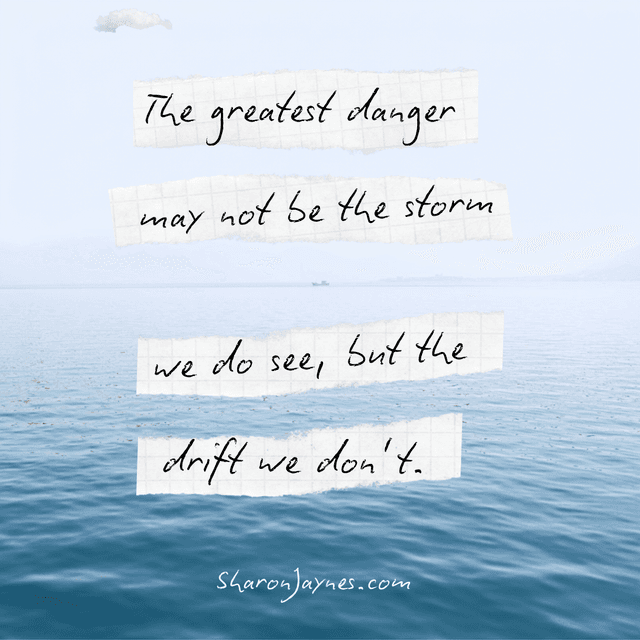
 Sometimes the distance doesn't feel like distance at all — it just feels like ordinary life.
John Mark Comer was a successful pastor in Portland. By most measures, he was thriving — a growing church, a platform, influence. And he was slowly coming apart.
It wasn't a moral failure. It wasn't burnout exactly. It was something harder to name. He began noticing that his inner world had become colonized by things he'd never consciously chosen — anxieties, desires, assumptions about what a good life looked like — and most of them had nothing to do with Jesus.
He started reading. Slowly, obsessively. Ancient Christian writers. Philosophers. Psychologists. And what he found was a framework so old it had been nearly forgotten, and so precise it felt like someone had turned on a light in a room he'd been fumbling through for years.
The early church had a name for what was happening to him. They called it the world, the flesh, and the devil — not as a formula to recite, but as a description of three very real, very active forces working to shape a person into something other than who God made them to be. And the first step wasn't fighting harder. It was simply learning to see.
 It wasn't a dramatic moment. It never is. Just something quietly settling into place.
The idea that stopped him — and the one that might stop you — is deceptively simple: you cannot fight an enemy you haven't learned to recognize. The lies that do the most damage aren't the obvious ones. They're the ones that feel like common sense, like just the way things are, like everyone knows this is true. They're sewn into the air of the culture so completely that resisting them feels strange, almost antisocial.
"The devil's greatest trick," Comer writes, paraphrasing a tradition much older than himself, "isn't making you doubt God. It's making you live as if God is simply irrelevant."
What are the things you believe — really believe, in the way you spend your money and your attention and your worry — that you've never actually examined?
What made me uncomfortable wasn't the content of this book — it was what the content revealed. I could see how much I had absorbed without ever questioning it. Knowing what the Bible says and actually being formed by it turned out to be two very different things, and sitting with that gap was harder than I expected.
BOOK OVERVIEW
It's organized into three movements, each one corresponding to an ancient enemy of the soul: the world, the flesh, and the devil. Comer doesn't rush through them. Each section builds slowly, like an argument that wants to be felt before it's understood.
What the book keeps returning to is the gap between what we say we believe and what we actually live — and the quiet, unseen forces that create that gap. It's about desire, and how desire gets formed without our permission. It's about the stories a culture tells until they become invisible, and how those invisible stories end up shaping what we want, what we fear, what we worship without calling it worship. Underneath all of it is a deep conviction that transformation is possible, but only if we stop pretending the problem is smaller than it is.
Comer draws heavily from scripture — particularly Paul's letters and the Gospels — but he also leans into writers like Dallas Willard, C.S. Lewis, and the Desert Fathers in a way that feels less like citation and more like conversation. He's a pastor who reads widely and isn't afraid to say so, and it shows in how layered the thinking is without ever feeling academic.
People who have been following Jesus for a while but feel something slowly going dim tend to find this exactly when they need it. If you've ever known what Scripture says about relationships, marriage, or how to live — but felt the pull of a completely different story coming from everywhere else — this book has a way of quietly bringing things back into focus. And if you have a community to read it with, even better. The shift from knowing truth to actually living it doesn't usually happen alone. It happens in the kind of relationships where someone can look at you and say, honestly, that you're drifting — and where you can do the same for them.
It's called Live No Lies, by John Mark Comer.
If you'd like to read it: Live No Lies (Affiliate Link)
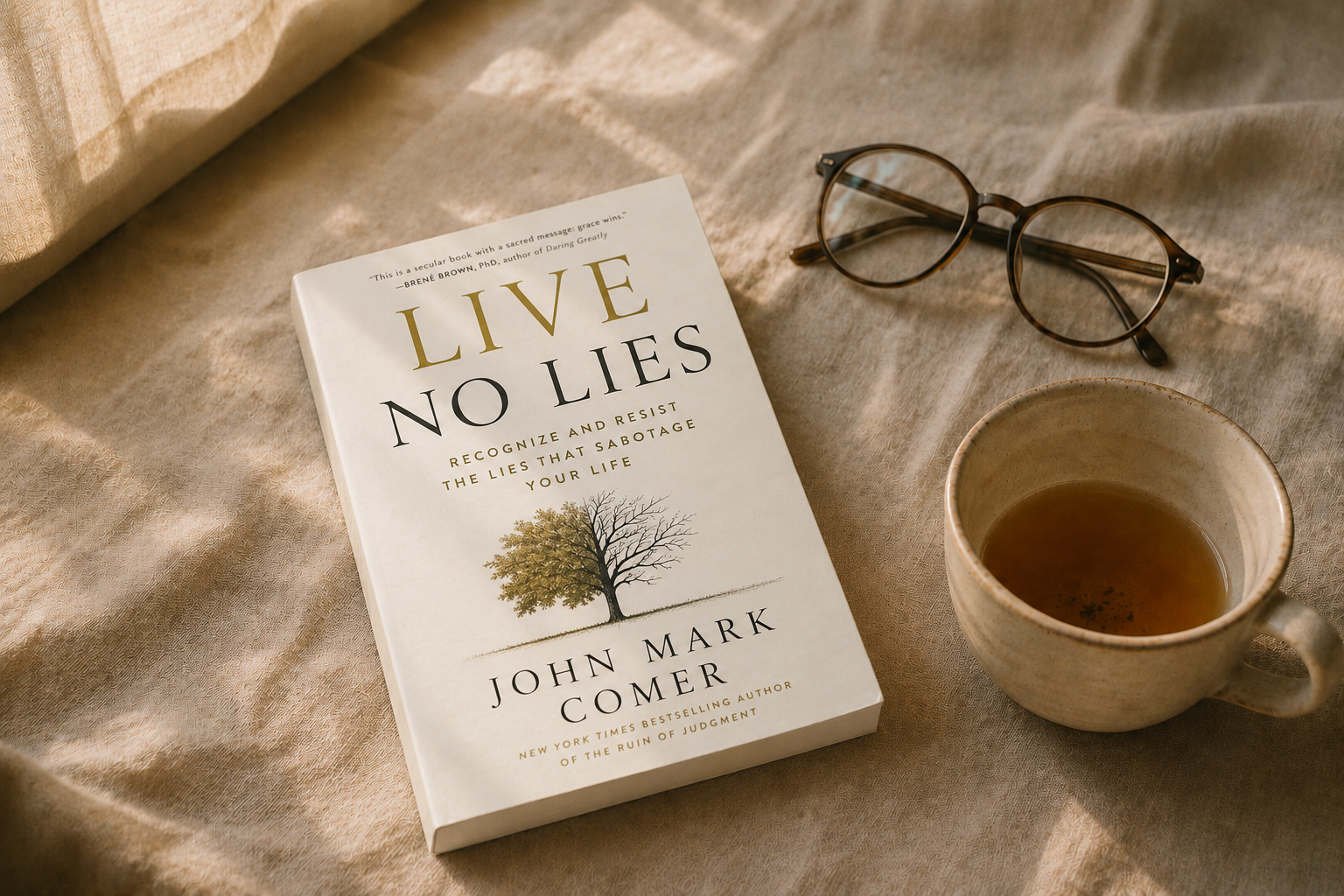 The kind of book you don't finish so much as carry with you.
📚You Might Also Like
You're Not Too Busy. You're Just Hurrying — The Ruthless Elimination of Hurry —
The Paradox of Love: Why a "No" is the Kindest "Yes" — Boundaries —
The Spear You Don’t Throw Back: A Masterclass in Radical Silence — A Tale of Three Kings