Making Room for Music: Joseph Haydn’s Symphony No. 6, “Le Matin”
“I’ll make time for music when things settle down.”
It is easy to promise ourselves we’ll make time for music after the deadline, when the house is quiet, or when the errands are done.
But life doesn’t always settle down. The weeks fill up, and what matters to us keeps waiting. Sometimes, we don’t need more time—we need to stop waiting for the perfect time to begin.
A Composer with Many Responsibilities
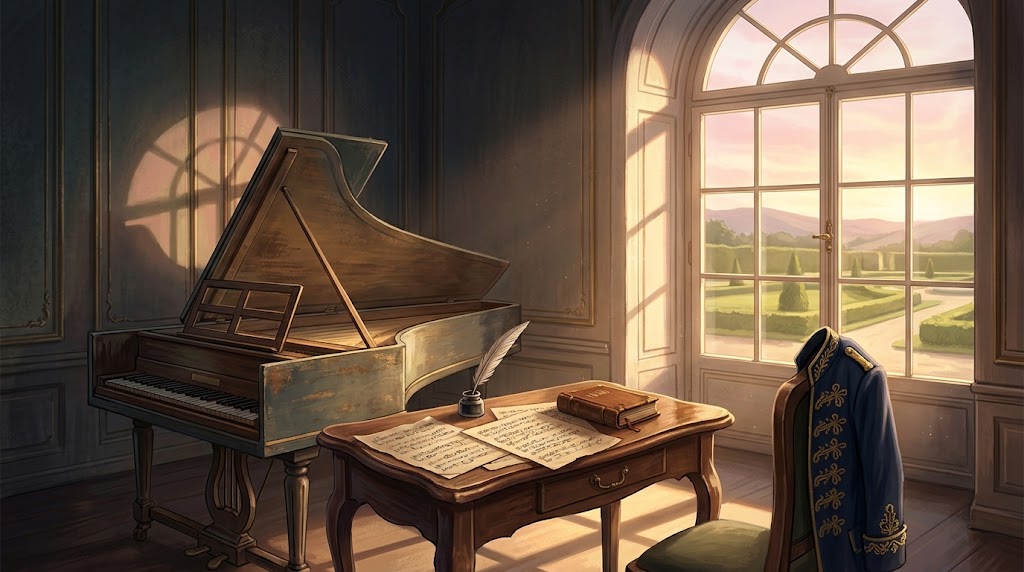
In 1761, Joseph Haydn began working for the Esterházy family, composing music, supervising musicians, and preparing performances. His days were shaped by the demands of the court, leaving him to create within the time and expectations set by his employer.
That same year, Haydn composed Symphony No. 6 in D Major, known as Le Matin (Morning). The music begins gently before developing into a lively orchestral conversation, with different instruments taking turns in the spotlight.
Haydn’s life reminds us that meaningful work doesn’t always happen under ideal conditions. Sometimes, we have to make the most of the time and resources already available to us.
Stop Waiting for the Perfect Time
We often think meaningful activities require long, uninterrupted hours. But ten minutes at the piano, a few pages of a book, or a small step toward a long-postponed project can be enough to begin.
The goal isn’t to fill every spare minute with tasks. Rest and relationships matter, too. Instead of waiting for a perfect schedule, choose a small commitment you can realistically keep. A simple routine that fits your life may be more valuable than an ambitious plan you can’t sustain.

Faithfulness in Everyday Life
“And whatsoever ye do, do it heartily, as to the Lord, and not unto men.” — Colossians 3:23
Faithfulness doesn’t mean doing everything at once or filling every hour with activity. It means giving proper attention to the responsibilities and opportunities before us. Music, like other interests and gifts, can have a meaningful place in our lives without becoming our highest priority.
We may not control how much time we have, but we can choose how to use it. Haydn’s story leaves us with a simple question: What have we been putting off until life becomes less busy? Perhaps we don’t need a different schedule—just a little room in the one we already have.
Explore a collection of Haydn’s later symphonies here. (affiliate link)
Read previous: When Music Wasn't the Only Job: The Many Lives Behind the Music