Manchester City 2-1 Arsenal — How Tactical Friction Forges Greatness and Faith
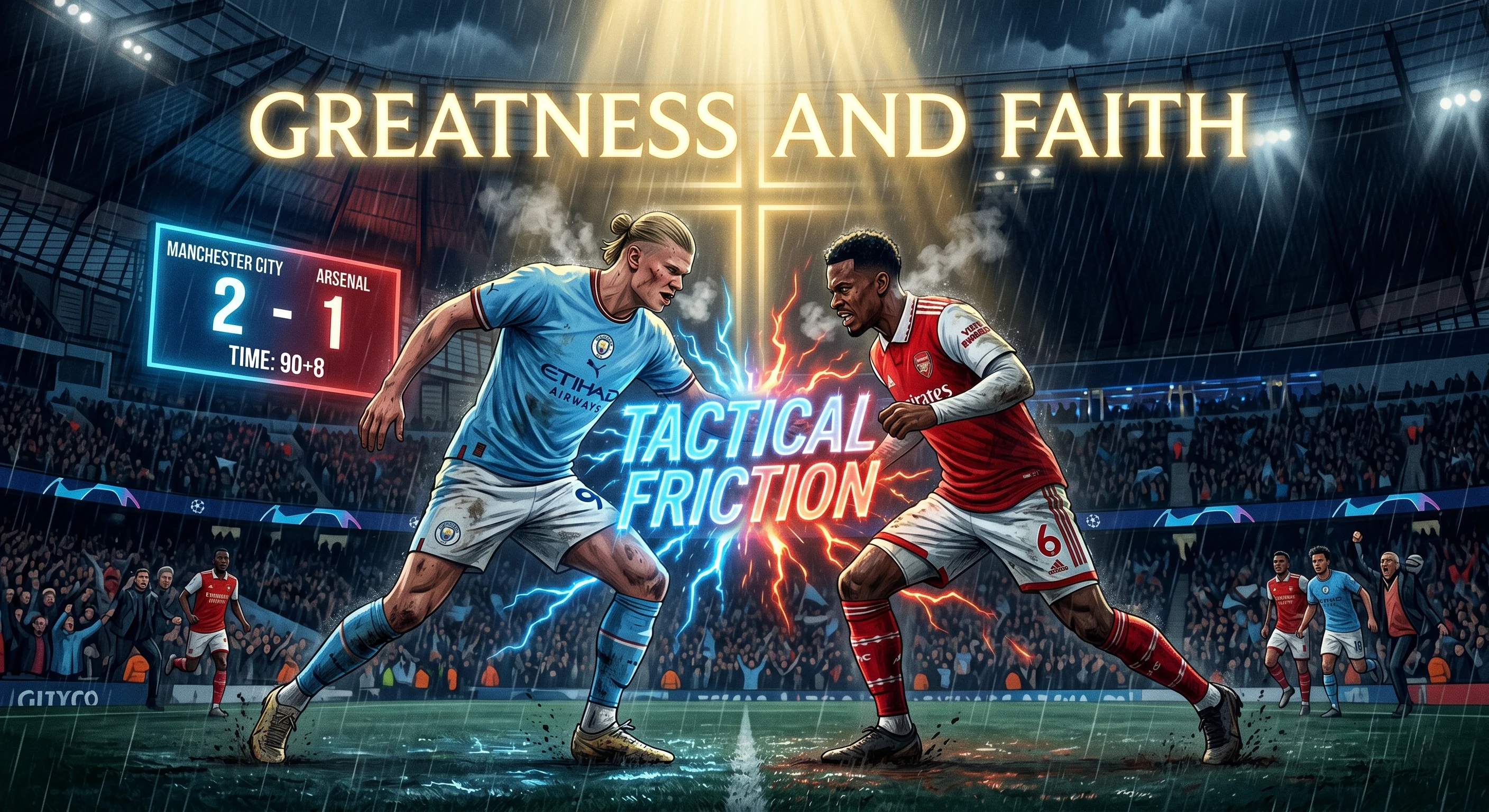
There is a unique kind of electricity in the air when two footballing minds that share the exact same DNA go to war. Sunday’s clash at the Etihad Stadium was not just a battle for three points in the relentless 2025-26 Premier League title race. It was a deeply personal, fiercely intellectual chess match.
As the final whistle blew, sealing a 2-1 victory for Manchester City, the embrace between Pep Guardiola and Mikel Arteta told the whole story. It was an embrace of exhaustion, immense mutual respect, and the quiet acknowledgment that they had just pushed each other to their absolute limits.
Out of the Shadows: The Master and the Apprentice
To truly appreciate the gravity of this 2-1 scoreline, we have to rewind the tape. From 2016 to 2019, Mikel Arteta was not the intense, touchline-pacing manager we see today. He was the quiet tactician sitting on the Manchester City bench, acting as Guardiola’s most trusted confidant. When Guardiola conceptualized complex tactical theories, it was often Arteta who translated those intricate positional play concepts to the players on the training ground.
When Arteta finally left to take the helm at Arsenal, he took Guardiola’s blueprints with him. But he didn’t just copy them; he evolved them. As detailed in the brilliant tactical breakdown by The Coaches’ Voice (Mikel Arteta: Coach Watch), Arteta built a squad capable of replicating City’s suffocating possession, but infused it with a relentless, gritty defensive structure that Arsenal had lacked for over a decade. He built a machine specifically designed to look his old master in the eye and not blink.
The Tactical Chess Match: Suffocation vs. Invention
When the match kicked off, the tension was palpable. This was not a chaotic, end-to-end shootout. It was a masterpiece of control.
Arsenal deployed a brilliantly organized 4-4-2 mid-block. Arteta knows exactly how much Guardiola loves to exploit the half-spaces—those highly dangerous channels between the wing and the center of the pitch. Consequently, Arsenal’s midfielders clamped down on those zones like a vice. For the first hour of the match, City’s usual fluid passing lanes were entirely blocked. It was as if Arteta had stolen the remote control to Guardiola’s television.
But this is where greatness is forged. Faced with an impenetrable wall designed by his own former student, Guardiola had to innovate. You can review the exhaustive match statistics and team data on the Premier League’s Official Match Center for Manchester City, but numbers don’t capture the sheer genius of City’s adaptations. Guardiola pushed his inverted fullbacks higher, aggressively overloading the midfield to create microscopic fractures in Arsenal’s armor.
That subtle, brilliant tactical shift eventually forced the breakthrough. Arsenal didn’t lose because they were naive; they lost because Guardiola was forced to reach into an entirely new dimension of tactical genius just to break them down.
The Spiritual Takeaway: The Beauty of “Tactical Friction”
“As iron sharpens iron, so one person sharpens another.” — Proverbs 27:17 (NIV)
Watching Guardiola and Arteta challenge each other is a breathtaking visual representation of one of the Bible’s most profound truths.
Think about the physical process of sharpening a blade. Iron cannot become sharp in a vacuum. It requires friction. It requires another hard piece of metal to strike against it, creating sparks, heat, and resistance, grinding away the dull edges until a razor-sharp weapon is forged.
If Arteta had never challenged Guardiola with such a perfectly organized Arsenal side, Guardiola would never have needed to evolve his tactics. He would have grown stagnant. Conversely, Arteta’s entire managerial foundation was sharpened by the intense heat of working under Pep. They make each other better because they refuse to let each other be comfortable.
In our spiritual lives, we desperately need this kind of friction. Human nature urges us to surround ourselves with people who agree with us, people who validate our comfort zones and never challenge our complacency. But a faith that is never challenged is a blade that grows dull.
True spiritual maturity happens when we invite “iron” into our lives. We need mentors who will call out our blind spots. We need a church community that will challenge our perspectives and hold us accountable to the standard of Christ. Sometimes, that friction feels uncomfortable—just as it must have felt agonizing for Guardiola to try and break down Arsenal’s defense. But that resistance is exactly what God uses to refine us.
If you want your faith to be sharp enough to cut through the noise of this world, don’t run from the friction. Surround yourself with people who will sharpen your iron, and embrace the grind.