Music & Architecture (Part 2): Renaissance Proportion and the Birth of Tonal Harmony
Renaissance architecture and Western music share a common foundation: proportion, balance, and mathematical order. During this period, both fields moved away from medieval complexity toward clarity, symmetry, and tonal harmony.
1. From Verticality to Balance
While Gothic architecture reached upward through jagged spires and dense complexity, the Renaissance shifted attention back toward the human scale. Architects and composers moved toward balance, clarity, and proportion—principles grounded in reason rather than excess.
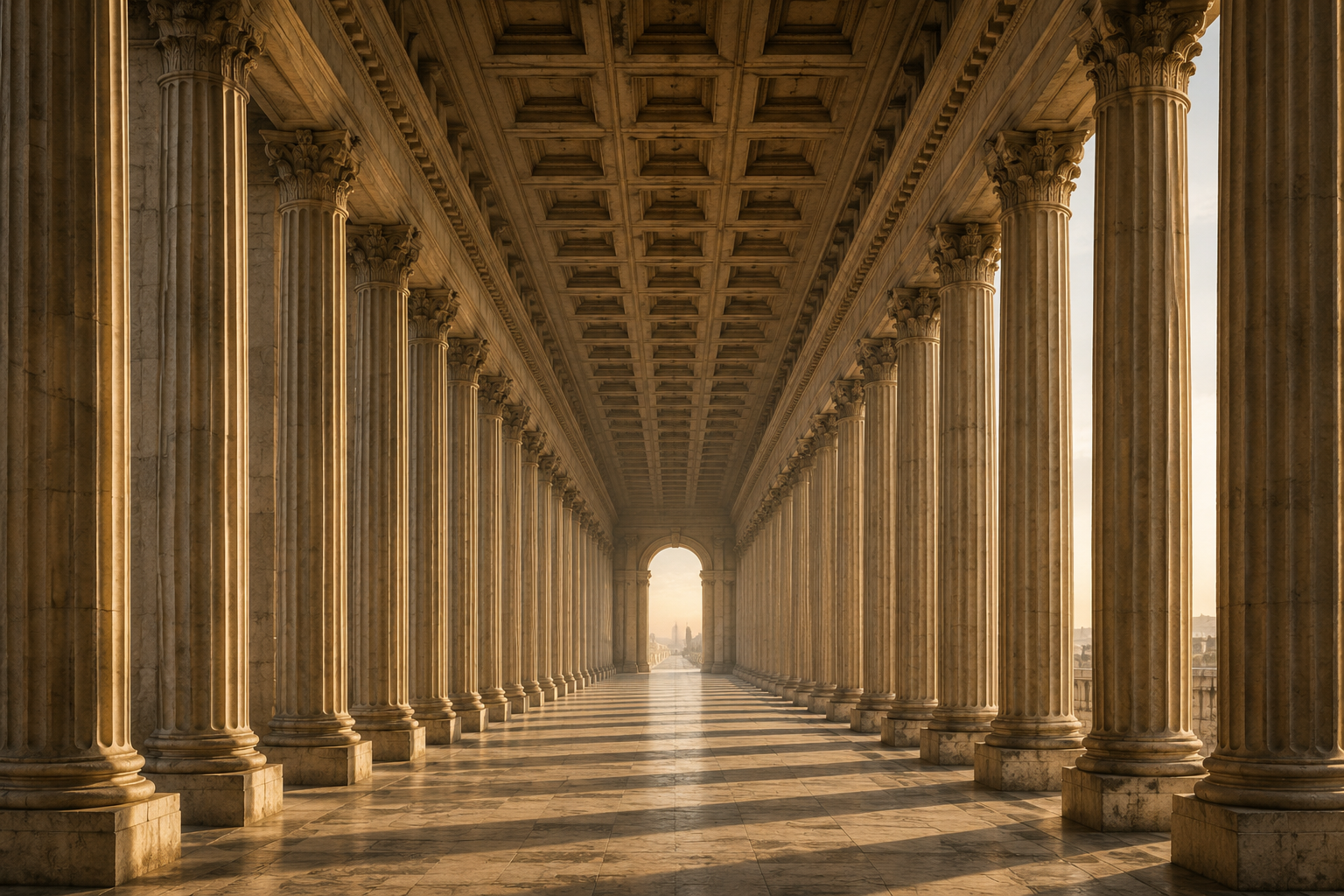 The Rhythm of Columns: Visual Calm and Order
2. The Geometry of Beauty
Renaissance thinkers believed the universe was structured according to divine mathematical ratios. This instinct for symmetry is deeply human; even a child playing with blocks will naturally seek balance without any instruction.
What begins as simple intuition is elevated in Renaissance thought into a sophisticated philosophy of “universal order.”
 Innate Balance: Symmetry by Intuition
Andrea Palladio’s Villa Rotonda embodies this idea. Built around a central axis and organized through circles and squares, it is perfectly symmetrical in all directions. More than a building, it becomes a spatial expression of cosmic order—calm, measured, and precise.
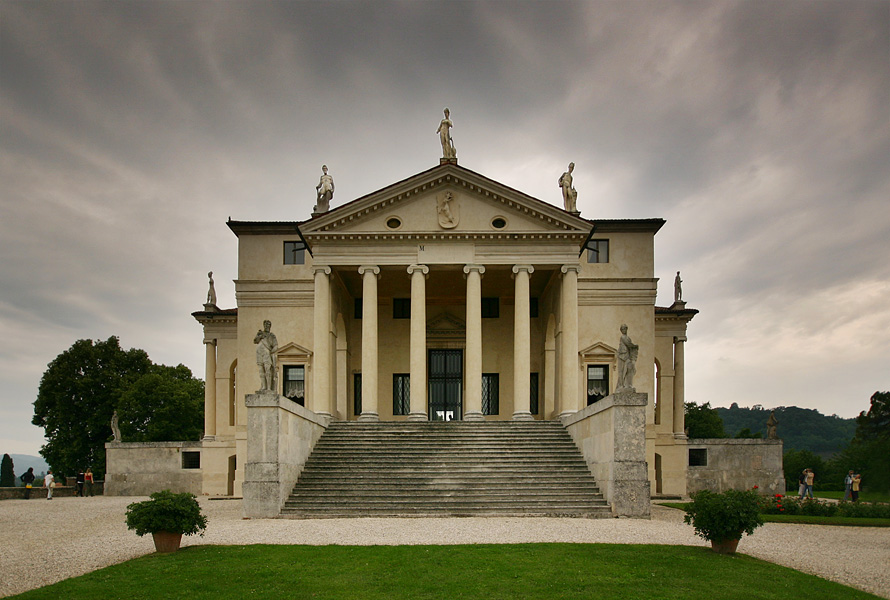 Villa Rotonda (1592), Andrea Palladio
3. The Birth of Tonal Harmony
A similar shift occurred in music. During the Renaissance, Western music began moving toward what we now call tonal harmony.
Music was no longer just overlapping independent lines. Instead, it began to move with direction and purpose. Chords worked like a system of tension and release—creating movement toward resolution, a sense of arriving home.
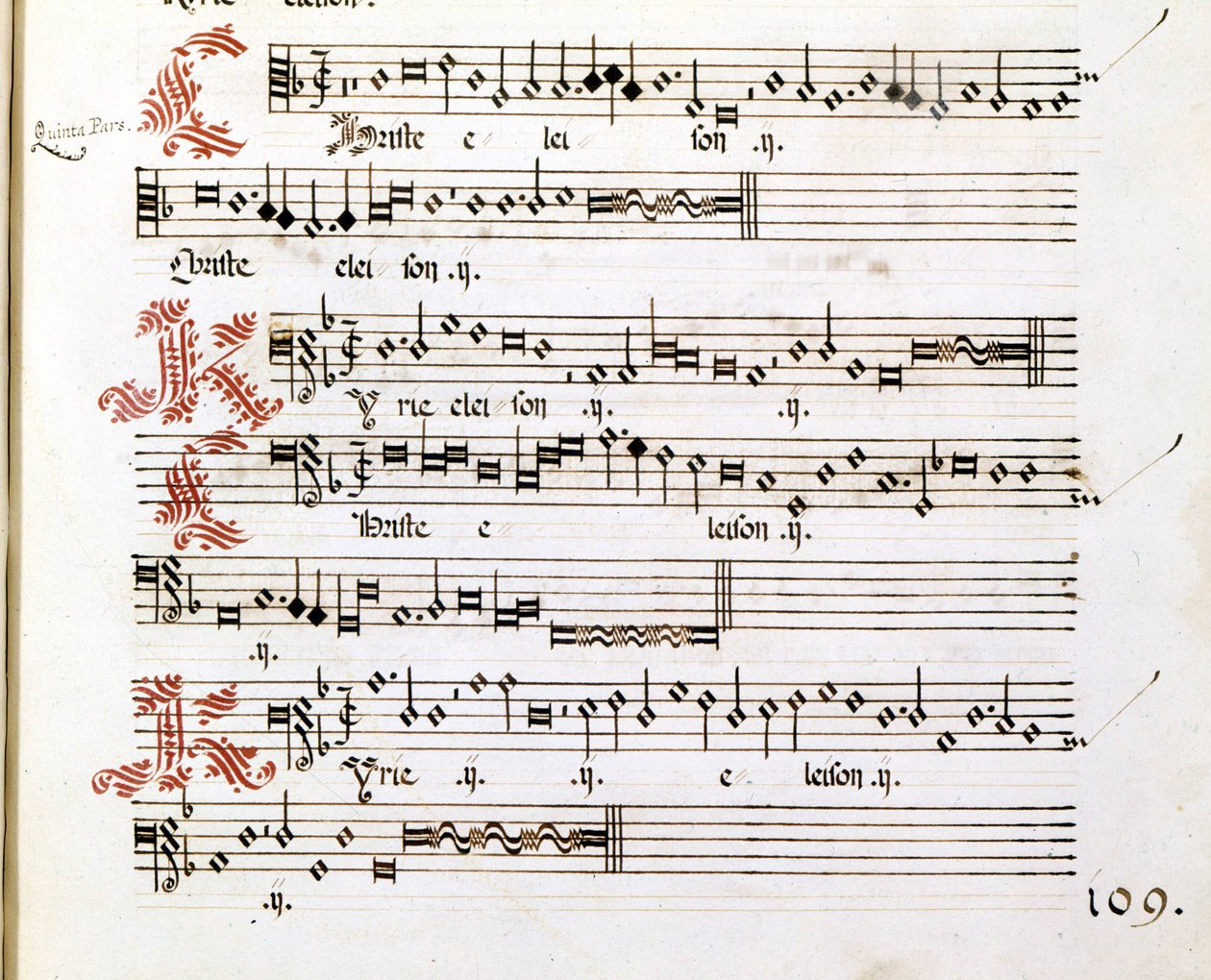 Kyrie, Messes of Mantua (Palestrina, c. 1590)
4. Harmony as Proportioned Space
Just as Palladio designed space through ratios that feel visually balanced, composers shaped musical phrases that feel structurally “right” to the ear.
In the works of Giovanni Pierluigi da Palestrina, this balance becomes especially clear. His polyphony avoids excess and hierarchy; no single voice dominates. Instead, each line exists in equilibrium, gently guiding the music toward resolution.
Conclusion: Reconciling Beauty with Reason
The Renaissance can be understood as an attempt to reconcile beauty with reason. Whether in architecture or music, harmony emerges through proportion and restraint.
Before the emotional intensity of the Baroque, there was this quieter world—one where structure felt centered, stable, and deeply ordered.
Experience Renaissance-inspired music here (affiliate link)
Previously: [Music & Architecture (Part 1): Gothic Cathedrals and Counterpoint]