Music & Architecture (Part 3): Baroque Architecture and Musical Ornamentation
Baroque art rarely stays still. In architecture, surfaces curve and flow with ornament; in music, melodies unfold through trills and decorated melodic lines. Though one is built from stone and the other from sound, both share a common language of ornament—used to create movement, emotional intensity, and dramatic expression.
The Baroque era (1600–1750) treated ornament not as excess, but as a form of meaning. This article explores how architecture and music developed a shared aesthetic logic built on decorative detail.
1. Ornament in Baroque Architecture
Baroque buildings reject plain surfaces. Walls, ceilings, and facades are filled with curves, scrolls, and sculpted detail, creating a constant sense of visual motion.
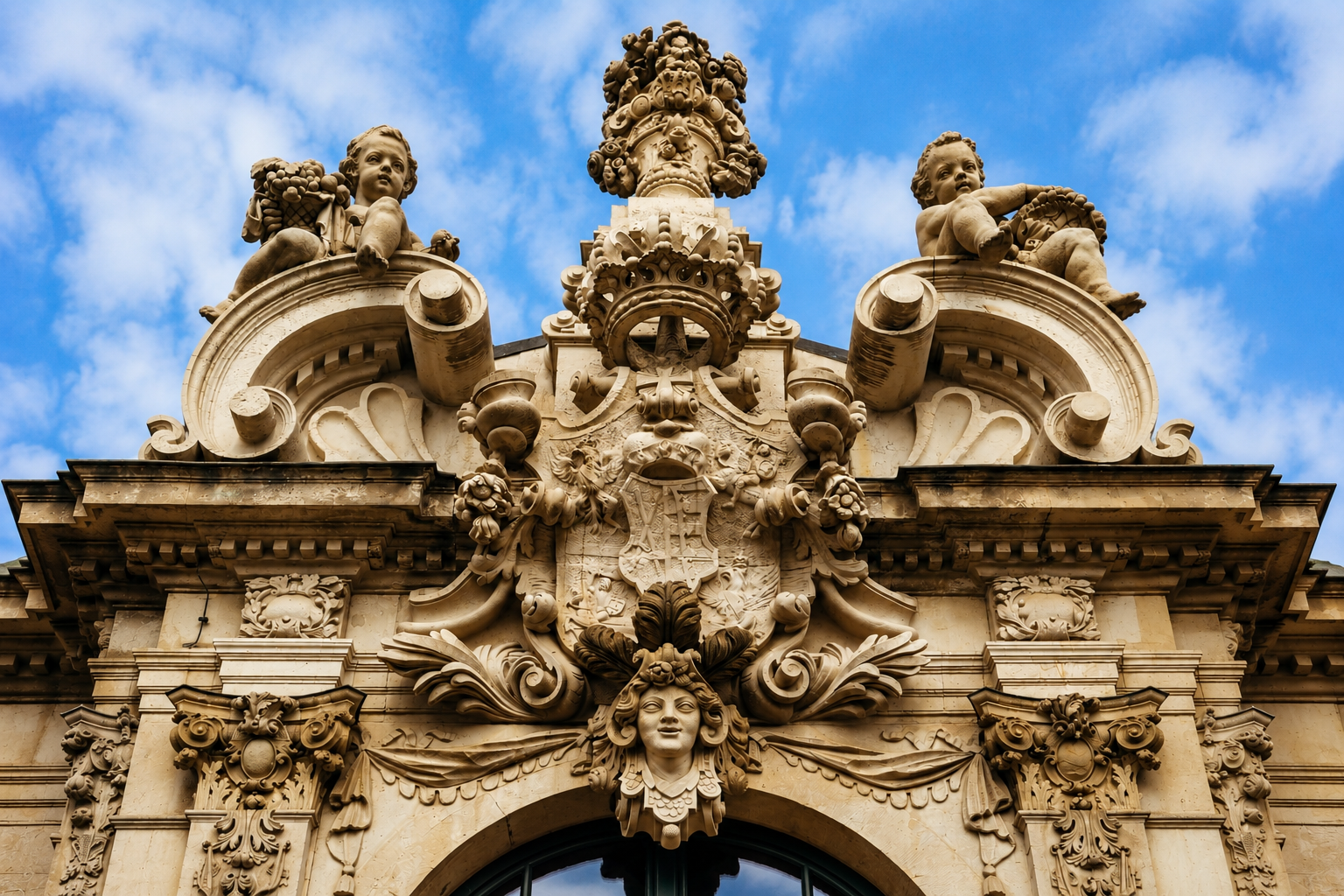 Ornament in Baroque architecture
Rather than resting in symmetry or simplicity, Baroque architecture draws the eye across surfaces that seem to unfold in real time. Ornament becomes a way of activating space.
2. Ornament in Baroque Music
Baroque music follows the same principle of ornamentation as architecture. Melodies are rarely left simple. Instead, they are decorated with trills, mordents, and turns—rapid notes that circle around a central pitch.
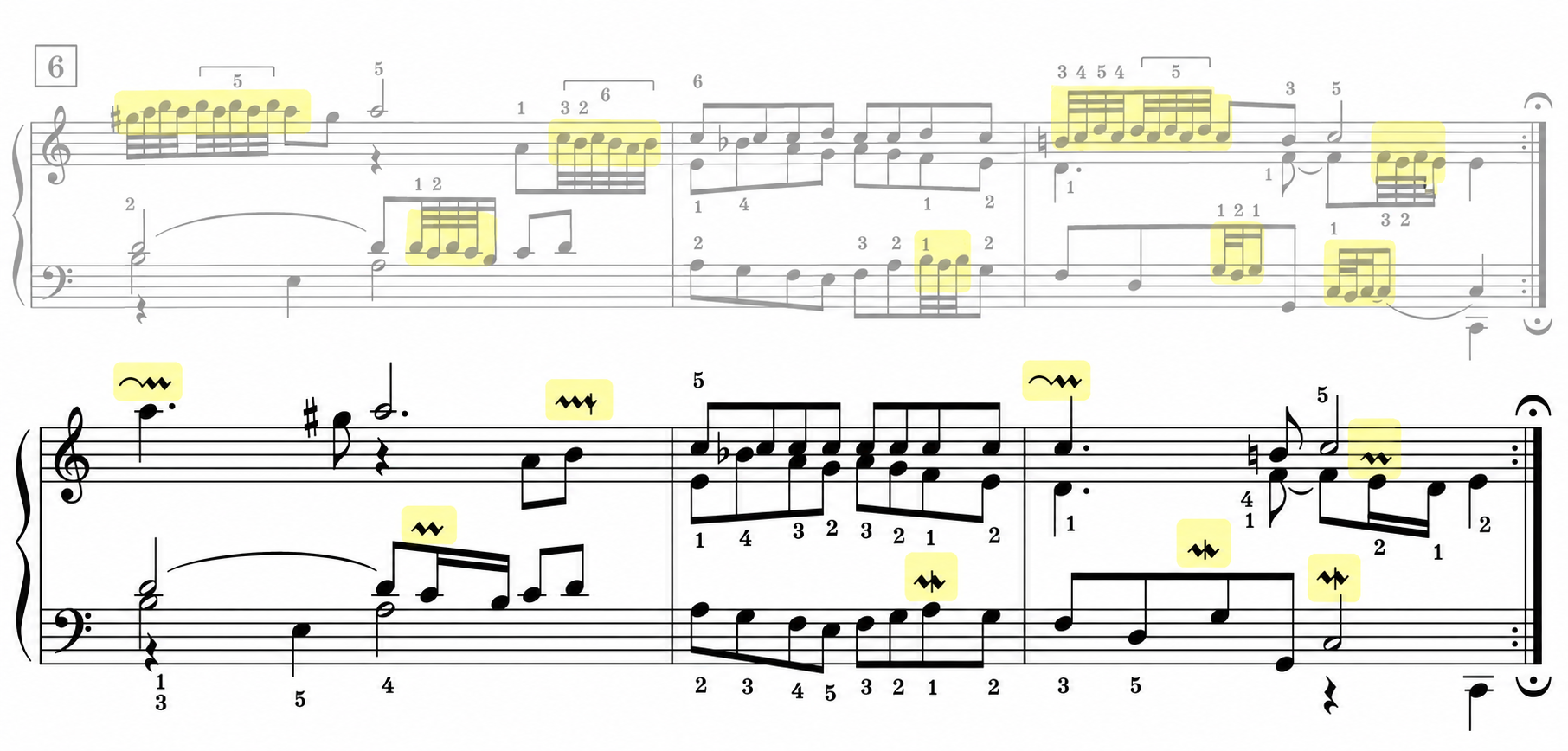 Lower staff shows the written ornament; upper staff shows the performance note by note
These ornaments are not merely decorative. They shape phrasing, create tension, and intensify emotional expression.
Visually, these musical gestures often feel like curved or swirling motion—closely echoing the scrolls and flourishes found in Baroque architecture.
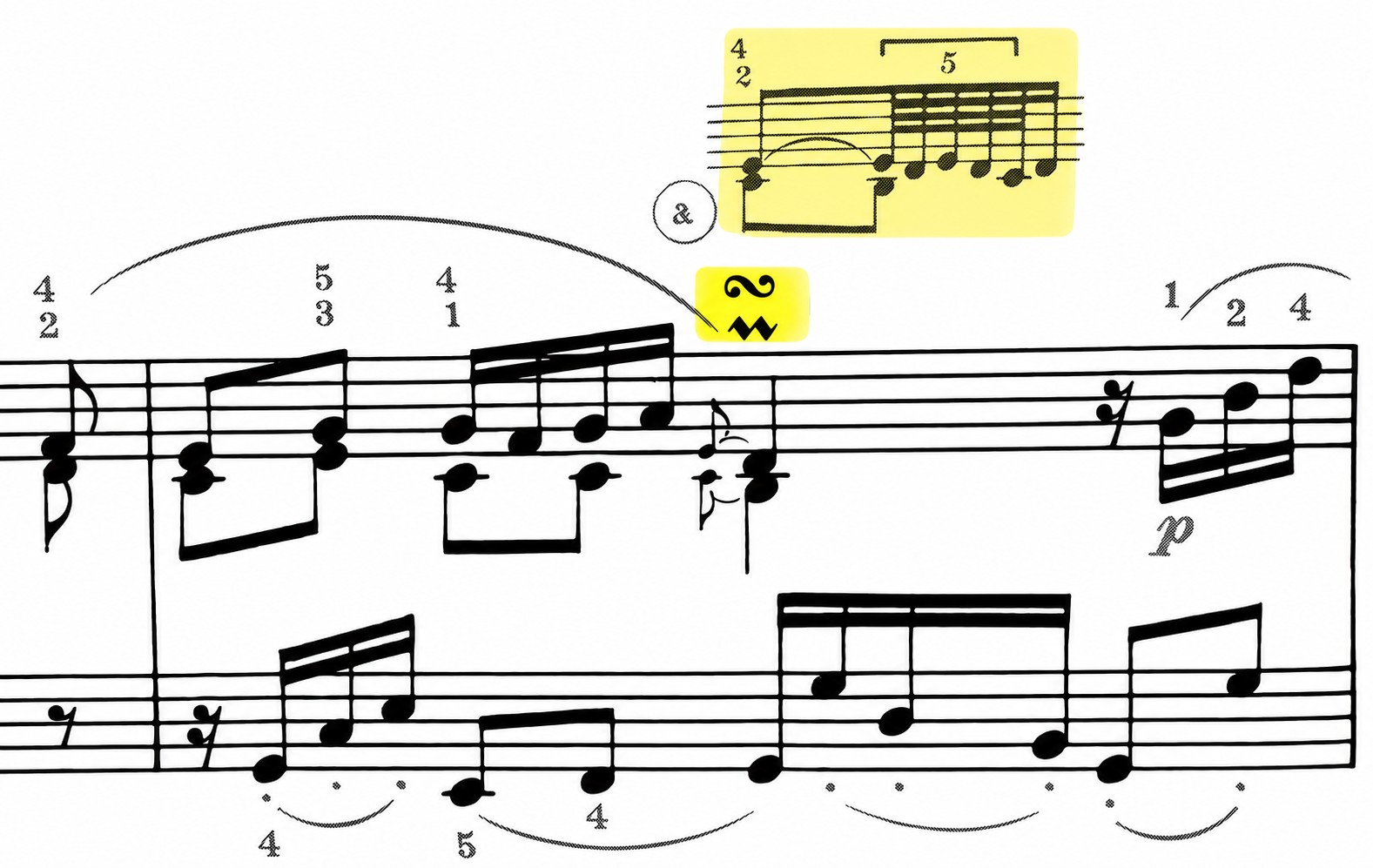 Turn ornament resembling Baroque architectural curves
In both Baroque music and architecture, ornament is not an addition to structure. It is what brings structure to life.
3. Versailles as Total Ornament
The Palace of Versailles brings this principle to its most complete expression.
Here, ornament is no longer confined to surface detail—it becomes a total system. Gilded surfaces, vertical rhythms, mirrored reflections, and layered decoration transform the entire space into a kind of visual composition.
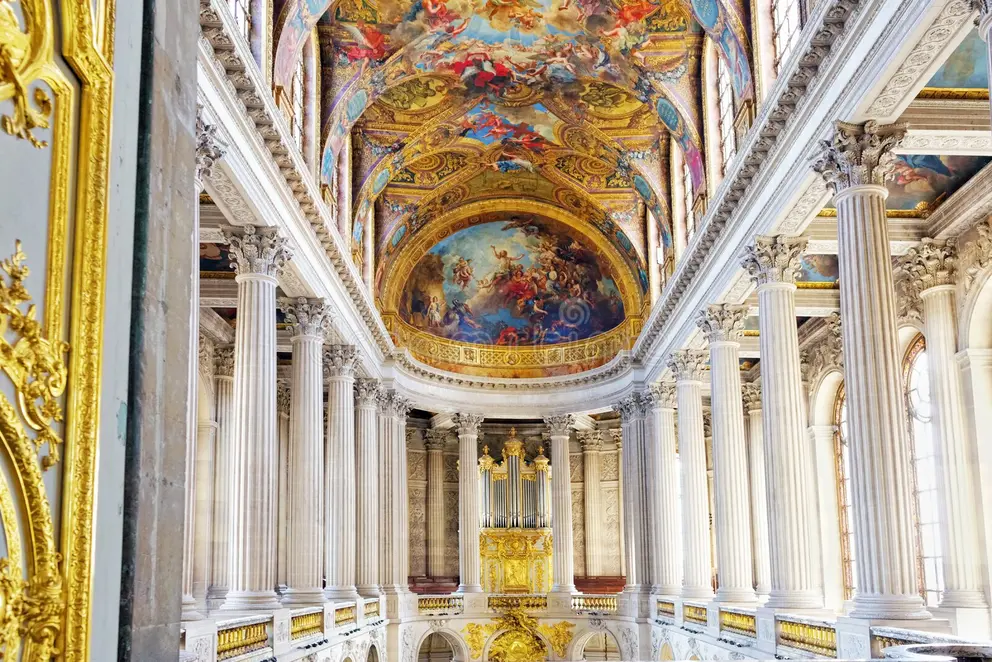 Royal Chapel, Versailles — gilded space shaped by vertical rhythm
Across Versailles, space itself behaves like ornament. Light, repetition, and symmetry work together to produce a continuous sense of movement, as if the building is unfolding rather than standing still.
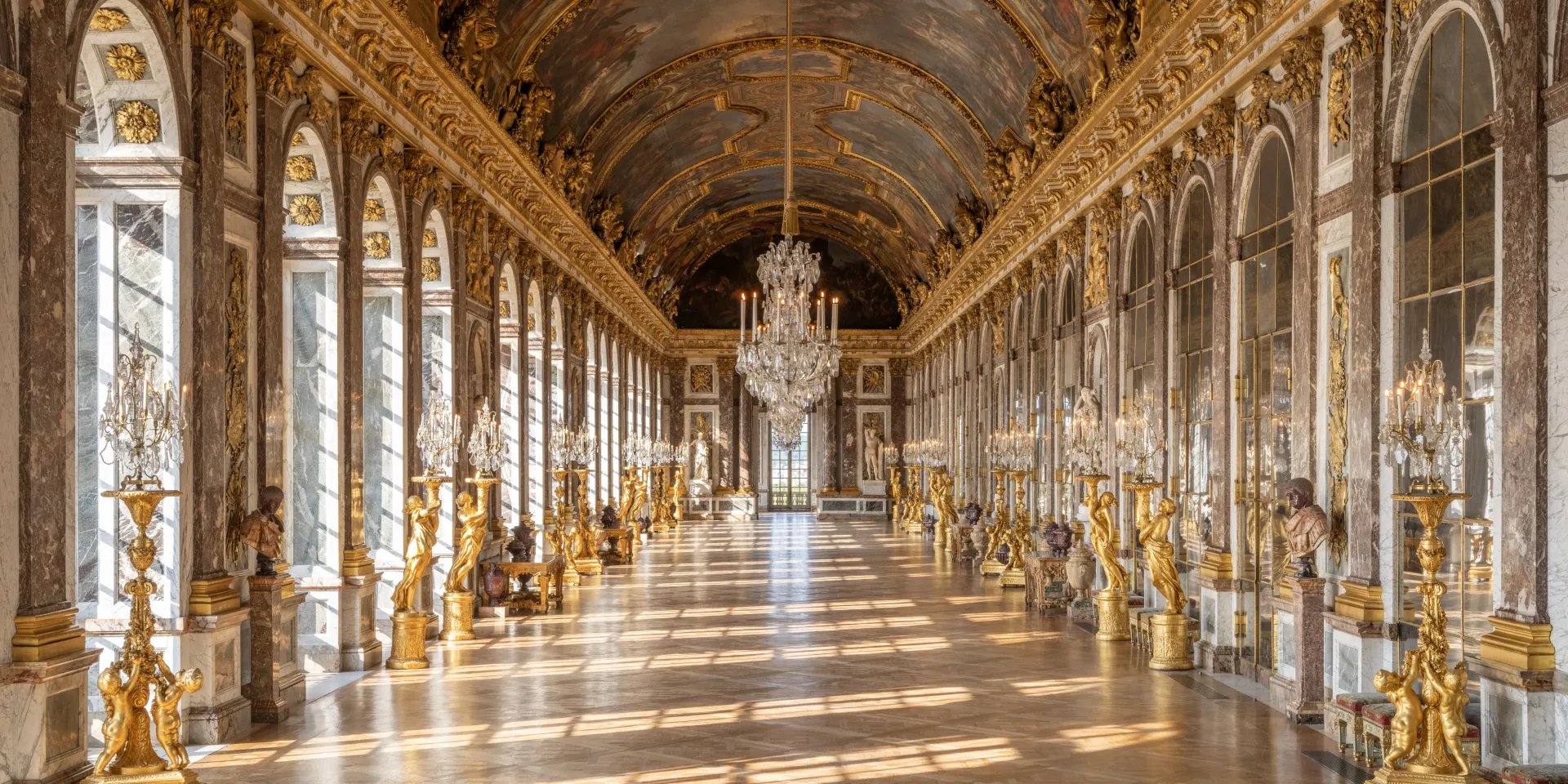 Hall of Mirrors, Versailles — light multiplied through reflection
In this sense, Versailles does not simply contain ornament. It is ornament—expanded into architectural scale.
Listening
Listen to Bach’s Partita No. 1 in B-flat Major performed on a modern piano. The rapid ornaments function like architectural flourishes in sound—small details that transform a simple line into something more expressive, layered, and alive.
Explore more Baroque keyboard music here: : Bach family harpsichord concertos (Affiliate link)
Previously: [Music & Architecture (Part 2): Renaissance Proportion and the Birth of Tonal Harmony]