"My Muscles Are Actually Growing!" A Christian Look at Creatine
Spend any time around a gym or health-related content online, and one name keeps coming up.
Creatine.
"Isn't that for bodybuilders?"
"Isn't that only for athletes?"
A lot of people assume so.
But creatine is actually a substance your body already produces naturally, and it's involved in the energy-production process your muscles rely on for short bursts of intense effort. For people who train consistently, it's one of the most widely studied supplements for supporting exercise performance and muscle growth.
So how should a Christian think about a workout supplement like this?
Scripture doesn't tell us to treat our bodies carelessly. Instead, it teaches that caring well for the body God entrusted to us is an important part of how we live (1 Corinthians 6:19-20).
The purpose of caring for your health was never simply to build a more impressive physique — it can be preparation to carry out the life and calling God has given you, in better health.
 Strength training helps build and maintain muscle, supporting everyday mobility, physical resilience, and long-term health. Consistency in exercise, nutrition, and recovery matters more than any single supplement.
1. It Can Help You Push a Little Harder During Exercise
Imagine someone who's started working out at the gym, but the weight on the bar just isn't going up the way they'd hoped.
Combined with consistent strength training, proper meals, and enough rest, creatine can help some people improve their capacity to repeat short, intense bursts of effort.
That's exactly why it's been studied so extensively for exercises like the bench press or squat, which demand sudden, powerful force.
That said, creatine doesn't build muscle on its own.
Taking a supplement without actually exercising doesn't produce a healthy body.
What actually matters is consistent exercise, eating, and sleep. Creatine is simply one tool that supports that process.
Isn't the life of faith similar? Just as daily Scripture, prayer, and small acts of obedience gradually change us far more than a single dramatic experience does, health, too, is built through habits stacked up day after day.
2. It May Help You Maintain and Build Muscle
Past 40, a lot of people notice that muscle just doesn't come as easily as it used to.
Changes in the body show up more slowly even with exercise, and reduced activity levels can gradually chip away at muscle mass over time.
What matters most here is still strength training paired with enough protein.
Used alongside that kind of training, creatine can play a supportive role in helping build muscle mass and strength.
And especially as we age, muscle isn't simply about appearance.
It's what lets you get up from a chair, climb stairs, run errands, travel with family, and serve your church and community.
Maintaining healthy muscle strength can be, in a sense, preparing a body that's able to love and serve for a long time to come.
3. There's a Reason It's Drawing Interest From Older Adults Too
It's easy to assume creatine is only for young gym-goers, but lately it's drawn real interest for muscle health in midlife and older adults too.
For someone past 60 whose strength has declined enough that walking and everyday tasks feel harder than they used to, appropriate strength training and balanced nutrition matter more than anything else.
Depending on the individual's health situation, creatine can be considered as a supportive addition on top of that.
But there's something worth remembering here.
Taking creatine doesn't suddenly make you younger.
Health was never the product of one supplement — it's the combined result of exercise, nutrition, rest, and lifestyle working together.
Caring for the body God entrusted to us is also more about consistency than short-term results.
So Who Might Actually Consider Creatine?
It may be worth looking into if:
- You're training consistently with strength exercises
- You'd like to modestly improve your exercise performance
- Building muscle mass and strength is a genuine goal
- You're exercising specifically to guard against muscle loss in midlife or beyond
But creatine doesn't replace exercise.
What you need to prioritize before any supplement is enough food, enough protein, enough sleep, and regular exercise.
How Should You Actually Take Creatine?
The most commonly used form is creatine monohydrate.
Many people take around 3 to 5 grams daily, consistently.
There's no requirement to take it right before a workout. Consistency matters more than timing.
Also, when you start creatine, water stored inside your muscles tends to increase, which can lead to a modest rise on the scale. That's not the same thing as gaining body fat.
If you're looking for a well-studied, third-party tested option, [a micronized creatine monohydrate powder like this one from Thorne] is NSF Certified for Sport, which can offer some added confidence around purity and quality (affiliate link — I may earn a small commission at no extra cost to you).
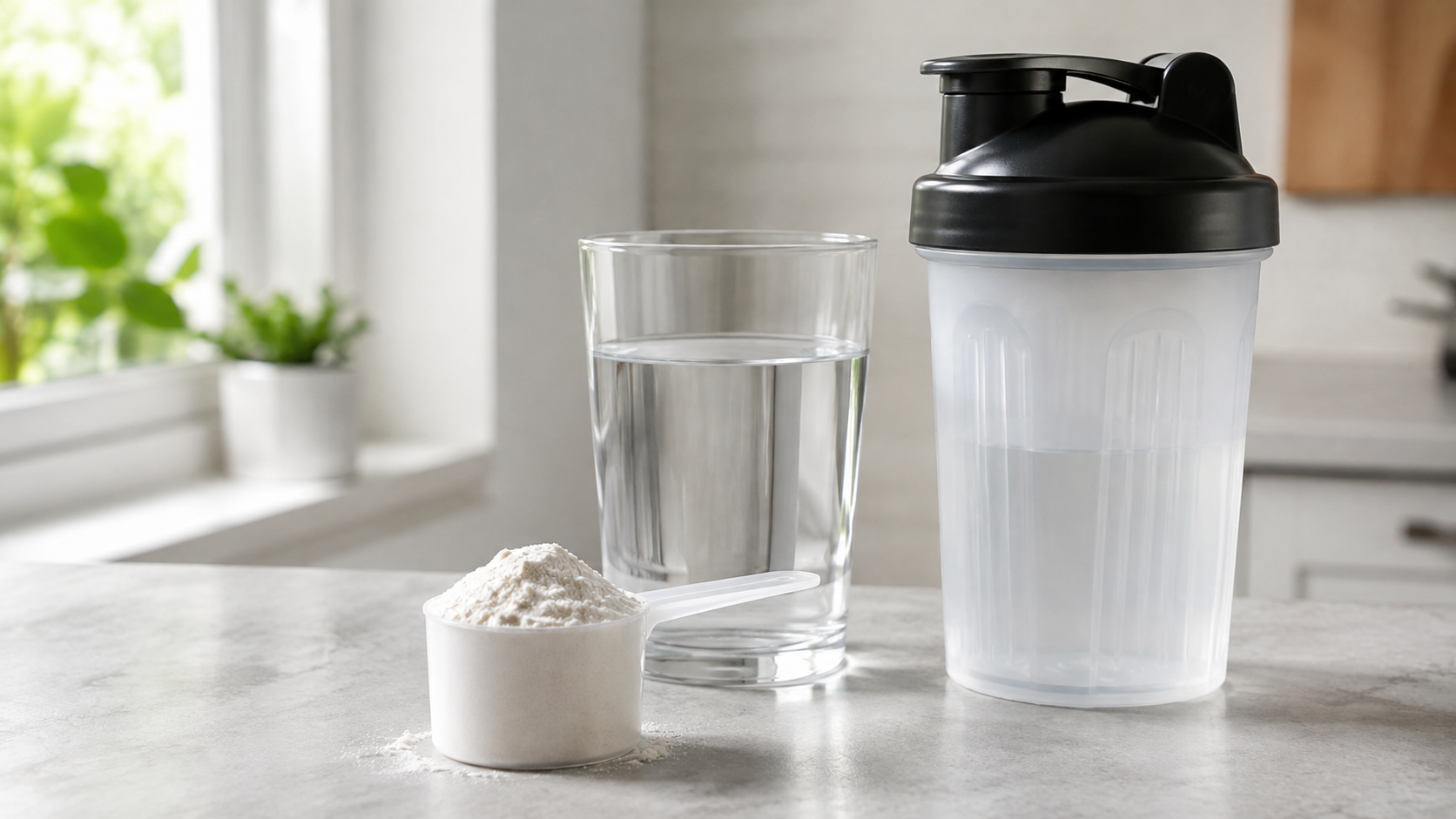 Creatine is one of the most widely studied sports supplements and is commonly used alongside resistance training to support strength and exercise performance. It should be viewed as a supplement to—not a replacement for—healthy eating, regular exercise, and adequate rest.
Your Health Status Comes Before Any Supplement
Just because something can be beneficial for health doesn't mean it's necessary for everyone.
In particular, if you have kidney disease or are being treated for one, take multiple medications, or are pregnant or breastfeeding, it's better to talk with a doctor or healthcare professional before starting a supplement on your own.
And if you're dealing with specific symptoms or ongoing fatigue, it's important not to assume it's simply a nutritional gap and try to fix it with a supplement alone.
For Christians, Health Is a Tool, Not the Goal
Our culture never stops insisting we need to be thinner, look younger, and appear more muscular.
Without realizing it, exercise meant for health can quietly become **exercise meant to compete with everyone else.**
But for a Christian, physical health was never the final purpose of life in itself.
Paul acknowledges that bodily training has some value, while teaching that godliness is of far greater value (1 Timothy 4:8, KJV): "For bodily exercise profiteth little: but godliness is profitable unto all things, having promise of the life that now is, and of that which is to come."
So exercise, protein, and creatine alike shouldn't become things that rule our lives.
It's worth reconsidering, again, why you actually want a healthy body.
To love your family for longer.
To faithfully carry out what's been entrusted to you.
To serve your church and neighbors in better health.
And to live out, with gratitude, the day God has allowed you.
With that kind of purpose, exercise and health management move beyond simple self-care and can become part of a genuinely faithful, stewardship-minded life.
The Takeaway
Creatine isn't a miracle supplement.
But for someone who exercises consistently, it can be one tool that supports strength and exercise performance.
What matters more than what you take might be why you're pursuing health in the first place.
Not to show off a more impressive body, but to gratefully care for the body God has entrusted to you, love your family and neighbors, and guard your health so you can carry out your calling for a long time to come.
That might be the slightly different lens a Christian brings to exercise and health.
Today, instead of only checking the mirror, it's worth taking a moment to ask: how well am I actually caring for the body and life God has entrusted to me?
 Building strength is about more than appearance. Staying active can help us remain capable of enjoying family, serving others, and faithfully caring for the body and life God has entrusted to us.
This article is intended as general health information and is not a substitute for individual diagnosis or treatment. If you have an underlying condition or are taking medication, please consult a healthcare professional before starting any supplement.