"Not Me, Right?" — Diabetes Often Starts Quietly, and Caring for Your Body Is Part of Faith
Bring up diabetes in conversation and you'll hear some version of the same thing pretty quickly.
"I'm too young for that." "I don't even eat that much sugar." "Nobody in my family has diabetes."
But diabetes isn't a disease reserved for older people or people who eat a lot of sweets. Type 2 diabetes in particular tends to develop slowly, often with no noticeable symptoms for a long stretch of time. By the time symptoms actually show up, blood sugar may already be quite elevated, or complications may already be underway — which is exactly why regular screening matters.
For a Christian, taking care of your health was never just about trying to live longer. This body isn't something we get to use up however we want — it's a place God entrusted to us for this life. 1 Corinthians 6:19-20 reminds us that our bodies belong to God.
That said, getting sick was never a verdict on someone's faith or their self-discipline. Diabetes develops from a genuine mix of causes — genetics, age, environment, medications, other health conditions. Managing your health isn't a standard for judging someone who's already dealing with a disease. It's closer to a responsibility: caring gratefully for the body God gave you.
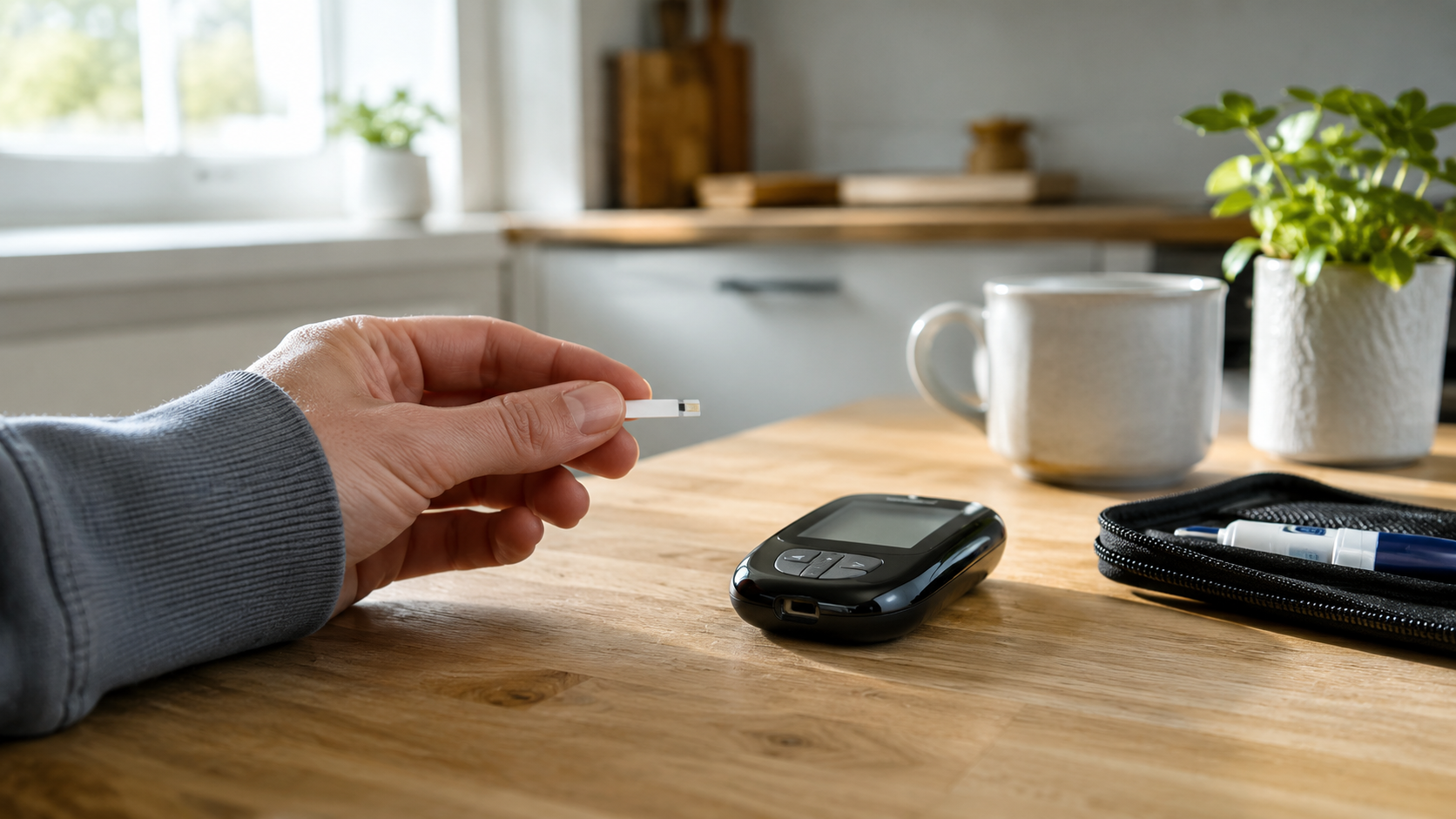 A close-up of a person’s hand holding a glucose test strip beside a small blood glucose meter on a kitchen table in soft morning light.
What Actually Happens in Diabetes
When you eat, part of the carbohydrate you consume breaks down into glucose and enters your bloodstream. Insulin, released by the pancreas, is what allows that glucose to actually get into your cells and be used as energy.
When your body doesn't make enough insulin, or the insulin it makes doesn't work properly, glucose builds up in the blood instead. Sustained high blood sugar like that is diabetes.
Type 1 diabetes usually develops from an autoimmune response that damages the cells that produce insulin. Type 2 diabetes typically involves a combination of insulin resistance — where insulin doesn't work as effectively — and a gradual decline in the pancreas's ability to produce it. So describing diabetes simply as "a disease from eating too much sugar" isn't really accurate.
What Early Symptoms Can Look Like
Early diabetes can come with no symptoms at all. Type 2 in particular develops so gradually over years that it's easy to write off fatigue or blurry vision as just getting older.
If any of the following keep showing up, or have gotten more noticeable, it's worth getting your blood sugar checked.
You're drinking water constantly and using the bathroom more often. When blood sugar runs too high, the kidneys try to flush excess glucose out through urine, and water gets pulled along with it — leading to more frequent urination and stronger thirst. If you're drinking more water than usual and still feel thirsty, or waking up multiple times a night to use the bathroom, that's worth checking. That said, caffeine intake, prostate or bladder issues, and certain medications can cause similar symptoms, so this alone doesn't confirm diabetes.
You're tired even after resting enough. If cells can't properly use the glucose that's available, fatigue can set in fairly easily. If you're sleeping enough but still feel physically heavy, or hit a wall of exhaustion by afternoon, it's worth checking not just blood sugar but also anemia, thyroid issues, and sleep disorders. Fatigue can show up with diabetes, but it's far from unique to it.
You're losing weight without trying. If you're eating normally — or even more than usual — and still losing weight, pay attention. When cells can't use glucose efficiently, the body starts breaking down fat and muscle for energy instead, which can cause unintended weight loss. This tends to appear fairly quickly and noticeably with Type 1 diabetes in particular, and if it's paired with intense thirst, frequent urination, nausea, or abdominal pain, that combination calls for prompt medical attention. On the flip side, gaining weight around the abdomen is better understood as a risk factor for Type 2 diabetes rather than an early symptom of it — excess visceral fat tends to increase insulin resistance.
Your vision gets blurry or hard to focus. Rapid shifts in blood sugar can affect the lens of the eye and fluid balance, leading to temporarily blurred vision. If your glasses suddenly seem like the wrong prescription, or text looks fuzzy, it's worth checking blood sugar in addition to an eye exam. Sustained high blood sugar over time can damage the small blood vessels at the back of the eye and affect vision more permanently.
Wounds are healing slower than they used to. Prolonged high blood sugar can affect circulation and immune function, which can mean small wounds heal slowly or infections keep recurring. Wounds on the feet in particular deserve close attention even when they don't hurt much. That said, one slow-healing cut doesn't automatically mean diabetes.
Your hands or feet feel numb, tingly, or burning. Numbness, tingling, or a burning sensation in the fingers or toes can reflect diabetic nerve damage. But the same sensations can come from pinched nerves in the neck or lower back, carpal tunnel syndrome, vitamin deficiencies, or circulation issues. If it's recurring or disrupting sleep, that's a reason to get it checked rather than guess at the cause yourself.
 A home-cooked meal on a plate featuring grilled chicken, steamed vegetables, and a small portion of brown rice on a kitchen table in natural daylight.
Who Should Pay Attention Even Without Symptoms
If any of the following apply to you, it's worth talking to a doctor about when to get screened, even without symptoms:
- A parent or sibling with diabetes
- Being overweight, or a significantly increased waist circumference
- Limited physical activity
- High blood pressure or abnormal cholesterol
- A history of gestational diabetes
- Fatty liver disease or cardiovascular disease
- A prediabetes diagnosis
- Frequent sugary drinks, late-night eating, or overeating
- Insufficient sleep or an irregular daily rhythm
No family history doesn't guarantee you're safe, and having a family history doesn't guarantee you'll develop diabetes either. Genetics and lifestyle work together, which is exactly why it's worth focusing on the parts you can actually change.
How Diabetes Is Actually Diagnosed
Fasting blood glucose and A1C (hemoglobin A1c) are the two most commonly used tests.
Fasting glucose measures your blood sugar after a period without eating. A1C reflects your average blood sugar over roughly the past two to three months. Generally, an A1C below 5.7% is considered normal, 5.7% to 6.4% is prediabetes, and 6.5% or above falls in the diabetes range. Fasting glucose of 126 mg/dL or higher can also indicate diabetes. When symptoms aren't clear-cut, repeat testing on a different day, or confirming with an additional test, is standard practice.
Internationally, some guidelines recommend prediabetes and Type 2 diabetes screening for overweight or obese adults ages 35 to 70. But the right starting age and interval depends on your weight, family history, any prior gestational diabetes, and previous test results — it's more accurate to work out a screening schedule with a doctor based on your actual risk factors than to follow a blanket rule like "everyone over 40, once a year, no exceptions."
Preventing Type 2 Diabetes Doesn't Require a Dramatic Overhaul
Type 1 diabetes isn't something diet and exercise alone can prevent. But Type 2 diabetes risk can genuinely be lowered, or its onset delayed, through healthier lifestyle habits. Prevention was never about living a flawless life — it's about sticking with small, doable changes over time.
Aim for balance over restriction. You don't need to cut carbohydrates out entirely. What matters more is the type and amount of carbs, and how your overall meals balance out. Choosing whole grains, beans, vegetables, and less processed foods over white rice, white bread, and sugary drinks and snacks is a solid place to start. Swap sugary drinks for water or unsweetened tea, replace some white rice with whole grains or beans, pair carbs with vegetables and protein, and cut back on late-night overeating. A diabetes-friendly diet isn't some special "patient diet" — it's really just the same balanced eating that benefits anyone, diabetic or not.
Start with walking, consistently. Exercise doesn't require a gym membership. Brisk walking, biking, swimming, taking the stairs, and light strength training all count. Adults generally benefit from aiming for at least 150 minutes of moderate activity per week — and if 30 minutes at once feels like too much at first, even a 10-minute walk after a meal is a reasonable place to start. Exercise helps your cells use glucose more effectively and supports healthy weight, blood pressure, and cholesterol. If you have chest pain, severe shortness of breath, a foot wound, or another chronic condition, talk to a doctor before starting something new.
If getting started is mostly a matter of having the right pair of shoes, these diabetic-friendly walking shoes with arch support and extra-wide widths are designed with foot comfort and circulation specifically in mind, which can make that daily 10-minute habit a lot easier to actually keep (affiliate link — I may earn a small commission at no extra cost to you).
Even a 5–7% weight loss matters. For someone who's overweight or obese and dealing with prediabetes, a fairly modest weight loss can still make a meaningful difference. The U.S. Diabetes Prevention Program found that people who lost about 5–7% of their starting weight and stayed active around 150 minutes a week lowered their risk of developing Type 2 diabetes. For someone weighing 154 lbs (70 kg), that's roughly 7.5 to 11 lbs. Sustainable habits beat crash diets or extreme fasting here — by a wide margin.
Sleep and stress matter too. Insufficient sleep can interfere with how well insulin regulates blood sugar. Chronic stress does something similar, through stress hormones that destabilize blood sugar and disrupt eating and exercise habits. Getting enough rest isn't laziness — it's worth remembering that God built rest into our design, alongside work. A regular bedtime, less phone use before sleep, prayer and quiet reflection, a short walk, and real conversation with family can all help lower physical and emotional tension. That said, prayer and faith practices were never meant to replace medical testing and treatment — seeking God's wisdom while also getting a doctor's help is its own form of responsible stewardship.
 Lacing up walking shoes by the front door highlights how everyday movement, even a simple walk, can support blood sugar management and overall health.
Don't Turn Health Management Into a Law to Obey
Read enough health content and you start feeling pressure — "never eat this," "you must exercise every single day."
But a faith-shaped approach to health was never a competition to build a perfect body. It's not a basis for judging someone else's weight or illness either.
Some people carry higher genetic risk. Some face medications or conditions that make managing weight and blood sugar genuinely harder. Some people's work schedules or financial circumstances make healthy eating and consistent exercise difficult in ways that have nothing to do with willpower.
A church community should walk alongside someone managing diabetes, not judge them. Sharing healthy food with someone who needs it, walking together with someone who struggles to exercise alone, and comforting a family worn down by treatment costs and caregiving — these are concrete ways of loving your neighbor.
Small Obedience in Caring for Your Body
Diabetes doesn't always announce itself clearly. Intense thirst, frequent urination, unexplained weight loss, ongoing fatigue, blurry vision, and slow-healing wounds can all show up — but blood sugar can also climb with no symptoms at all. That's exactly why it matters not to judge your health purely by how you feel, and to get tested when it's actually due.
We were never fully in control of our health to begin with. Even careful management doesn't guarantee you'll avoid illness, and unexpected difficulty can show up regardless. Even so, choosing a slightly more balanced meal today, moving your body for even a few minutes, resting properly, and getting the screening you're due for — these are small acts of honoring a life entrusted to you by God.
There's no need to look at diabetes only through fear. The risk of prediabetes and Type 2 diabetes can genuinely be reduced or delayed through lifestyle changes, and even with a diagnosis, proper treatment and management can lower the risk of complications.
Instead of brushing past the thought with "not me," try actually listening to what your body's been signaling lately. Checking your last screening results, starting that walk you've been putting off, and building a healthier table with your family — small changes like these can be the first real step toward protecting tomorrow's health.
This article is intended as general health information and is not a substitute for a doctor's diagnosis or treatment. If you experience intense thirst, frequent urination, rapid weight loss, vomiting, abdominal pain, confusion, or breathing difficulty, seek medical care promptly.