Orienteering: An Outdoor Sport That Engages the Body, Mind, and Faith
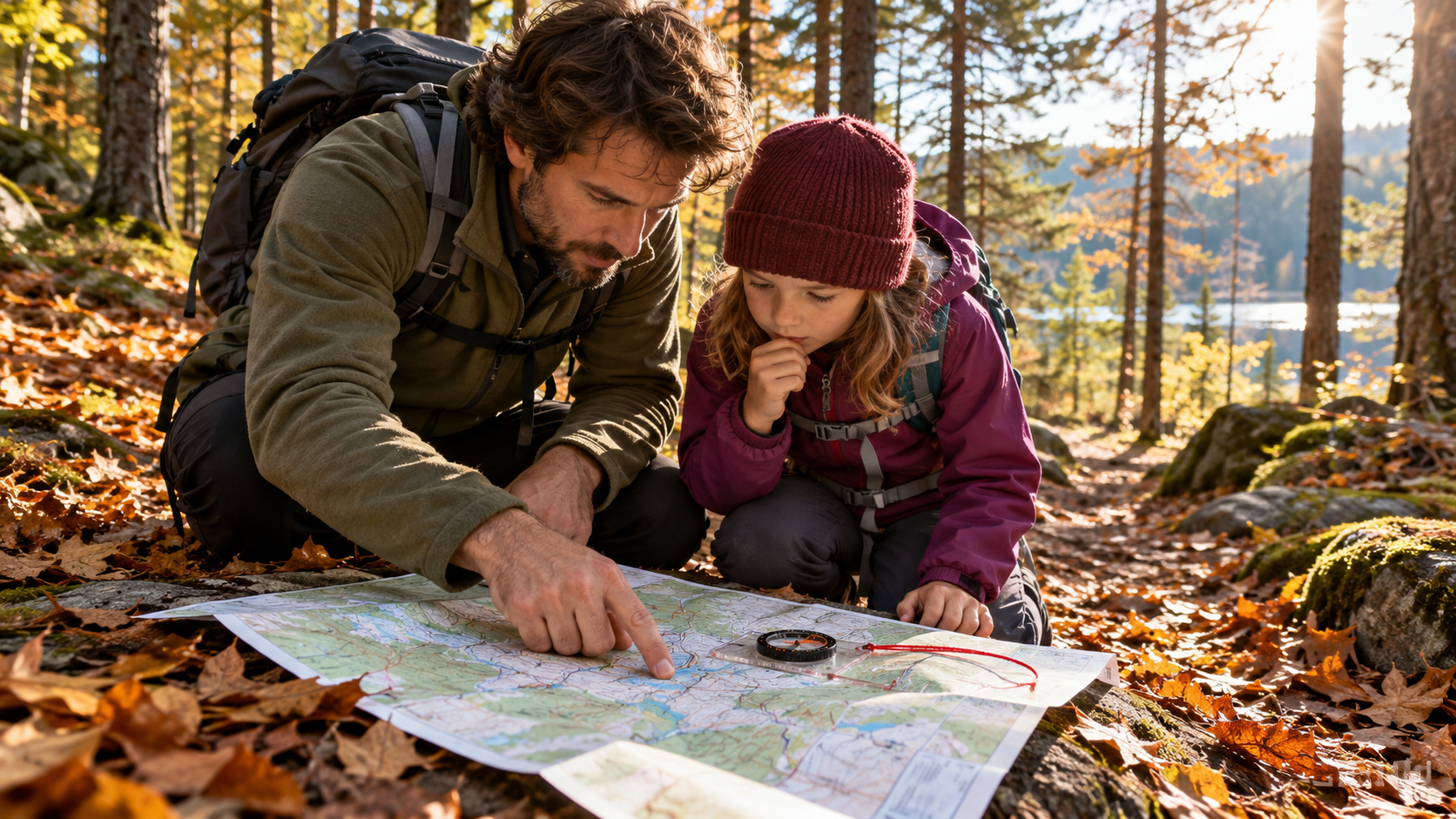 Orienteering offers families an opportunity to explore nature while practicing map reading, navigation, and problem-solving. By finding their way together, parents and children can build confidence, strengthen relationships, and appreciate the beauty of God's creation.
How finding your way with a map and compass can get you moving, sharpen your attention, deepen your appreciation for God’s creation, and bring people together.
In an age of smartphones and GPS, finding our way has become remarkably easy. Whether we are driving to an unfamiliar city, visiting a national park, or looking for a nearby restaurant, we simply type in an address and follow the screen. If we take a wrong turn, the device recalculates instantly.
But what happens when we put the phone away and find our way with only a map, a compass, and our own judgment? That is the challenge, and the appeal, of orienteering.
Orienteering is an outdoor navigation sport that combines walking or running with map reading, spatial awareness, and decision-making. For Christians, time spent navigating forests, parks, and open landscapes can offer more than a physical challenge. It can be a chance to notice the beauty of creation, practice patience and wisdom, and build relationships with family and friends.
What Is Orienteering, and How Is It Different from Hiking?
In orienteering, participants use a detailed map, and a compass when needed, to find a series of checkpoints called controls. Courses range from competitive routes for runners to short, easy courses for families and first-timers. At each control, participants confirm their arrival, often with an electronic timing chip.
What makes the sport unique is that participants usually choose their own route between checkpoints. The shortest line on the map might cross a steep hillside or thick brush, while a longer path along a trail may actually be faster, easier, or safer. Each choice depends on distance, terrain, fitness, and navigation skill.
That constant decision-making is what sets orienteering apart from an ordinary hike or run. Picture someone standing where two trails meet. The map shows a creek to the east and a small hill to the west. Before going on, they need to check whether what they see matches the map. If it does not, they must stop, figure out where they are, and choose a new route.
Small decisions like these draw on many mental skills at once: observation, spatial memory, planning, problem-solving, and the flexibility to change course. And all of it happens while the body is moving. In a sense, orienteering is a moving puzzle. The body supplies the motion, and the mind chooses the direction.
What Research Says About Orienteering and the Brain
Because orienteering combines exercise with demanding navigation, researchers have begun asking whether it offers benefits beyond physical activity alone.
In 2023, Emma Waddington and Jennifer Heisz of McMaster University in Canada published a study in PLOS ONE. They surveyed 158 healthy adults ages 18 to 87 with varying levels of orienteering experience, from none to elite. Experienced orienteers reported using a wider range of navigation strategies and having better spatial memory than physically active people without orienteering experience. Since everyone in the study was already active, the finding hints that navigation experience may be linked to cognitive skills beyond what exercise alone provides.
The study had important limits, though. It relied on participants’ own reports and observed people at a single point in time. It cannot show that orienteering caused better memory. People who are already good at navigating may simply be more likely to enjoy the sport and stick with it.
In a 2024 follow-up, Waddington and colleagues tested 63 healthy young adults with no orienteering experience. Participants completed one session of moderate-intensity orienteering, vigorous-intensity orienteering, or vigorous exercise without navigation. Both vigorous activities improved certain memory measures and raised levels of brain-derived neurotrophic factor (BDNF), a protein that supports the growth and health of brain cells. But spatial memory improved only after vigorous orienteering, suggesting that pairing navigation with exercise may give the brain extra stimulation.
This study, too, looked only at young adults and the effects of a single session. The researchers themselves noted that long-term effects and other age groups still need to be studied. So while the findings are encouraging, it is too early to call orienteering a proven way to prevent dementia or age-related cognitive decline. What we can say is that it offers an unusually rich workout for both body and mind.
Seeing God’s Creation with Fresh Eyes
David writes, “The heavens declare the glory of God; and the firmament sheweth his handywork” (Psalm 19:1, KJV). Forests, hills, streams, and open fields can stir gratitude for the world God has made.
Yet modern life leaves little room to notice it. We hurry between home, work, school, and errands, and even outdoors, our eyes often stay on our phones or on the destination ahead.
Orienteering asks us to pay attention. Participants notice the shape of a hillside, the direction a stream flows, the pattern of the trees, and the small differences between trails. Those details matter for navigation. For a Christian, they can also become invitations to slow down and see the richness of creation.
Orienteering is not a spiritual activity in itself, and not everyone will experience it the same way. But believers can approach it with gratitude and a sense of stewardship. Creation is not only a place for recreation. It is a gift to appreciate and protect, which means respecting wildlife, following park rules, staying off fragile vegetation when asked, and leaving natural areas cleaner than we found them.
Finding the Right Direction: Wisdom, Humility, and Perseverance
Orienteering offers a simple picture of a familiar challenge in the Christian life: making decisions when the way ahead is unclear.
On a course, you know your destination but not necessarily the best way to reach it. A path that looks promising may turn out to be a dead end. Another may take more effort at first but lead somewhere clearer and safer. You have to observe, weigh your options, decide, and sometimes correct an earlier mistake.
Proverbs puts it this way: “A man’s heart deviseth his way: but the LORD directeth his steps” (Proverbs 16:9, KJV). The verse is about human planning and God’s sovereignty, not navigation sports. Still, it invites reflection. We make decisions about family, work, education, money, and relationships without seeing every consequence. Like someone crossing unfamiliar terrain, we need to admit our limits, stay open to correction, and seek God through prayer and wise counsel. The fastest-looking path is not always the best one, and sometimes making progress means stopping long enough to check our direction.
Mistakes are part of orienteering. You may misread the map or miss a trail junction. When that happens, pressing on confidently in the wrong direction rarely helps. The better response is to stop, go back to the last place you were sure of, study the terrain, and choose again. That takes humility, admitting your first judgment was wrong. It also takes perseverance, especially when others seem to be moving faster.
Of course, becoming a better navigator does not make anyone more spiritually mature. The value lies in how we reflect on the experience and what we carry from it into the rest of life.
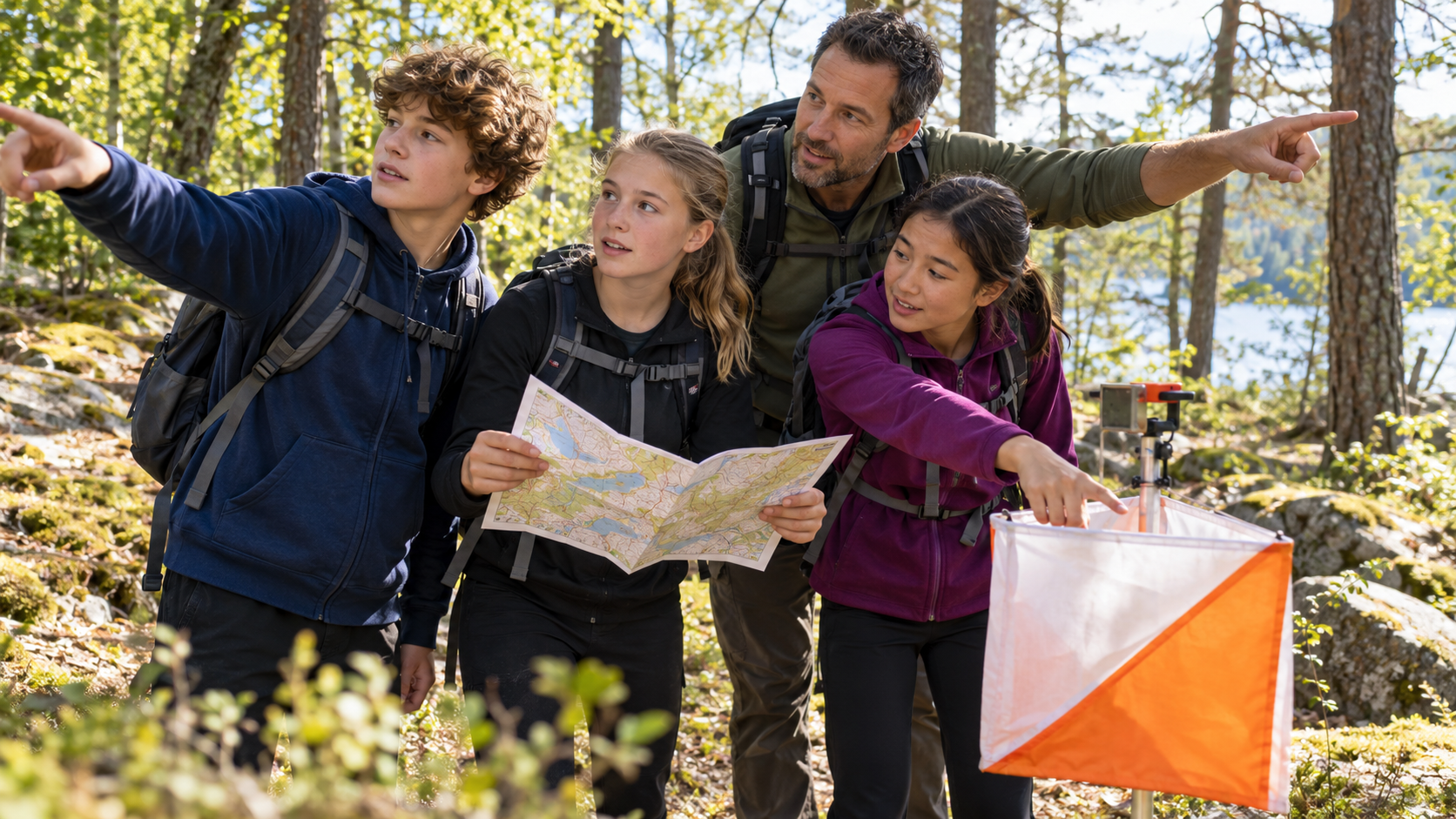 Orienteering combines outdoor exercise with teamwork, communication, and decision-making. For church youth groups and Christian schools, navigation activities can provide meaningful opportunities to practice cooperation, patience, and shared responsibility while enjoying time outdoors.
A Shared Adventure for Families and Churches
Unlike sports that reward strength or speed, beginner orienteering can be built around walking, observing, and solving problems together. That makes it a good fit for families and church groups.
Parents and children can work together to read a simple map and find checkpoints. Instead of giving every answer, parents can ask questions and let children make age-appropriate decisions. This helps kids build confidence, patience, and responsibility. The time outdoors also opens natural conversations about creation, gratitude, and caring for the environment.
For youth groups, small teams can navigate a course under adult supervision and practice communication and teamwork. Afterward, a leader might ask a few simple questions:
- What did your team do when you disagreed about the route?
- How did you respond when someone needed help?
- What did you learn about patience and trusting one another?
A short devotional can connect those answers to Christian teaching on humility, service, and community. The activity itself should stay fun, not turn into a long lesson.
Orienteering can also bring generations together. Younger participants may move quickly, while older adults often bring patience, careful observation, and experience. On a well-chosen course, everyone has something to contribute.
Churches planning an event should work with a local club or an experienced leader, use areas where the activity is permitted, get any needed approvals, and set clear safety procedures.
Getting Started Safely in the United States
Orienteering does not require expensive gear or athletic training. The easiest way to begin is through a local club. Orienteering USA, the sport’s national governing body, keeps a directory of clubs and an events calendar, and there is at least one club in most states. Many clubs welcome first-timers and offer beginner instruction.
The sport also comes in several forms. Beyond walking or running in natural terrain, there is trail orienteering, which emphasizes precise map reading and is accessible to people with physical disabilities, as well as ski and mountain bike orienteering. Permanent and do-it-yourself courses let individuals and families practice without attending a formal event. Orienteering USA also supports programs in schools, Scouting, and JROTC, and the sport was part of the 2026 National Scout Jamboree in West Virginia.
Tips for your first outing:
Choose a beginner course in a park or other flat, familiar area rather than challenging wilderness.
Learn to orient the map so it lines up with the landscape around you.
Use clear landmarks such as trails, fences, buildings, ponds, and hills to confirm your position.
Pick routes that suit your ability. The shortest route is not always the easiest or safest.
Follow the organizer’s instructions, check in and out, stay within course boundaries, and obey park rules. GPS may be restricted in competitive events, but carrying a phone for emergencies is usually allowed.
Beginners will find a basic baseplate compass much easier to use than a tiny keychain compass, especially when learning to take bearings. A simple, reliable option is the Suunto A-10, a no-frills baseplate compass from a long-established Finnish outdoor brand.(Affiliate link: the author may earn a small commission if you make a purchase. As an Amazon Associate I earn from qualifying purchases.)
Safety deserves special attention in the woods:
Ticks: In many parts of the United States, ticks in forests and tall grass can spread Lyme disease and other illnesses. Wear long pants, use an EPA-registered insect repellent, and check your whole body for ticks afterward.
- Uneven ground: Roots, rocks, and slopes make ankle sprains and falls common. Wear sturdy shoes, and slow down on rough terrain.
- Heat and weather: Bring water, dress for the weather, and protect yourself from the sun.
- Plants: Learn to recognize poison ivy and avoid it.
- Getting lost: Tell someone your plans, carry a whistle, and if you become truly lost, stop and stay where you are rather than wandering further.
Many beginner courses can be walked, so orienteering can work well for middle-aged and older adults who already enjoy walking. Adding a few navigation tasks can make a familiar routine more interesting. But people with heart disease, balance problems, mobility limits, or other medical conditions should choose easy, accessible courses and talk with their doctor about how much exertion is safe. Health is not a measure of faith, and the goal is enjoyable, sustainable activity, not unnecessary risk.
Useful places to start:
- Orienteering USA: https://orienteeringusa.org/
- Find a local club: https://orienteeringusa.org/events/clubs/
- Events calendar: https://orienteeringusa.org/events/calendar/
- Permanent and DIY courses: https://orienteeringusa.org/events/permanent-courses/
Conclusion: Learning to Recognize the Right Direction
Technology has made navigation easier than ever, and that convenience has real value. But there is also something good about occasionally putting the screen away and learning to see the world more carefully.
Orienteering invites us to do just that. It challenges the body through movement and the mind through navigation and decision-making. For Christians, it can also be a space for reflection. The beauty of nature can stir gratitude. A difficult route can remind us of the need for patience and wise choices. A wrong turn can teach humility. A shared adventure can draw families, friends, and church members closer.
These lessons do not come automatically from any sport. They grow when we approach ordinary experiences thoughtfully and with faith.
The psalmist prays, “Thy word is a lamp unto my feet, and a light unto my path” (Psalm 119:105, KJV). The verse speaks of spiritual guidance, not geography. Yet it reminds us that knowing where to go takes more than simply moving forward. Sometimes the most important step is not moving faster, but learning to recognize the right direction.
This weekend, instead of walking the same familiar route, consider trying a local orienteering course with family or friends. Take a map, look closely at the landscape, and enjoy the process of finding your way. You may discover a new way to stay active, and a fresh opportunity to appreciate creation, practice patience, and share meaningful time with others.
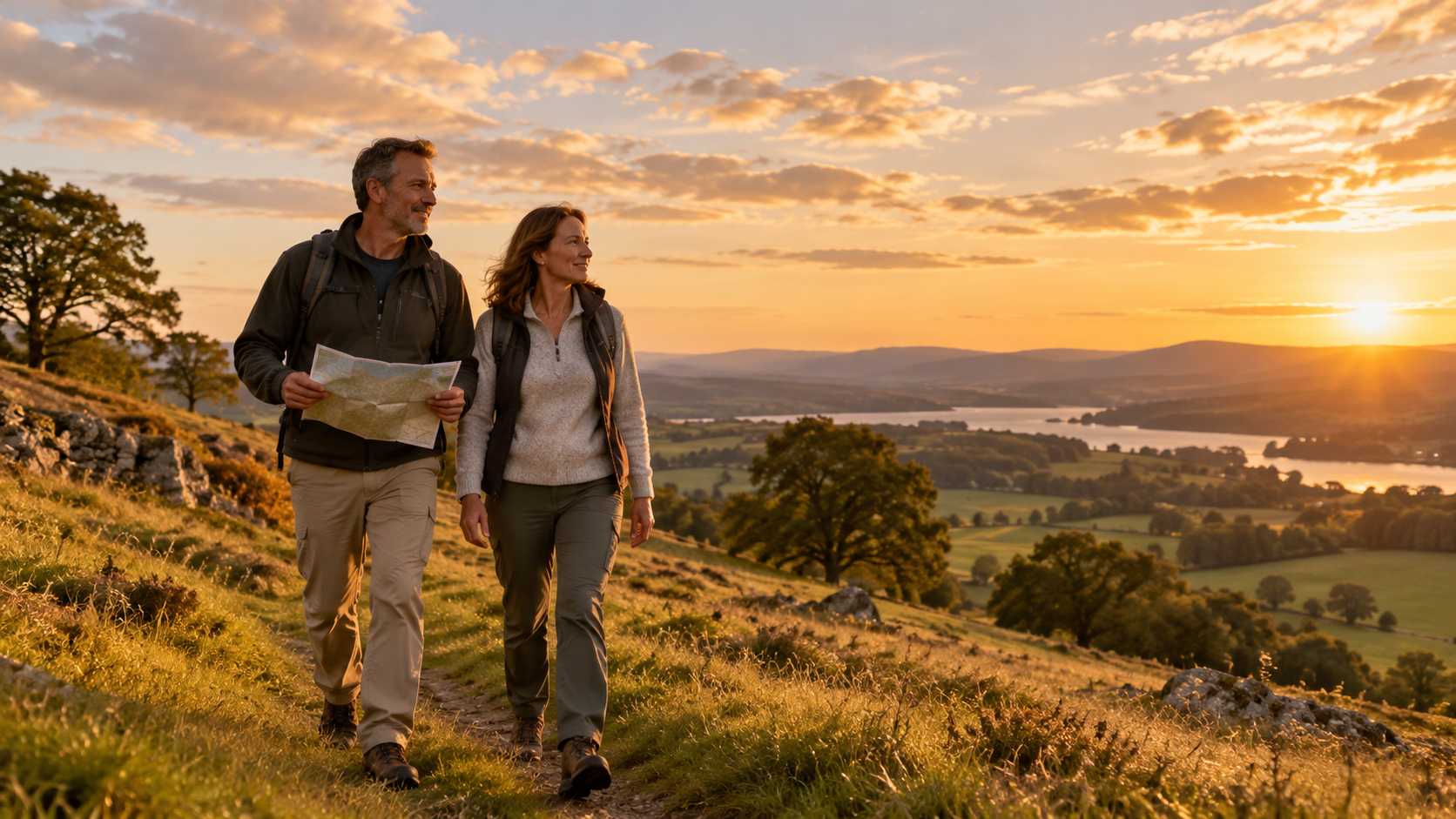 Orienteering can be enjoyed at a walking pace, making it an appealing outdoor activity for middle-aged and older adults. Combining physical movement with navigation encourages mental engagement while providing time to reflect, connect with others, and appreciate the beauty of God's creation.
References
Waddington, E. E., & Heisz, J. J. (2023). Orienteering experts report more proficient spatial processing and memory across adulthood. PLOS ONE, 18(1), e0280435. https://doi.org/10.1371/journal.pone.0280435
Orienteering combines vigorous-intensity exercise with navigation to improve human cognition and increase brain-derived neurotrophic factor. PLOS ONE, 19(5), e0303785 (2024). https://doi.org/10.1371/journal.pone.0303785
Orienteering USA. What Is Orienteering? https://orienteeringusa.org/explore/what-is-orienteering/
Orienteering USA. How to Orienteer. https://orienteeringusa.org/explore/how-to-orienteer/
Orienteering USA. Youth Development. https://orienteeringusa.org/resources/youth-development/
This article is intended for general education, recreation, and faith-based reflection. The studies discussed do not establish that orienteering prevents dementia or treats cognitive disorders. Choose activities that fit your physical abilities, follow safety guidance, and consult a healthcare provider if you have medical concerns. Scripture quotations are from the King James Version.