Pumpkin Seed Oil: A Small Wisdom for a Healthier Table
Everyday Choices for Caring Well for the Body God Has Given
 Fresh California ingredients and a drizzle of pumpkin seed oil come together to create a wholesome summer meal. Rich in nutty flavor, pumpkin seed oil is a delicious finishing touch for salads, roasted vegetables, and other seasonal dishes, making healthy eating both simple and satisfying.
Among the cooking oils drawing attention for both flavor and nutrition, pumpkin seed oil holds an interesting position — rich, nutty, and with a research profile that's more developed than most people realize.
For Christians, healthy eating isn't about following trends or managing appearances. It's part of stewarding what God has entrusted to us. The Apostle Paul puts it plainly:
"Whether therefore ye eat, or drink, or whatsoever ye do, do all to the glory of God." (1 Corinthians 10:31, KJV)
Every meal is a small opportunity to practice gratitude, moderation, and wisdom. This is a practical look at pumpkin seed oil — what it actually contains, where the research is solid, and how to use it well.
What Is Pumpkin Seed Oil?
Pumpkin seed oil is a plant-based oil cold-pressed from pumpkin seeds (Cucurbita pepo or related varieties). Its flavor is deep and nutty — reminiscent of toasted seeds — and it has been a staple of traditional food culture in Austria and Germany for centuries.
Its main culinary role is as a finishing oil. Because its smoke point is relatively low, it's not ideal for high-heat cooking. Instead, it shines when added at the end — drizzled over salads, soups, roasted vegetables, oatmeal, or pasta to add depth and aroma.
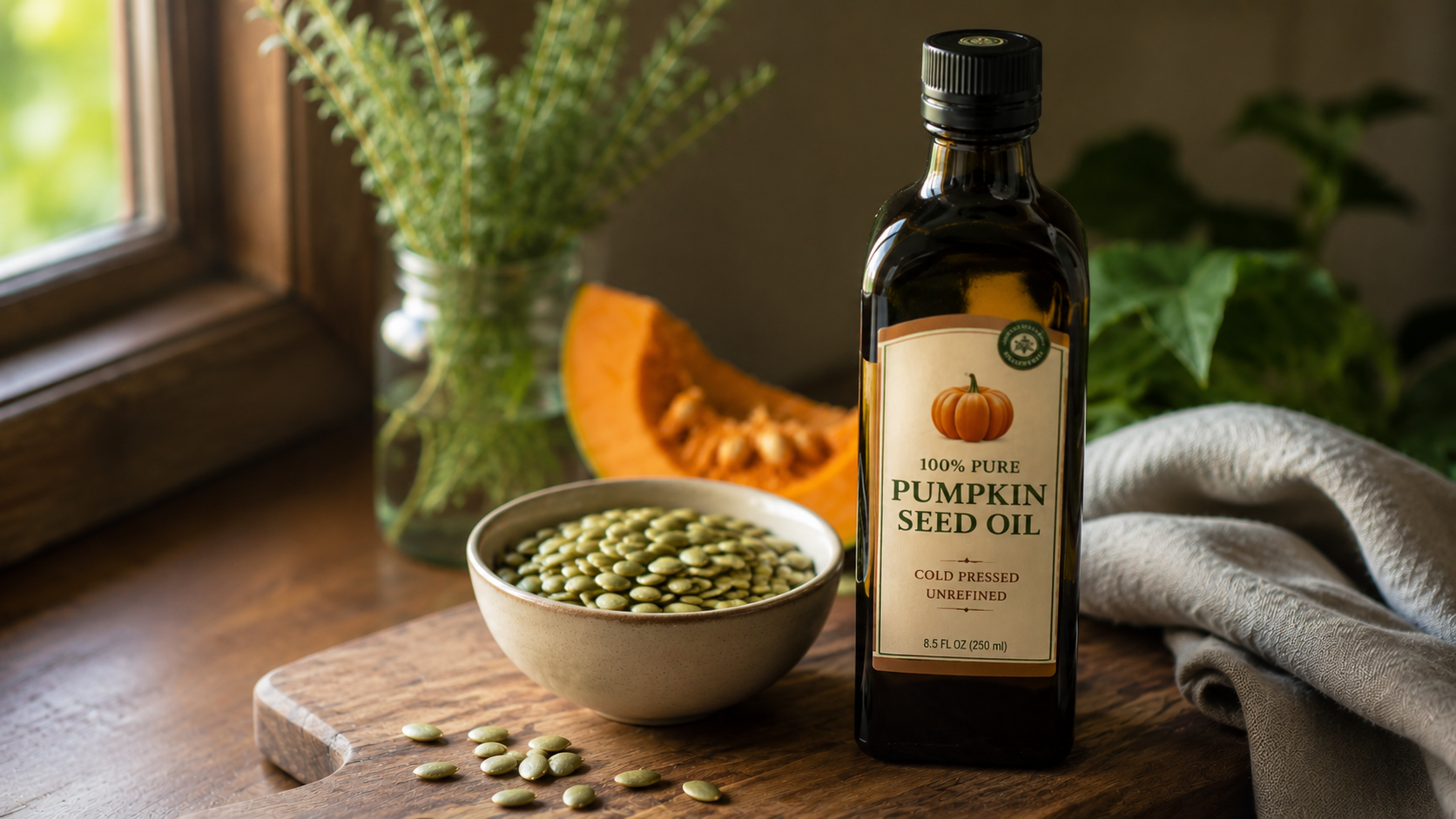 Cold-pressed pumpkin seed oil adds a rich, nutty flavor to salads, soups, roasted vegetables, and other dishes. Packed with beneficial plant compounds and healthy fats, it is a simple way to enhance both the taste and nutritional value of everyday meals.
Fatty Acid Profile: Omega-6 Dominant, Not Omega-9
One of the first things worth clarifying about pumpkin seed oil is what kind of fat it is. Depending on the pumpkin cultivar, the fatty acid composition is typically:
Linoleic acid (omega-6): 35–63% — the dominant fat
Oleic acid (omega-9): 17–44% — the secondary fat
Smaller amounts of palmitic and stearic acids
This matters for context. Unlike olive oil or avocado oil — which are high in oleic acid (omega-9) — pumpkin seed oil is predominantly omega-6 (linoleic acid). Linoleic acid is an essential fatty acid the body can't produce on its own, so dietary sources are important. However, most Western diets already provide omega-6 in abundance. Pumpkin seed oil works best as one component of a varied fat intake — alongside olive oil, avocado, and nuts — rather than as the sole healthy fat in your diet.
Antioxidants: Vitamin E and Protective Plant Compounds
Pumpkin seed oil contains meaningful amounts of vitamin E (tocopherols), carotenoids, and phenolic compounds — all of which have antioxidant activity. Antioxidants help protect cells from oxidative stress, which is linked to aging and a range of chronic conditions.
A morning yogurt bowl with berries, nuts, and a drizzle of pumpkin seed oil is a simple, satisfying breakfast that also brings these compounds in. For those interested in skin and hair nutrition, the essential fatty acids in the oil — particularly linoleic acid — support skin barrier function.
As always, no single ingredient transforms health on its own. These benefits are most meaningful as part of a consistently balanced diet.
Phytosterols and Heart Health
Pumpkin seed oil is notably rich in phytosterols, particularly beta-sitosterol and the distinctive Δ7-phytosterols that are relatively unique to pumpkin seed varieties. Phytosterols are well-studied for their ability to reduce LDL ("bad") cholesterol by competing with cholesterol for absorption in the digestive tract — a mechanism supported by the American Heart Association's dietary guidance on phytosterol-rich foods.
Practically, this is one reason to consider pumpkin seed oil as a drizzle over roasted vegetables, in salad dressings, or stirred into soups: it brings more to the table than just flavor.
Prostate Health: Where the Evidence Is Most Developed
The most clinically studied application for pumpkin seed oil is benign prostatic hyperplasia (BPH) — the non-cancerous prostate enlargement that commonly affects men over 50, causing frequent urination, weak stream, and disruptive nighttime bathroom visits.
A 12-month clinical trial published in Nutrition Research and Practice found that men taking 320 mg of pumpkin seed oil extract daily showed statistically significant improvements in International Prostate Symptom Scores. The active compounds responsible appear to be Δ7-phytosterols, which make up approximately 88% of the phytosterol content in hull-less pumpkin varieties and appear to work through multiple mechanisms — inhibiting the 5α-reductase enzyme, and suppressing androgen receptor expression.
One distinction worth making clearly: this research used a concentrated extract, not culinary finishing oil. The amount of phytosterols in a tablespoon of oil used as a salad dressing is much smaller than what was studied in clinical trials. Anyone managing BPH or urinary symptoms should speak with a urologist rather than treating this as a self-care substitution.
How to Use It
Salad dressing: Combine 1 tablespoon pumpkin seed oil, 1 tablespoon balsamic vinegar, ½ tablespoon honey, and a pinch of salt and pepper. Shake and pour over fresh greens.
Soup finishing: Drizzle in a spiral over butternut squash or pumpkin soup just before serving — it adds aroma, richness, and visual appeal.
Oatmeal topping: Add a small drizzle to warm oatmeal alongside nuts and honey for a satisfying breakfast.
Roasted vegetable finish: Toss over roasted potatoes, squash, broccoli, or asparagus after they come out of the oven.
Toast topping: Layer avocado on whole-grain toast and finish with a few drops of pumpkin seed oil. Simple, filling, and flavorful.
A Note on Cautions
Pumpkin seed oil is calorie-dense, so a little goes a long way — a tablespoon is usually enough. Avoid using it at high heat. Anyone with allergies, a chronic health condition, or who is pregnant or breastfeeding should check with a healthcare professional before adding it regularly to their diet.
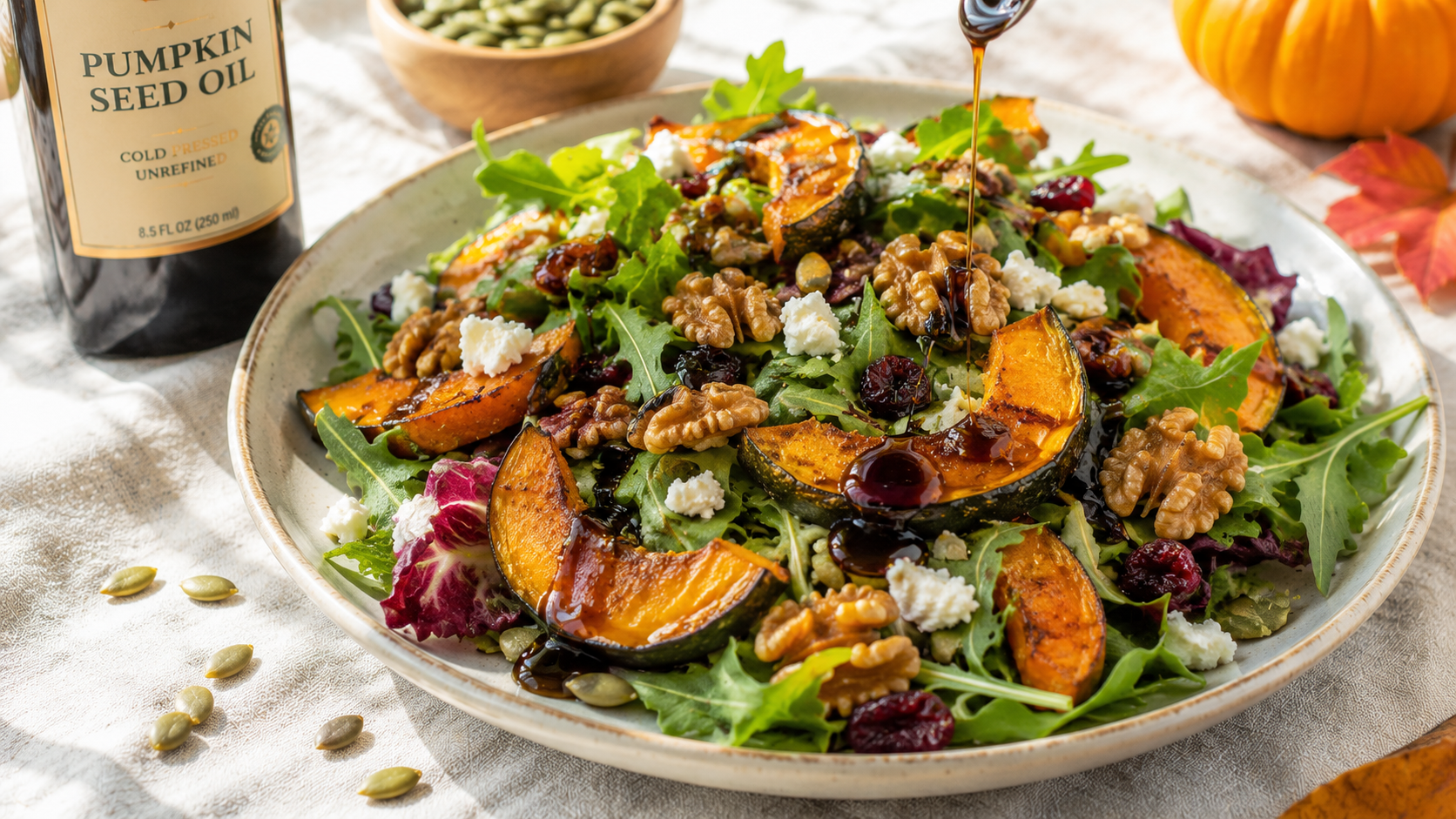 A vibrant autumn salad topped with roasted squash, walnuts, dried cranberries, and a rich drizzle of pumpkin seed oil. This wholesome dish brings together seasonal flavor, nourishing ingredients, and a warm harvest-inspired touch.
A Closing Thought
Pumpkin seed oil is a genuinely interesting food — nutritionally distinctive, flavorful, and with growing research behind some of its specific benefits, particularly for prostate health. It fits well in a varied, healthy diet that includes multiple sources of healthy fats.
The best approach to any food is neither to inflate its importance nor to dismiss it. Receive it with gratitude as one of the many provisions God has placed in creation — and use it with the practical wisdom that good stewardship requires.
Today's table is one more place to practice gratitude for what we've been given.
Note: This article is for general informational purposes. If you have prostate symptoms, cardiovascular concerns, or other health conditions, or take prescription medications, please consult a qualified healthcare professional.
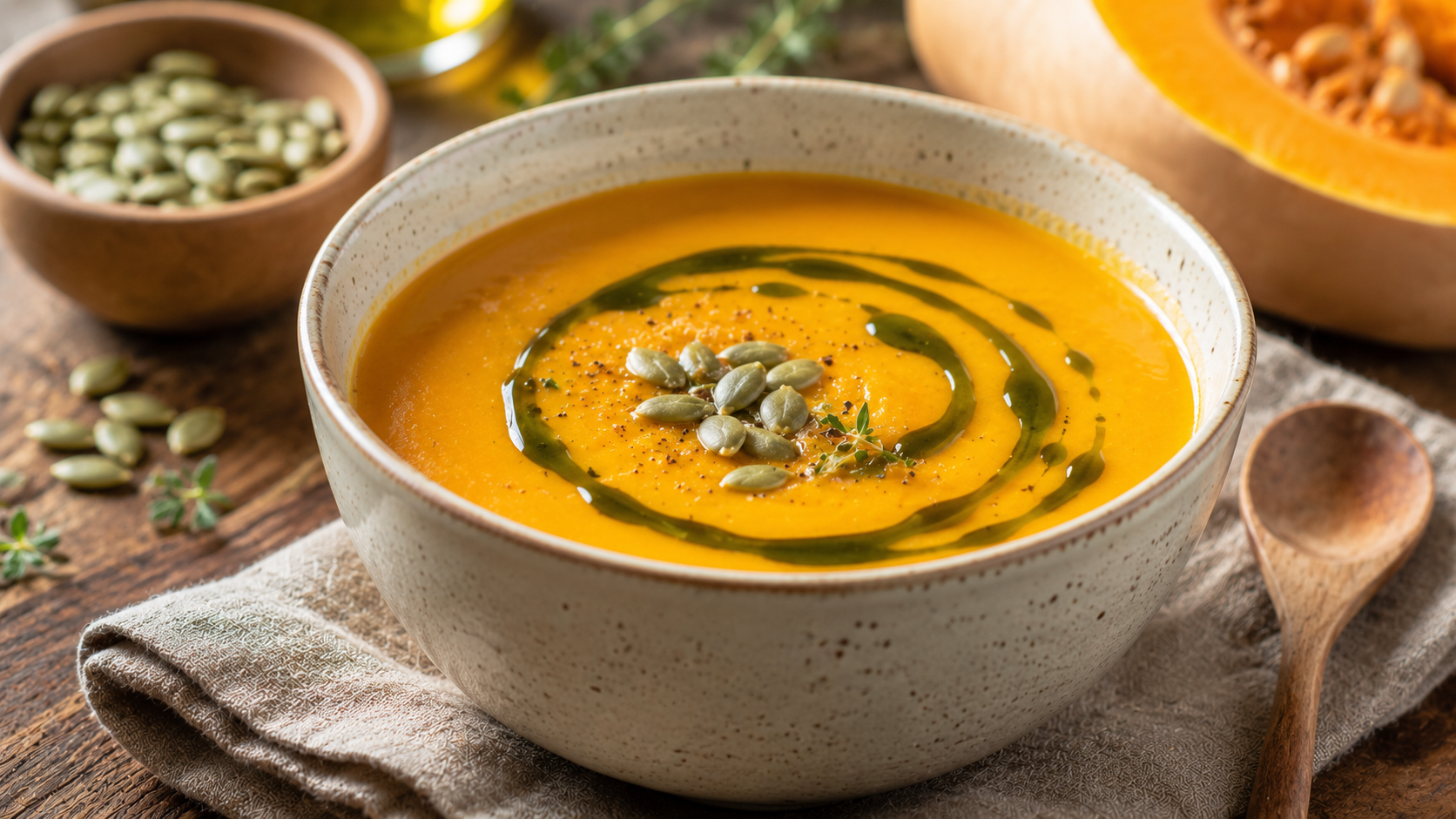 A cozy bowl of butternut squash soup finished with a rich swirl of pumpkin seed oil and crunchy pumpkin seeds. The deep nutty flavor of the oil adds warmth, color, and a nourishing touch to this comforting autumn dish.