Seven Plants Worth Knowing for Digestive Health
I'll be honest — I didn't used to think much about digestion until it started demanding my attention.
There was a season where I'd eat dinner and spend the rest of the evening feeling like my stomach hadn't gotten the memo. Nothing dramatic, just that low-grade, uncomfortable fullness that makes you not want to move, or sit, or really do much of anything. I started paying more attention to what I was eating. And then, slowly, to what else might help.
What I found wasn't magic. But it was genuinely useful — and a lot of it was already sitting in my kitchen.
Before I get into the specifics: none of this replaces a doctor's care. If your digestive symptoms are persistent, painful, or coming with things like unexplained weight loss or blood in the stool, please see someone. What follows is for the more ordinary territory of "that was too much at dinner" and "I always feel bloated on Thursdays."
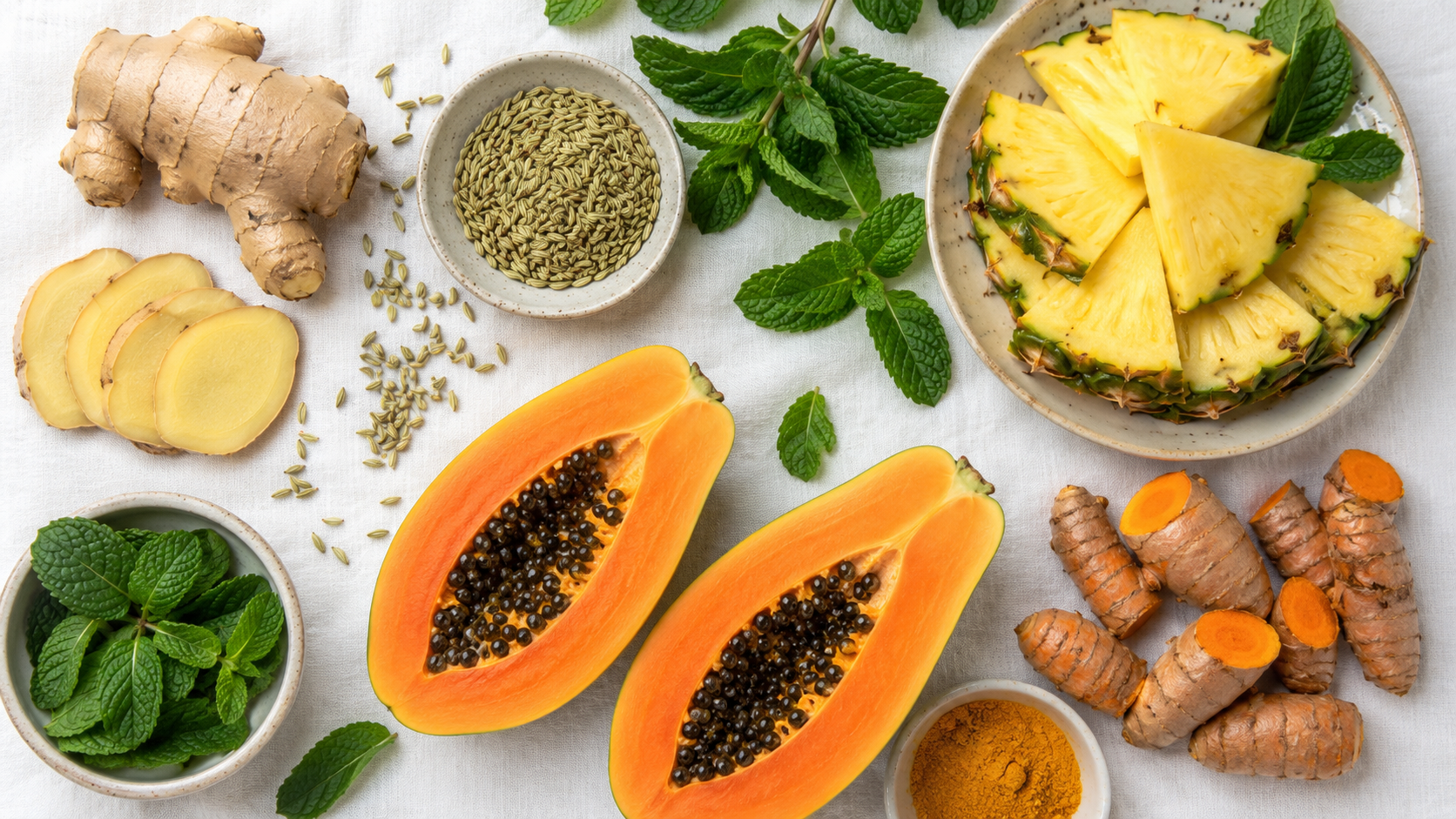 Fresh pineapple, papaya, ginger, fennel seeds, peppermint, and turmeric come together in a bright, wholesome flat-lay celebrating natural ingredients often associated with digestive wellness.
Pineapple
Pineapple contains bromelain, a family of protein-digesting enzymes that does something fairly unusual: it survives the stomach. Most enzymes break down in acidic environments, but research suggests bromelain retains its activity all the way through the gastrointestinal tract — with a half-life of around six to nine hours after it's absorbed.
That's genuinely interesting. The catch is that the amounts studied in research are usually found in concentrated supplements, not in a few slices of fruit. So eating fresh pineapple after a protein-heavy meal probably offers some benefit, but expecting pharmaceutical-level results from it would be getting ahead of what the evidence shows.
One caution worth mentioning: bromelain has antiplatelet properties, which means if you're on blood thinners or scheduled for any procedure, high-dose bromelain supplements are something to check with your doctor about first. And if you're prone to heartburn, the acidity in pineapple might not be your friend.
For most people, though, a few slices of fresh pineapple after a meat-heavy dinner is a pleasant and reasonable habit.
Papaya
Papaya gets talked about for similar reasons — it contains papain, another plant-based protein enzyme. The research picture is a little more complicated here, though, and I think it's worth being straightforward about that.
Papain's clearest evidence comes from studies where it was used in combination with other digestive enzymes, not on its own. In some randomized controlled trials on people with functional dyspepsia, multi-enzyme blends that included papain showed meaningful symptom improvements. But teasing out exactly what papain contributed, versus the other enzymes, is difficult. Standalone proof that eating papaya specifically improves digestion in the way a supplement might is still fairly limited.
None of that makes papaya a bad food. It's gentle, easy to digest, and a nice addition to yogurt, smoothies, or just eaten on its own. I just wouldn't put all your digestive hopes on it.
Pregnant women and anyone with certain food allergies should check with a doctor before eating it regularly in large amounts.
Ginger
If I had to pick one plant on this list with the most solid research behind it for digestive complaints, it would be ginger.
The National Center for Complementary and Integrative Health notes that ginger has been studied for multiple types of nausea and vomiting — including morning sickness, chemotherapy-related nausea, and post-surgical nausea — and that some evidence supports it helping. That's a more developed evidence base than you get for a lot of herbal remedies.
For everyday digestion, a cup of ginger tea after a heavy meal has been part of home remedy traditions across so many different cultures and centuries that it's hard to dismiss. In my experience, there's also something about the act of making a cup of tea — the few minutes of quiet, the warmth in your hands — that helps the body slow down after eating. That might be partly the ginger and partly just the pause.
If you're on blood thinners or have surgery coming up, check in with your doctor about larger amounts, since ginger can affect clotting. Otherwise, a warm ginger tea in the evening is about as low-risk a wellness habit as there is.
 A warm cup of ginger tea beside an open Bible captures a peaceful morning moment of prayer, reflection, and intentional wellness.
Peppermint
Peppermint is worth understanding correctly, because it works differently from the others on this list.
It isn't an enzyme or a digestion-stimulating plant. It's a muscle relaxant — specifically for the smooth muscle of the gut. That's why enteric-coated peppermint oil capsules have been studied for irritable bowel syndrome, and why some research shows they can help with cramping and abdominal pain.
The important thing to know is the flip side of that muscle relaxation: peppermint also relaxes the lower esophageal sphincter. Which is exactly what you don't want if you have acid reflux or GERD, because a relaxed sphincter lets stomach acid creep upward. For those people, peppermint tea after dinner can make heartburn noticeably worse.
If reflux isn't a problem for you, peppermint tea is a genuinely nice post-dinner drink. It's one of the few things I'd actively recommend as a simple end-of-the-day routine, especially as a replacement for that last cup of coffee.
Fennel
Fennel is probably the most underrated thing on this list, at least in American kitchens.
The seeds have been used after meals in Indian, Mediterranean, and Middle Eastern cultures for centuries — specifically for gas, bloating, and that uncomfortable cramped feeling. Whether you're at an Indian restaurant and they have a little bowl of fennel seeds near the exit, or your Italian grandmother kept them in a jar near the stove, the tradition is remarkably consistent across cultures.
Clinical research on fennel for digestion in humans is more suggestive than definitive, but the traditional use has a depth to it that's worth respecting. The mechanism — fennel appears to relax intestinal muscle and reduce gas-related spasms — makes reasonable biological sense.
A teaspoon steeped in hot water for five or ten minutes makes a mild, lightly sweet tea. Some people just chew a few seeds directly after eating. Either works.
Pregnant women should check with a doctor before using fennel regularly in more than culinary amounts, as it has mild estrogenic properties.
Artichoke
Artichoke actually has more formal clinical attention than I expected when I started looking into this.
Artichoke leaf extract has been studied specifically for functional dyspepsia — the kind of persistent, vague digestive discomfort that doesn't have an obvious structural cause. Some randomized controlled trials have found it helps with bloating, nausea, and the heavy feeling after eating. The evidence isn't conclusive, but it's more than most plants in this category can claim.
The main caution is for anyone with gallbladder disease. Artichoke stimulates bile production, which is part of how it helps digestion — but that same property can cause problems if you have existing gallstones or bile duct issues.
As a food, artichoke is wonderful roasted or steamed, and it fits naturally into a Mediterranean-style meal. If you're thinking about a supplement, that's worth discussing with your doctor first, especially if your digestion issues are ongoing.
Turmeric
Turmeric is everywhere right now, which means it's worth saying something carefully about it.
The research on curcumin — the active compound — for gut health and inflammation is genuinely interesting. Some of the anti-inflammatory effects have real biological plausibility. And using turmeric as a spice is something I'd encourage without much hesitation. A pinch in rice, soup, or eggs is a flavorful addition with no meaningful downside.
The concern is specifically with high-dose, concentrated curcumin supplements. The National Center for Complementary and Integrative Health has noted that these have been associated with liver problems in some people. That's not a reason to avoid turmeric in food — it's a reason to treat high-dose curcumin supplements with more caution than a cooking spice.
If you have liver disease or take multiple medications, please check with your doctor before starting any curcumin supplement.
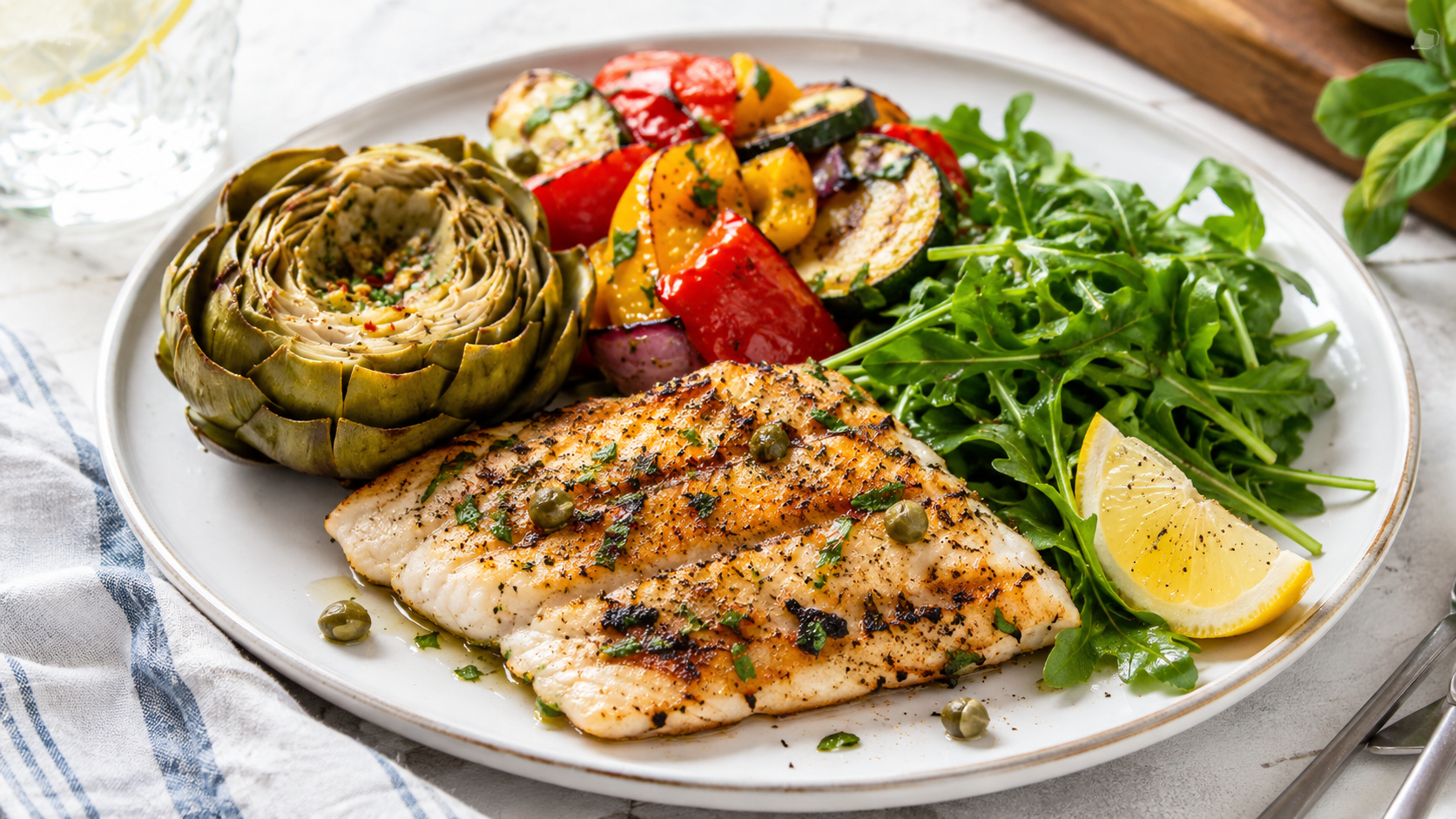 A fresh Mediterranean-style plate with grilled fish, artichoke, roasted vegetables, and leafy greens offers a colorful, balanced meal full of wholesome flavor.
A Closing Thought
There's a verse I come back to sometimes when I'm thinking about the body: "Whether therefore ye eat, or drink, or whatsoever ye do, do all to the glory of God" (1 Corinthians 10:31, KJV).
I don't think that means every meal has to be a spiritual exercise. But it does reframe what we're doing when we take care of our bodies. It's not vanity or obsession. It's a kind of stewardship — tending to what we've been given so we can keep showing up for the things and people that matter.
The plants above are not miracle cures. They're tools. Small ones, but real ones. Used alongside eating slowly, not overeating, moving a little after dinner, and actually getting enough sleep — they can be part of a life that takes the body seriously without making the body everything.
That seems like the right balance to me.
Note: This is general health information, not medical advice. If you have ongoing symptoms, take prescription medications, or have a health condition, please consult a doctor or pharmacist before adding herbal supplements to your routine.