Sorted: the Christian men's magazine that challenged Britain's lads' mag culture
Written by Duncan Williams for CFP
There was a time when you could hardly walk into a British newsagent or supermarket without being confronted by the unmistakable covers of Loaded, Nuts and FHM. During the late 1990s and throughout the 2000s, Britain's so-called lads' mag culture was at its height. Barely dressed models, sexualised humour, celebrity gossip and a particular brand of laddish bravado had become fixtures of the publishing landscape.
For a generation of boys and young men, these magazines helped shape popular perceptions of masculinity. The message was often uncomplicated: being a man meant having a good time, pursuing pleasure, enjoying a few beers and never taking yourself too seriously. There was plenty of entertainment, but rather less encouragement to think about responsibility, relationships, emotional maturity or the kind of character that makes a good husband, father or friend.
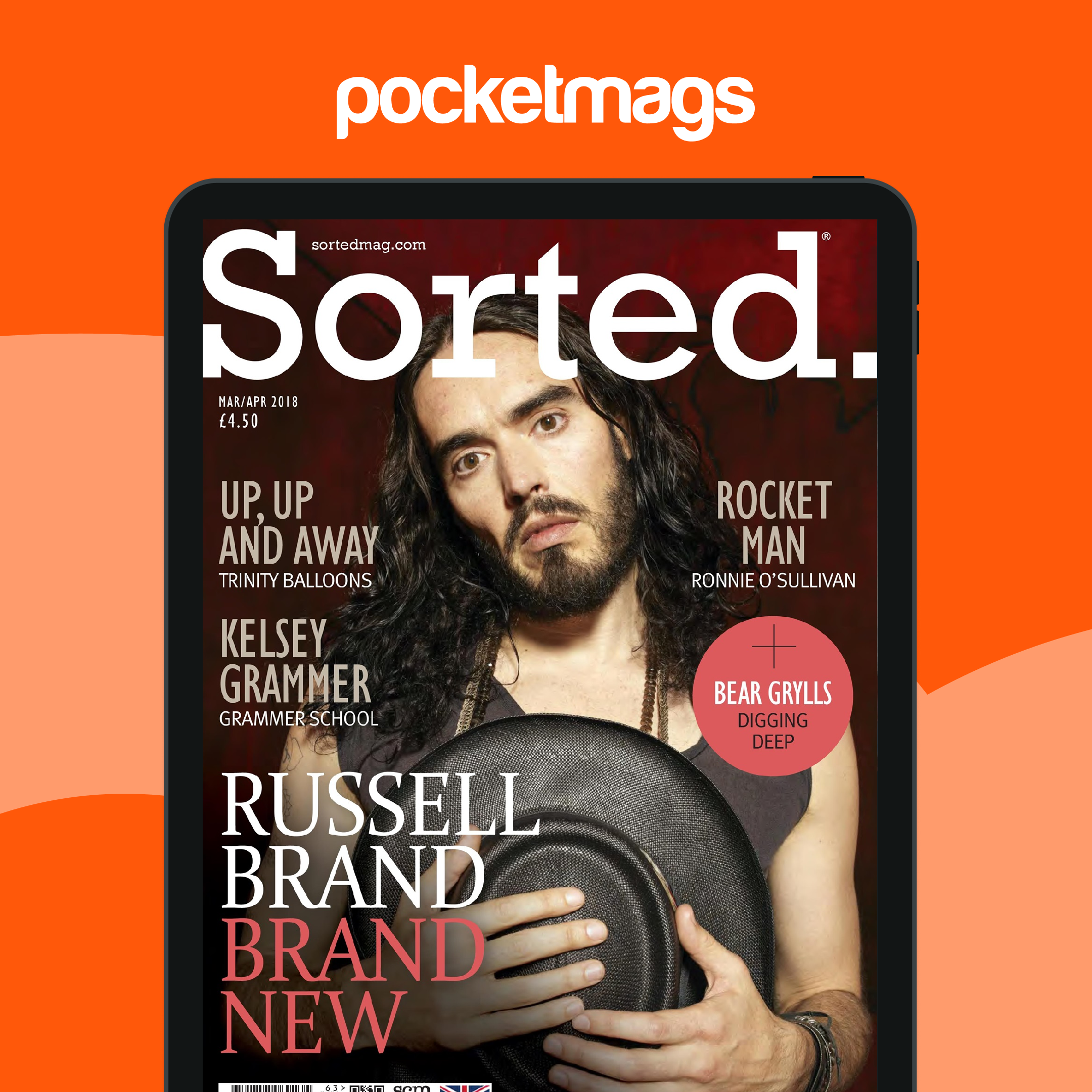
With the benefit of hindsight, we are seeing that whole cultural moment through a much sharper, more critical lens. High-profile cases, including the recent convictions of Russell Brand for rape and sexual assault, have shone a harsh light on some of the darker undercurrents of that noughties lad-culture era. Brand's case remains the subject of public discussion, with his legal team continuing to contest the findings of the court. He maintains his innocence and was himself featured on the cover of Sorted some years ago, at a time when he was first speaking publicly about his growing interest in Christianity.
Even so, the wider conversation has prompted many of us to revisit the attitudes, power structures and celebrity worship that were so prevalent during the peak years of the lads' mag boom. Back then, brash behaviour was often laughed off, excused or even celebrated. Today, we are far more alert to how such attitudes could normalise disrespect, entitlement and the abuse of power. It makes the quieter counter-mission of publications such as Sorted feel all the more prescient.
It was into that cultural environment that Sorted magazine emerged, with a rather different proposition: a men's magazine with morals.
Having been involved in the publishing company behind the magazine, Son Christian Media Ltd (SCM), as one of its directors, I had a ringside seat as we sought to establish something that was both commercially credible and unapologetically informed by Christian values. Looking back, it was an ambitious undertaking and, in many respects, a fascinating publishing experiment.
SCM had first explored the appetite for Christian content with a pastiche of a traditional red-top newspaper called simply The Son. With its full-on, faith-focused news splashes, it proved successful, paving the way for a glossy Christian men's magazine to follow.
The Sorted brand name began life in 2004, the brainchild of publisher Russell Church, also a man of faith who ran a gospel music recording studio in Brighton. In 2007, the magazine was given a new direction and identity, adopting the strapline 'The men's mag with morals!' It was a deliberately provocative response to the prevailing publishing culture, but the intention was never to produce a church magazine disguised as a men's lifestyle title.
Quite the opposite.
We wanted to create something that men would actually enjoy picking up and reading, regardless of whether they attended church, considered themselves religious or had any particular interest in Christianity. It needed to compete on the same terms as its secular counterparts, with engaging editorial, strong photography, celebrity interviews, sport, motoring, gadgets, humour and lifestyle features. The difference was that beneath the familiar magazine format lay a much more considered understanding of what it meant to be a man.
That distinction was important. Christian publishing has sometimes struggled with the temptation to speak primarily to its existing audience. We wanted Sorted to reach beyond the familiar boundaries of the Christian marketplace and find a place in the wider world of mainstream men's publishing.
Getting there was far from straightforward.
The original venture had encountered considerable financial difficulties and accumulated debt, while persuading the commercial publishing industry that there was a viable market for a Christian men's magazine proved challenging. Advertising agencies understood the established lads' mag readership. They knew how to sell advertising around its content and recognised the commercial appeal of its audience. A magazine that wanted to talk about faith, integrity and personal responsibility while competing for the same readers was a much harder proposition for them to understand.
Distribution presented another significant hurdle. Securing a presence in mainstream retail outlets, including WH Smith, through distributors such as Menzies and in supermarkets such as Tesco, was an uphill struggle. In the United States, Christian publications had a more established retail presence. In Britain, however, an openly Christian men's lifestyle magazine sitting alongside Loaded, FHM and the other mainstream titles was still something of a novelty.
We had to demonstrate that Sorted was not simply a niche publication for churchgoers, but a magazine with genuine editorial appeal and a readership that extended well beyond the Christian community.
Much of the editorial vision behind the relaunch was driven by founding editor Steve Legg, a children's magician who launched the revamped magazine while working in Belfast in 2007. Working alongside Hugh Southon, editor of The Son, who brought considerable experience of the national tabloid newspaper world, including time spent at Rupert Murdoch's The Sun, the team set about establishing a distinctive identity for the title. My involvement as a director of Son Christian Media gave me a perspective on the wider challenge of turning that editorial ambition into a sustainable publishing business.
One particularly significant achievement was securing Bear Grylls as a regular columnist.
As it happened, around this time he lived very near to me, on a houseboat moored along Chelsea Embankment, and was known to attend Nicky Gumbel's Holy Trinity Brompton Church.
Grylls was already becoming internationally recognised for his extraordinary adventures and television appearances. His Christian faith and association with the Alpha course made him a particularly natural fit for the magazine. He brought a profile and credibility that few Christian publications could command.
Here was a man whose public image was built around courage, physical endurance, determination and pushing beyond perceived limits. Yet his contributions to Sorted also explored the importance of character, perseverance, faith and the values that sustain a person when life becomes difficult.
It was a powerful contrast to the rather superficial masculinity often celebrated by the lads' magazines. Strength did not have to mean aggression, sexual conquest or bravado. It could mean self-discipline, humility, courage, compassion and taking responsibility for your actions.
Sorted also attracted some remarkable interview subjects. Among those featured were Sir Anthony Hopkins and Gary Oldman, demonstrating that its editorial ambitions extended well beyond the familiar Christian media circuit.
The magazine's appeal lay partly in its refusal to be pigeonholed. Readers might find themselves turning from a feature about gadgets, sport or entertainment to a thoughtful article about addiction, relationships, financial responsibility, mental health or personal accountability. There was room for humour and entertainment, but also for subjects that mattered to men's lives.
Importantly, it did not need to preach at its readers. The Christian ethos was woven into the editorial approach rather than imposed as a running commentary. The intention was to engage men where they were, offer something worthwhile and leave space for them to consider bigger questions about life, purpose and faith.
That, I think, was one of its most important contributions.
The magazine went on to build an international readership, reaching readers in more than 21 countries. Its circulation eventually peaked at an ABC-audited 33,824 in 2013, a considerable achievement for a publication operating in such a competitive market.
Looking back at the noughties, it is interesting to consider just how much the cultural conversation around masculinity has changed. The lads' mag phenomenon, once seemingly unstoppable, has largely disappeared from newsagent shelves. Loaded, Nuts and FHM are no longer the cultural reference points they once were. Meanwhile, discussions about male mental health, loneliness, addiction, relationships, pornography, fatherhood and the pressures facing younger men have become increasingly prominent.
Of course, the decline of print lads' magazines does not mean that the attitudes they sometimes promoted have disappeared. Much of that culture has migrated online, where social media, pornography and a new generation of influencers continue to offer young men competing and sometimes deeply unhealthy ideas about identity, success and relationships.
In that respect, the questions Sorted was trying to address remain remarkably relevant.
Perhaps its greatest significance was that it challenged the assumption that Christian values and mainstream popular culture had to occupy separate worlds. It demonstrated that a publication could be commercially ambitious, entertaining and culturally engaged without abandoning its principles.
I am proud to have played a part in that undertaking through Son Christian Media, yet saddened that both my co-directors Steve Legg and Hugh Southon have passed on. It was not an easy journey, and the commercial obstacles were considerable, but there was something genuinely worthwhile about attempting to offer men an alternative to the prevailing stereotypes of the time.
Today, Sorted continues in digital form, carrying forward something of the original vision established by Russell Church and developed by Steve Legg and the wider publishing team.
Print publishing has changed almost beyond recognition since those days. Yet the underlying challenge remains: how do we communicate with men in ways that are honest, engaging and relevant, while encouraging a healthier understanding of masculinity?
Back in 2007, putting the words 'men's magazine' and 'morals' together was enough to raise a few eyebrows. Perhaps that was precisely why it needed doing.
Sorted set out to prove that you could have a men's magazine with a sense of humour, a taste for adventure and a genuine interest in the world, without leaving your values at the newsagent's door.
( Image: Son Christian Media 📸 )