The Mathematics of Harmony: Bach’s Cello Suite No. 1
When we say that music “sounds good,” we do not usually think about numbers. We simply notice that a melody feels calm, that two notes seem to belong together, or that a chord gives us a sense of arrival.
Yet beneath some of the sounds we recognize so naturally lies a remarkable idea: music can be shaped by mathematical relationships. Numbers cannot explain everything we experience in music, but they can reveal simple patterns that create balance, stability, and harmony.
This is where our new series, The Mathematics of Music, begins. We will explore how music connects with numbers, patterns, proportion, and order—and how these connections can deepen our understanding of what we hear.
Hearing the Mathematics
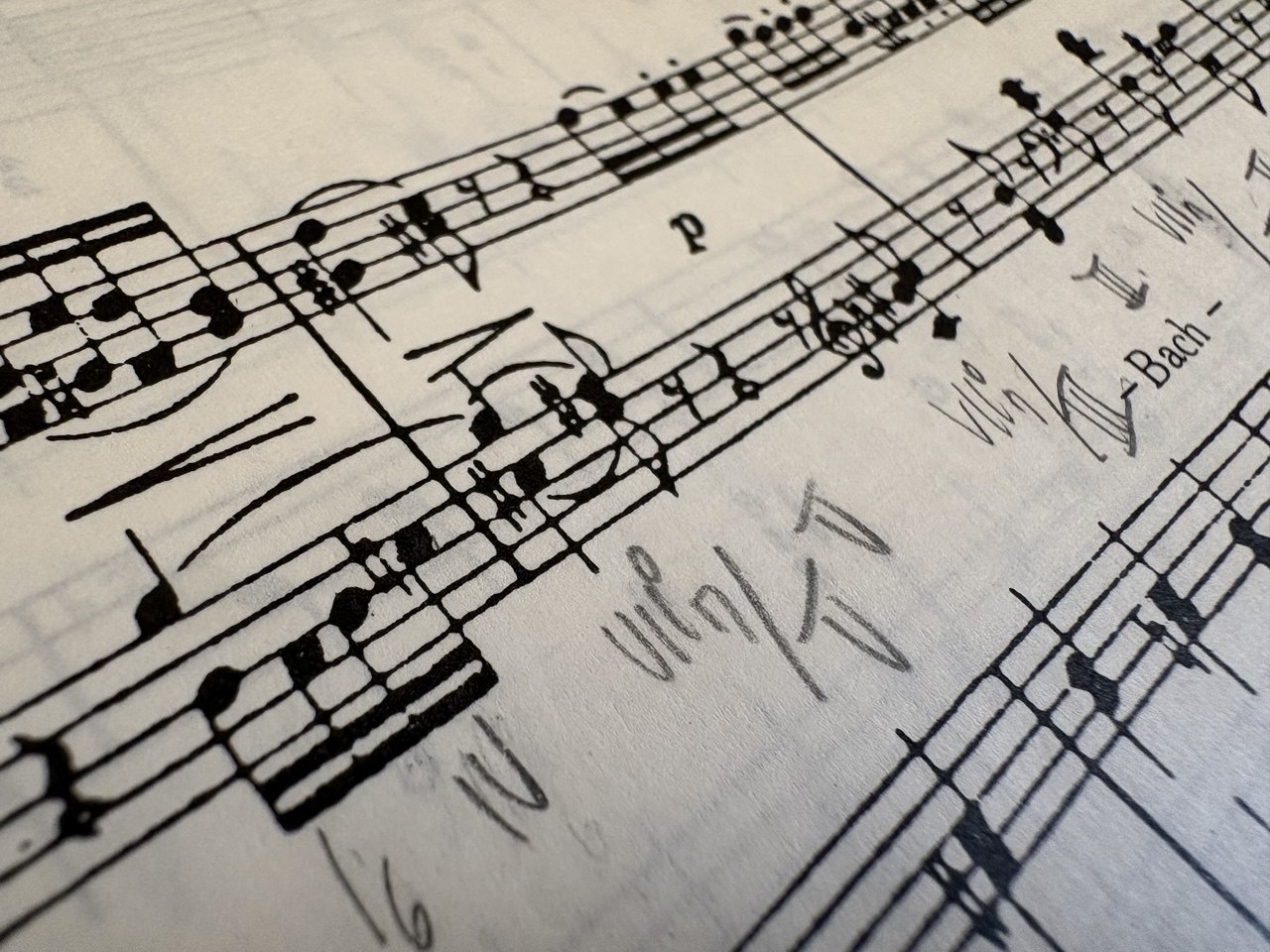
J. S. Bach’s Cello Suite No. 1 in G Major begins with one of the most familiar movements in the cello repertoire: the Prélude. The music unfolds through patterns that return and develop, creating a musical line that feels natural and continuous.
We do not hear it as a collection of mathematical relationships. We hear a musical line taking shape. Yet the structure is there whether or not we notice it—and that is what makes the connection between mathematics and music so interesting.
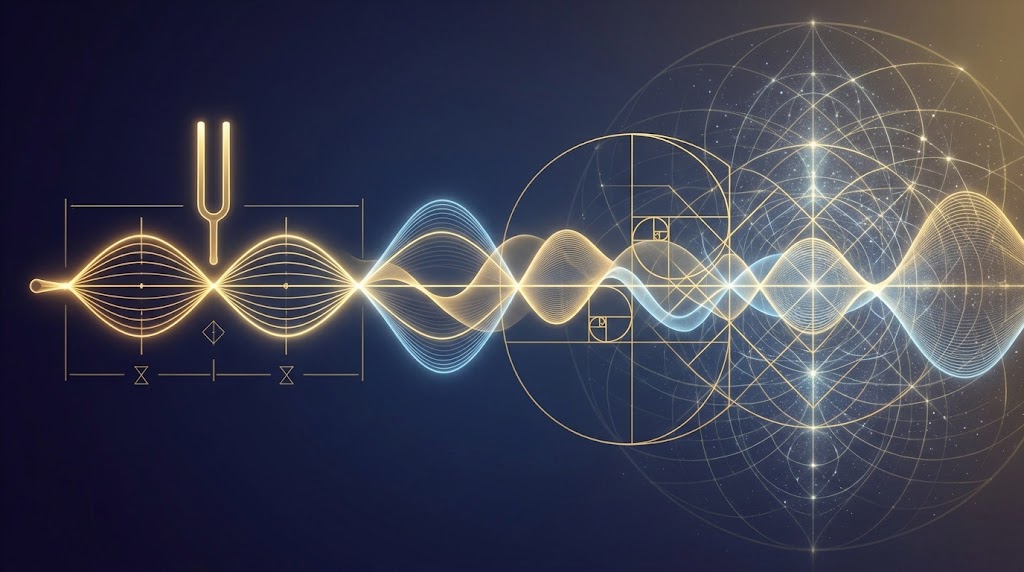
One of the simplest examples can be found in musical intervals. An octave corresponds to a frequency ratio of 1:2, a perfect fifth to 2:3, and a perfect fourth to 3:4. Music begins to show us something remarkable: numbers can be heard.
These simple numerical relationships were famously explored by the ancient Greek philosopher and mathematician Pythagoras, who recognized connections between simple whole-number ratios and musical intervals.
We do not need to calculate a ratio before enjoying a beautiful sound. The mathematics works quietly in the background. Perhaps that is part of the beauty.
More Than Numbers
It would be easy to think that mathematics explains why music is beautiful. But it does not. Numbers can describe relationships between frequencies and help us understand intervals, patterns, rhythm, tuning, and proportion. They reveal part of how music works, but not the whole of it.
Music is more than its measurements. Even Bach’s Prélude is not beautiful simply because its notes can be analyzed. Its beauty comes through the way those notes move, interact, return, and lead somewhere unexpected. Structure gives the music a framework, but what we experience within it is much richer than a formula.
The more closely we look at music, the more we may notice that beauty often has order beneath it—patterns, relationships, and a balance between repetition and change. The more we notice these things, the richer the music becomes.
The Wisdom Behind Order
In Proverbs 8, wisdom is personified as present with God during the creation of the world, offering a picture of the wisdom and order woven into creation.
“When he established the heavens, I was there; when he drew a circle on the face of the deep.” — Proverbs 8:27
Music does not give us a mathematical formula for understanding God. But when we discover order within something as intangible as sound, it gives us another reason to pause and wonder.
We hear music with our ears, but we can also notice the patterns and relationships beneath it. Perhaps that is one of the gifts of learning music: it teaches us to pay attention.
The more carefully we listen, the more we may discover that what seems simple on the surface can hold a surprising depth of order and beauty. The mathematics is there. But so is the mystery.
You can find Bach’s complete Cello Suites here. (affiliate link)
Read previous: Mendelssohn's “Notturno”: The Beauty of Moments That Cannot Last