The Season I Kept Skipping
A friend of mine — I'll call him David — grew up in the same kind of church I did. Contemporary. Energetic. The kind of place where December meant Christmas music from the first Sunday of the month, sometimes earlier. Bright lights, full production, the works. He loved it. So did I, honestly.
A few years ago, David moved to a new city and started attending an Anglican church — not for any theological reason, mostly just geography. He walked in on the first Sunday of December expecting what he'd always known.
Instead he found the room quiet. Dimmer than usual. Purple fabric draped across the front. The congregation was reading something from Isaiah — words about longing, about darkness, about waiting for a light that hadn't come yet. There was no Christmas music. The sermon was about a people who had been promised something and were still, centuries later, holding their breath.
David texted me that afternoon. "I think I've been skipping something," he wrote. "I just don't know what it was yet."
I knew exactly what he meant. Because I'd been skipping it too.
For most of my life, I'd heard the words — Advent, Lent, liturgical calendar — without really knowing what they referred to. The seasons were there in the background, vaguely associated with Catholic and Episcopal churches, not really mine to claim. I knew about Christmas and Easter. I knew about Palm Sunday and Good Friday. But the idea that these things formed a system, a yearly rhythm the whole church was meant to live inside — that came to me much later. College, actually. A Bible study that went deeper than I expected, and suddenly all these pieces I'd been holding separately snapped into something larger.
I remember the strange feeling of realizing I'd been living near something my whole life without ever fully stepping into it. All those Decembers. All that rushing toward Christmas without ever sitting in the longing that makes Christmas mean something.
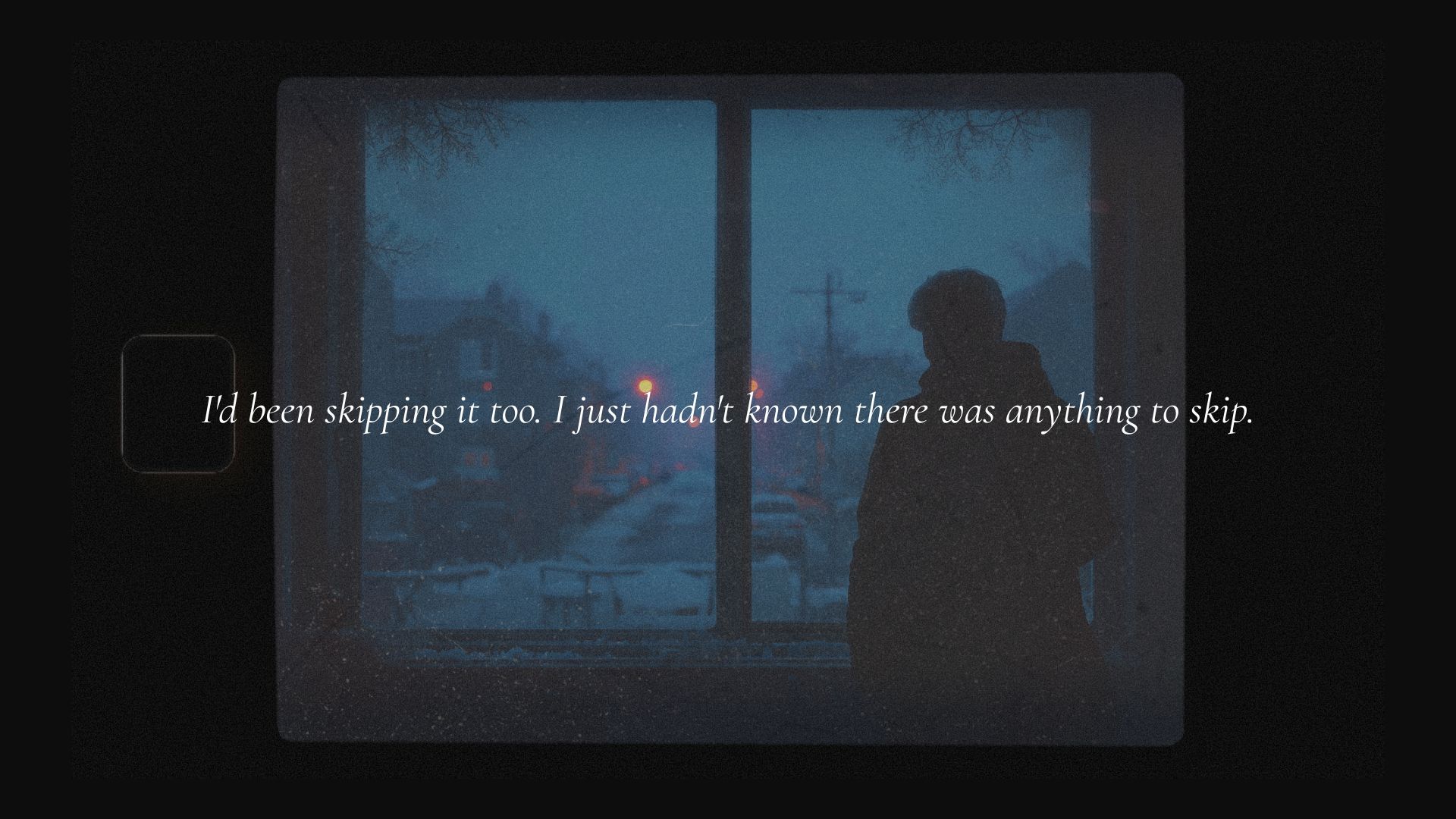
I'd been skipping it too. I just hadn't known there was anything to skip.
What I learned, slowly, is that Advent is the season that begins the church's year. Four Sundays before Christmas. And the first thing it asks you to do is not celebrate.
It asks you to wait.
The word itself comes from the Latin for arrival — which is a strange name for a season that spends most of its time in the not-yet. That's intentional. Advent invites the church to step imaginatively into what it felt like to be Israel before the first Christmas. Not Israel in a single bad year. Israel across centuries of silence. Generations of people who had been given a promise and had not seen it kept. Who had grown old and died still waiting. The silence had stretched so long that some had stopped expecting anything at all.
And here is what struck me when I first really sat with that: we are still waiting. Israel was waiting for the first coming. The church is waiting for the second. The posture is not just a historical imagination exercise — it's the actual shape of where we are. The God who kept his promise to Israel is the same God who has promised to return. Advent holds both, and asks us to feel the weight of that honestly. To read Isaiah's words — oh, that you would rend the heavens and come down — not as ancient history but as a cry that still belongs to us.
Sit in that. Feel, in some small way, what it costs to hold a promise you cannot yet see fulfilled.
The culture around us runs the opposite direction. By the first of December — sometimes earlier — Christmas is already fully present. Music, decorations, the whole infrastructure of celebration. Nothing wrong with any of it. But the church has always had a quiet instinct to say: not yet. The waiting is real. The longing is not a problem to be solved by skipping ahead.
David told me later that he kept going back to that Anglican church all through December. Not because the services were more impressive than what he'd known. Because something in him needed what they were doing — the slowness, the darkness before the light, the willingness to stay in the not-yet a little longer.
He said it made Christmas mean more. Not in a sentimental way. More like — the arrival actually felt like an arrival.
I've thought about that a lot. We talk about Christmas joy like it's something we generate, something we owe each other, a mood to be maintained from Black Friday through December 26. And then it collapses, almost overnight, and we're not sure what happened.
But maybe the joy was never meant to be generated. Maybe it's something that rises in people who have actually been waiting for it. In people who let themselves feel the absence before they celebrated the presence.
That's what Advent is for. Not to make Christmas harder to reach. To make the reaching mean something.
I don't know what December looks like in your church. Maybe it looks like David's first church — full Christmas production from Sunday one. Maybe you've been practicing Advent for years and it's already part of your rhythm. Maybe, like me, you grew up near this season without ever quite stepping inside it.
But I'll tell you this honestly: I still don't always know how to wait well. December comes, and the calendar fills up, and the culture's version of Christmas is loud and everywhere, and sitting in the longing feels like swimming upstream. I'm still learning this. Still finding my way into a season I spent most of my life skipping.
If you are too — you're not behind. You're just beginning.
Is there a part of the Christmas season you've always rushed toward — and what might it feel like to slow down and wait for it instead?