Trying to Lose Weight — But Losing Muscle Along With It?
The first thing most people check when starting a diet is the number on the scale.
Watching it drop 4 or 5 pounds in just a few days feels like proof that the effort is paying off. But losing weight quickly doesn't automatically mean you're losing it in a healthy way. Along with fat, you may be losing water — and muscle too.
This risk goes up especially when meal portions are cut too drastically, or when someone tries to lose a large amount of weight in a short window. The muscle that actually holds your body together is often the first thing to weaken.
Scripture reminds us that our bodies were never meant to be objects for chasing a certain look — they're a meaningful tool for living out the life God entrusted to us. Caring for your health should start from a posture of stewardship over the body God gave you, not a competition to look thinner.
 A woman incorporates stair climbing into her daily walk. Simple activities such as walking and climbing stairs can improve strength, endurance, and overall physical well-being.
Why Rapid Weight Loss Often Costs You Muscle
When calorie intake drops sharply and suddenly, the body starts pulling from its stored resources to make up the difference.
And it doesn't selectively burn only fat. If food intake is too low, or protein intake falls short, the body will break down muscle tissue for energy too.
There's real research behind this: athletes who cut weight rapidly over just 10 days lost a much larger share of that weight from lean tissue — muscle, water, and related mass — rather than fat, compared to athletes who lost a similar amount more gradually over 28 days, where the proportion of lean tissue lost was noticeably smaller.
That can lead to a familiar chain of effects: reduced muscle mass, a lower resting metabolic rate, fatigue and low energy that shows up more easily, reduced physical performance, and the classic yo-yo pattern of regaining weight after the diet ends.
The scale might look like it's moving fast at first, but if muscle is disappearing along with the fat, your body ends up burning fewer calories than before over time — which means it becomes easier to gain weight back eating the exact same amount you used to.
The body God gave you was never meant to be forced through something drastic in a short window. Respecting its actual limits and caring for it steadily is the wiser path.
Muscle Isn't Just for Strength
It's easy to assume muscle only matters for athletes or people trying to look a certain way. But muscle is a genuinely important tissue for everyone's health.
Beyond simply letting you move through daily life, muscle also: maintains your resting metabolic rate, supports healthy blood sugar regulation, protects your back and joints, maintains balance, reduces fall risk, and helps preserve independent living later in life.
Muscle matters more, not less, as you age. Things that felt effortless when you were younger — standing up, walking, climbing stairs — can become genuinely difficult once muscle mass declines.
A genuinely healthy approach to weight loss was never just about the number dropping. It includes preserving your body's actual function, and keeping the strength you need to carry out whatever you've been called to do.
How to Lose Weight Without Losing Your Muscle
Protecting muscle while losing weight isn't complicated or exotic. Sticking with the basics matters more than any dramatic plan.
Don't rush the process. Losing a lot of weight quickly can produce visible results, but it's genuinely hard to sustain.
The CDC and most major health organizations generally recommend around 1 to 2 pounds (0.5–1 kg) per week as a safe, sustainable pace. At this rate, weight loss tends to come mostly from fat rather than muscle, and it's associated with a better chance of keeping the weight off long-term. Losing faster than this raises the risk of gallstones, muscle loss, nutritional deficiency, and a slower metabolism.
A sustainable habit matters more than a fast result. Just as a life of faith isn't completed overnight, a healthy body is built through consistent discipline and training over time. Patiently sustaining small changes is what actually gets you there.
Keep protein in the picture, even while eating less overall. A lot of people cut both portions and side dishes drastically when dieting. But reducing calories shouldn't mean cutting out the nutrients your muscles actually need to hold onto themselves.
It's worth including a reasonable amount of protein at every meal — lean meat, fish, eggs, tofu and beans, milk and unsweetened yogurt, chicken breast, and nuts are all good options.
The exact amount varies by weight, activity level, and health status, so it's worth checking with a doctor or dietitian for a number specific to you. But research consistently shows that deliberately keeping protein intake a bit higher than usual during a diet helps reduce muscle loss.
What matters isn't just eating less. It's asking not only "what should I cut?" but also "what do I need to keep, for the sake of my health?"
Food was never meant to be something you fear and avoid with guilt — it's daily provision to receive with gratitude and choose wisely. Self-control isn't starving yourself; it's the ability to choose what you actually need.
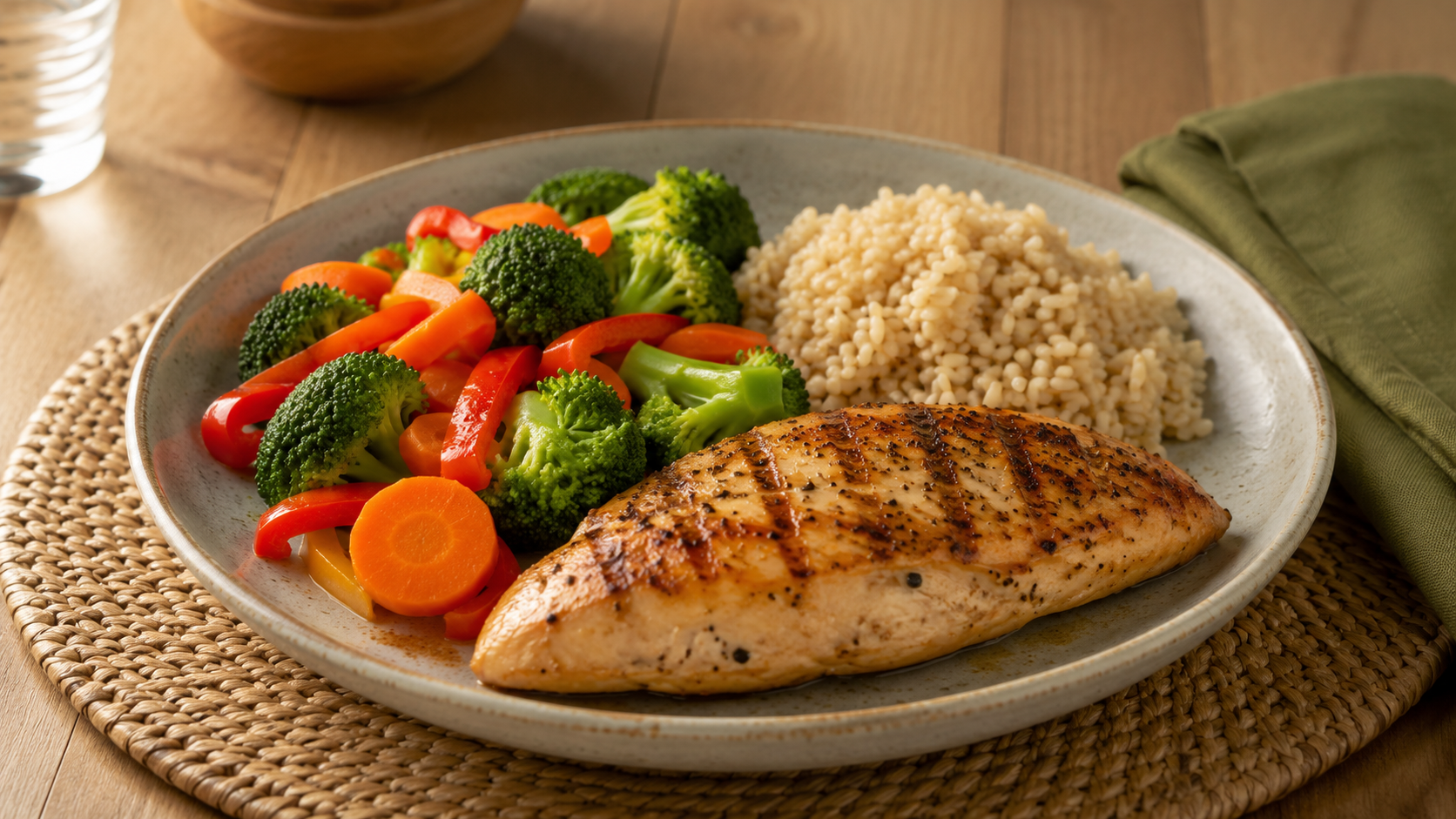 A balanced meal combines lean protein, colorful vegetables, and a moderate serving of whole grains. Adequate protein and nutritious foods can help protect muscle while managing body weight.
Add strength training. Muscle you don't use gradually shrinks. Give it the right stimulus, though, and your body decides it's worth holding onto.
You don't need a gym to do this. At home, you can genuinely build strength with: slow sit-to-stands from a chair, wall push-ups, light squats, stair climbing, arm exercises using a water bottle, and resistance band exercises.
If you're looking for an easy way to start, [a set of resistance bands] makes it simple to add real strength training at home without any equipment or gym membership (affiliate link — I may earn a small commission at no extra cost to you).
You don't need to start with long sessions. Doing 15 to 30 minutes, 2 to 3 times a week, consistently, is enough to matter.
Exercise was never meant to be about showing off a certain look. It can be training for living a genuinely healthy life. What matters is being grateful that you're able to move your body at all, and starting at a level that actually fits you.
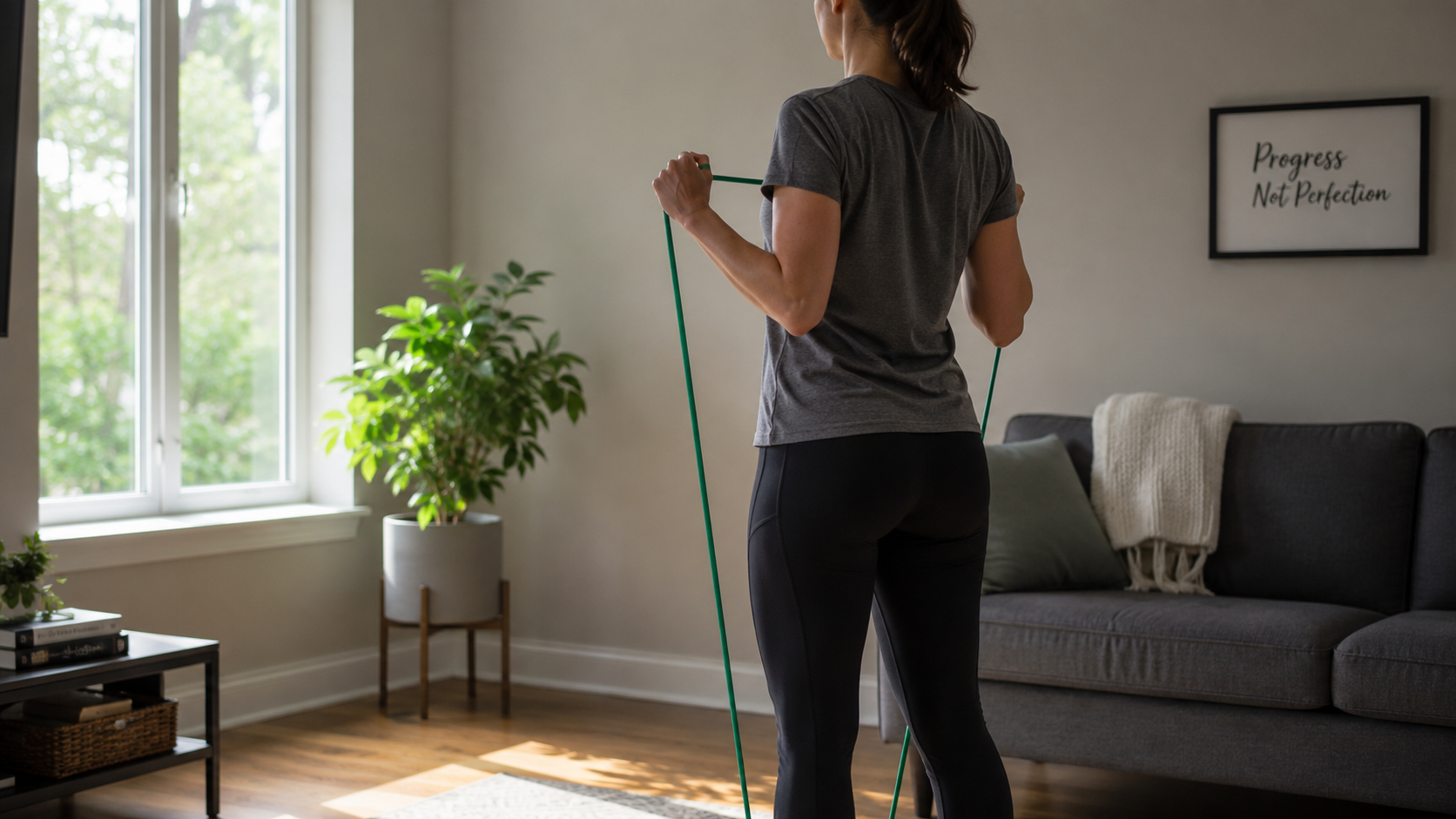 A woman uses a resistance band for a simple strength workout at home. Regular resistance exercise can help preserve muscle mass during weight loss and support long-term health.
Don't rely on cardio alone. Walking, running, and cycling genuinely help cardiovascular fitness and body fat reduction.
But doing a lot of cardio while eating very little raises your risk of losing muscle.
The best approach combines cardio and strength training in a reasonable balance — walking three to five times a week, for example, with two or three of those sessions including a short strength routine.
Just as balance matters in life generally, exercise shouldn't lean too heavily on one method either.
Get enough rest and sleep. Sleep is one of the most overlooked factors in both dieting and muscle preservation.
Poor sleep builds fatigue, saps motivation to exercise, and makes appetite harder to regulate. Muscles also need adequate rest to actually recover after a workout.
Even in a busy life, rest shouldn't be dismissed. Just as God built rest into the order of things, our bodies need real time to recover too.
Resting well isn't laziness — it's a responsible choice for your health.
Signals Worth Watching More Than the Scale
While dieting, it's worth paying attention to how your body is actually changing, not just the number on the scale.
If you notice any of the following, it's worth reconsidering your approach: getting tired more easily than before, struggling more with stairs, finding it harder to lift things, declining physical performance, dizziness or low energy, unusual sensitivity to cold, reduced focus and increased irritability, or a body that's lost weight but feels soft and lacking in tone.
These signs may point to nutritional shortfall or muscle loss, not just fat loss.
Losing weight on the scale, by itself, isn't proof of success. What actually matters is whether your body is healthier and more energetic than it was before.
Reconsidering the Real Purpose of Managing Your Health
We sometimes start a diet by comparing ourselves to someone else's appearance.
A photo, a number on a scale, a clothing size — these can feel like they say everything about health. But a person's worth was never determined by their body weight.
God doesn't look only at appearance. He looks at the heart and the whole of a life.
Working toward a healthy weight is worthwhile. But it shouldn't start from dissatisfaction with your body, or self-loathing. It's genuinely hard to become healthy while hating the body you currently have.
Instead of pushing yourself with "why can't I do better than this," try asking, "how can I take better care of this body God entrusted to me today?"
That shift turns dieting from a punishment into an act of care.
The Takeaway
The goal of losing weight was never just about a lower number.
What matters is building a body that can move well, carry out what you've been given to do, and love and serve family and neighbors.
Weight lost quickly tends to come back quickly. But change built through a balanced diet, reasonable exercise, and enough rest — protecting your muscle along the way — is far more likely to actually last.
If you want to lose weight, start by stepping away from starving and pushing your body too hard. Change your eating habits slowly, keep protein in the picture, use your muscles, and rest enough.
A healthy diet was never a fight against your own body. It's training for a healthier life, built on gratitude for the body God gave you.
Value today's strength, health, and sustainable change more than the number on the scale.
This article is intended as general health information and is not a substitute for individual diagnosis or treatment. When planning a weight loss approach, please consult a doctor or registered dietitian based on your own health situation.