What Can Beethoven’s Pathétique Sonata Teach Us? Learning from an Imperfect Teacher
In life, we all encounter teachers, mentors, or people who help guide us. Yet even the people we respect most are imperfect. What should we do when a teacher or mentor disappoints us, misunderstands us, or falls short of our expectations?
The story of Joseph Haydn (1732–1809) and Ludwig van Beethoven (1770–1827) offers an answer. Their teacher-student relationship was complicated, yet Beethoven still gained valuable lessons from Haydn.
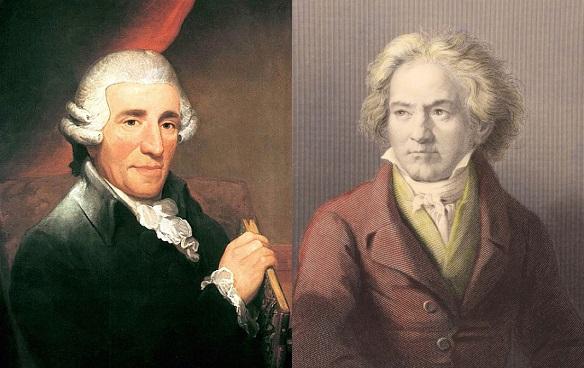 Joseph Haydn and Ludwig van Beethoven
When Beethoven was a young musician, Haydn was one of the most respected composers in Europe. After meeting the young Beethoven in Bonn and hearing of his promise as a composer, Haydn agreed to take him on as a student in Vienna. It was a remarkable opportunity for a young composer hoping to establish himself.
Yet their relationship was not always easy. Beethoven was sometimes dissatisfied with Haydn’s instruction, and their very different personalities created tension. Beethoven eventually sought guidance from other teachers as well, making their relationship more complicated than a simple teacher-student success story.
Learning from a Teacher’s Limitations
Despite the challenges, Beethoven still gained valuable lessons from Haydn. Haydn was a master of musical form, teaching Beethoven how to organize ideas, develop themes, and create balance within a composition. These foundations remained important even as Beethoven later developed his own musical language.
Haydn also showed Beethoven what it meant to take music seriously as a profession. By the time Beethoven arrived in Vienna, Haydn had spent decades refining his craft and building a respected career. His discipline and commitment offered another kind of lesson beyond music itself.
Beethoven did not simply become a copy of Haydn. Beethoven’s Pathétique Sonata, written only a few years after his studies with Haydn, shows this balance especially clearly.
Its emotional world is bold and personal, yet its drama is never shapeless. Beneath the powerful contrasts lies a firm sense of design: ideas return, tensions are organized, and each section contributes to a larger musical journey.
Looking Beyond a Teacher's Flaws
The same principle applies far beyond music. We may eventually discover that our teachers, mentors, leaders, pastors, or parents have weaknesses. When their weaknesses become visible, we may be tempted to dismiss everything they have taught us.
But wisdom does not require a perfect messenger. A teacher may have flaws and still offer valuable insight, and we can receive something meaningful from someone while recognizing their limitations.
“Listen to advice and accept discipline, and at the end you will be counted among the wise.” — Proverbs 19:20
The book of Proverbs does not tell us to seek perfect teachers. Instead, it encourages us to remain teachable. Jesus made a related point when He warned His followers not to imitate the hypocrisy of religious leaders who “do not practice what they preach” (Matthew 23:2–3). Their failures did not make God’s truth untrue.
Perhaps that is part of God’s wisdom. If we waited for perfect teachers, we might never learn at all. The question is not whether our teachers are imperfect, but whether we are willing to receive what is valuable while recognizing their limitations.
Explore Beethoven's complete piano sonatas here. (affiliate link)
Read previous: How Schumann Encouraged Brahms: The Story Behind Brahms’s First Symphony