What is God's Providence When My Life is Broken?
 Photo by Kelly Sikkema on Unsplash
You keep track of all my sorrows. You have collected all my tears in your bottle. You have recorded each one in your book. – Psalm 56:8 (NLT)
How am I supposed to make sense of my life and then try to make sense of what God is doing in my life? It sure seems like God is not doing much good. It feels like God is absent or at least distant. Where is God’s providence towards me?
Yes, there is a lot of theology around these questions. Theology doesn’t answer my pain, my doubts, my feelings of lostness.
Calvinism believes God ordains everything for His greater glory and our ultimate good. You will hear the word sovereign used a lot with this crowd. Sovereign feels kingly, stoic, and distant from my pain.
Arminianism believes God allows all things for the sake of free love and relationship. God allows evil for a genuine yes. So how has God allowed my heart to become so smashed? Well then, I’m not sure I trust God.
Open theism believes God cannot know the outcome of free moral decisions, so His plan is developing in concert with our choices. Instead of executing a fixed, meticulous script, God is seen as a “master chess player.” God adapts His plans in real time, working with humanity to guide history toward His ultimate goals based on the choices we freely make. To believe this is to believe that God is aware of the unfair circumstances in my life that have left me so broken. That gives me a little comfort.
These theological frameworks offer different ways of understanding God’s relationship with our choices and the painful things that happen to us. But when my heart is smashed, I need more than a framework. I need to know whether I can still trust God.
I have learned not to rush past heartbreak believing the platitude that God allowed this to happen to teach me something. I don’t want to give God credit for my pain just because something good eventually grows from it. Some things are tragic. Some things are unjust. God hates what destroys what He loves.
There is evil at play here. Evil ruins things in at least two ways: The direct effect of evil creates injustice and requires us to make it right and evil ruins the environment of relationships creating a lack of trust and emotional damage. That needs to be made right too.
This is why my heart, particularly my broken heart, responds to Gerry Breshears’s understanding of Active Providence: God is at war with evil, using good as His primary weapon to overcome it. Sometimes God directs events; sometimes God allows the choices of His creatures. Not everything that happens is what God wants to happen. But evil will not have the final word. God is at work bringing good into the midst of evil, and He invites us to join him in that work.
If evil creates injustice and destroys trust, then overcoming evil means more than fixing circumstances. It also means restoring what evil has damaged. This is the kind of work I want to be invited into.
I cannot explain every unfair thing that has happened in my life. I cannot promise myself that it will all make sense someday. I do like the thought that I’ve been invited to join in on defeating evil that has smashed me. God is near me in this.
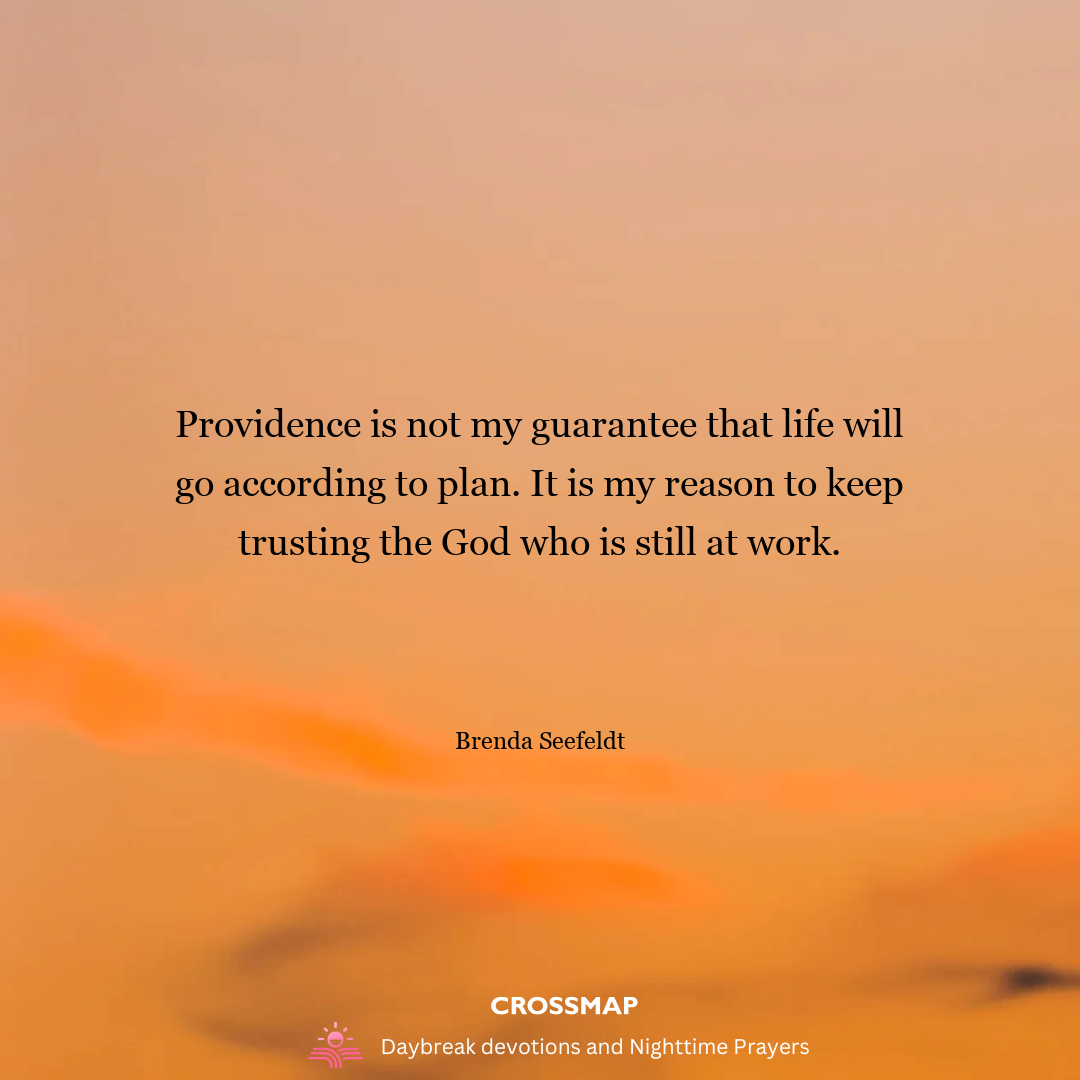
This God is active and for me and acknowledges that I’ve been hurt. God is not asking me to call evil good or pretend the damage never happened. God is working to make right what evil has made wrong. I can trust that God is not the source of every heartbreak, but God is present in it, working against what smashes me and inviting me into what restores life. I may not understand what God is doing or know how He will redeem my pain but I can trust His larger story even when I cannot make sense of my circumstances. Providence is not my guarantee that life will go according to plan. It is my reason to keep trusting the God who is still at work.
God has to be close to collect those tears.
Questions for Reflection:
1. When something painful happens, do you tend to look for a reason, search for a lesson, or struggle to understand what God is doing? Why do you think you respond that way?
2. Have you ever been given a theological explanation for your pain that made sense intellectually but didn’t actually comfort you emotionally? What was missing?
3. The article describes different theological understandings of God’s relationship to suffering, human choices, and providence. Which ideas have shaped your own understanding of God?
4. Have any of those theology ideas made trusting God more difficult?
5. What is the difference between believing God planned your pain and believing God can work to redeem your pain?
6. The devotional suggests that we can join God in defeating the evil that has hurt us. What might that look like in real life? How might we participate in restoring what evil has damaged?
7. Have you ever experienced a time when pain eventually led you toward something restorative, such as deeper compassion, a braver decision, or helping someone else? How do you understand that experience now?