What Tart Cherry Powder Can (and Can't) Do for Sleep and Recovery — A Christian Perspective
"Why am I so exhausted lately?"
You'd think enough sleep would fix it, but mornings still feel heavy, and nights turn into hours of restless tossing and turning. A packed schedule, stress, too much screen time, and an irregular routine keep both body and mind in a constant state of tension.
In the middle of all that, one food that's picked up genuine attention for sleep and post-workout recovery is tart cherry. Tart cherry powder in particular has gotten popular — easy to store, easy to stir into water, yogurt, or a smoothie.
But for a Christian, a "health food" was never just about whether it works. This body isn't something we get to use up however we like — it's a place God entrusted to us for this life. So caring for it was never purely about appearance or living longer. It's part of a kind of stewardship — caring for the body so we're able to serve God and the people around us more fully.
What Exactly Is Tart Cherry?
Tart cherry is a noticeably more sour variety than the sweet cherries most people snack on. The deep red Montmorency variety is the one most commonly used in health products.
Tart cherries carry anthocyanins and other polyphenols, along with a small amount of naturally occurring melatonin. Those compounds are why researchers have studied tart cherry in relation to sleep, post-exercise recovery, and inflammation.
That said, most published research so far has used tart cherry juice or concentrate, not powder. So it's not accurate to assume tart cherry powder produces identical results — concentration, processing method, and serving size all vary from product to product.
 A glass of tart cherry juice rests on a bedside table, creating a peaceful evening atmosphere associated with relaxation and a healthy bedtime routine.
There's Some Real Possibility Here for Sleep Quality
Sleep is the reason tart cherry became well-known in the first place.
Small clinical trials found modest improvements in sleep duration or sleep efficiency among participants who drank tart cherry juice or concentrate. The melatonin and polyphenols in tart cherry are thought to influence physiological processes tied to sleep. But these studies involved small numbers of participants over short periods, so it's a stretch to say tart cherry has been proven to treat insomnia.
It's better to think of tart cherry as a food to use alongside — not instead of — a consistent bedtime, reasonable exercise, and cutting back on late-day caffeine and screen time, rather than treating it like a sleep aid on its own.
Worth noting again: most of the sleep research to date used Montmorency tart cherry juice concentrate, not powder. If you'd actually like to try what the research was based on, [a tart cherry juice concentrate like this one] is closer to the form the studies actually used (affiliate link — I may earn a small commission at no extra cost to you).
Scripture treats sleep less as something we earn through effort, and more as a gift God gives.
"In vain you rise early and stay up late... for he grants sleep to those he loves." (Psalm 127:2)
Rather than leaning entirely on a health food, it's worth handing the day's worries over to God and building the kind of daily rhythm that actually lets body and mind rest.
It May Help With Recovery After Intense Exercise
Tart cherry has also drawn interest among people who exercise regularly.
Pooled analyses across multiple studies suggest tart cherry supplementation may help speed up strength recovery after intense exercise. Recovery benefits showed up more clearly in studies where people took it for a period leading up to the exercise, though results on muscle soreness and inflammation markers varied study to study. In some research, juice or concentrate produced clearer effects than powder did.
Rather than expecting tart cherry to instantly eliminate post-workout soreness, it makes more sense to treat it as a supplement alongside proper hydration, a balanced diet with enough protein, stretching, and sleep.
A healthy body was never the actual point of faith, but it's a genuinely important foundation for carrying out whatever you've been called to do. Pushing through exhaustion isn't the only expression of faith — resting and recovering properly is also a humble way of accepting the limits God built into us.
You'll Get Some Polyphenols and Anthocyanins
Tart cherry's deep red color comes largely from anthocyanins, a type of plant pigment and a category of polyphenol. Researchers continue studying how anthocyanins affect oxidative stress and inflammation in the body.
Some clinical trials and pooled analyses have observed possible improvements in certain inflammatory and oxidative stress markers after tart cherry consumption. But products and dosages vary study to study, and this doesn't mean tart cherry prevents or treats every inflammatory condition.
It's also an overreach to claim that a food rich in antioxidants automatically "stops aging," "removes toxins," or "definitely improves skin." A genuinely varied diet — vegetables, fruit, whole grains, protein, and healthy fats — matters more than leaning on any single food.
Results on Blood Pressure and Cholesterol Are Still Inconsistent
You'll also hear claims that tart cherry benefits blood pressure and cardiovascular health.
Some small studies reported reductions in systolic blood pressure or LDL cholesterol. But pooled analyses across multiple studies haven't confirmed a meaningful blood-pressure-lowering effect, and researchers have called for more long-term research.
Tart cherry should never be used as a substitute for blood pressure or cholesterol medication. If you're already on one, don't stop or adjust the dose on your own — follow your doctor's guidance.
There's Some Possible Supportive Role in Gout Management
Researchers have also looked into whether cherries and tart cherry affect blood uric acid levels and gout flare risk.
Some studies found a trend toward reduced uric acid or gout symptoms with cherry product consumption. But results haven't been consistent, and there isn't enough evidence to say tart cherry treats gout or can replace prescribed medication. For now, it's safer to think of it as a supplement to proper diet and medical treatment, not a replacement for either.
If you're being treated for gout or high uric acid, don't stop taking a uric-acid-lowering medication just because you're relying on tart cherry. And watch for added sugar in sweetened cherry juices — check the label, since that can actually work against you.
How Should You Take It?
Tart cherry is commonly used in a few simple ways: mixed into water or sparkling water, stirred into unsweetened yogurt, added to a smoothie or oatmeal, or included in a small post-workout snack or meal.
There's no universal standard dose across all products — concentration and raw ingredient content vary, so it's best to follow the recommended amount on the specific product's label.
If you're taking it for sleep, start with a smaller amount in the evening rather than a large dose right before bed, and pay attention to how your body responds. Tart cherry alone matters less than keeping a consistent bedtime and cutting back on late caffeine and heavy late-night meals.
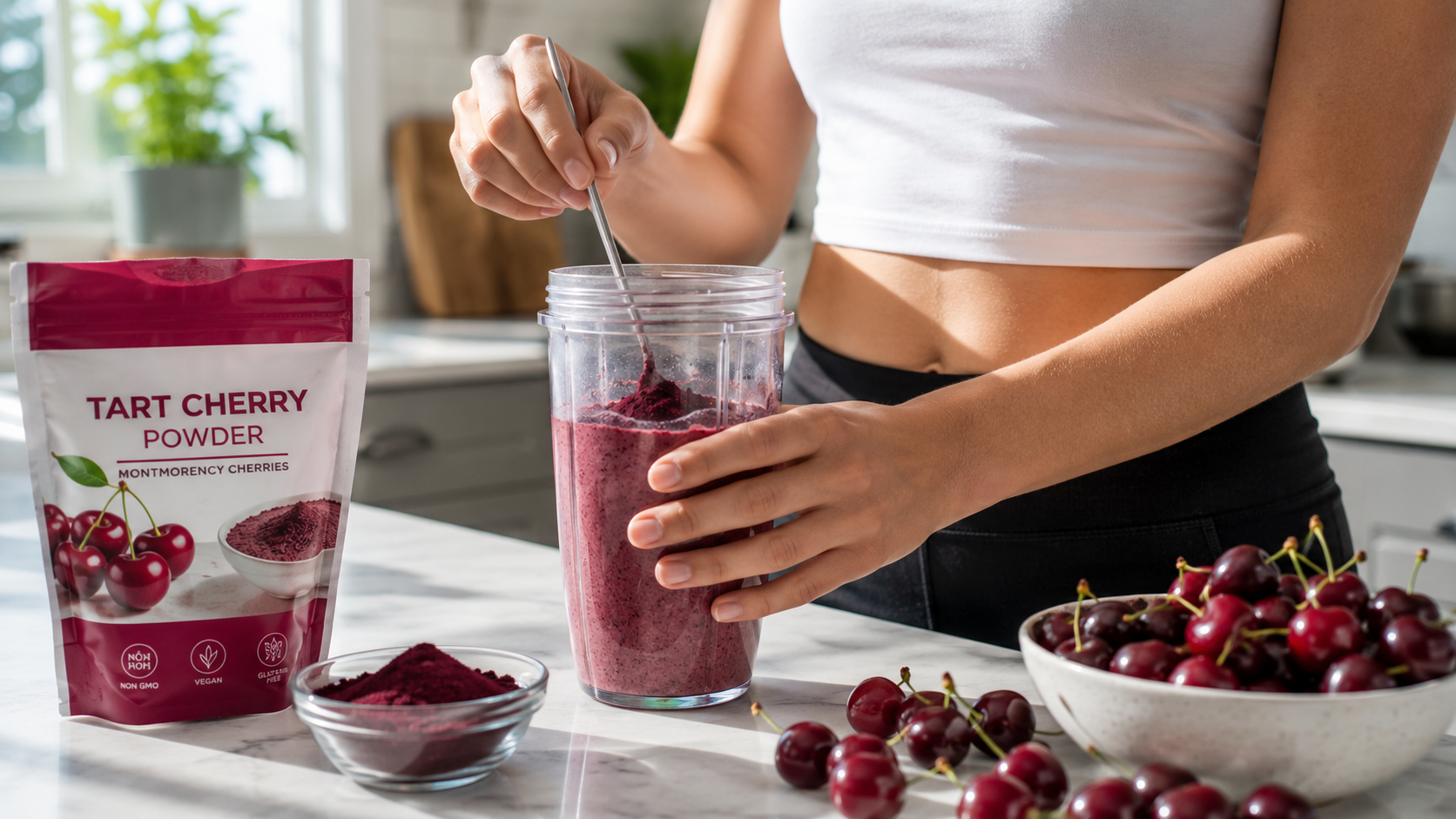 Tart cherry powder is added to a smoothie for a simple and convenient way to include the fruit’s naturally occurring plant compounds in a morning routine.
What to Check Before You Start
Tart cherry is a food, but it doesn't necessarily agree with everyone the same way.
Overdoing it can cause bloating or diarrhea. If you have diabetes, check added sugar and carbohydrate content per serving. If you have kidney disease, gout, or take multiple medications, it's worth checking with a doctor or pharmacist first.
Supplements can interact with prescription and over-the-counter medications, so it's worth telling your doctor about every supplement you're taking, not just the new ones.
If insomnia persists long-term, or you notice snoring, breathing pauses during sleep, or severe daytime sleepiness, that's a reason to see a doctor rather than lean on a food to fix it.
What Caring for Your Health Means, in Faith
Christians shouldn't cling to health as an idol, but neither should we treat the body carelessly.
God made us whole people — not souls floating free of a body, but body and mind together. Eating well, moving reasonably, and resting enough isn't just self-management. It's faithfully caring for a life entrusted to us.
But a spoonful of tart cherry isn't going to resolve every source of fatigue and anxiety we carry. Food can help the body, but it can't carry the deeper fears and burdens weighing on our hearts.
Jesus said:
"Come to me, all you who are weary and burdened, and I will give you rest." (Matthew 11:28)
We need rest for the body, and rest for the soul, together. Choosing healthy food and building better habits matters — and so does laying down our worries in prayer and finding rest in Scripture. Both belong in the same picture.
The Takeaway: More Important Than One Spoonful
Tart cherry may genuinely help with sleep and post-exercise recovery, and it offers a convenient way to get polyphenols and anthocyanins into your diet.
But current research doesn't support the claim that it treats insomnia, high blood pressure, arthritis, or gout. Powder products in particular may differ in composition and concentration from the juice or concentrate used in most studies — so it's worth reading the actual ingredient list and nutrition label, not just the marketing copy.
A small spoonful can be a reasonable starting point for a healthier habit. But real recovery was never found in one single food.
Regular meals and sleep, reasonable exercise and rest, and handing the weight of each day over to God — together, these care for body and mind in a way that's genuinely balanced.
May you care gratefully for the body God has entrusted to you today, and find true rest in Him.
 A runner stretches after an early morning workout, with tart cherry juice nearby as part of a balanced post-exercise recovery routine.
This article is intended as general health information and is not a substitute for individual diagnosis or treatment.