When Liszt Played Chopin: Chopin’s Études, Op. 10
Chopin was trying to write a letter. Liszt was playing the piano. The letter wasn’t going well.
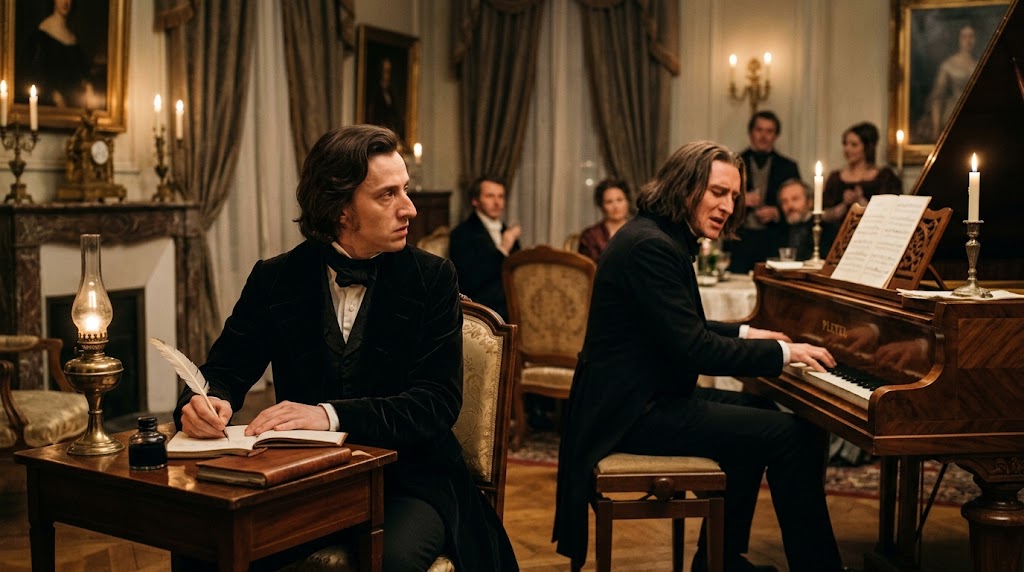
In June 1833, Chopin wrote to fellow musician Ferdinand Hiller that Liszt’s playing of his études was distracting him. He even wished he could play his own music the way Liszt did—a sentiment some English translations express as wanting to “steal” Liszt’s way of playing.
The remark reveals Chopin’s admiration for Liszt’s playing, even as an accomplished pianist and composer. Though their styles differed, Chopin recognized something in Liszt’s musicianship that he could learn from.
Chopin dedicated his Études, Op. 10, to Liszt, honoring his fellow pianist’s gifts.
The dedication reflects Chopin’s admiration for Liszt and the respect he had for his fellow pianist.
More Than Technical Exercises
An étude develops a particular musical skill. Chopin transformed the form, turning technical challenges into expressive music. His Études, Op. 10, contains twelve pieces, each exploring a specific technique through the entire work.
From delicate melodies to rapid passagework and powerful chords, these études show the many ways technique can shape musical expression.
Technique, then, is not an end in itself. Hours spent practicing scales, fingerings, and difficult passages prepare the way for greater freedom—to shape a phrase, bring out a melody, and communicate what words cannot quite express.
Learning from Another Musician
Chopin’s admiration for Liszt shows that even accomplished artists can learn from one another. He could appreciate Liszt’s gifts without imitating him or losing his own musical identity.
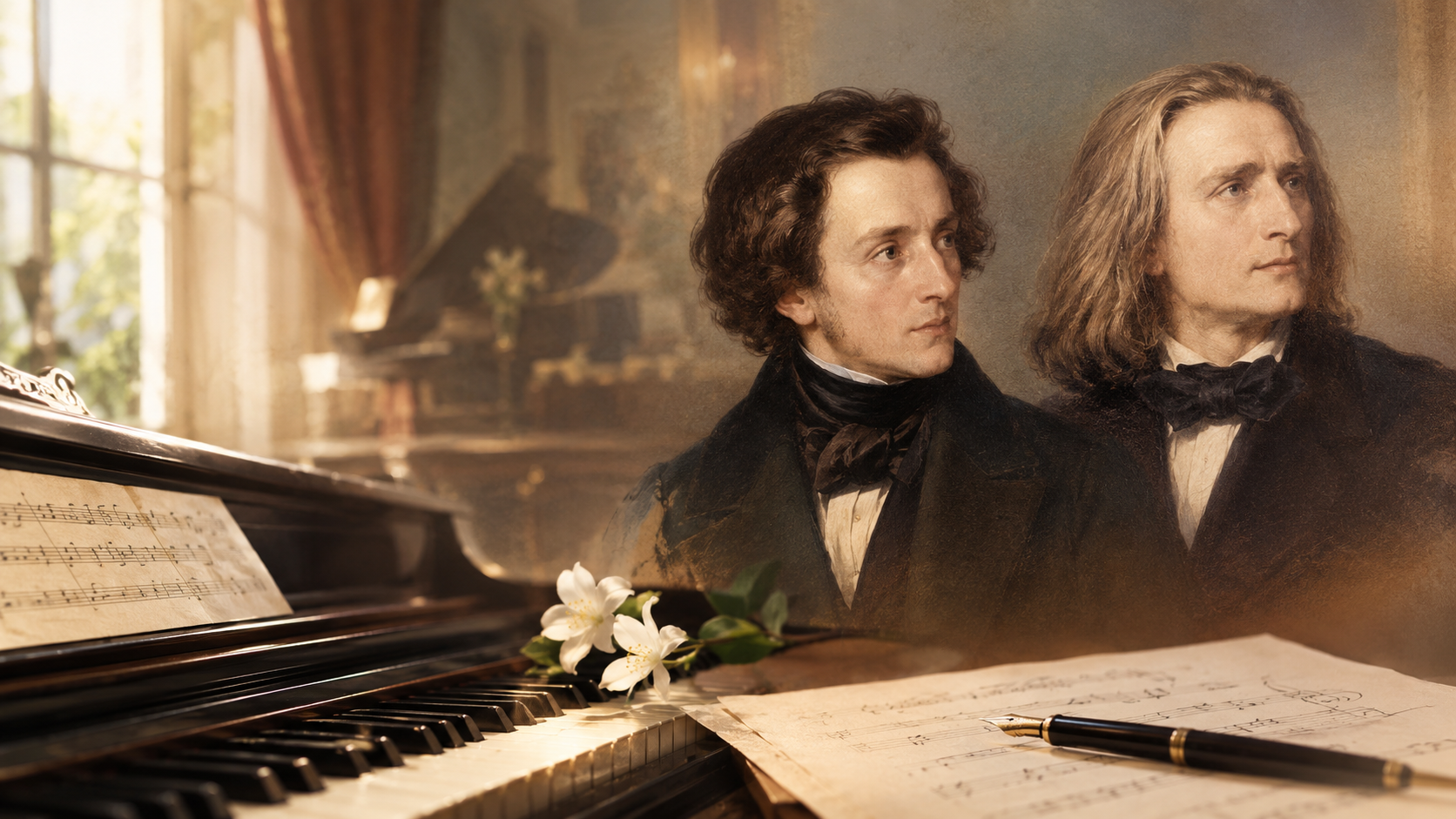
This happens in music when a performer discovers a new way to shape a familiar melody or a teacher learns from a student’s unexpected insight.
The same is true beyond music. Others may have skills or perspectives we lack, and learning from them can broaden our own understanding. When we appreciate what others can teach us, we make room to grow.
Honoring One Another
“Do nothing out of selfish ambition or vain conceit. Rather, in humility value others above yourselves, not looking to your own interests but each of you to the interests of the others.” — Philippians 2:3–4
These verses encourage us to value others with humility and consider their needs alongside our own. Chopin’s admiration for Liszt offers a memorable example of this attitude. He could openly appreciate another pianist’s artistry while continuing to develop his own musical voice. Confidence and humility can exist together.
Admiration is not always easy, especially when we feel behind or unsure of ourselves. Yet we can begin by noticing what others do well, expressing sincere appreciation, and staying open to learning.
Chopin’s Études, Op. 10, continue to challenge pianists and move listeners today. Their dedication to Liszt reminds us that great music can tell a story not only of individual achievement, but also of respect between musicians.
Explore Chopin’s complete Études here. (affiliate link)
Read previous: What Makes a Musical Life? Jean Sibelius’s The Spruce