7 Ways to Manage Your Blood Pressure: Caring for Your Heart Through Faith and Healthy Habits
The psalmist prays, "I will praise thee; for I am fearfully and wonderfully made" (Psalm 139:14, KJV). Our bodies are a gift, and caring for them can be one way of saying thank you.
Yet between work, family, church, and daily stress, the habits that protect our health often slip down the list. High blood pressure deserves special attention. Often called the "silent killer," it can cause no symptoms while steadily raising the risk of heart disease, stroke, and kidney problems. The good news is that everyday choices can make a real difference.
Here are seven evidence-based ways to manage your blood pressure, along with a Christian perspective on building habits that last.
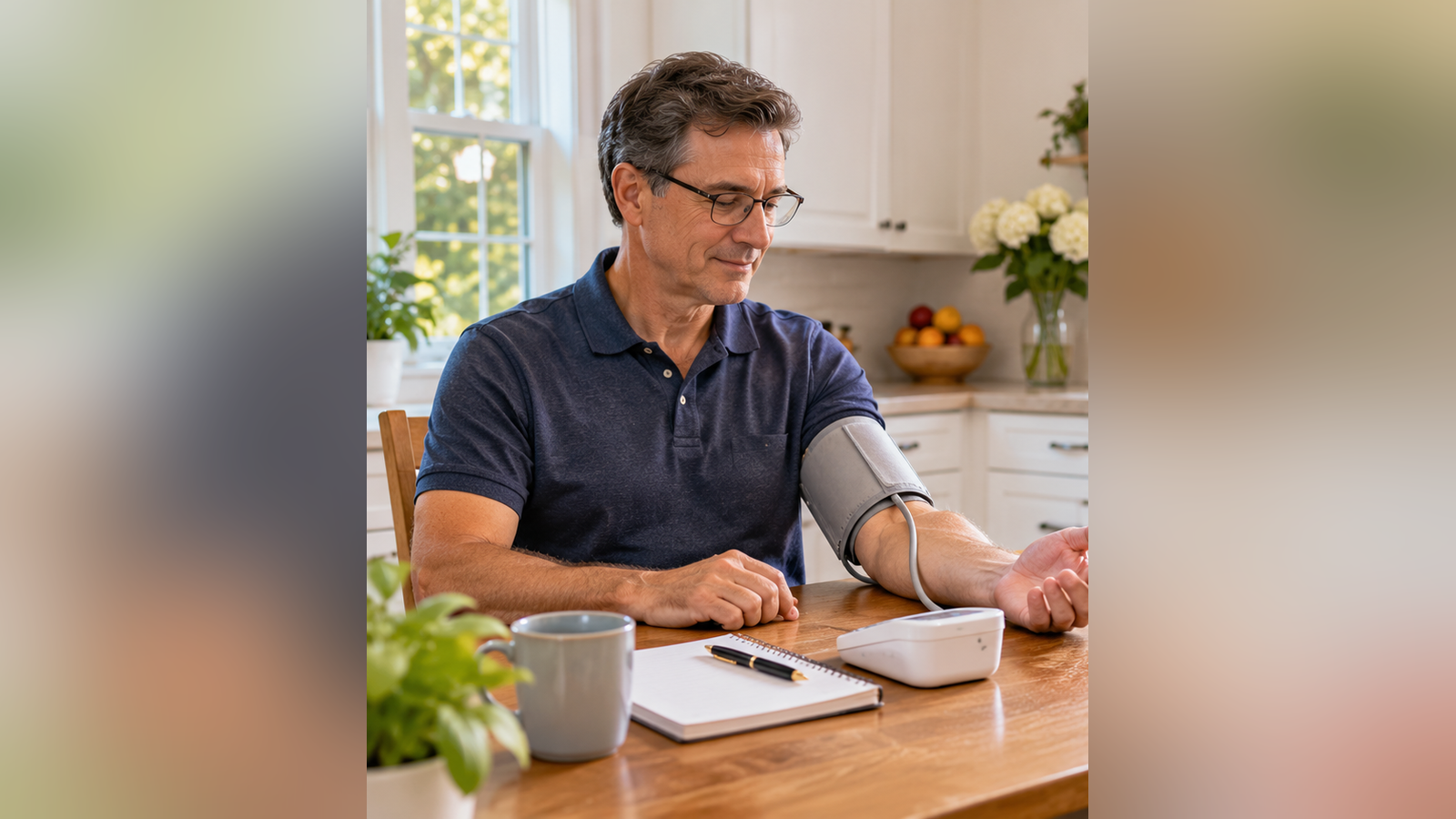 Caring for Our Health Through Daily Habits: Regular home blood pressure monitoring helps us better understand our cardiovascular health. Taking small, consistent steps to care for our bodies is one way to practice responsible stewardship of the life God has entrusted to us.
1. Know Your Numbers
Blood pressure has two numbers. The top number (systolic) measures pressure when your heart beats; the bottom number (diastolic) measures it when your heart rests between beats. Under the 2025 guideline from the American Heart Association and American College of Cardiology, adult categories are:
- Normal: below 120/80 mm Hg
- Elevated: 120–129 systolic and below 80 diastolic
- Stage 1 hypertension: 130–139 systolic or 80–89 diastolic
- Stage 2 hypertension: 140 or higher systolic or 90 or higher diastolic
These categories rely on repeated, properly measured readings, not a single number. If your readings stay high, talk with your healthcare provider. Knowing your numbers is not a reason for fear; it is a chance to make informed choices.
2. Eat Less Sodium and More Whole Foods
Cutting sodium is one of the most effective changes you can make. The guideline recommends less than 2,300 milligrams a day, ideally 1,500 for most adults. Most of our sodium comes not from the saltshaker but from processed foods, restaurant meals, deli meats, canned soups, and fast food. Check Nutrition Facts labels, choose lower-sodium options, and cook more at home using herbs, garlic, or lemon for flavor.
The DASH eating plan (Dietary Approaches to Stop Hypertension) was designed specifically for blood pressure. It emphasizes vegetables, fruits, whole grains, beans, nuts, fish, and low-fat dairy. Start small: add vegetables to lunch, or swap processed meats for beans or fish a few times a week.
Potassium-rich foods can help too, and the new guideline notes that potassium-based salt substitutes may benefit people who get most of their sodium from table salt. But if you have kidney disease or take medicines that affect potassium, check with your provider first.
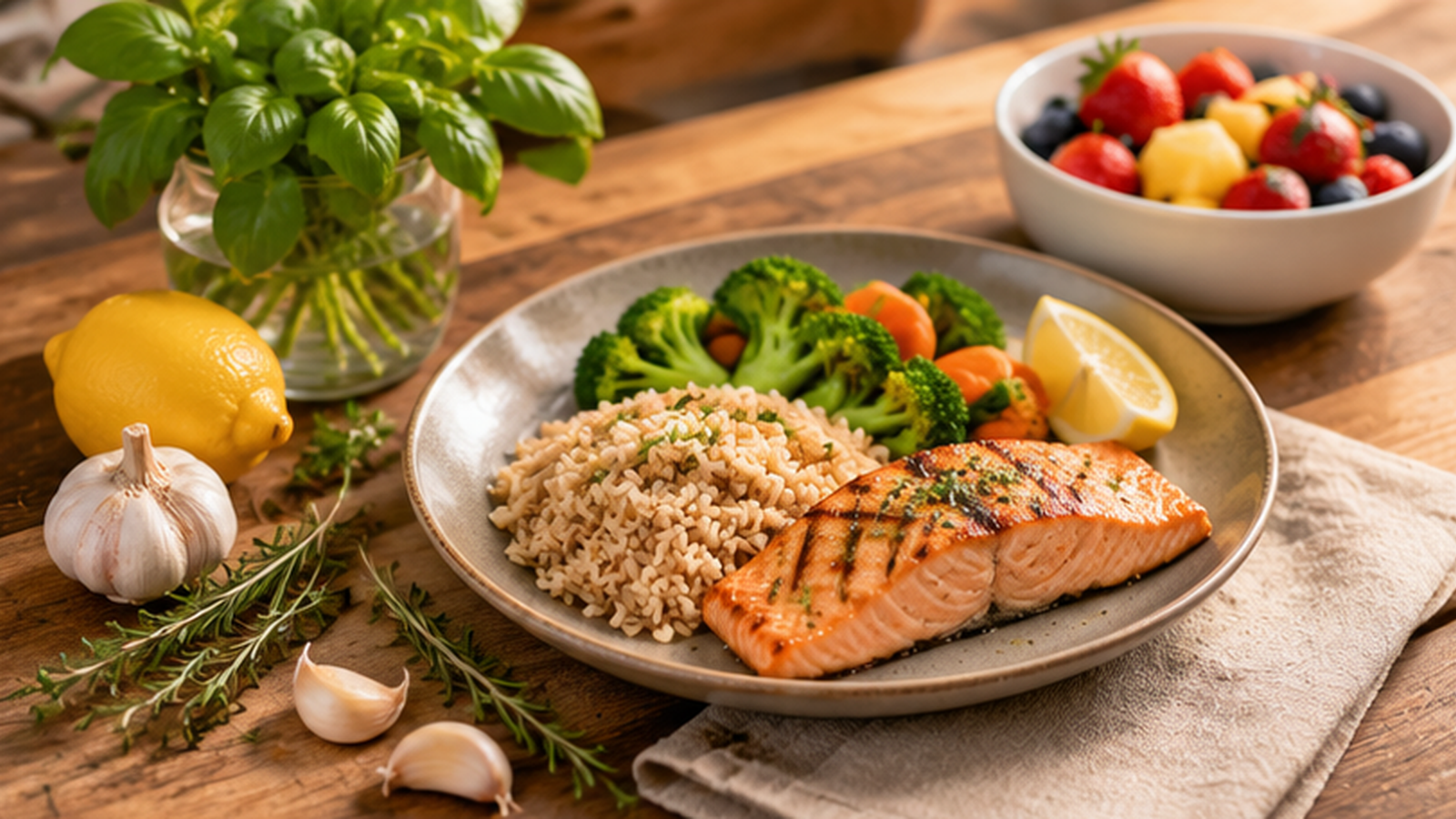 Nourishing the Body with Gratitude: A balanced meal featuring vegetables, whole grains, and lean protein reflects the principles of the DASH eating plan. Making thoughtful food choices can support healthy blood pressure and remind us to be grateful for God's provision.
3. Move Your Body Regularly
Aim for at least 150 minutes of moderate activity a week, such as brisk walking, plus muscle-strengthening exercise. If you are not used to exercise, start with 10 or 15 minutes and build up. A walk after dinner or with a friend after church can also become time for fellowship and prayer.
Rest matters as much as activity. When His disciples were worn out, Jesus said, "Come ye yourselves apart into a desert place, and rest a while" (Mark 6:31, KJV). If you have very high blood pressure or heart disease, talk with your provider before starting a new exercise program.
4. Aim for a Healthy Weight
For people who are overweight, even modest weight loss helps. The 2025 guideline suggests an initial goal of losing at least 5% of body weight, which is about 10 pounds for someone who weighs 200. Focus on changes you can keep rather than quick results. Stewardship is not a contest over appearance; our worth comes from God, not from a number on a scale.
5. Avoid Tobacco, Limit Alcohol, and Check Your Medicine Cabinet
Smoking and nicotine damage blood vessels and raise blood pressure, so quitting, and avoiding vaping and secondhand smoke, protects your heart. Alcohol also raises blood pressure. The new guideline treats not drinking, or drinking as little as possible, as best. Those who drink should have no more than two drinks a day for men and one for women.
Some everyday medicines can raise blood pressure as well. Pain relievers called NSAIDs, such as ibuprofen and naproxen, and oral decongestants in many cold remedies, such as pseudoephedrine and phenylephrine, are common examples. This is worth remembering during cold and flu season. Acetaminophen is less likely to raise blood pressure, and nasal saline can help with congestion. Some supplements, such as licorice root, can also raise it. If you have high blood pressure, ask your doctor or pharmacist before choosing an over-the-counter medicine.
Scripture names temperance, or self-control, as a fruit of the Spirit (Galatians 5:22–23, KJV). That can encourage us to look honestly at habits that quietly harm our health, and to seek help when change is hard.
6. Make Room for Rest, Sleep, and Prayer
Stress and poor sleep make blood pressure harder to control. Most adults need about seven to nine hours of sleep. A regular bedtime, less screen time at night, and a calm evening routine can help. If you snore loudly, stop breathing briefly during sleep, or feel sleepy all day, ask your provider about sleep apnea.
Prayer can be part of that evening routine. Paul writes, "Be careful for nothing; but in every thing by prayer and supplication with thanksgiving let your requests be made known unto God" (Philippians 4:6, KJV), where "careful" means "anxious." Prayer can bring real peace, but it is not a substitute for medical care, nor a guaranteed way to lower blood pressure. It works best alongside rest, supportive relationships, and professional help.
7. Check Your Blood Pressure at Home and Follow Medical Advice
Blood pressure changes throughout the day, so home monitoring is one of the most practical tools for managing it. The American Heart Association recommends an automatic upper-arm cuff monitor that has been clinically validated. Before buying, check that the model appears on the American Medical Association's list at ValidateBP.org, and make sure the cuff fits your arm.
One affordable option is an upper-arm monitor like this one. (Affiliate link: the author may earn a small commission if you make a purchase. As an Amazon Associate I earn from qualifying purchases.)
For accurate readings:
- Avoid caffeine, smoking, and exercise for 30 minutes beforehand.
- Empty your bladder and sit quietly for five minutes.
- Sit with your back supported, feet flat, and legs uncrossed.
- Rest your arm at heart level with the cuff on bare skin.
- Take two readings about one minute apart.
- Record the results and share them with your provider.
If your provider prescribes medication, take it as directed, and do not stop just because your numbers improve. Receiving medical treatment is not a failure of faith. God often provides care through doctors, nurses, and the people around us.
When it's an emergency: If your reading is higher than 180/120, wait one minute and measure again. If it is still that high, contact your provider right away, even if you feel fine. If very high blood pressure comes with chest pain, shortness of breath, sudden weakness, trouble speaking, or vision changes, call 911 immediately. These symptoms can signal an emergency at any blood pressure level.
Small Steps of Faithful Stewardship
Managing blood pressure is not about one miracle food or a perfect workout. It is about ordinary choices repeated over time: a little less sodium, a daily walk, enough sleep, careful measuring, and following your treatment plan.
Some seasons, our bodies will not respond as we hope, even when we do everything right. Health is not a measure of faith, and God's love is not measured by our blood pressure or the absence of disease. Our calling is to care wisely for what has been entrusted to us, seek help when we need it, and offer grace to ourselves and others.
You do not need to change everything today. Take one small step, and then another tomorrow.
A Prayer for Health and Wisdom
Heavenly Father, Thank You for the gift of life and the bodies You have entrusted to us. Give us wisdom to choose well, patience to build good habits, and peace when health concerns weigh on us. Guide those who care for us, and help us care for ourselves so we can keep loving and serving others. In Jesus' name, Amen.
What healthy habit would you like to start this week? Share in the comments; your story may encourage someone else.
 Walking in Faith and Wellness: An evening walk offers an opportunity for physical activity, meaningful conversation, and peaceful reflection. Regular walking can support heart health, while fellowship and moments of gratitude can enrich our spiritual and emotional well-being.
Medical References
- American Heart Association and American College of Cardiology. 2025 Guideline for the Prevention, Detection, Evaluation, and Management of High Blood Pressure in Adults. https://professional.heart.org/en/science-news/2025-high-blood-pressure-guideline
- American Heart Association. Understanding Blood Pressure Readings. https://www.heart.org/en/health-topics/high-blood-pressure/understanding-blood-pressure-readings
- American Heart Association. Monitoring Your Blood Pressure at Home. https://www.heart.org/en/health-topics/high-blood-pressure/understanding-blood-pressure-readings/monitoring-your-blood-pressure-at-home
- American Heart Association News. Taking Medicine for a Cold? Be Mindful of Your Heart. https://www.heart.org/en/news/2019/01/18/taking-medicine-for-a-cold-be-mindful-of-your-heart
- American Heart Association. When to Call 911 About High Blood Pressure. https://www.heart.org/en/health-topics/high-blood-pressure/understanding-blood-pressure-readings/when-to-call-911-for-high-blood-pressure
- American Medical Association. Validated Blood Pressure Devices. https://www.validatebp.org
Medical Disclaimer: This article is for education and faith-based encouragement only and is not a substitute for professional medical advice, diagnosis, or treatment. Consult a qualified healthcare professional about your individual health. Scripture quotations are from the King James Version.