A Simple Breakfast by the Sea: More Than Just a Meal
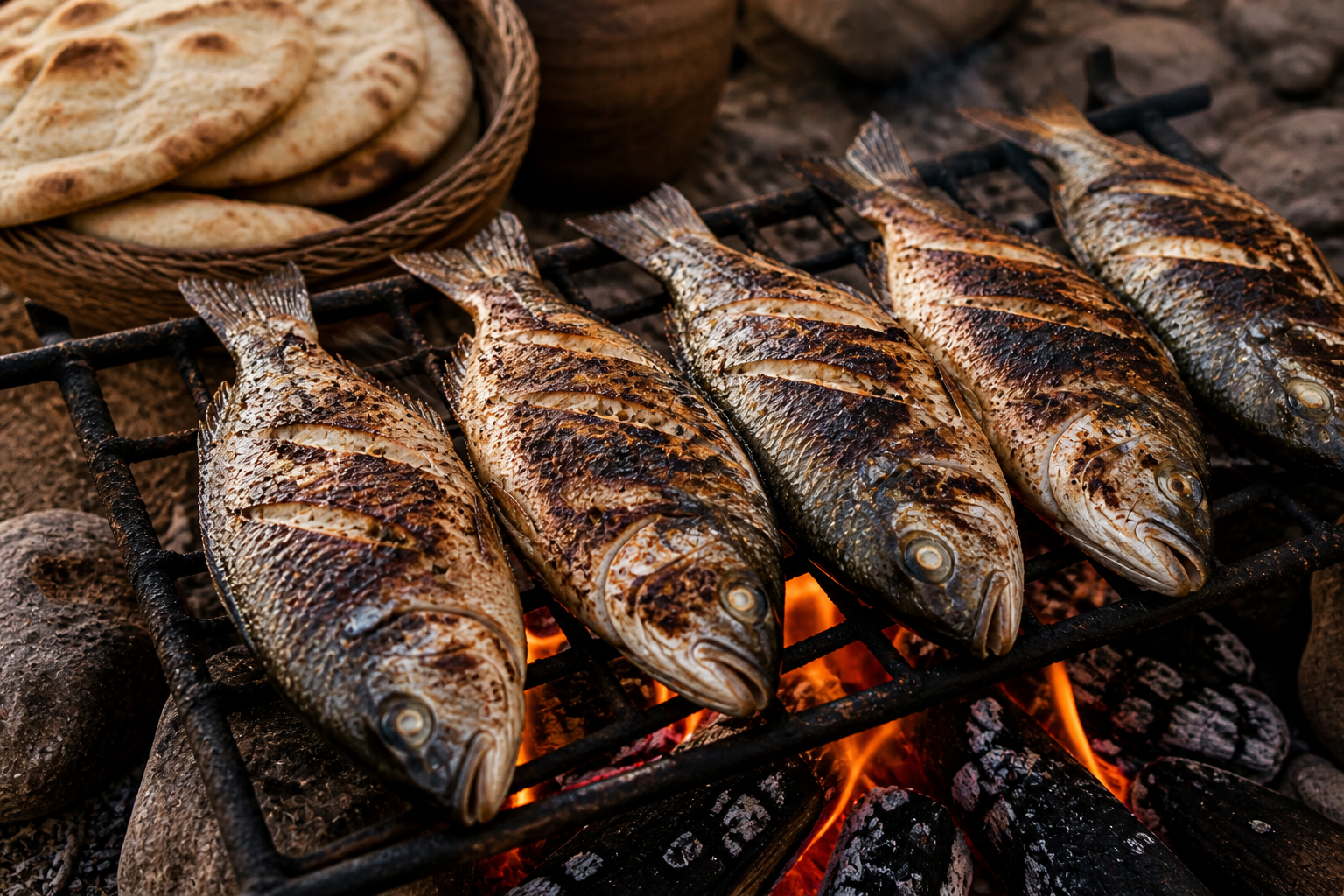
There’s a scene in Gospel of John chapter 21 that I keep coming back to. It’s quiet, almost easy to overlook, especially after everything that came before it—the cross, the resurrection, the empty tomb. But maybe that’s exactly why it stands out.
The disciples had gone back to what they knew. Fishing.
They were out on the water all night, working, trying, probably frustrated. And still—nothing. Not a single fish. Then, just as morning was breaking, a voice from the shore:
“Cast the net on the right side.” It sounds simple, almost too simple. But they obeyed. And suddenly the net was full.
When they finally made it back to land, tired and probably still trying to process what just happened, they saw something unexpected:
“When they got out on land, they saw a charcoal fire in place, with fish laid out on it, and bread.” (John 21:9)
Jesus had already prepared breakfast.
Not Just a Meal, But a Moment
What I find striking isn’t just the miracle of the fish. It’s what comes after. Jesus didn’t launch into a sermon. He didn’t immediately correct Peter or unpack deep theology. Instead, He made food. He invited them to sit. To eat. There’s something deeply human about that.
After everything the disciples had gone through—the fear, the confusion, the failure—this moment feels like restoration, not through words first, but through presence… and a simple meal.
Why Fish?
The detail that the text gives us is specific: fish on a charcoal fire. In that region, around the Sea of Galilee, the common fish would have been things like tilapia or small oily fish similar to sardines. Nothing extravagant. Just everyday food.
But when you look a little closer, it’s actually remarkable. Fish like these are rich in omega-3 fatty acids—nutrients our bodies can’t produce on their own. We have to get them from what we eat.
Two of the most important ones are:
DHA — a key building block for the brain
EPA — helps reduce inflammation and supports heart health
Modern studies keep pointing to the same thing: people who regularly eat fish tend to have lower risks of heart disease, better cognitive function as they age, and even more stable mental health.
It’s interesting, isn’t it? Long before anyone understood DHA or EPA, this kind of food was already part of daily life.
The Way It Was Prepared
There’s another detail that’s easy to miss—the cooking method. This wasn’t fried fish. No heavy oils, no complicated preparation. Just fish over a charcoal fire.
Simple. And in many ways, that simplicity matters. Cooking fish this way helps preserve its natural nutrients, including those fragile omega-3 fats that can be damaged by excessive processing.
It’s the kind of meal that feels both ancient and, honestly, very relevant today.
A Meal That Restores
The more I sit with this passage, the more it feels like this wasn’t just breakfast. It was restoration.
Jesus meets His disciples not in their success, but in their emptiness—after a night of catching nothing. He provides what they couldn’t. And then He invites them to eat. There’s nourishment here on multiple levels:
Physical — real food, prepared and shared
Emotional — a calm, unhurried moment after chaos
Spiritual — the quiet presence of the risen Christ
Sometimes we look for dramatic moments of healing or clarity. But here, it comes through something as ordinary as a shared meal.
Something to Think About
It makes me wonder how often we overlook the simple things. A piece of bread. A bit of fish. Sitting down, slowing down, eating with intention.
In a world that constantly pushes complexity—more, faster, louder—this scene offers something different.
A reminder that sometimes what we need most isn’t complicated at all. Just something real. Something nourishing. And maybe… someone to share it with.