Aaron Copland’s Appalachian Spring: Can a Teacher Help You Find Your Own Voice?
When we learn music, it is natural to sound like our teachers for a while. We copy their fingering, imitate their phrasing, and try to reproduce the sounds they make. That kind of imitation is part of learning.
But a good teacher does not want a student to remain a copy. The goal is to help the student eventually discover a voice of their own. The relationship between Nadia Boulanger (1887–1979) and Aaron Copland (1900–1990) offers a beautiful example of this kind of teaching.
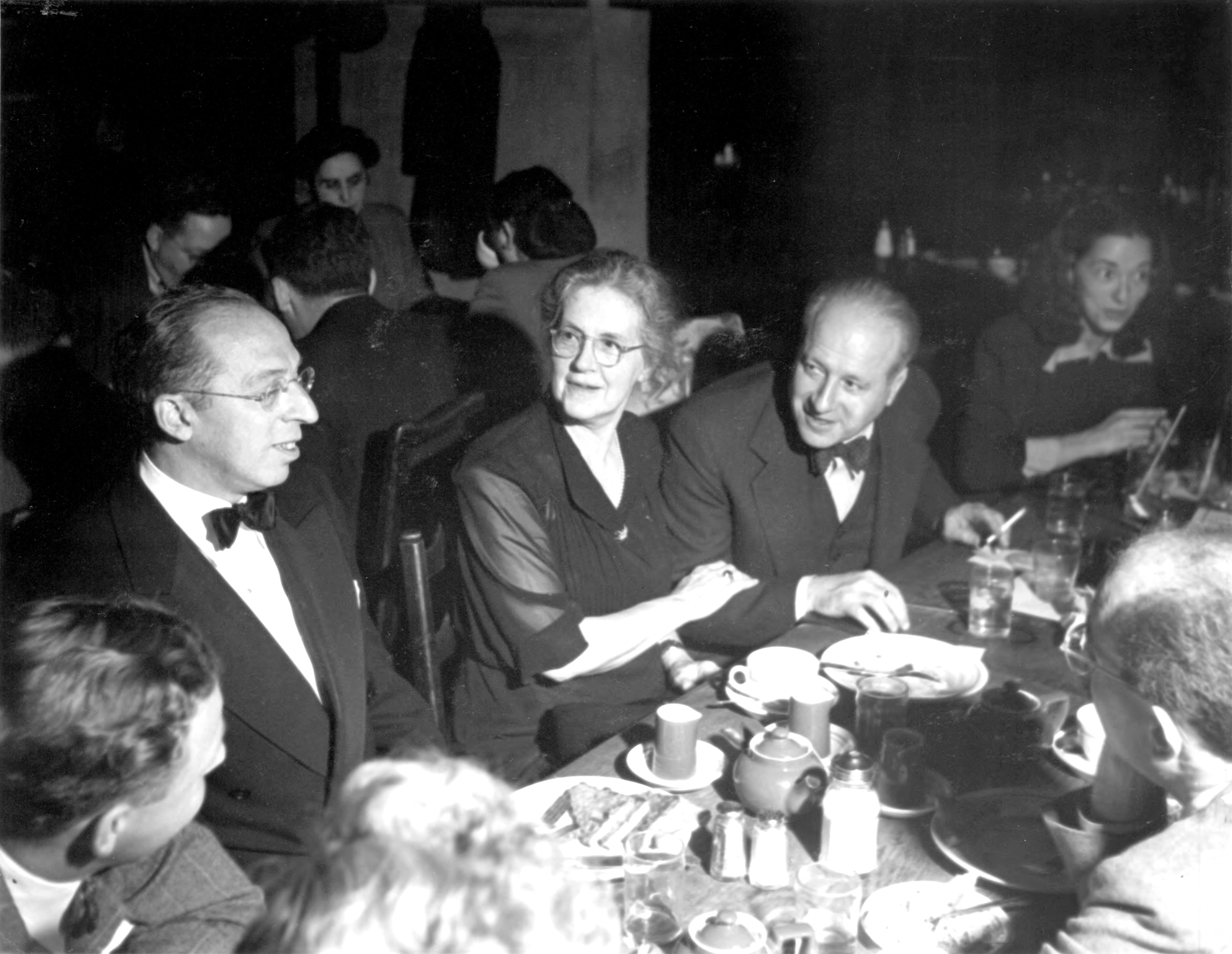 Aaron Copland, Nadia Boulanger, Walter Piston at the Old France restaurant, Boston, 1945
Nadia Boulanger and Aaron Copland
Copland, an American composer, met Nadia Boulanger in Paris in the early 1920s. Boulanger was already an accomplished musician and would become one of the most influential teachers of composers in the twentieth century.
She taught students who went on to develop very different musical styles, including Copland, Elliott Carter, and later Philip Glass. Their diversity shows that Boulanger was not simply teaching students to imitate her. She helped them strengthen their skills and find their own voice.
Copland eventually developed a musical language distinctly his own. His music drew on jazz, folk traditions, and the sounds and rhythms of American life. Alongside the European traditions he had studied, he developed a voice that helped shape a new musical identity.
One of the clearest examples is Appalachian Spring. Originally composed as a ballet for choreographer Martha Graham, it premiered in 1944. Its spacious harmonies, simple melodies, changing rhythms, and the familiar Shaker tune “Simple Gifts” (18:00) create a sound that is unmistakably Copland.
It does not sound like Boulanger. It sounds like Aaron Copland—and perhaps that is exactly what a good teacher hopes for.
When Learning Becomes Your Own
Something similar happens as we grow as musicians. In the beginning, we depend on our teacher to correct our mistakes, guide our practice, and point out details we would otherwise miss.
But eventually, we have to make our own musical decisions—how a phrase should sound, what we want the listener to hear, and how we can communicate the music rather than simply reproduce someone else’s interpretation.
I remember preparing a piece on my own for the first time after years of relying on my piano teacher’s guidance. At first, I felt overwhelmed, but gradually I learned to listen carefully, make my own decisions, and shape my interpretation. In the end, although it was far from perfect, I felt I was finally playing with a voice of my own.
Learning from Others Without Losing Yourself
That experience taught me something that applies beyond music. We all have people who influence us—teachers, parents, mentors, friends, or musicians we admire. Their example can be valuable, but we can learn from others without needing to become like them.
“There are different kinds of gifts, but the same Spirit distributes them.” — 1 Corinthians 12:4
God does not make us all the same. Just as musicians develop different voices, each of us has different gifts and experiences. Learning from others does not mean losing what makes us uniquely ourselves. We still need guidance from those who can see what we cannot.
But the best teachers do not keep us dependent on their voice forever. They give us the tools, understanding, and confidence to develop our own. That may be one of the greatest gifts a teacher can give—not a perfect imitation or a finished product, but the freedom and confidence to find your own voice.
Read previous: What Can Beethoven’s Pathétique Sonata Teach Us? Learning from an Imperfect Teacher