Barley Bread and Olive Oil: What a Simple Meal Actually Carries
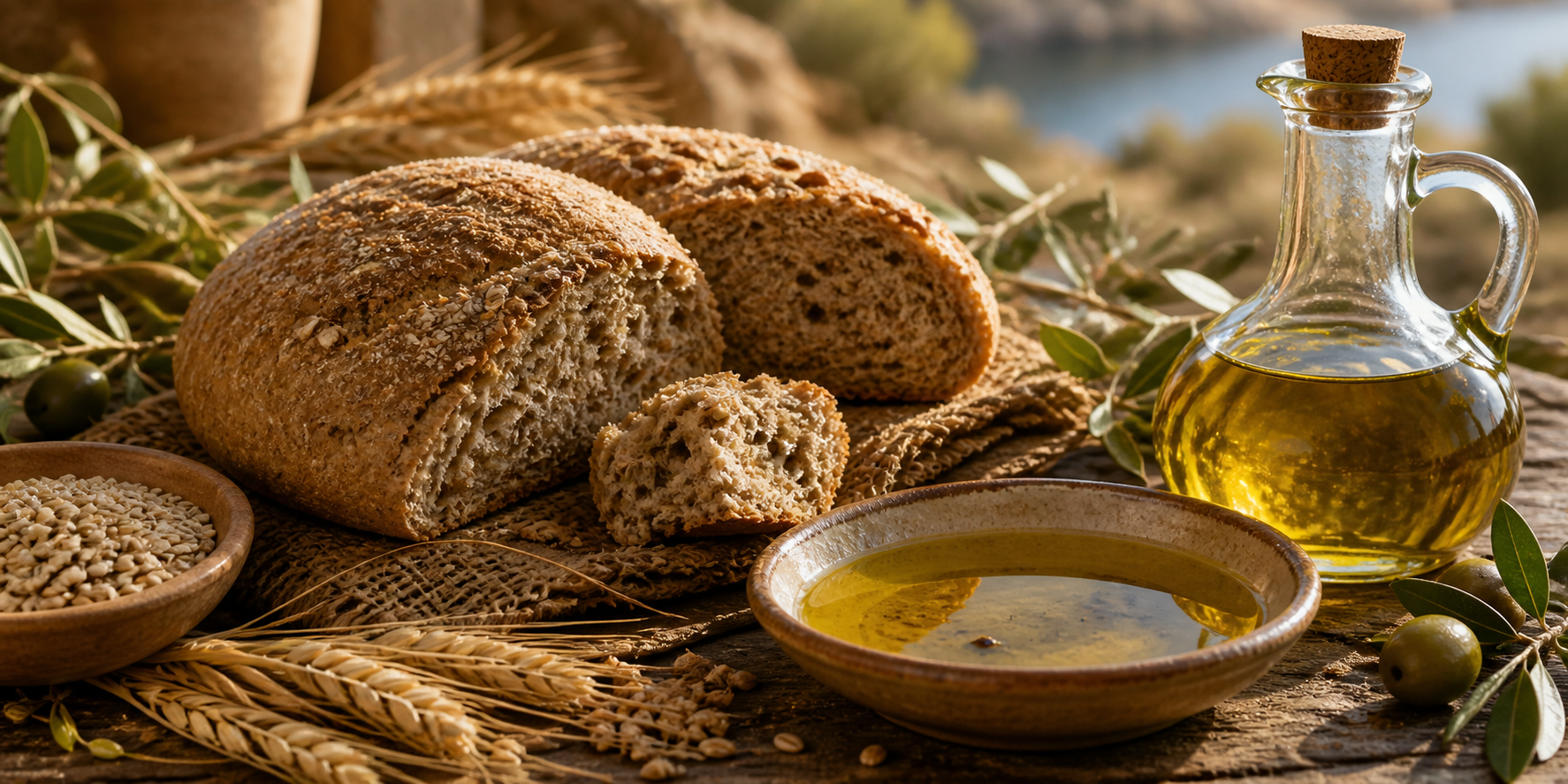
I was sitting with John 6 recently — the feeding of the five thousand — and something caught my attention that I'd honestly overlooked a hundred times before. The text mentions that the bread was barley bread. Not wheat, not anything fancy. Barley.
That detail felt small at first. But the more I thought about it, the more it stuck. Barley was the grain of ordinary people — farmers, fishermen, soldiers. It was cheap, widely available, and utterly unremarkable. In a culture that valued wheat bread as a sign of status, barley was the bottom shelf option. And yet that's exactly what Jesus chose to multiply.
"Here is a boy with five small barley loaves and two small fish, but how far will they go among so many?"(John 6:9)
Barley was never just "the poor man's grain"
Here's the thing that really surprised me when I dug into this: from a nutritional standpoint, barley is actually extraordinary. Modern research has caught up to what ancient people were eating without knowing why it was good for them.
Barley is rich in a soluble fiber called beta-glucan, and the science on this compound is genuinely impressive.
What beta-glucan does — backed by research
Lowers LDL cholesterol levels in the blood
Stabilizes blood sugar by slowing glucose absorption
Feeds beneficial gut bacteria, supporting digestive health
Clinically recognized — some foods with beta-glucan are approved to carry heart health claims
The "cheap" bread that ancient subsistence farmers ate every single day was, by modern measures, a functional food. There's something quietly wonderful about that.
And then there's olive oil
Olive oil runs all the way through Scripture. It shows up in healing. The Good Samaritan pouring it on wounds. It shows up in consecration, priests and kings anointed with it. It was never just a cooking ingredient; it was medicine, it was blessing, it was abundance.
What I find fascinating is that modern science validates this. Olive oil contains a compound called oleocanthal, which has strong anti-inflammatory properties — some studies suggest it acts similarly to ibuprofen in the body. The ancient instinct to use olive oil as something healing wasn't just symbolic. There may have been real biological truth behind it.
Eaten together — barley bread with olive oil — you're looking at a meal that simultaneously supports heart health, blood sugar regulation, gut function, and inflammation reduction. This was everyday food for people who had no concept of nutrition labels or wellness culture. They just ate what was there.
The simplest things carry the most
I keep coming back to this: we spend so much energy chasing the next superfood, the next supplement, the next protocol — and meanwhile, the people of Scripture were eating barley and olive oil every morning and calling it an ordinary day.
It makes me think that God's provision has always been closer and more complete than we tend to assume. What's already in the field, already on the table, already ordinary — it's often enough. More than enough.
The miracle of the five loaves wasn't just that the food multiplied. It's that what seemed small and insufficient — a child's simple lunch — turned out to be exactly what was needed. I think that's true more often than we notice.