Brain Health: Check Your Table Before You Check the Supplement Aisle — The MIND Diet and Christian Wisdom
As we get older, moments like these start happening.
What did I just come in here to do?
Why can't I remember this person's name right now?
When memory doesn't feel as sharp as it used to, it's natural to start paying more attention to brain health. Walk into any American grocery store or pharmacy, and you'll see no shortage of vitamins and supplements marketed as "Brain Health," "Memory Support," or "Cognitive Support."
But brain health doesn't have to start with the most expensive supplement on the shelf.
It can start with something simpler: the table we sit down to every day, with gratitude to God.
Scripture doesn't prescribe a specific diet. But for a Christian, the body isn't something to use up however we please — it's part of the life God has entrusted to us.
Paul writes in 1 Corinthians 6 that our bodies are the temple of the Holy Spirit.
That verse isn't simply a command to "be healthy." But caring wisely for the body entrusted to us is genuinely connected to a life of faith.
Caring for your health was never just about living longer, either.
Caring for body and mind so we can love God, care for family, serve neighbors, and carry out what's been entrusted to us — that, too, is part of a life of stewardship.
One eating pattern worth looking at from that angle is the MIND diet.
 A family pauses to give thanks before a meal, reflecting a Christian view of the table as a place not only for nourishment, but also for gratitude, fellowship, and faithful stewardship of health.
What Exactly Is the MIND Diet?
MIND stands for Mediterranean-DASH Intervention for Neurodegenerative Delay.
In simple terms, it combines the strengths of the Mediterranean and DASH diets while placing extra emphasis on foods specifically studied in relation to brain health.
The basic direction: eat vegetables, whole grains, legumes, nuts, berries, and fish often, while cutting back on butter, processed meat, fried food, and heavily sweetened food.
The good news is that this isn't a diet requiring exotic health foods.
Spinach, kale, oatmeal, whole-grain bread, beans, frozen blueberries, nuts, and fish — all easy to find at a typical American grocery store — are genuinely enough to get started.
One thing needs to be said clearly, though.
The MIND diet hasn't been proven to definitively prevent or treat dementia or Alzheimer's disease.
Several studies report a positive association, but the results aren't uniformly consistent.
So rather than treating the MIND diet as a "special diet that blocks dementia," it's better understood as one healthy eating pattern you can choose for overall brain and vascular health.
Approach Health With Wisdom, Not Fear
Worrying about health naturally increases with age.
But growing anxiety about health can make you an easy target for marketing claims like "eat this and you'll prevent dementia" or "take this supplement and your memory will improve."
What matters in Christian health management isn't being driven by fear — it's choosing with discernment and wisdom.
Rather than trying to solve every health concern with one food or one supplement, it matters more to look at the current evidence and honestly examine your own lifestyle.
So how can the MIND diet actually be practiced at a typical American table?
1. Green Leafy Vegetables Like Spinach and Kale
One food category the MIND diet particularly emphasizes is green leafy vegetables.
Spinach, kale, romaine lettuce, collard greens, and arugula are the main examples.
Adding spinach to your morning eggs, tossing romaine into a lunch sandwich, or serving a small salad with dinner can all increase your intake.
One observational study found that people who ate leafy greens often had a slower rate of cognitive decline. In the researchers' statistical model, that difference was calculated as roughly equivalent to an 11-year age gap.
But this shouldn't be interpreted as "eating vegetables makes your brain 11 years younger."
That's a statistical association observed in an observational study — it doesn't mean green vegetables directly reverse your brain's age.
When reading health information, looking past the dramatic headline to the actual evidence is part of managing your health wisely.
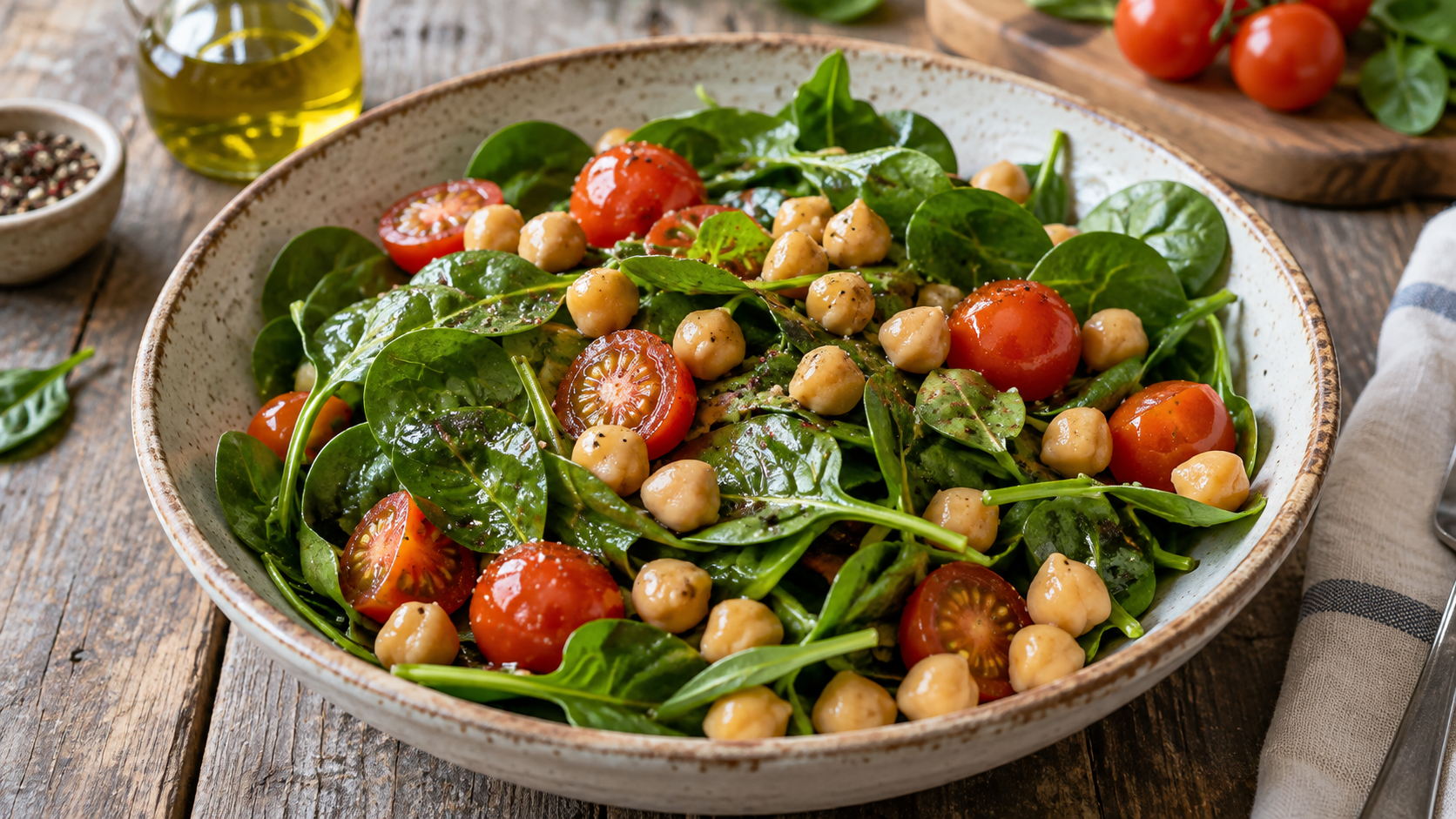 Spinach, chickpeas, tomatoes, and olive oil provide a simple example of how leafy greens, legumes, and healthy fats can be incorporated into a MIND-style meal.
2. Add a Variety of Colorful Vegetables to Your Plate
Broccoli, carrots, tomatoes, bell peppers, cabbage, and cauliflower are all worth eating in a variety of colors.
In the U.S., salads and frozen vegetables make this easy.
Even with a burger or sandwich, choosing a side salad over fries, or adding frozen broccoli to dinner, helps.
If you find yourself throwing out fresh vegetables often, frozen vegetables are a genuinely good alternative.
Healthy eating doesn't require buying the most expensive organic products.
Choosing food wisely within the means God has allowed you, without waste, is its own important attitude.
3. Berries Like Blueberries and Strawberries
Among fruits, the MIND diet particularly emphasizes berries.
Blueberries, strawberries, raspberries, and blackberries are the main examples.
Berries carry anthocyanins and other polyphenols, and their connection to brain health continues to be studied.
When fresh blueberries are expensive, frozen ones work just as well.
A few frozen blueberries added to plain oatmeal or Greek yogurt make for a simple breakfast or snack.
What matters isn't eating a lot of any one "superfood" — it's consistently repeating choices that support your health.
4. Work In Oatmeal and Whole Grains
Whole grains are another important part of the MIND diet.
At an American table, oatmeal, brown rice, barley, quinoa, whole-wheat bread, and whole-grain cereal are all options.
If breakfast usually means a sugary cereal, try swapping it for plain oatmeal a few times a week.
If sandwiches are a regular lunch, choosing 100% whole wheat or whole-grain bread instead of white bread is another option.
There's no need to change everything all at once.
Eating habits, much like a life of faith, are shaped by small daily choices accumulated over a long time.
Making one meal today perfectly isn't as important as making a choice you can actually keep doing tomorrow.
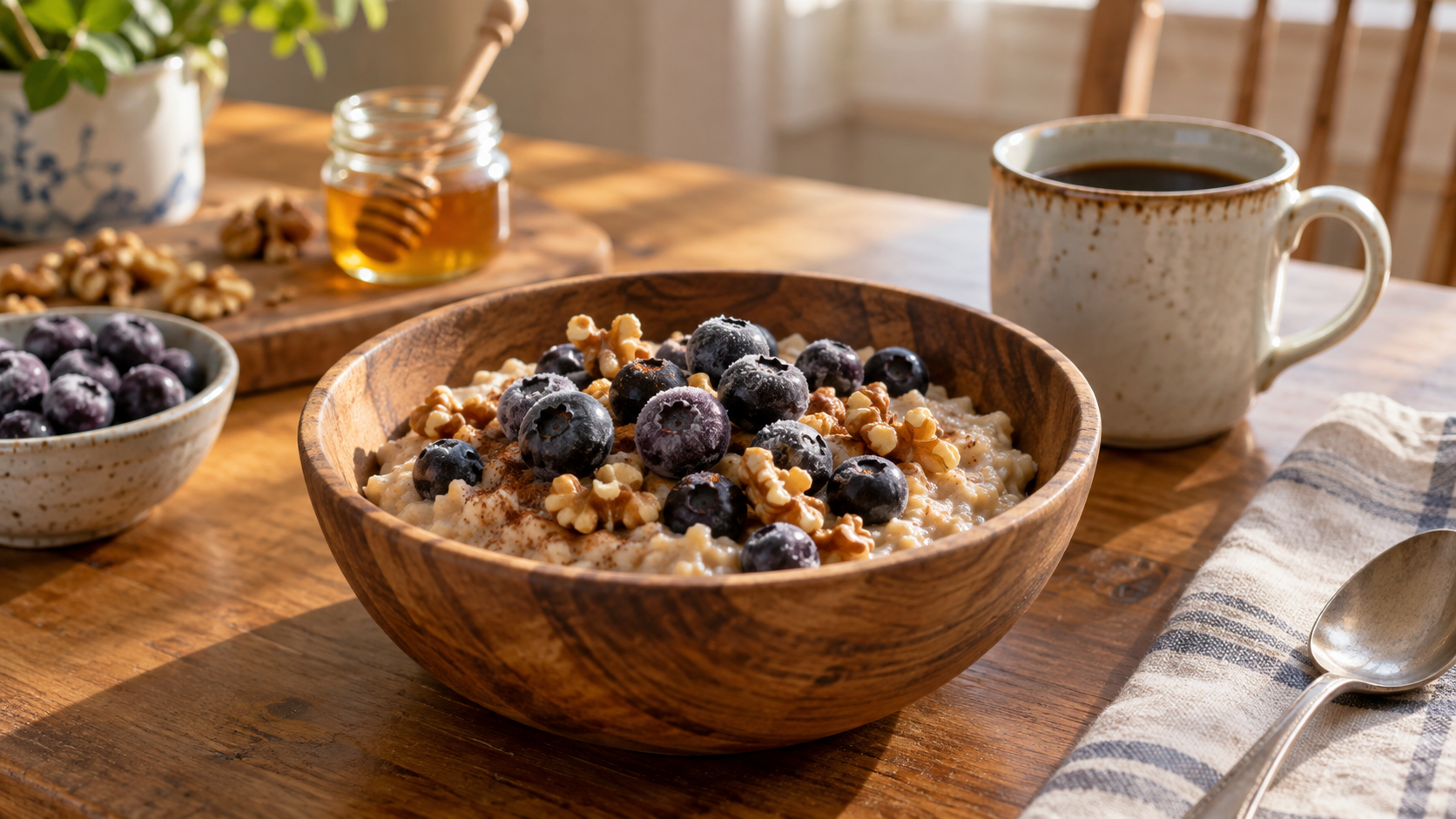 A simple bowl of oatmeal with blueberries and walnuts shows how a brain-healthy breakfast can begin with affordable, everyday foods rather than expensive supplements.
5. Beans Are Both Economical and Versatile
Black beans, chickpeas, lentils, kidney beans, and pinto beans are all foods recommended in the MIND diet.
Canned beans are easy to find in the U.S., making them convenient to use.
Add chickpeas to a salad, swap part of the meat in tacos for black beans, or add lentils to soup.
When choosing canned beans, checking for "No Salt Added" or "Low Sodium" is worth doing when possible.
One of the real advantages of beans is price.
Replacing part of your meat intake with beans or lentils can lower your food costs while adding fiber and plant protein.
It's worth letting go of the idea that a healthy diet has to be expensive.
6. A Small Handful of Nuts Instead of Chips
Walnuts, almonds, pistachios, and peanuts are all worth working in.
If chips or cookies are a regular afternoon snack, swapping part of that for unsalted nuts is a reasonable change.
That said, nuts are calorie-dense, so there's no need to eat a lot.
A small handful is enough.
Even healthy food loses its balance in excess.
The principle of self-control that Scripture emphasizes repeatedly applies to eating too.
Rather than eating a lot of something just because it's "good for you," receiving a reasonable amount with gratitude matters more.
7. It Doesn't Have to Be Salmon
Fish is another recommended food in the MIND diet.
Salmon is the best-known example, but you don't need expensive salmon specifically.
Tuna, sardines, mackerel, and trout are all good options.
Canned tuna or salmon works well in a salad or sandwich too.
If your household rarely eats fish, starting with once a week is a reasonable place to begin.
A health-driven change was never meant to place an unreasonable financial burden on your household or complicate the whole family's meals.
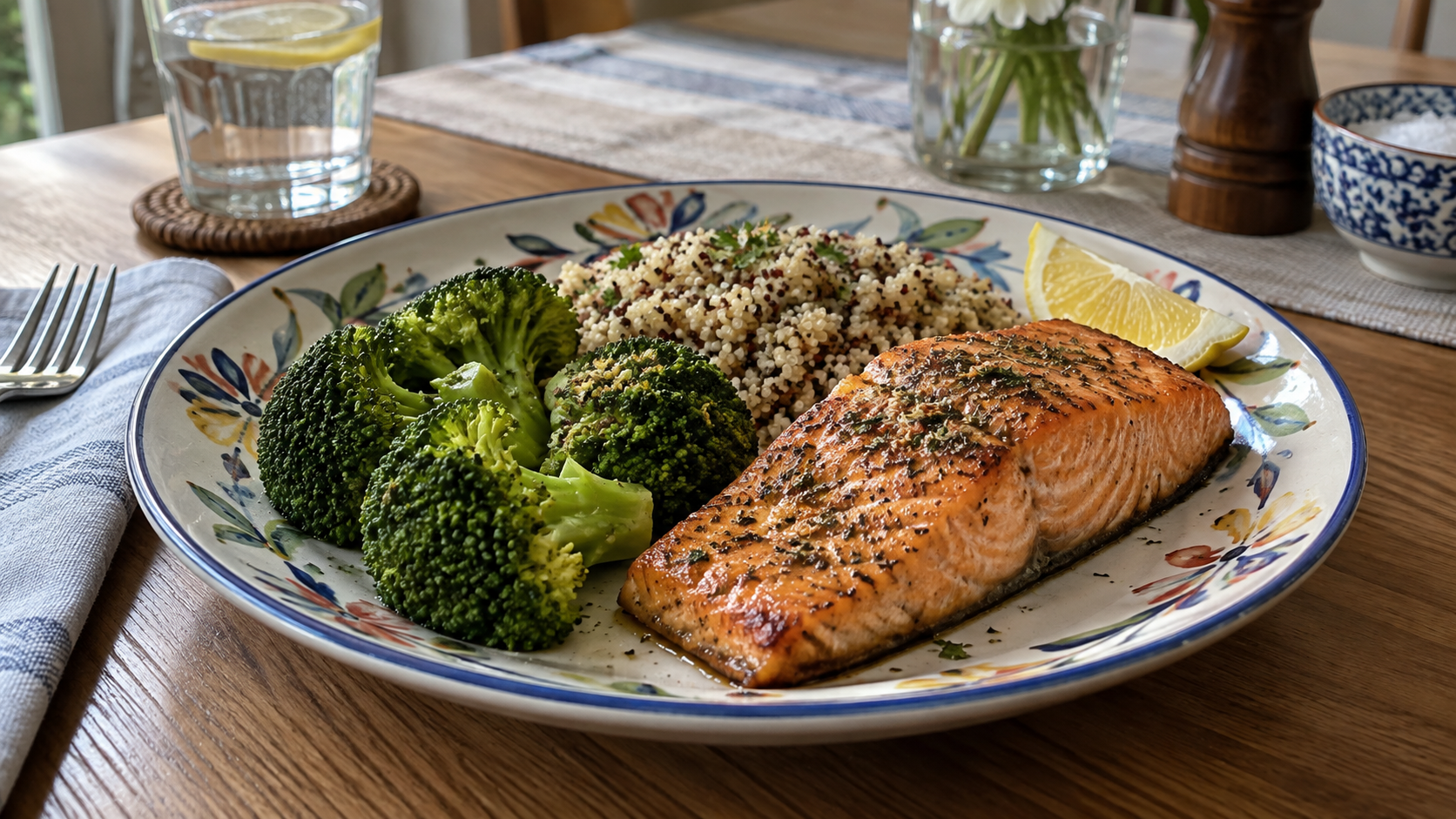 Baked salmon, broccoli, and whole grains offer a balanced meal inspired by the MIND diet, which emphasizes fish, vegetables, and minimally processed foods.
8. Grill or Bake Chicken Instead of Frying It
The MIND diet recommends reducing red meat and using poultry like chicken instead.
That doesn't mean eating fried chicken or chicken nuggets often, though.
Grilled, baked, or roasted chicken is the better direction.
Simply cutting back on how often you eat steak or burgers at dinner, and swapping some of those meals for chicken or fish, is enough.
9. Cut Back on Butter, Use Olive Oil Wisely
Butter shows up often at an American table.
The MIND diet recommends cutting back on saturated-fat-heavy foods like butter and using unsaturated fats like olive oil instead.
Olive oil works well in salad dressing or for cooking vegetables.
That said, eating more olive oil doesn't automatically make you healthier either.
The key is swapping, not just adding.
Try using olive oil in place of butter in a few dishes where you'd normally reach for butter.
What's Worth Cutting Back On?
The MIND diet recommends reducing how often you eat:
- Excessive red meat, like burgers and steak
- Processed meat like bacon, sausage, and hot dogs
- Butter and other foods high in saturated fat
- Dishes with excessive cheese
- Donuts, cookies, cake, pastries
- French fries and fried foods
- Fast food
This doesn't mean never eating these foods again.
What matters is restraint and frequency.
If you eat fast food three times a week, cutting back to once or twice, and swapping one of those meals for a homemade salad, soup, or fish dish, is a reasonable place to start.
Self-control in the Christian life was never simply about strict prohibition.
It's connected to examining what's actually ruling you, and having the freedom to stop yourself and choose something better when needed.
Checking Nutrition Facts Is a Good Habit Too
When grocery shopping in the U.S., checking the Nutrition Facts label is a genuinely helpful habit.
A product front label might say "Natural," "Healthy," "Low Fat," or "Whole Grain," but the actual nutrition content can differ.
It's worth specifically checking:
Sodium, Added Sugars, Saturated Fat, Dietary Fiber
Salad dressings, sauces, cereal, and granola can look health-conscious but still carry surprisingly high added sugar or sodium depending on the product.
Checking for yourself, rather than trusting a familiar phrase or advertisement, matters for health too.
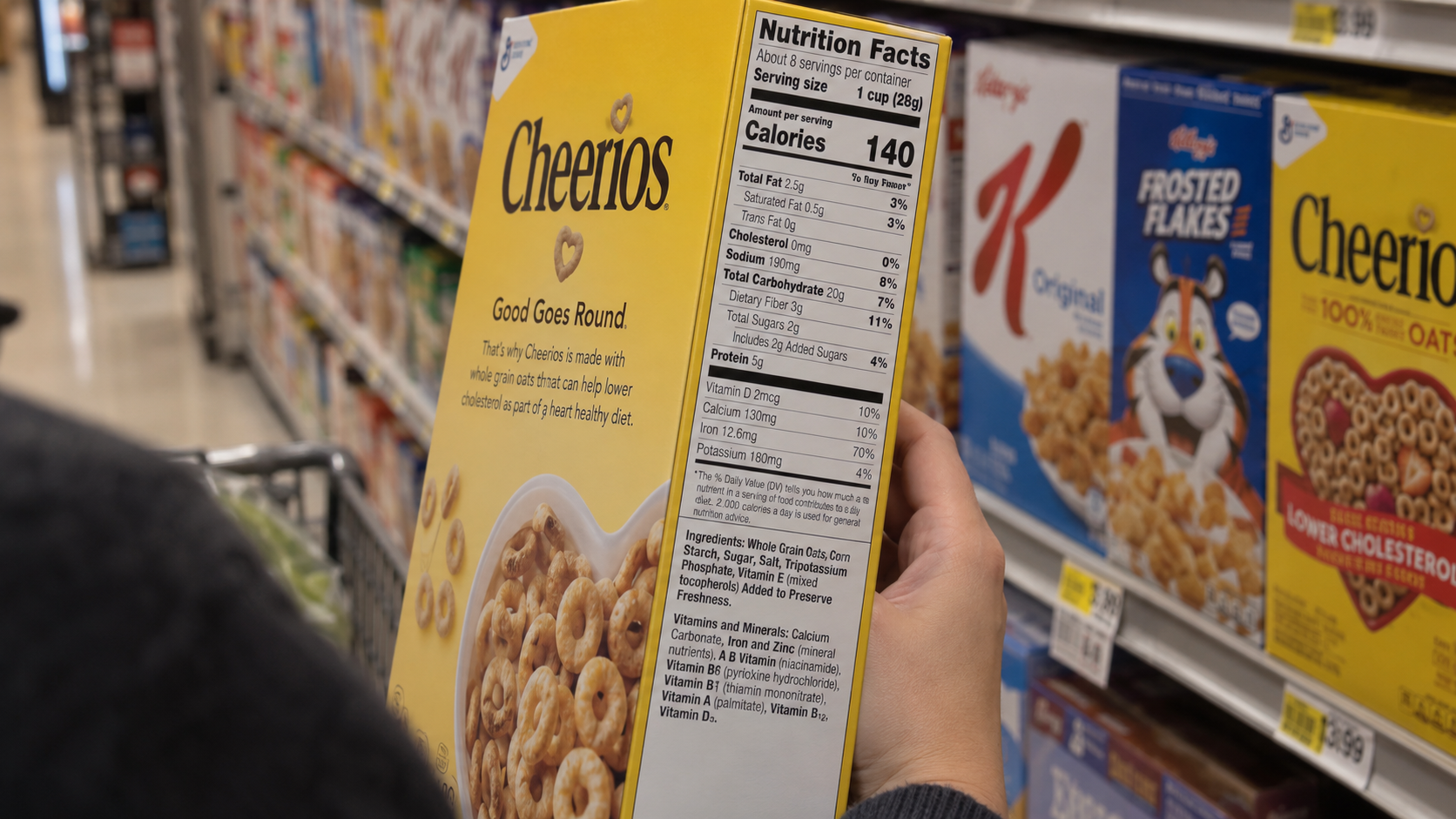 Reading the Nutrition Facts label can help shoppers compare sodium, added sugars, saturated fat, and fiber when choosing foods for a healthier everyday diet.
Does the MIND Diet Actually Prevent Dementia?
This question deserves a careful answer.
Several observational studies have reported that people who follow the MIND diet closely tend to have a lower risk of cognitive decline or impairment.
An analysis of the REGARDS cohort, which included roughly 14,000 participants, also observed a somewhat lower association with cognitive impairment risk among those with higher MIND diet adherence.
A 2026 analysis of the Framingham Heart Study Offspring cohort also reported an association between higher MIND diet adherence and slower long-term changes in certain brain structures.
But most of these are observational studies.
People who follow the MIND diet closely may also exercise more, smoke less, or manage their blood pressure better — differences in other lifestyle factors that could account for the association.
So it's hard to conclude that the MIND diet itself caused the difference in cognitive outcomes.
Stricter Clinical Trials Haven't Shown a Clear Difference
Results looked a bit different in more rigorous randomized controlled trials.
In a 3-year study of 604 older adults with a family history of dementia but normal cognition (average age 70.4, 65.5% female, average BMI 33.9), both the MIND diet group and the control diet group showed improved cognition.
But the MIND diet group didn't show a statistically greater improvement than the control group.
MRI scans also showed no clear difference between the two groups.
Interestingly, both groups lost weight, and cognition improved in both groups alongside that weight loss. This suggests that weight management itself may play an important role in brain health, regardless of the specific diet type.
That result is actually worth sitting with.
Rather than placing all our hope in one special food or diet, maintaining an overall healthy lifestyle may matter more.
Summarizing the current evidence: the MIND diet is a healthy eating pattern that may support brain health, but it is not an established dietary treatment for preventing or treating dementia or Alzheimer's disease.
Don't Let "Health" Become Another Idol
Health matters.
But for a Christian, health was never the ultimate purpose of life.
However carefully we manage our health, the human body eventually ages and weakens. Illness, too, isn't something we can completely avoid through perfect management.
So it's worth caring about health without letting it become our greatest fear or obsession.
"If I don't eat this, something terrible will happen." "If I don't take this supplement, I'll get dementia."
If fear like this leads to spending more than necessary, or spending all day checking health information, the effort toward health can actually rob us of peace.
What we can do is responsibly care for the body we've been given, while letting go of the idea that we can fully control our life and future.
Doing our best for our health, while ultimately trusting our life to God, is the faith that's needed here.
Check Your Table Before an Expensive Brain Supplement
In the U.S., supplements marketed for memory and brain health are easy to find.
Vitamin B, fish oil, ginkgo, turmeric, and various memory-support products are widely available.
But there isn't a specific vitamin or supplement established as something the average person must take to prevent dementia.
The words "Brain Health," "Memory," or "Cognitive Support" on a label don't mean dementia prevention has been proven either.
Before buying an expensive supplement long-term, it's worth checking a few things first.
What am I actually eating every day? Am I getting enough vegetables? Am I exercising consistently? Are my blood pressure and blood sugar managed? Am I sleeping enough? Do I have meaningful relationships with family and neighbors?
These ordinary habits matter more for healthy aging than we might expect.
How to Start at Home
There's no need to start the MIND diet dramatically.
If breakfast usually means a sugary cereal or a donut, try swapping it a few times a week for plain oatmeal + frozen blueberries + walnuts.[Organic steel cut oats like this one] are an easy, unsweetened base to build that breakfast around (affiliate link — I may earn a small commission at no extra cost to you).
If you have toast, choose whole-grain bread instead of white bread.
Add a bit more spinach and tomato to a lunch sandwich, and add chickpeas or beans to a salad.
At dinner, cut back on burgers or steak and work in baked fish, grilled chicken, or lentil soup.
For snacks, swap part of your chips and cookies for nuts, fruit, or plain Greek yogurt.
You don't need to change everything perfectly.
Just change one thing at a time.
A Healthy Table Doesn't Have to Be Expensive
"Healthy eating" can sound like it requires expensive organic food from a specialty store.
But that's not actually true.
If fresh berries are pricey, frozen berries work just as well.
If salmon feels like a stretch, canned tuna, sardines, or mackerel are practical alternatives.
If an organic salad mix costs too much, regular spinach or frozen broccoli works fine.
Part of your meat can be swapped for beans or lentils.
Store brands and sale items are worth using too.
The core of healthy eating isn't buying an expensive "superfood."
Choosing food wisely for your family without wasting the resources God has allowed you is also part of good stewardship.
Meals Are a Time for Gratitude, Not Just Nutrients
We often look at food purely as a combination of nutrients — how many grams of protein, how many calories, how much omega-3.
That kind of information is genuinely useful. But if a meal becomes nothing more than filling a nutrient quota, we might be missing something at our own table every day.
The fact that you have food to eat today, hands and time to prepare it, and family or neighbors to share it with — these, too, are genuine reasons for gratitude.
1 Timothy 4 (KJV) says: "For every creature of God is good, and nothing to be refused, if it be received with thanksgiving."
Even a plate of spinach or a bowl of oatmeal can be received that way.
The Takeaway
The MIND diet isn't some special prescription for brain health.
But a balanced diet that includes vegetables, whole grains, legumes, fish, and nuts remains a genuinely healthy choice, supported by the evidence we currently have.
What matters isn't building a perfect meal plan — it's starting with one small change today, and sticking with it.
And not forgetting, at that table, to thank God for allowing us all of it.
That may be the most reliable starting point for brain health there is.
This article is intended as general health information and is not a substitute for individual diagnosis or treatment. If cognitive decline or memory concerns persist or worry you, please consult a healthcare professional.