Chickpea Benefits, Fully Explained: Why They Belong in Your Diet After 40
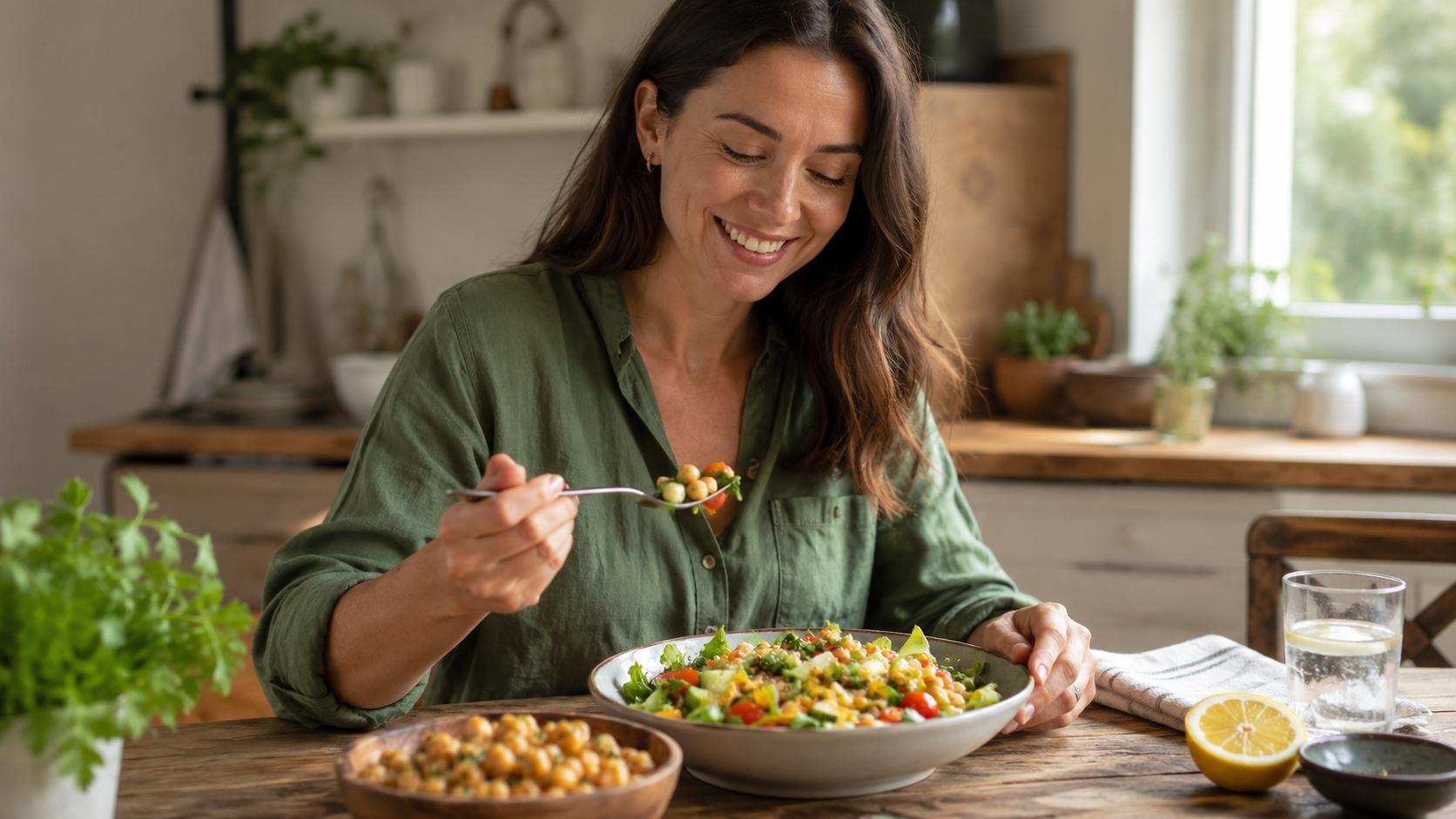 A wholesome chickpea salad makes an easy and satisfying meal, offering plant-based protein, fiber, and fresh vegetables as part of a balanced everyday diet.
The food we eat every day means more than simply filling us up. Especially as we get older, what we eat is closely tied not just to weight, but to muscle, blood sugar, gut health, and cardiovascular health.
Looking at the table through a Christian lens adds one more layer worth thinking about.
Scripture puts it this way:
"For every creature of God is good, and nothing to be refused, if it be received with thanksgiving." (1 Timothy 4:4, KJV)
A healthy diet doesn't have to start with chasing down some mystical "superfood." It can start with receiving the wide variety of food God has provided with gratitude, and choosing wisely among it.
The chickpea is one such food worth introducing today.
Small and mild-tasting, chickpeas offer plant protein, fiber, and a range of minerals together — which makes them especially useful in a diet built for life after 40.
A Small but Sturdy Legume
The chickpea gets its English name — from the Latin cicer — for its rounded shape, and it's also called the garbanzo bean. It's best known as the main ingredient in hummus, a Middle Eastern staple.
Lately, chickpeas have become a familiar sight in salads, weight-management diets, high-protein diets, and blood-sugar-conscious meal plans.
The real strength of the chickpea isn't any single standout nutrient — it's that it delivers protein, fiber, and several other nutrients together, in one food.
After 40, muscle mass tends to decline gradually, and weight, blood sugar, and cholesterol often become things people pay closer attention to than before.
What matters at that point isn't eating less across the board — it's eating a bit more in balance.
Chickpeas can genuinely help build that kind of diet.
1. They Help Round Out Your Plant Protein Intake
Muscle is something you can't afford to overlook in your health after 40.
Muscle mass naturally tends to decline with age, which makes getting enough protein — alongside proper exercise — genuinely important.
Chickpeas provide a solid amount of plant-based protein.
If relying only on meat and eggs for protein feels like a lot, chickpeas, lentils, and tofu are worth working into your diet alongside them.
They're great in a salad, and they blend in well with rice, soup, or curry.
That said, it's better not to lean on chickpeas alone to cover every nutrient you need — pairing them with fish, eggs, whole grains, nuts, and vegetables gives you a more complete picture.
Receiving the wide variety of food God has given us with gratitude, rather than leaning too heavily on one thing, is closer to what a genuinely healthy table looks like.
2. Their Fiber Helps You Feel Full Longer
One of the standout benefits of chickpeas is their fiber content.
Fiber-rich food helps you stay satisfied longer after a meal.
If you're managing your weight, cutting portions too aggressively can actually backfire — hunger creeps in, and you end up reaching for snacks or overeating later.
What matters more here isn't "eating less" but "staying satisfied longer."
Adding a spoonful or two of chickpeas to a salad, or mixing some into rice, is a natural way to bring in both fiber and protein at once.
A healthy diet also calls for self-control. Self-control here doesn't mean refusing to eat — it means eating gratefully in the amount you actually need, and reining in excess desire.
3. They Fit Well Into a Blood-Sugar-Conscious Diet
Because chickpeas combine protein and fiber, they're a useful building block for a blood-sugar-conscious diet.
To be clear, chickpeas aren't a treatment for diabetes, and they don't lower blood sugar directly the way medication does.
But a meal built around chickpeas, vegetables, and protein is generally a better choice — for both fullness and blood sugar — than one built mostly around fast-digesting carbs like white rice, white bread, or crackers.
For example, try cooking rice with a portion of chickpeas mixed in, or spreading hummus on bread instead of a sugary jam.
Health was never decided by one special meal.
Small choices repeated every day add up to become your actual eating pattern, and that pattern shapes your health over time.
Faith works similarly. Just as small, daily prayers, Scripture, and acts of obedience accumulate to change us over a long stretch of time, health starts with small, daily habits too.
4. They Can Support Gut Health and Regular Digestion
Fiber plays an important role in gut health too.
If your usual diet is light on vegetables and whole grains, and heavier on refined carbs like white rice, bread, and noodles, fiber intake can end up falling short without you noticing.
Gradually adding chickpeas to that kind of diet helps round out your fiber intake.
That said, if you're not used to eating much legume, suddenly eating a lot of chickpeas can bring on gas or bloating.
Rather than eating a large amount right away just because it's "healthy," it's better to increase the amount gradually while paying attention to how your body responds.
In health management generally, a change you can actually sustain matters more than a drastic one.
5. They Fit Well Into a Heart-Conscious Diet
Chickpeas are also useful for adding variety to a diet that's heavy on meat.
This doesn't mean meat needs to be avoided entirely.
But if a large share of your meals lean on processed meat or foods high in saturated fat, it's worth considering swapping some of that out for plant-based protein like chickpeas, lentils, or tofu.
Eating enough fiber matters for cholesterol and cardiovascular health too.
Preparation method matters as well. Even a genuinely healthy ingredient like chickpeas loses much of its benefit if it's cooked with a heavy hand of butter, salt, or oil.
Boiling them for a salad or soup, or blending them into hummus with a modest amount of olive oil, is a better approach.
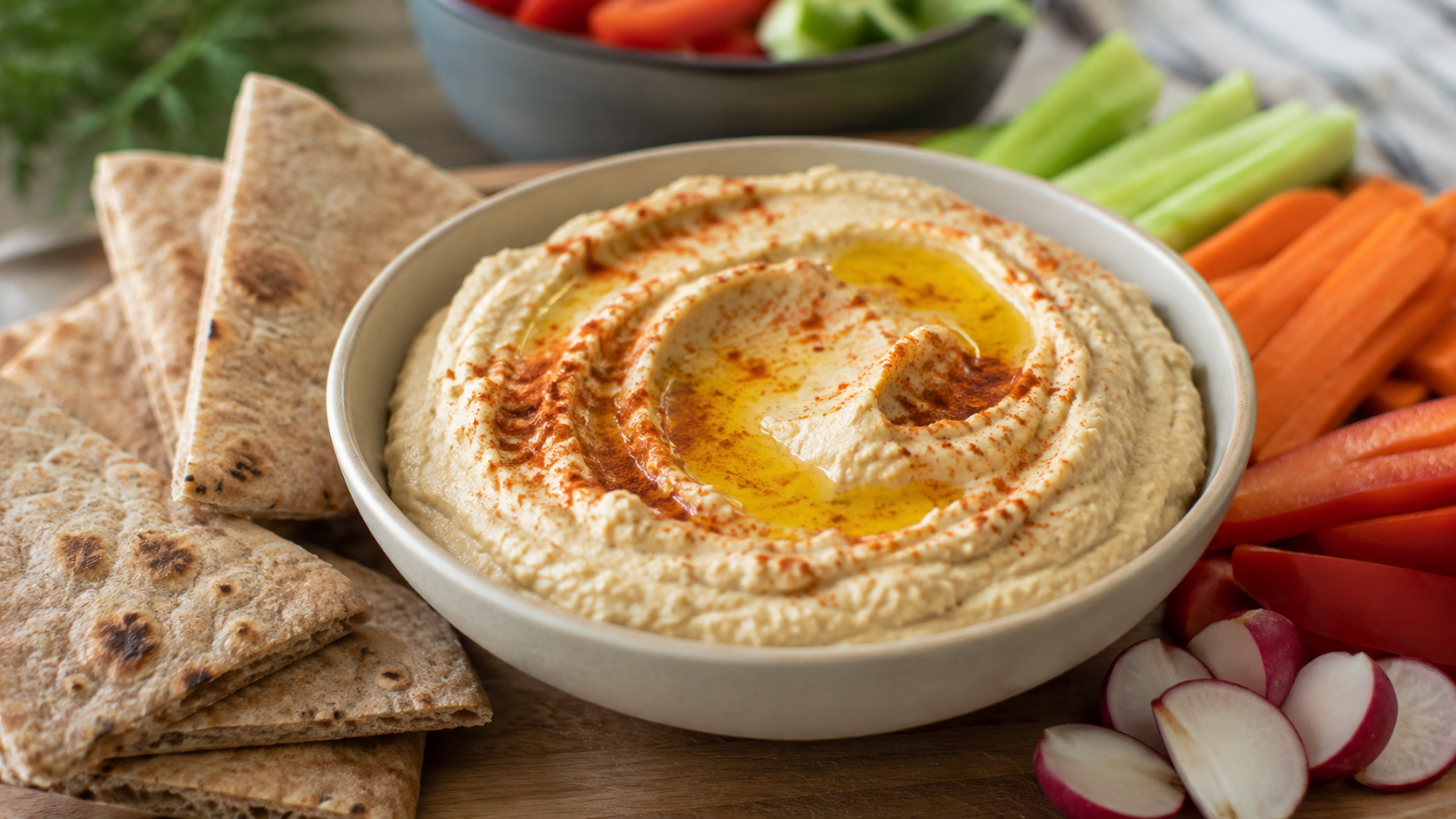 Homemade hummus made from chickpeas offers a flavorful way to enjoy plant-based protein and fiber, especially when paired with whole wheat pita and fresh vegetables.
6. A Range of Nutrients — Folate, Iron, Magnesium, and More
Beyond protein and fiber, chickpeas also carry folate, iron, magnesium, and potassium.
Folate plays a role in cell production, iron is needed to carry oxygen through the body, and magnesium is involved in muscle and nerve function and energy metabolism, among other things.
Of course, chickpeas alone don't cover every nutrient you need.
That kind of exaggeration is exactly what's worth being cautious about when talking about "healthy foods."
No single food completes your health on its own — a balanced diet is built from a range of ingredients working together, complementing one another.
How Should You Actually Eat Chickpeas?
Chickpeas are easier to use than you might expect.
The simplest approach is adding boiled chickpeas to a salad. Paired with vegetables, egg, grilled chicken, and a modest olive oil dressing, that's a genuinely satisfying meal.
Cooking soaked chickpeas together with rice — a simple chickpea rice — works well too.
You can also make hummus: blend boiled chickpeas with tahini, lemon juice, garlic, and olive oil into a smooth spread, and enjoy it with whole wheat bread or vegetable sticks.
Roasting chickpeas in the oven or an air fryer makes for a good snack too, though it's worth avoiding a heavy hand with salt or oil even for a "healthy" snack.
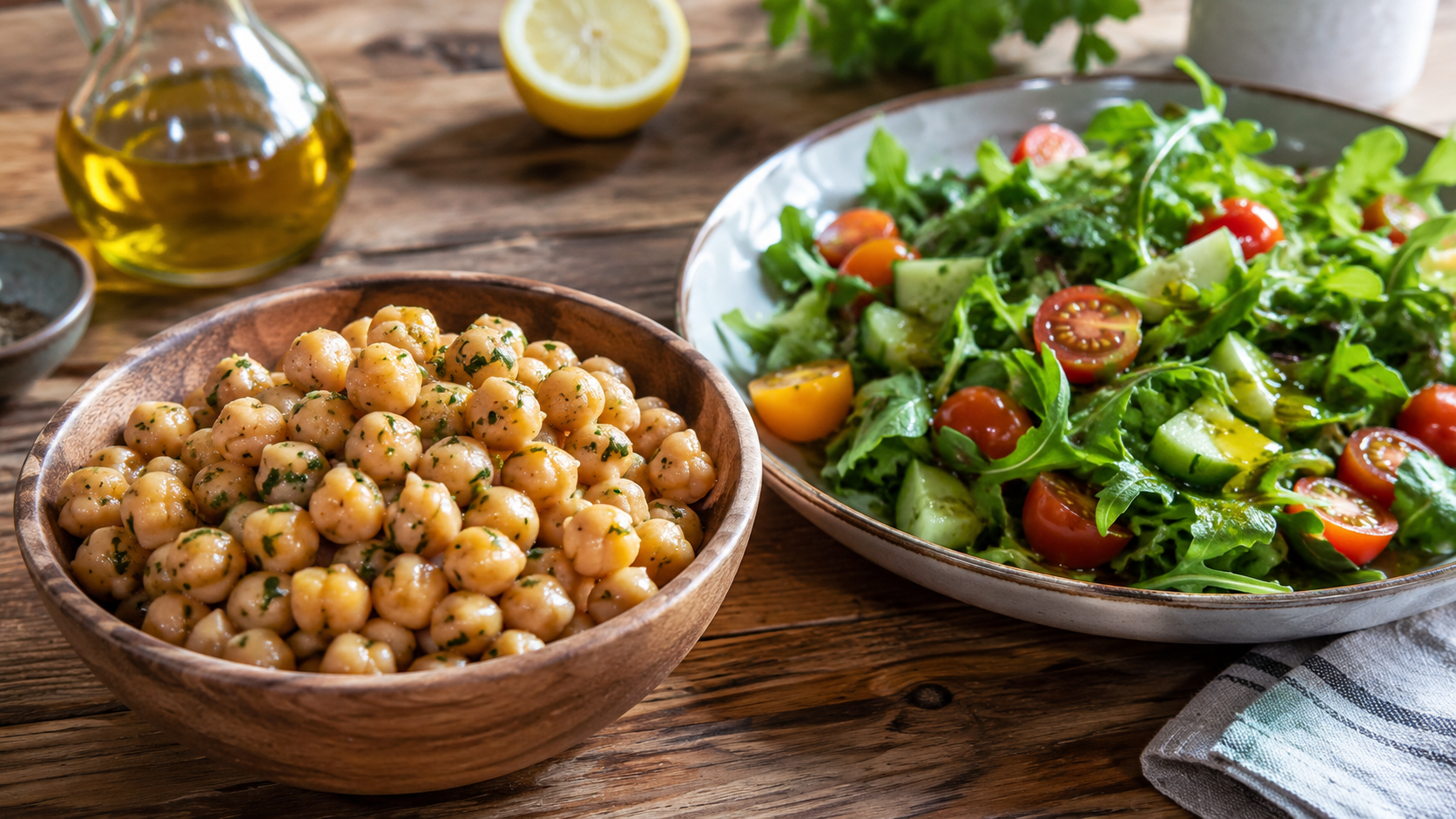 Cooked chickpeas paired with a fresh vegetable salad make a simple, nutrient-rich meal packed with plant-based protein and fiber.
What to Watch For When Eating Chickpeas
Even a genuinely healthy food doesn't work the same way for everyone.
Because chickpeas are high in fiber, eating a large amount suddenly can cause gas, bloating, or digestive discomfort. It's better to start with a small amount.
Canned chickpeas can carry a fair amount of sodium depending on the brand, so rinsing them thoroughly under water before use is a reasonable step. Choosing [a no-salt-added organic option like this one] sidesteps the issue from the start, without any extra rinsing needed (affiliate link — I may earn a small commission at no extra cost to you).
If you're managing kidney disease and need to limit potassium or phosphorus, it's worth checking an appropriate serving size with a doctor or dietitian.
And treating chickpeas as a "diet food" you can eat without limit isn't wise either. Even healthy food comes down to eating a reasonable amount.
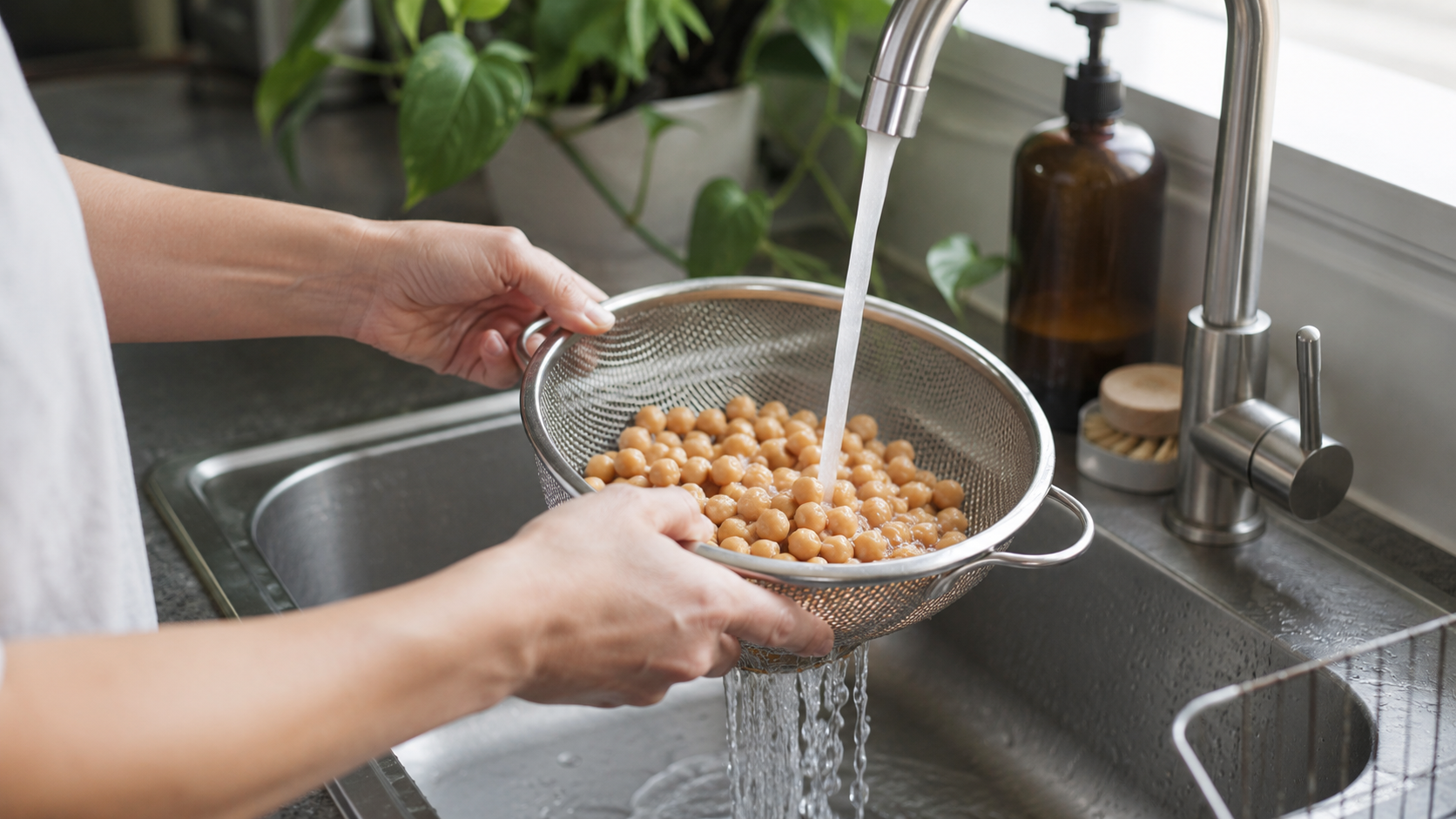 Rinsing canned chickpeas under running water before serving can help remove excess sodium and makes them ready for salads, soups, hummus, and other healthy meals.
Receiving God's Table With Gratitude
As we pay more attention to health, it's tempting to keep chasing the next "superfood" — one food that fixes blood sugar, another that melts fat, another that slows aging.
But our health was never something we could hand over to a single food.
Chickpeas aren't a miracle cure for health either — they're one good ingredient among many that helps build a healthy diet.
It's worth returning to that verse from 1 Timothy:
"For every creature of God is good, and nothing to be refused, if it be received with thanksgiving." (1 Timothy 4:4, KJV)
This verse invites us not to fear or worship food itself, but to receive what God has given with gratitude and actually enjoy it.
The same applies to healthy eating. Rather than believing one food will automatically make you healthy, what matters is gratefully receiving the range of food God has allowed, wisely choosing what your body actually needs, and practicing self-control.
Caring for your body can be a small act of stewardship — part of living well the life you've been given.
But health itself was never meant to be the measure of your faith. A healthy person's faith isn't stronger, and someone facing illness isn't weaker in faith because of it.
What we can actually do is care for the body we've been given, as best we can, within today's circumstances — and leave the outcome in God's hands.
The Takeaway: Health Starts at a Grateful Table
Chickpeas are a genuinely good ingredient — offering plant protein, fiber, and a range of minerals together.
If you're thinking about muscle, weight, blood sugar, gut health, or cardiovascular health after 40, they're worth working into your regular diet, little by little.
There's no need to start with something dramatic.
A spoonful in a salad. A bit mixed into rice. Making hummus together with family. That's enough to start.
A healthy life isn't built overnight.
Receiving the food God has given with gratitude, practicing self-control as needed, and stacking up small, good choices every day — that might be the simplest, most grounded act of health management and gratitude we can start at our own table.
This article is intended as general health information and is not a substitute for medical diagnosis or treatment. If you have kidney disease or another condition requiring dietary restriction, please consult a healthcare professional or registered dietitian about appropriate serving sizes.