Coconut Oil: Better Seen as a "Routine Oil" Than a Health Food
Walk through the health-food section of any store, online or off, and one item shows up again and again: coconut oil. For a while it was sold as a "good-for-you fat," a "diet oil," an "energy oil" — as if simply eating it would melt away weight or hand you better health.
But for a Christian, caring for your health is less about chasing trends and more about wisely tending the body God entrusted to you. The body isn't a possession to drive into the ground or neglect at will; it's a gift, and the instrument through which we live out our calling. So instead of pitching coconut oil as a miracle food, let's look at it for what it really is — a routine oil to use, in moderation, in everyday life.
 A simple morning kitchen routine reminds us that caring for the body can begin with gratitude, balance, and small daily choices.
Skip the Hype — Here Are the Facts
Coconut oil is a plant oil pressed from coconut, with a distinctive aroma and texture that make it useful in cooking, baking, and skin care. But it's worth being careful about the health-food halo around it.
Start with the key facts. Coconut oil is roughly 82 percent saturated fat — higher than butter (about 63 percent) or beef fat (about 50 percent). After reviewing more than 100 studies, the American Heart Association issued an advisory recommending against consuming coconut oil, noting that it raised LDL ("bad") cholesterol in all seven controlled trials they examined. A single tablespoon packs more than 11 grams of saturated fat — nearly the AHA's entire suggested daily limit of about 13 grams.
You'll sometimes hear that the medium-chain fatty acids in coconut oil are burned quickly for energy. Maybe so, but that doesn't make it a fat you can use freely. Health is never decided by one single food. Tending the body God gave us isn't about hunting for a trendy ingredient; it's about minding our daily meals, sleep, movement, and even the posture of our hearts, all together.
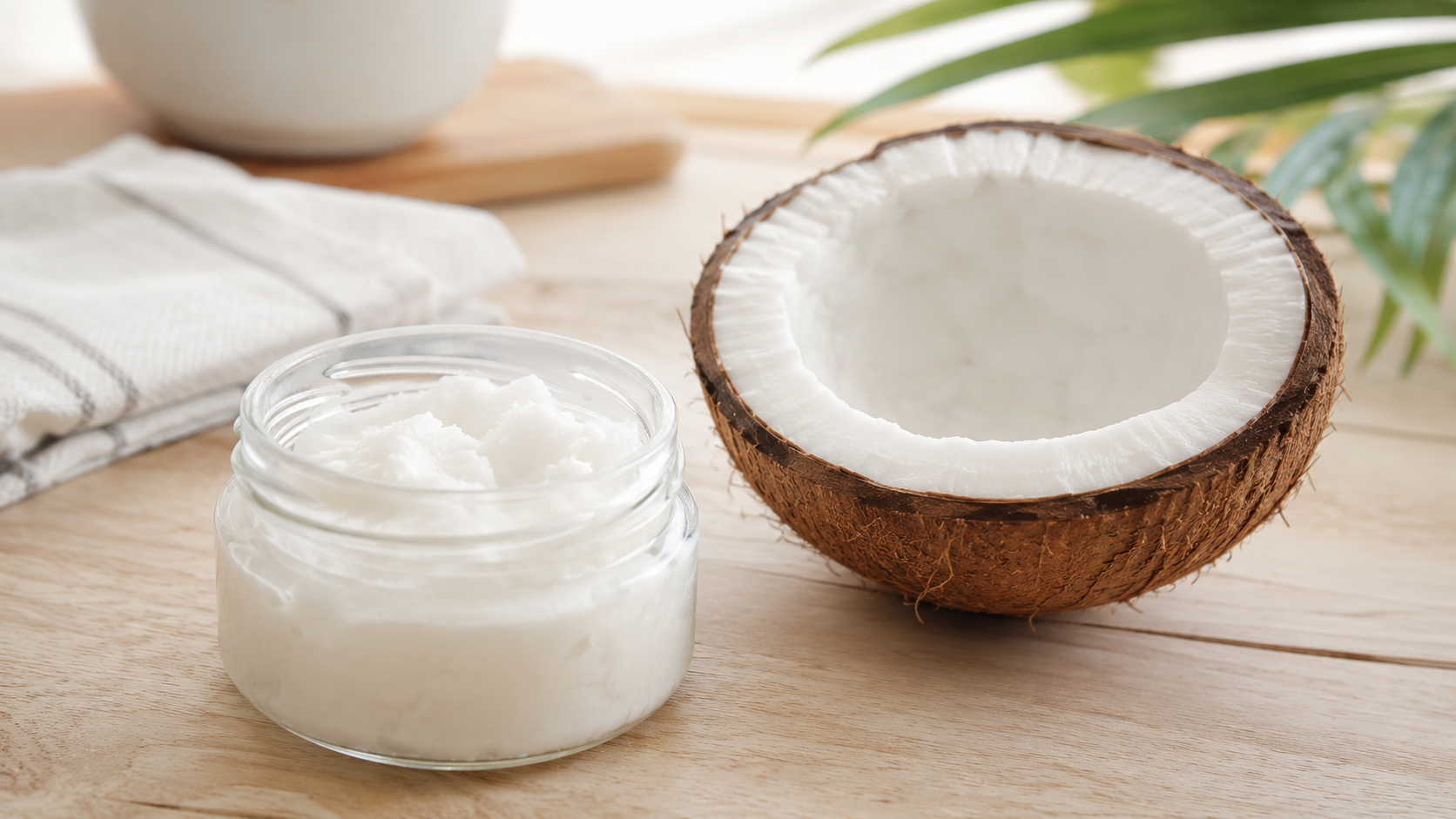 A small jar of coconut oil sits beside a freshly halved coconut on a light wooden counter, highlighting the ingredient’s clean, simple appeal as a versatile staple for everyday cooking and wellness routines.
Not "Add" — "Swap"
The most practical principle for using coconut oil is simple: don't add more fat; swap it in when it makes sense.
If you're already eating a lot of rich, oily food and you pour coconut oil on top of that, it's hard to call that a healthy choice — every oil, whatever the type, still carries calories. On the other hand, if you've been reaching for butter or margarine regularly, swapping in a small amount of coconut oil now and then can be a reasonable way to adjust a routine — a little flavor for pancakes, baking, or a light sauté. Even then, the key word isn't "lots," it's "a little." Scripture keeps pointing us toward self-control, and that matters in caring for the body too. Even something that looks good loses its benefit in excess, and coconut oil is no exception.
You can also work a small amount into a morning routine — a touch in coffee or a warm drink for flavor, or a little instead of butter on bread. That said, taking oil on an empty stomach doesn't suit everyone. If you have an easily upset stomach, digestive trouble, or gallbladder issues, be cautious. And if your cholesterol is high or you're at cardiovascular risk, talk with a medical professional before making it a regular health habit.
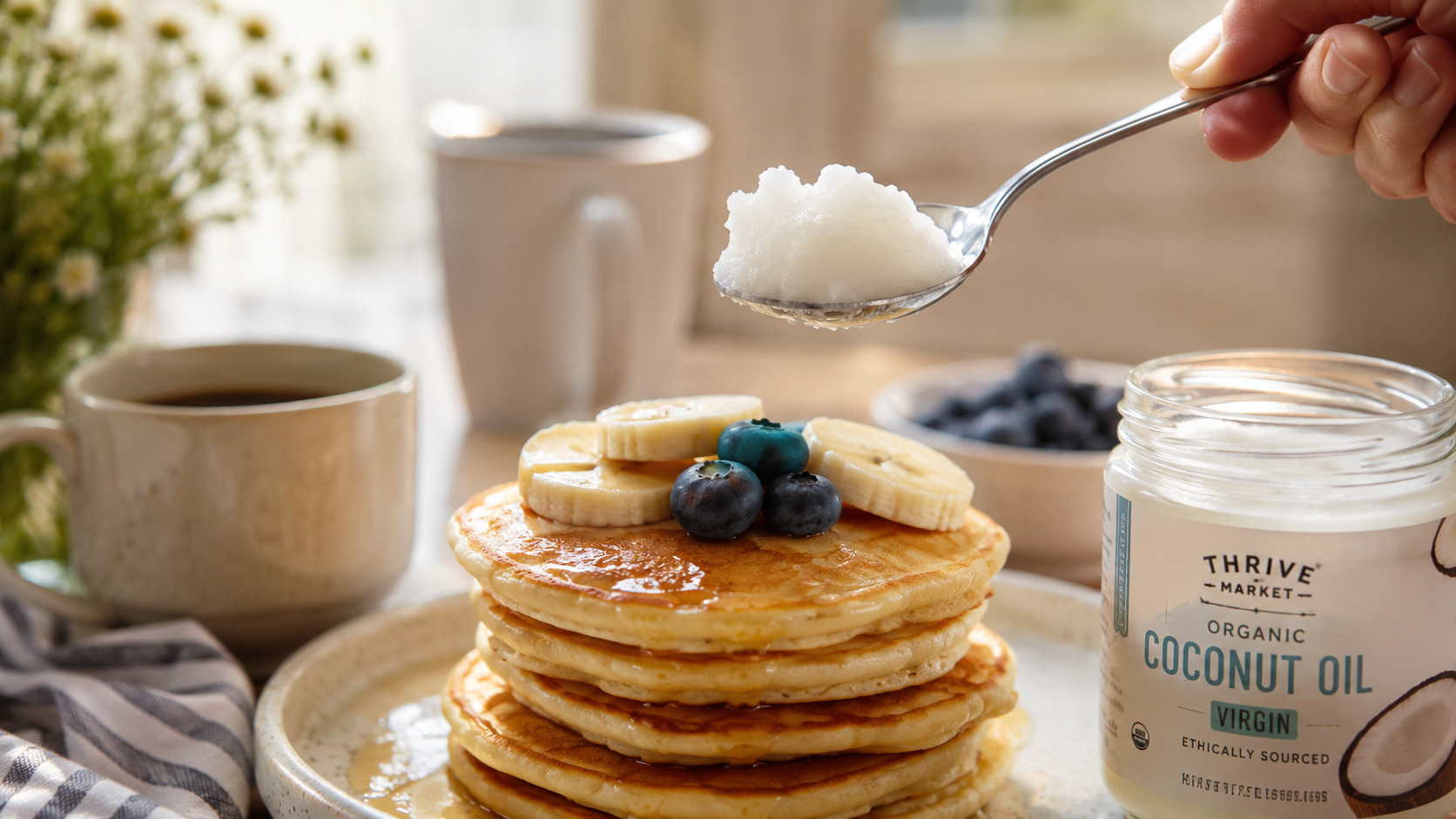 A simple breakfast scene reminds us that caring for the body often begins with small, mindful choices made with gratitude and moderation.
Check the Heart Before the Diet
When we start trying to get healthier, we often want fast results. Just eat this. This oil burns fat. Your body will change in days. But health rarely comes from being in a hurry. Just as God shapes our lives one day at a time, the body mends as small habits accumulate. So it's better to see coconut oil not as a shortcut to weight loss but as a small tool for making your eating a little simpler and more restrained. The more useful question isn't "What can I add?" but "What can I cut back, and what can I swap?"
Beyond eating, coconut oil can serve as a everyday moisturizer — a small amount on dry lips, rough hands or feet, or frizzy ends. But it doesn't suit every skin type either. The Cleveland Clinic notes that coconut oil can clog pores or trigger breakouts for some people, so if your skin is acne-prone or sensitive, test a small amount first. What matters in a routine isn't using a lot of an expensive product, but the wisdom of watching how your own body responds and using only as much as you need.
And in cooking, coconut oil isn't always the best pick. Its aroma can be lovely in small amounts on pancakes, roasted vegetables, pan-fried tofu, or a light stir-fry. But for heart health, the more common recommendation is to build your everyday diet around unsaturated fats — olive oil, canola oil, nuts, fish. A healthy table isn't completed by any single oil, but by vegetables, protein, whole grains, the right fats, and a grateful heart together.
Discernment, Not Trends
We live in an age awash in health information. One food becomes a "superfood" overnight; another is suddenly something to avoid. But what a Christian needs is neither fear nor blind faith — it's discernment. Coconut oil is a good example. It has its uses, but there's no need to inflate them. It's not a diet food and not a cure-all; it's one oil, useful in moderation in ordinary life.
Coconut oil is less a "special fat that makes you healthy" and more a routine oil for occasional, small uses. It can help you tweak a butter-or-margarine habit, add aroma to a dish, or moisturize hands and lips — but eating more of it won't make you healthier, and those with high cholesterol or cardiovascular risk should be especially careful.
The goal of caring for your health isn't a perfect body; it's carrying out today's life and calling with the body God entrusted to you. Swap rather than add. Use wisely rather than lean on it too heavily. Live as a steward of the body rather than a follower of trends. That small posture is where a healthy daily routine begins.
Note: This article offers general health information and everyday tips. Because coconut oil is high in saturated fat, anyone with high cholesterol, cardiovascular disease, gallbladder or digestive conditions, or special dietary needs should consult a medical professional before adding it to their diet.
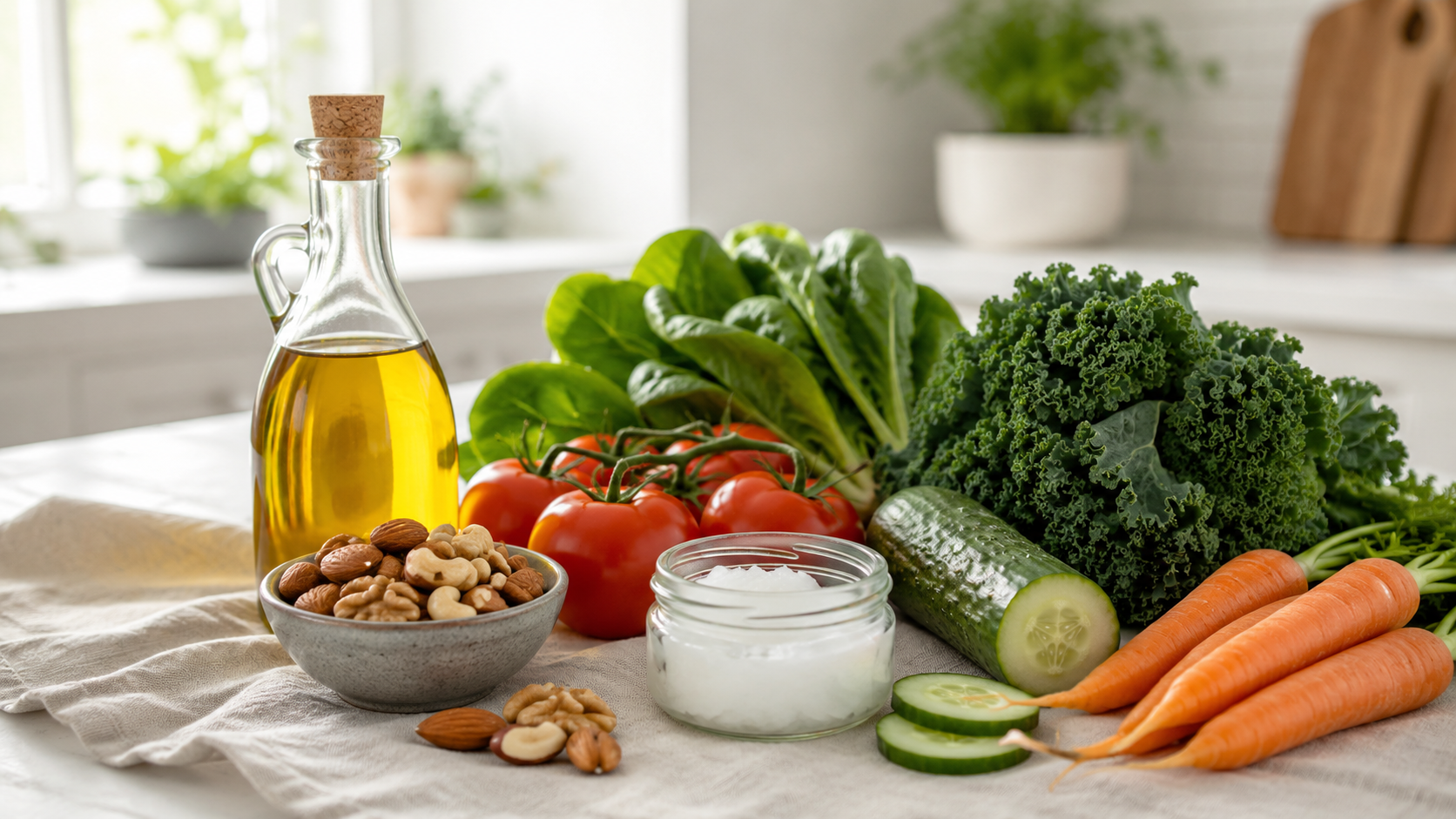 A simple spread of wholesome ingredients reminds us that caring for the body often begins with balance, gratitude, and wise daily choices.