Do You Really Need 10,000 Steps a Day?
New Research on Step Counts and Walking Pace, and a Christian View of Caring for the Body
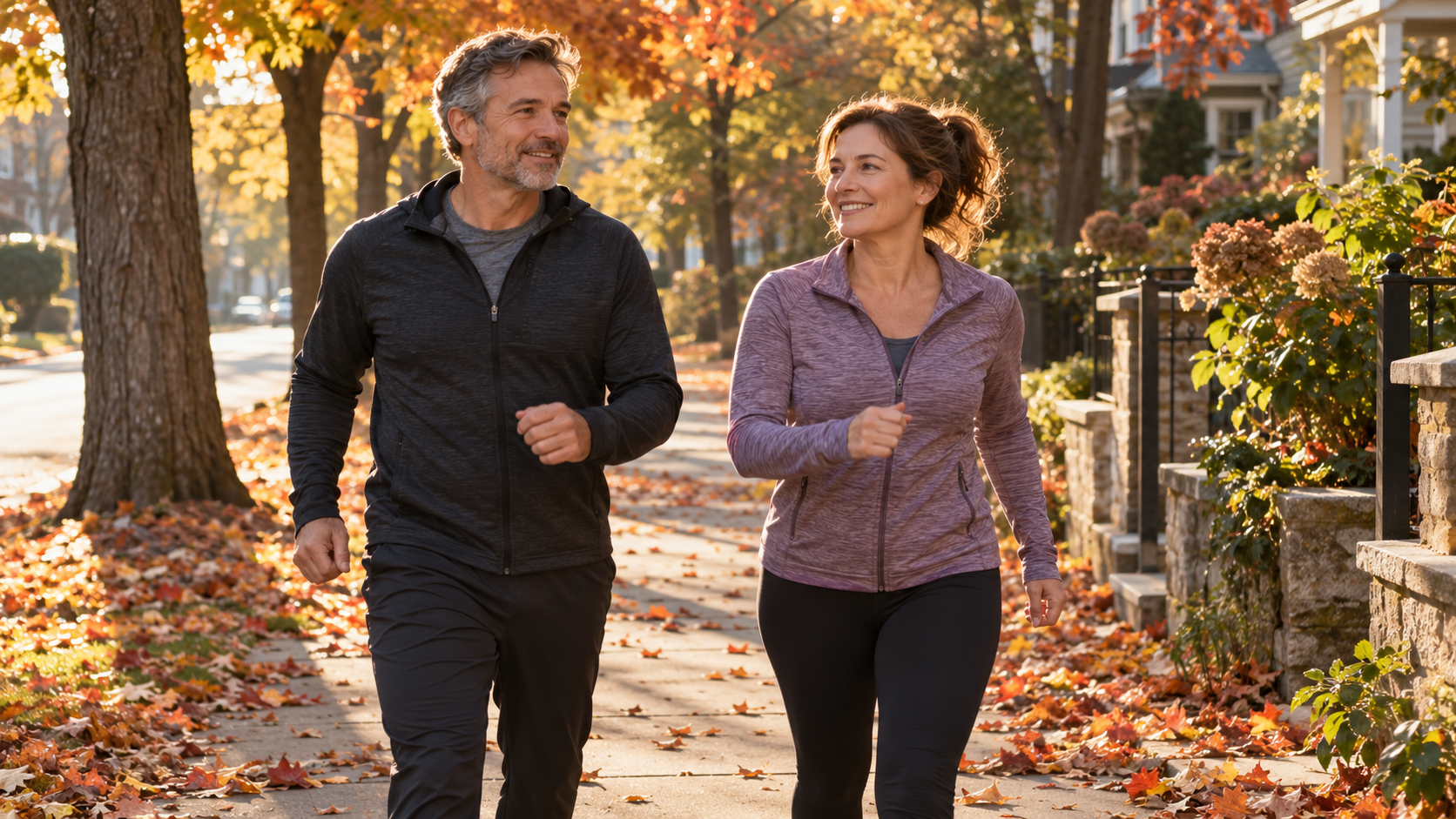 Brisk walking can be a simple way to incorporate moderate-intensity physical activity into a daily routine. Both walking pace and total daily steps can contribute to overall health.
Once you start walking for your health, it is natural to start watching your daily step count. Many of us check our phones or smartwatches to see whether we hit 5,000 steps or made it to 10,000. Reaching the goal feels good, but on busy days when the number falls short, it is easy to feel like we failed at exercise.
So do we really need 10,000 steps a day to stay healthy? A study published in September 2026 in the British Journal of Sports Medicine offers an interesting answer. It suggests we should look not only at how much we walk, but also at how briskly we walk.
The study also raises a question for Christians. How are we caring for the body God has entrusted to us? And in our efforts to stay healthy, have we become too attached to the numbers?
Not All 5,000 Steps Are the Same
Walking is exercise almost anyone can start without special equipment. A walk on the way to work, during a lunch break, or after dinner all count.
But 5,000 steps do not give every body the same workout. One person strolls slowly, while another walks briskly enough to breathe a little harder. This study focused on that difference. The researchers looked at daily step counts and walking pace together to see which combinations were linked to a lower risk of death.
A Study That Followed More Than 60,000 Adults for Eight Years
The researchers analyzed data from the UK Biobank, a large British health database. Between 2013 and 2015, participants wore an activity tracker on their wrist for seven days. The analysis of death from any cause included 64,743 people with an average age of about 61, and the analysis of cardiovascular death included 70,075 people. Over an average follow-up of about eight years, 1,697 participants died, 502 of them from cardiovascular disease.
A key strength of the study is that activity was measured by a device rather than relying on people’s memories of how much they exercised.
Its limits matter just as much. This is an observational study. Finding a link between steps or pace and the risk of death does not prove that walking faster actually extended anyone’s life. People who were already healthier may have walked more and faster, while some walked slowly because of existing health problems. The researchers themselves noted that the study cannot establish cause and effect.
Walking More or Walking Briskly: Which Matters?
The researchers divided daily step counts into four groups: fewer than 5,000, 5,000 to 7,500, 7,500 to 10,000, and more than 10,000. The lowest risk of death appeared in the 7,500 to 10,000 range, regardless of walking pace. People did not need to go beyond 10,000 steps to see the best results.
The more striking finding came from people who walked less. Among those taking fewer than 5,000 steps a day, the ones who walked at a brisker pace had a clearly lower risk of death. Their risk was on par with that of people who took 5,000 to 7,500 steps at a slower pace. The researchers suggested that walking at a higher intensity with fewer steps may offer benefits similar to walking more steps at a lower intensity. That is especially meaningful for people who are short on time or who find it hard to walk a lot because of health limits.
It helps to understand exactly what “walking pace” meant here. The study measured the average pace of a person’s 30 most active one-minute periods in a day. Those 30 minutes do not have to be continuous. Some news reports described the finding as “walking briskly for at least 30 minutes a day,” but that does not mean you must walk fast for 30 minutes straight. Short bursts of brisk walking spread throughout the day also count toward this measure.
This does not mean walking 3,000 steps quickly is the same as walking 6,000 steps slowly. It simply means that if adding more steps is hard, walking part of the time a little more briskly is an option worth considering.
How Can You Tell How Fast You Walk?
If you are not sure what “brisk” feels like, there is a simple way to check. While walking at your usual pace, count your steps for 15 seconds and multiply by four. That gives you your steps per minute. Walking research commonly uses about 100 steps per minute as a marker of moderate-intensity walking for adults.
If counting feels like a hassle, you can go by feel instead. If you can carry on a conversation but would find it hard to sing, you are walking at a moderate intensity.
You do not need an expensive device to track your steps. Most smartphones already count them, and if even that feels like too much, the 15-second count and the talk test are enough.
The Guideline Is 150 Minutes a Week, Not a Step Count
The Physical Activity Guidelines for Americans from the U.S. Department of Health and Human Services recommend that adults get 150 to 300 minutes of moderate-intensity aerobic activity, or 75 to 150 minutes of vigorous activity, each week. The World Health Organization makes the same recommendation. Adults should also do muscle-strengthening activities that work the major muscle groups on two or more days a week. Older adults benefit from including balance training along with aerobic and strengthening activities.
Brisk walking is an excellent way to get moderate-intensity aerobic activity. But exercise for health cannot be judged by a single step count. If you have not been very active, it is better to build up gradually than to start with an ambitious goal.
What the Bible Says About the Body, and About Self-Control
Paul writes, “What? know ye not that your body is the temple of the Holy Ghost which is in you, which ye have of God, and ye are not your own? For ye are bought with a price: therefore glorify God in your body, and in your spirit, which are God’s” (1 Corinthians 6:19-20, KJV).
These words were originally written in a passage about sexual purity. So it would be a stretch to read them as a command to walk a certain number of steps each day. Still, they remind us that the Christian’s body is not separate from God and that faith is not limited to the spiritual realm. Eating, working, resting, and walking are all part of living before God.
At the same time, Scripture teaches balance. “For bodily exercise profiteth little: but godliness is profitable unto all things, having promise of the life that now is, and of that which is to come” (1 Timothy 4:8, KJV). This does not mean exercise is worthless. It acknowledges the value of physical training while pointing us to what matters more deeply in life.
Today we live surrounded by numbers: step counts, hours of sleep, heart rates, and weight. These numbers can help us reflect on our habits, but managing them should never become the goal of life. There is no need to think more highly of ourselves for reaching 10,000 steps, or to feel guilty for falling short. Health itself is not a measure of faith. Believers who live with illness, disability, or the limits of aging have exactly the same faith and dignity as anyone else.
Self-control does not mean pushing the body no matter what. Sometimes it means keeping up with exercise faithfully, and sometimes it means resting well when we are tired or sick.
One distinction is worth stating clearly. This study did not look at participants’ faith or prayer lives, so it cannot tell us that people who pray while they walk live longer. Nor does the Bible give a medical standard for how many steps to take each day. Science helps us understand how the body responds to activity, and Scripture shapes the attitude with which we treat that body.
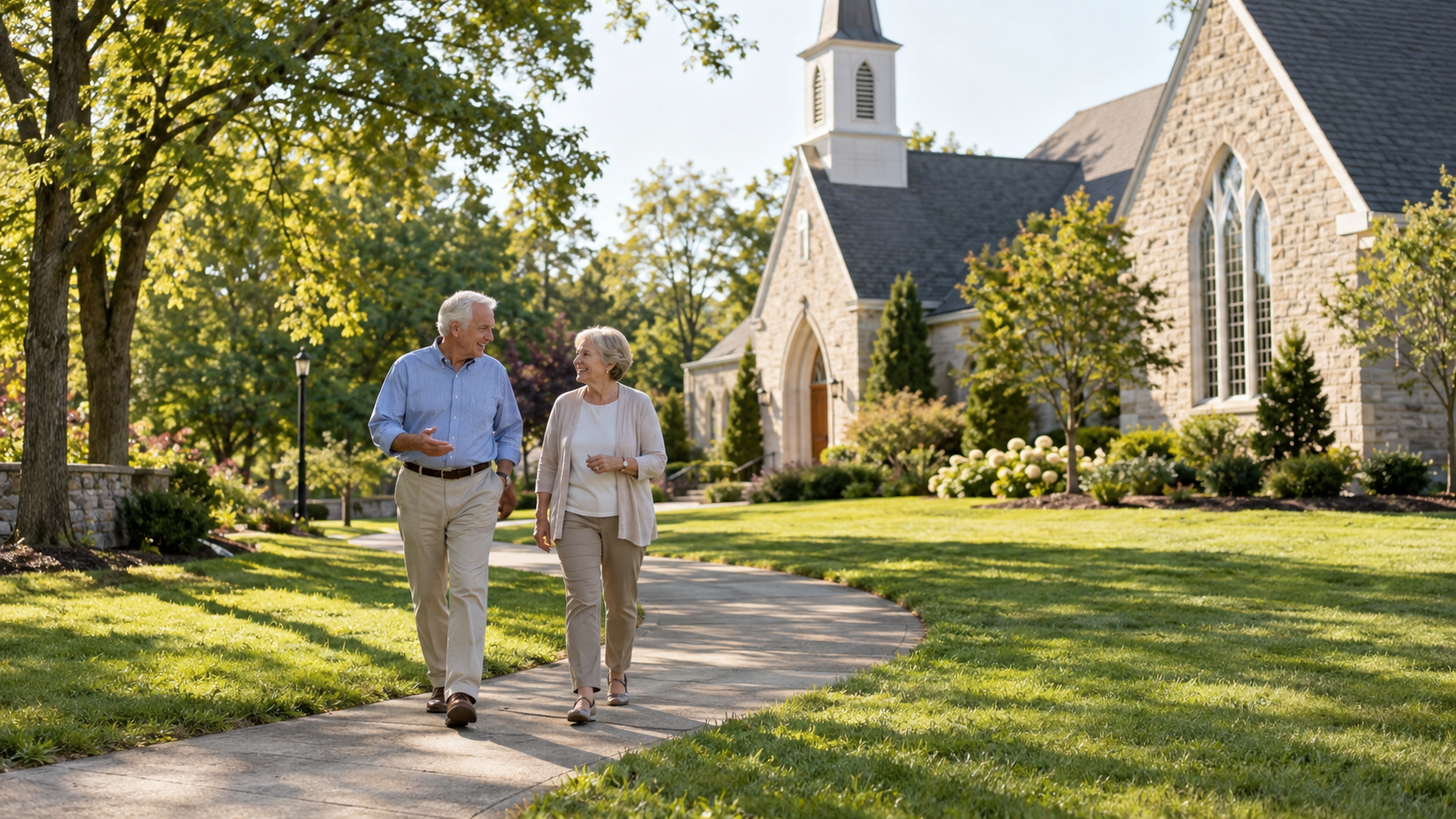 Walking with a friend or family member offers opportunities for physical activity and social connection. Regular walks at a comfortable pace can help older adults maintain mobility and support overall well-being.
Walking for Busy Christians, with Room for Reflection
For people juggling work, family, and church ministry, 10,000 steps a day can feel like a heavy goal. Instead of starting high, begin with your current habits. If you usually walk about 3,000 steps a day, aim for 4,000 first. Once that feels comfortable, add a 10-minute walk at lunch or after work. Try walking a few of those minutes a little more briskly.
Church life offers chances too. Park a little farther from the entrance, or walk around the church grounds with a friend after the service and catch up along the way.
Walking time can also become time to turn our hearts toward God.
On a morning walk, you can pray and commit the day to God.
On a lunchtime walk, you can recall reasons for gratitude you may have overlooked in a busy day.
On an evening walk, you can reflect on your words and actions from the day.
The psalmist confesses, “He maketh me to lie down in green pastures: he leadeth me beside the still waters” (Psalm 23:2, KJV). This verse is not a basis for an exercise plan, but it can turn a walk into a time to slow down, look around, and remember how God has led us. Of course, walking does not have to be prayer time, and praying on a walk does not promise any special health benefit.
Check with Your Doctor First If You
Have heart disease or recently had surgery: Talk with your healthcare team before increasing your walking pace or time.
Have diabetes with reduced feeling in your feet: Check your feet before and after walking, and wear well-fitting shoes.
Are an older adult at risk of falling: Put balance and safety ahead of speed, and choose level, well-lit paths.
Find walking difficult because of joint problems or a disability: Rather than forcing more steps, work with your healthcare provider to find activity that suits your body.
If you experience chest pain, severe shortness of breath, or dizziness while exercising, stop right away and seek medical care. And we should never compare one another’s health or faithfulness by who walks more.
Closing Thoughts: Steady Care Over Numbers
Falling short of 10,000 steps does not make the day’s walking meaningless. In this study, the lowest risk appeared in the 7,500 to 10,000 range, and people who walked briskly had a lower risk even with fewer steps. Still, no step count or pace guarantees a longer life. What matters is moving consistently in a way that fits your fitness and health.
If you did not reach 10,000 steps today, try a 10-minute walk. If you can, walk a few minutes a little more briskly; if not, a comfortable pace is enough. You might also set your phone aside for a moment, look up at the sky and the trees, and give thanks.
A healthy life does not begin with the number 10,000. It begins with small, faithful steps: treasuring the day God has given us and caring wisely for the body He has entrusted to us.
 A quiet evening walk offers a chance to unwind, enjoy nature, and stay physically active. Walking at a comfortable pace can be a sustainable way to build a consistent daily movement habit.
References
Combinations of stepping intensity and daily step counts against all-cause and cardiovascular disease mortality: insights from a device-based prospective study. British Journal of Sports Medicine (2026). https://doi.org/10.1136/bjsports-2025-111173
U.S. Department of Health and Human Services. Physical Activity Guidelines for Americans, 2nd edition (2018).
World Health Organization. WHO Guidelines on Physical Activity and Sedentary Behaviour (2020).
This article offers general health information and Christian reflection based on published research and physical activity guidelines available as of October 2026. Statistical associations found in research do not guarantee a longer life or the prevention of disease for any individual. Biblical reflections are presented separately from scientific evidence. Please adjust the intensity and amount of exercise to your own health, and talk with a healthcare provider when needed.