Don Quixote and Richard Strauss: When Dreams Meet Reality
Some dreams may seem unrealistic from the outside. Don Quixote famously mistakes windmills for giants, yet he believes he is fighting for what is right and noble. His story captures the tension between holding on to an ideal and facing reality when the two do not seem to match.
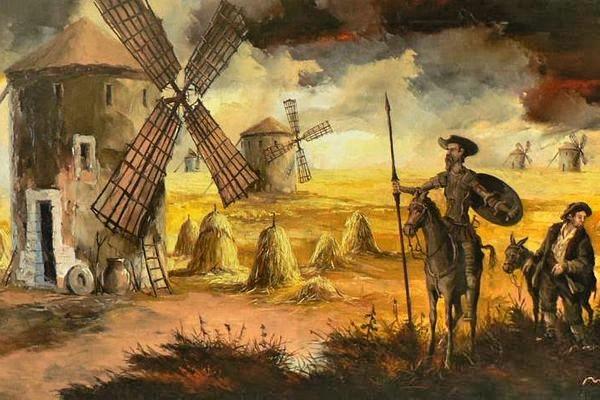 Don Quixote and Sancho Panza at the Windmills (Ricardo Balaca, c. 1880)
That tension lies at the heart of Don Quixote, the famous novel by Spanish writer Miguel de Cervantes. Centuries later, German composer Richard Strauss (1864–1949) brought its idealistic, often humorous hero to life through music.
Strauss’s Don Quixote, Op. 35, is more than a musical retelling of Don Quixote’s adventures. Through vivid orchestral colors, he portrays a man whose imagination often clashes with reality, yet whose desire for goodness, honor, and meaning remains sincere.
Don Quixote and His Unusual Way of Seeing
Strauss brings this contrast to life through two important instruments. The solo cello represents Don Quixote, while the viola represents his loyal companion, Sancho Panza. Their musical relationship reflects the difference between Don Quixote’s idealistic imagination and Sancho’s more practical view of the world.
As the music moves through Don Quixote’s adventures, Strauss uses changing orchestral colors to portray his imagination—sometimes heroic, sometimes humorous, and sometimes satirical. Behind the fantasy is a man who continues searching for goodness, honor, and meaning.
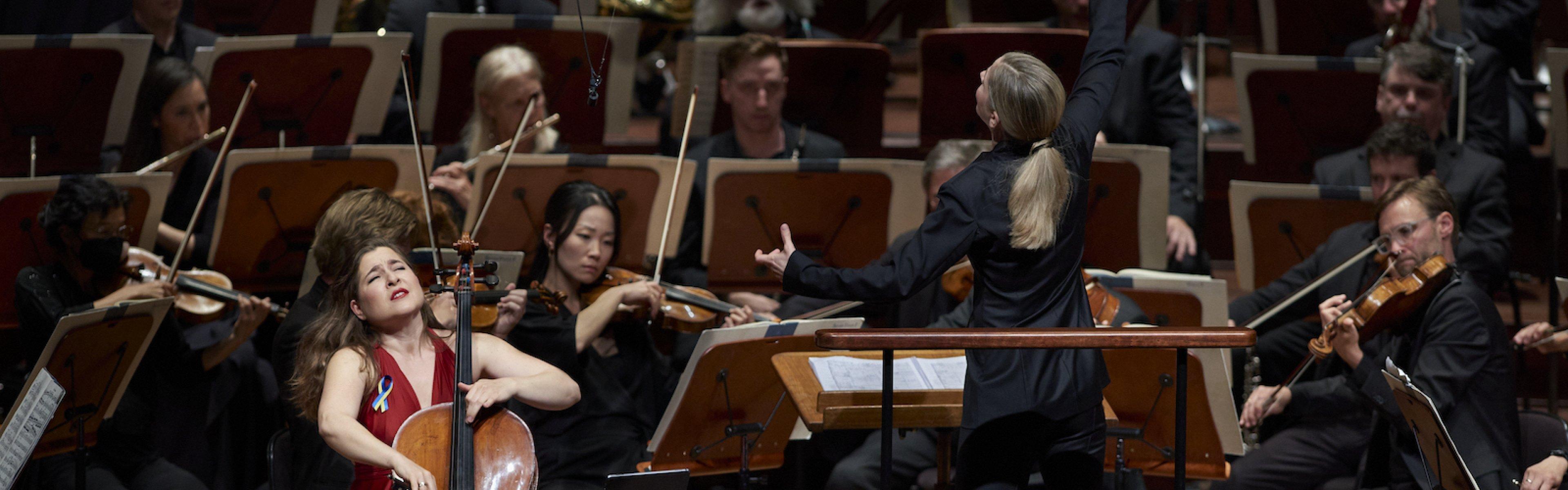 San Francisco Symphony, conducted by Karina Canellakis
When Reality Disappoints Us
There is something familiar in Don Quixote’s struggle. Most of us do not mistake windmills for giants, but we all have hopes and expectations about how life should turn out. We work toward something, believe in someone, or hope for change—and sometimes reality disappoints us.
Hope does not mean ignoring difficulties. It means seeing reality clearly while continuing to value what is good. Don Quixote is an imperfect example, but there is something moving about his determination to pursue what he believes is right. Perhaps that is why his story has lasted for centuries.
Holding On to What Is Good
“Let us not become weary in doing good, for at the proper time we will reap a harvest if we do not give up.” — Galatians 6:9
This verse can be tempting to read simply as “don’t give up on your dreams.” But it points to something more specific: not giving up on doing good, even when the results are slow or nowhere in sight.
That makes Don Quixote more sympathetic than merely ridiculous. He may be misguided, but he keeps trying, however imperfectly, to live out his ideal of honor and goodness in a world that does not always reward it.
Strauss’s Don Quixote captures both sides of this tension: the humor of a dreamer who misunderstands reality and the sincerity of someone who longs for a better world. Perhaps the challenge is to see reality honestly while still having the courage to hope.
Read previous: How Shakespeare Inspired Tchaikovsky: Romeo and Juliet and the Longing for Peace