Eggplant, Garlic, and Olive Oil Together: An Ancient Meal for Restoration
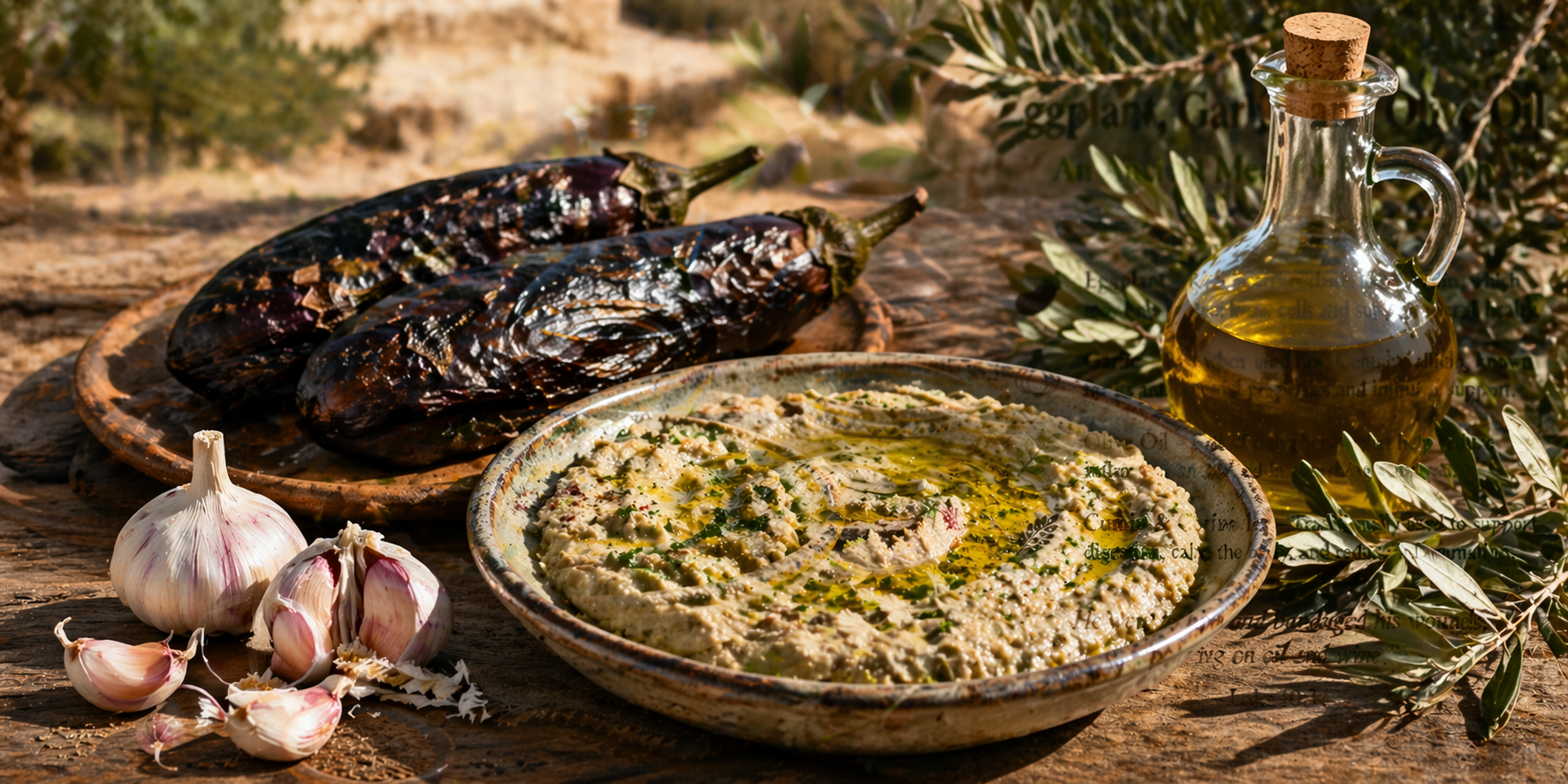
The Bible often mentions foods like grapes, figs, and olives. But there were also many other foods that played an important role in daily life in the ancient world, even if they are not mentioned in Scripture. Eggplant is one of them.
Eggplant does not appear prominently in the Bible, but it was widely grown and eaten throughout the ancient Near East. One of the most common ways to prepare it was to roast it whole over a fire.
When eggplant is roasted directly over flame, the skin becomes charred while the inside turns soft and smoky. People would often mash it together with raw garlic, olive oil, cumin, coriander, and other herbs. It was very similar to what we know today as baba ghanoush.
This kind of dish was not only flavorful. It also brought together several ingredients known for supporting the body.
Eggplant is rich in antioxidants, especially in its deep purple skin. One of its most well-known compounds is nasunin, a type of anthocyanin that may help protect brain cells from oxidative damage. Because of this, eggplant is sometimes seen as more than just a vegetable. It is also considered helpful for brain health.
Adding raw garlic makes the dish even more powerful.
Garlic was widely used for health in biblical times. When the Israelites were in the wilderness, they remembered the foods they had eaten in Egypt, and garlic was one of the foods they missed.
“As we remember the fish we ate in Egypt at no cost—also the cucumbers, melons, leeks, onions and garlic.” (Numbers 11:5)
This verse shows how familiar and valuable garlic was in daily life. Garlic is especially beneficial when it is crushed and eaten raw because that is when allicin, one of its most important compounds, is most active. Allicin is known for its antibacterial properties and its ability to support the immune system.
Olive oil brings everything together. The Bible mentions olive oil constantly. It was used not only in cooking, but also for healing and caring for wounds.
In Luke 10, the Good Samaritan poured oil and wine on the wounds of the injured man.
“He went to him and bandaged his wounds, pouring on oil and wine.” (Luke 10:34)
Olive oil contains polyphenols that may help reduce inflammation. It also helps the body absorb fat-soluble nutrients from vegetables and herbs, so it does much more than simply add flavor.
Cumin and coriander also play an important role. Cumin may help digestion and settle the stomach, while coriander is often associated with calming the body and reducing inflammation.
In the end, roasted eggplant with raw garlic, olive oil, and herbs is more than a simple side dish. It is an ancient meal that may support digestion, immunity, brain health, and overall recovery.
Tonight might be a good time to roast an eggplant, drizzle it with olive oil, add some garlic, and enjoy one of the simple healing foods of the ancient world.