Fasting or Intermittent Fasting? (3) A Simple Way to Practice Fasting Today: Body and Soul Together
Understanding fasting is one thing. Practicing it is another.
For many modern Christians, fasting can feel distant—like something from another time. It may seem extreme, unnecessary, or simply difficult to fit into daily life. But fasting does not have to begin with something dramatic. It can start with a simple, sustainable rhythm.
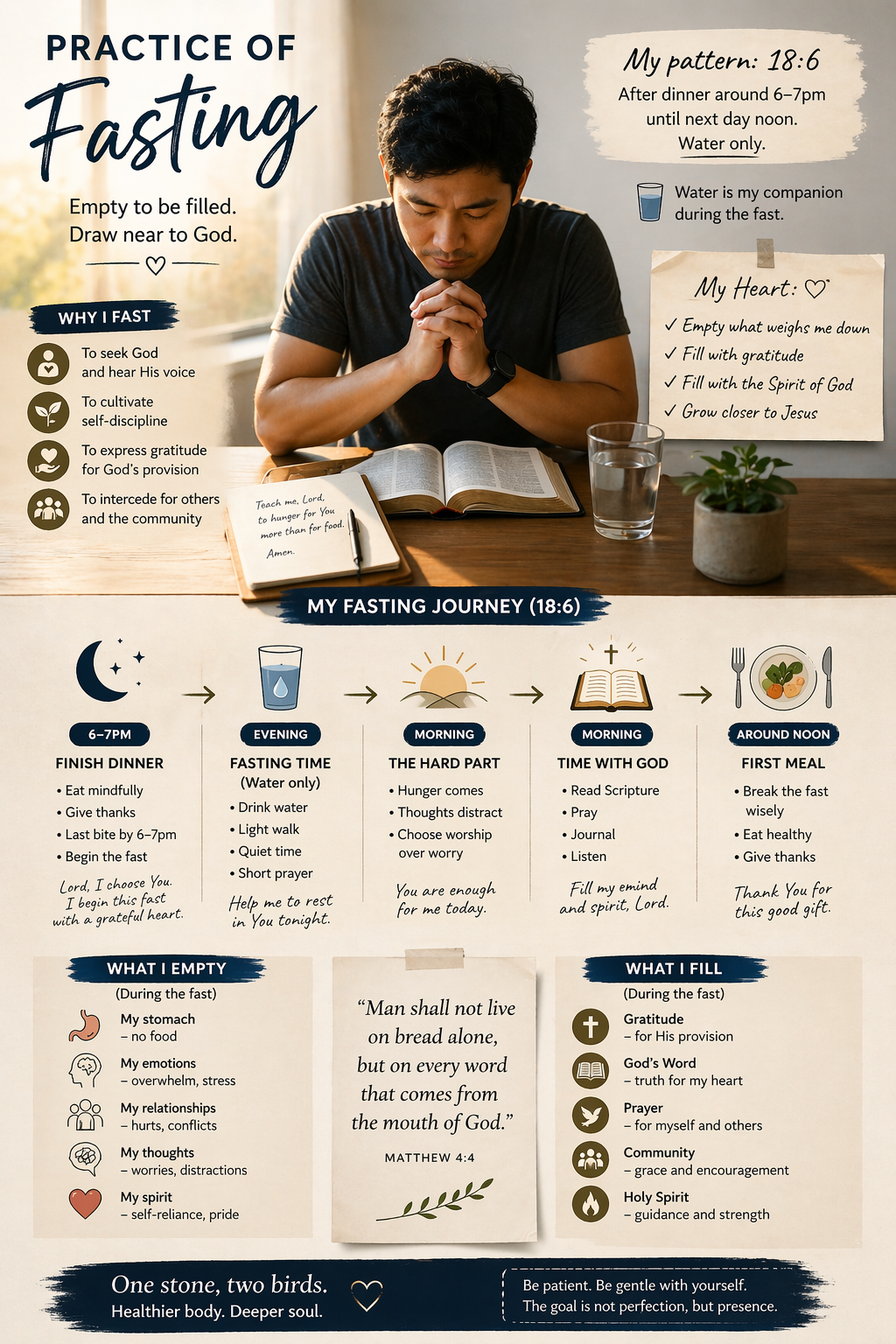
One of the most practical ways to approach fasting today is through a 16:8 pattern, which is also commonly used in intermittent fasting. This means fasting for sixteen hours and eating within an eight-hour window. For example, finishing dinner at 7 p.m. and having the next meal at 11 a.m. the following day.
But the key difference is not in the schedule—it is in what we do with the time.
The fasting period, especially in the morning, becomes an opportunity. Instead of immediately reaching for food, we begin the day more slowly. A glass of water. A few quiet minutes. A short prayer. Perhaps reading a passage of Scripture.
In that moment, the absence of food becomes a kind of presence.
Jesus once said: “Man shall not live on bread alone…” (Matthew 4:4)
These words take on a different meaning when we actually feel hunger. Fasting makes this truth tangible. It reminds us that our lives are sustained by more than what we consume.
As the morning continues, there may be moments of discomfort. Hunger comes in waves. This is often the most challenging part. But instead of seeing it as a problem, it can be reframed as a reminder—a small signal that turns our attention back to God, even briefly.
When it is time to eat, the goal is not to compensate for the fast with excess. The first meal should be calm and intentional. Simple, balanced, and unhurried. In this way, eating itself becomes more mindful.
Over time, this pattern can be extended. Some may choose one day a week to fast more deeply—skipping one or two meals and setting aside additional time for prayer or reflection.
In the early church, fasting was often connected to important decisions:
“So after they had fasted and prayed…” (Acts 13:3)
Fasting was not just about restraint. It was about clarity. It created space to listen more carefully.
Of course, fasting should always be approached with wisdom. Health conditions, life circumstances, and individual limits matter. Fasting is not about pushing the body beyond its capacity. It is about creating a rhythm that is both meaningful and sustainable.
And perhaps most importantly, fasting is not about perfection. There will be days when the rhythm breaks, when plans change, when hunger leads to an earlier meal. That does not cancel the practice. Fasting is not about strict success—it is about returning again and again.
In a world that constantly encourages consumption, fasting is a quiet resistance. It teaches us that we are not controlled by every desire. It slows us down. It clears space.
And in that space, something deeper begins to grow.
Not just a healthier body, but a more attentive soul