HbA1c: The One Number That Tells You Where Your Blood Sugar Has Really Been
Caring for Your Body Is Part of Faithful Living, Too
When people think of a blood sugar test, they usually picture fasting glucose — the test where you skip breakfast, avoid food the night before, and have blood drawn first thing in the morning. If the number comes back normal, it's easy to feel reassured.
But fasting glucose is exactly what it sounds like: a snapshot of your blood sugar on that one morning. If you eat a little lighter than usual for a few days beforehand, cut back on sugar, and have a light dinner the night before, the number can look better than your blood sugar usually runs.
Fasting glucose still matters. But to see the bigger picture, it helps to look at HbA1c — the hemoglobin A1c test — alongside it.
For Christians, taking care of the body isn't just about living longer. It's part of stewarding well what God has entrusted to us. Our bodies aren't ours to use however we please; they're a gift, held in trust. Checking your blood sugar and taking an honest look at daily habits isn't separate from faith — it's one small way that faith shows up in ordinary life.
 A brisk walk after a meal can be a simple, practical way to support healthy blood sugar management and build a more consistent wellness routine.
What Does HbA1c Actually Show?
In simple terms, HbA1c shows your average blood sugar over roughly the past two to three months. It's not a number that suddenly improves because you ate carefully for a day or two — it reflects months of eating, movement, sleep, stress, and daily rhythms all together.
Here's why the two-to-three-month window matters: your red blood cells contain a protein called hemoglobin, and glucose in your bloodstream attaches to it — the higher your blood sugar runs, the more glucose attaches. Red blood cells live for roughly that same two-to-three-month span before your body replaces them, so HbA1c essentially measures the buildup on those cells over their lifespan. It's less a "score for today" and more a "report card for the last few months."
One practical note: certain conditions — including some forms of anemia and other blood disorders — can affect red blood cell turnover and make HbA1c results less accurate. If you have a known blood condition, it's worth mentioning to your doctor when discussing your results.
How to Read the Numbers
HbA1c results are generally interpreted this way, based on American Diabetes Association criteria:
- Below 5.7%: normal range
- 5.7% to 6.4%: prediabetes
- 6.5% or higher: one of the criteria used to diagnose diabetes
Here's the part worth sitting with: prediabetes very often comes with no symptoms at all. You can feel completely fine — no unusual thirst, no noticeable fatigue — while your blood sugar is already trending in the wrong direction.
So HbA1c isn't only a test that confirms diabetes. It's more like a warning light that tells you which direction your body is heading.
Why This Matters More Than Many Americans Realize
This isn't a niche concern. According to the CDC's National Diabetes Statistics Report, an estimated 115 million U.S. adults have prediabetes — about 38% of the adult population. Nearly 80% of people with prediabetes don't know they have it. Among adults 65 and older, more than half are estimated to have it.
And prediabetes isn't a label that just sits there quietly. Up to 70% of people with prediabetes go on to develop type 2 diabetes, and without changes to diet and activity, many progress within five years.
A lot of this connects to how many of us actually eat — a diet leaning heavily on refined carbohydrates (white bread, pasta, sugary cereals, soda), frequent fast food and takeout, and busy schedules that leave little room for movement or sleep. It's entirely possible to have a normal fasting glucose while your HbA1c tells a different story — often a sign that your blood sugar spikes more than you'd guess after meals, or that daily habits haven't been supporting steady blood sugar as much as they could.
That's part of why the U.S. Preventive Services Task Force recommends prediabetes screening for adults aged 35–70 who are overweight or obese, and the American Diabetes Association recommends screening for all adults 35 and older — regardless of how you feel.
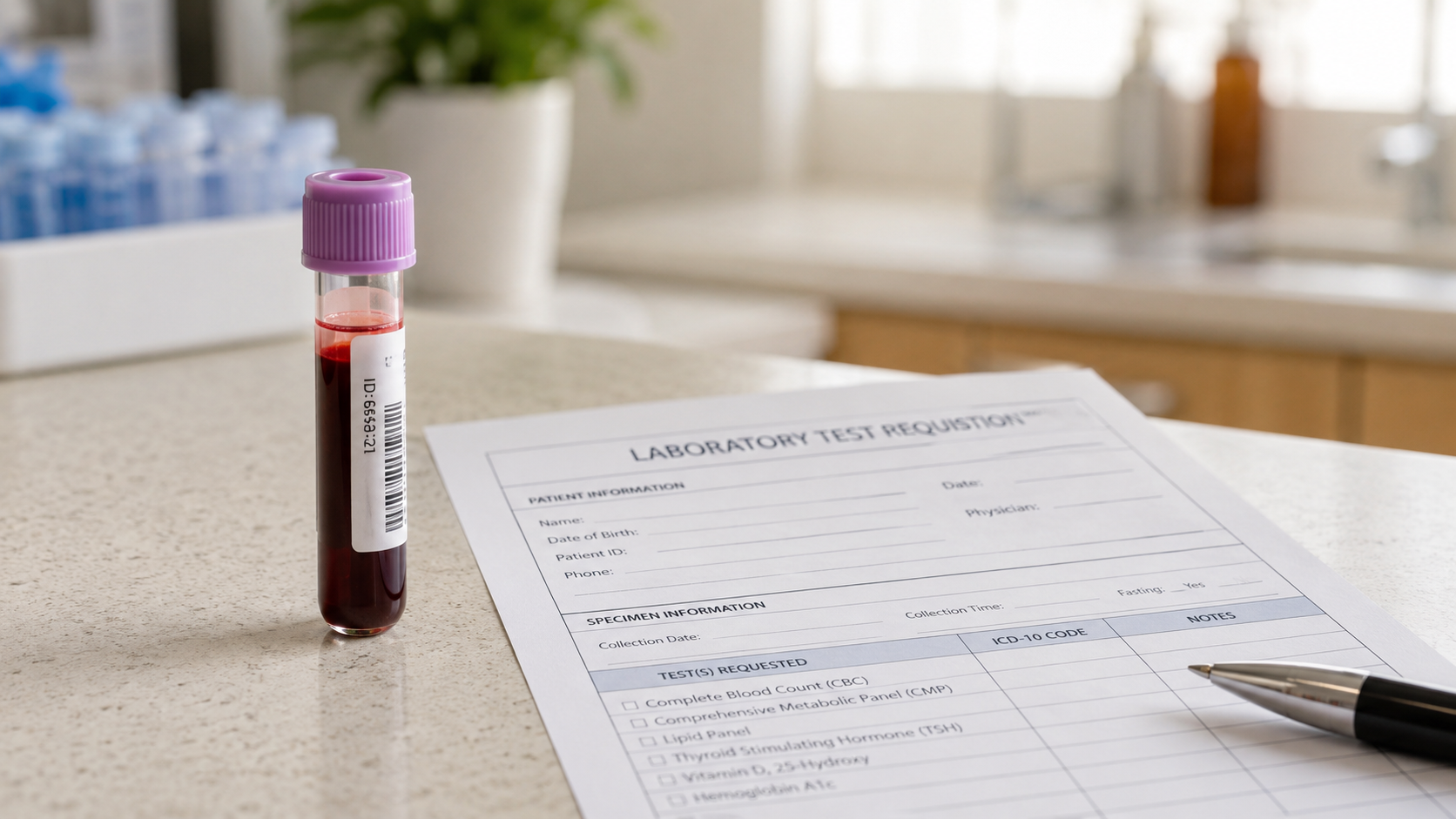 A blood sample and lab requisition form on a clean clinic counter, representing the importance of HbA1c testing in understanding long-term blood sugar control.
Signs Worth Paying Attention To
You might want to ask your doctor about an HbA1c check if any of these sound familiar:
- A parent or sibling has diabetes
- You carry extra weight around your midsection, or you've gained weight recently
- You feel unusually sleepy or foggy after meals
- A past checkup mentioned "borderline" blood sugar
- Cuts or wounds seem to take longer to heal than they used to
- You've become more sedentary, with less regular movement
- You're over 35 and haven't had your blood sugar checked in a while
None of these automatically means diabetes. But ignoring small warning signs the body sends isn't wisdom — it's just avoidance.
If the Number Is Borderline, Do You Need Medication Right Away?
An HbA1c in the prediabetes range doesn't necessarily mean medication starts immediately. That call depends on your doctor and your overall picture, but in many cases, lifestyle changes come first.
In the 5.7%–6.4% range especially, adjustments to eating, regular walking, modest weight loss, and better sleep can genuinely move the number. Even losing 3–5% of your body weight often makes a measurable difference in blood sugar management.
What matters most isn't a single dramatic decision — it's steady, faithful follow-through. The same is true in spiritual life: it's the small, repeated obedience, not the occasional grand gesture, that shapes us over time. A slightly smaller portion at dinner, a 10–20 minute walk after a meal, cutting back on late-night snacking — small, repeatable choices like these are what actually shift the body's direction.
Prayer and Practical Care Belong Together
When health concerns come up, prayer matters. But prayer isn't a substitute for responsibility — it's where we ask for the wisdom and strength to care well for what we've been given.
Entrusting your health to God doesn't mean doing nothing. Taking an honest look at your body, getting the screenings you need, and adjusting daily habits are themselves ways of living faithfully before Him.
Managing blood sugar isn't something to approach out of fear, and it's not something to load with guilt either. It can simply begin with the intention to care a little better, today, for the body God has given you.
HbA1c Is a Signal About Direction, Not Just a Verdict
HbA1c isn't just a yes-or-no marker for diabetes. It's a signal — a picture of which direction your body has been heading over the last few months.
A normal fasting glucose doesn't mean you can stop paying attention. And a slightly elevated HbA1c isn't a reason for despair either. What matters is what you do from here.
Our bodies are a meaningful gift, entrusted to our care. Getting checkups, knowing your numbers, and adjusting your habits aren't secular concerns disconnected from faith — they're part of using wisely and faithfully the life we've been given, for as long and as well as we can.
If you've had even a small concern about your blood sugar, consider asking about an HbA1c test at your next visit. One simple test can be the starting point for a real shift in the direction your health is heading.
Note: This article offers general health information. If you have concerns about your blood sugar or existing health conditions, please consult a doctor or qualified healthcare professional.
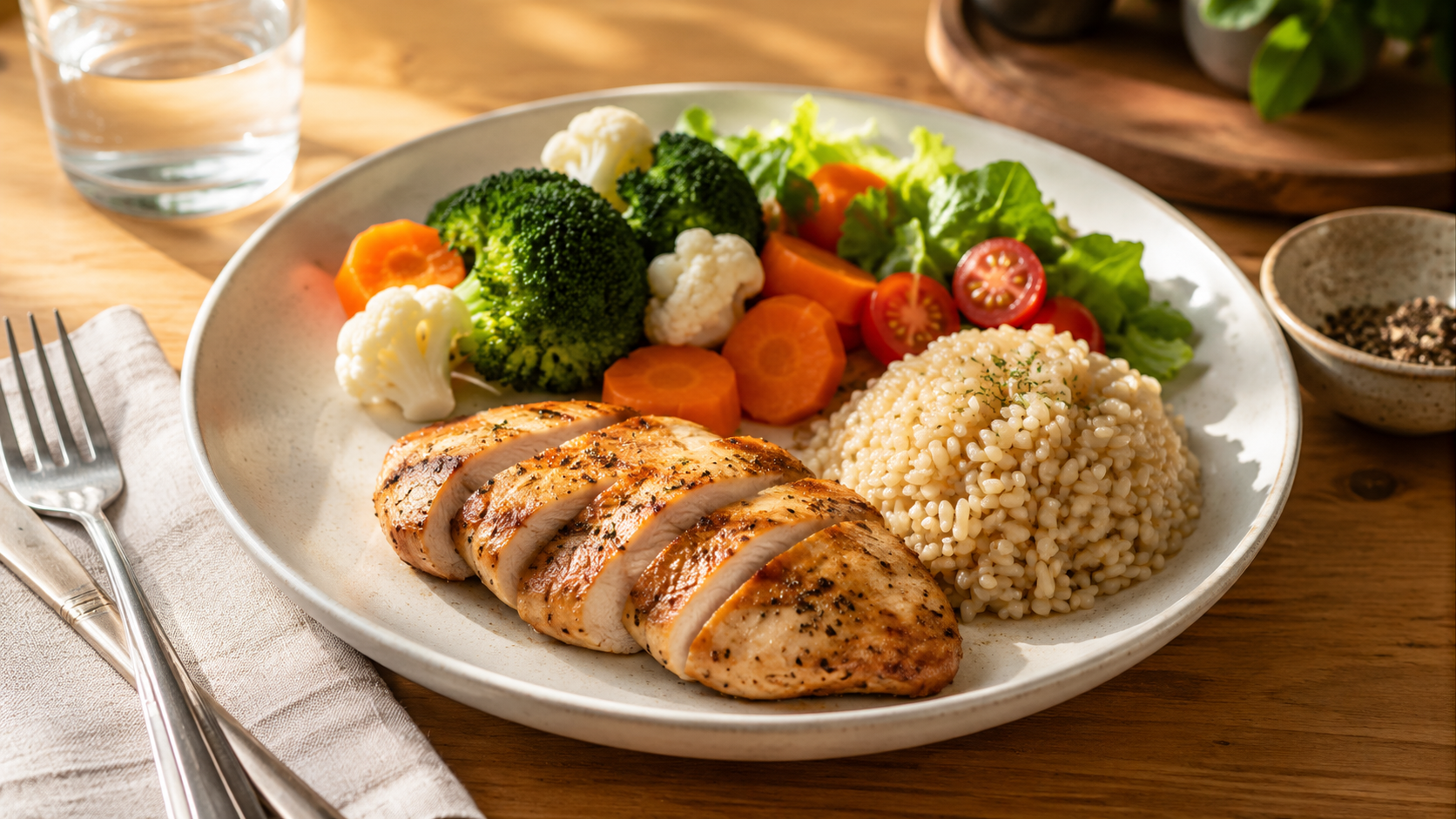 A balanced home-cooked dinner with grilled chicken, vegetables, and a small portion of brown rice, highlighting a simple and wholesome approach to blood sugar-friendly eating.