Hello, Beautiful Ordinary Person
 Photo image courtesy Pixabay
“For the moment all discipline seems painful rather than pleasant, but later it yields the peaceful fruit of righteousness to those who have been trained by it.” – Hebrews 12:11
We don’t usually love the word ordinary. It feels dismissive—like something forgettable or small. We long to be extraordinary, to stand out, to have our lives matter. But our souls were never made for “extra.” Extraordinary isn’t sustainable. Our souls were made for presence, for consistency, for deep and rooted love. The very things that only grow in the soil of the ordinary.
Author Eugene Peterson once described faith as “a long obedience in the same direction.” That’s a lot of ordinary.
This is living the spiritual practices called little virtues such as gentleness, humility, kindness, patience, simplicity, gratitude, honesty, generosity.
When you are practicing the little virtues, you are then prepared for those rare moments when you need bravery, boldness, or prophetic imagination. These are called big virtues and you really only need them on rare occasions, those extraordinary occasions.
We love those brave stories of extraordinary occasions. We tell those stories over and over. But they are not a part of the every day. Our souls couldn’t sustain that. Most of life happens in the ordinary. That’s where the little virtues do their quiet work to get you ready for those rare and extraordinary moments.
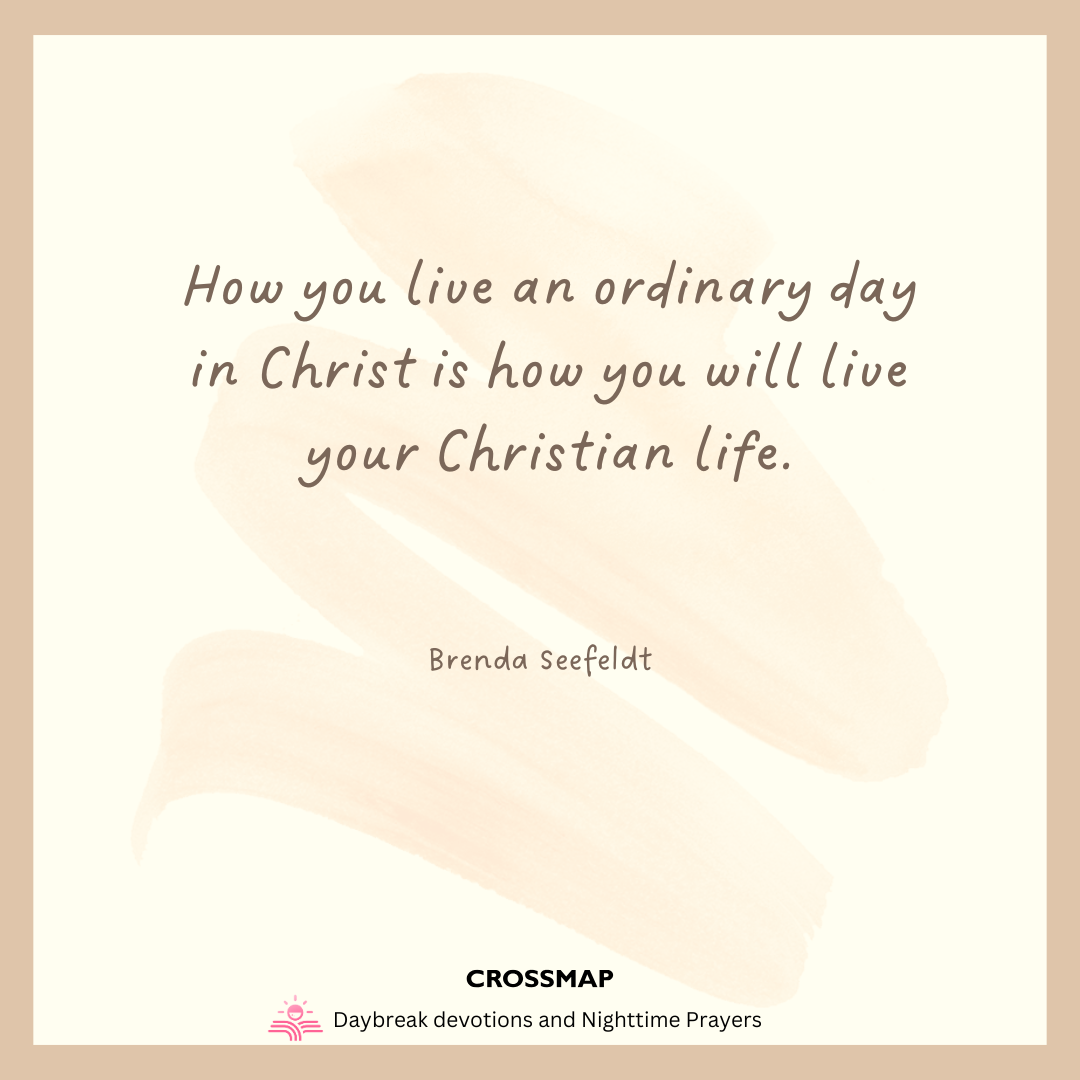
How you live an ordinary day in Christ is how you will live your Christian life.
This practice of little virtues and big virtues is an old practice called Salesian Spirituality. It was shaped by St. Francis de Sales, a Catholic bishop from the early 1600s, who believed something radical for his time: that holiness was not reserved for monks and nuns, but was possible for everyone. Every job. Every season. Every soul.
Yes, this is an ancient practice. It is a Catholic practice. It is also so full of common sense that you may begin practicing it today. We are a part of a larger story that is over 2,000 years old. This larger story has staying power because it is true. Adopting a practice that started in 1609 may give you a bit of steady footing in this unstable world that feels like it’s constantly influx—where everything feels “algorithmed,” temporary, and a little upside-down most days.
Doesn’t our world need more little virtues every day?
Spiritual practices are about being formed into the image of Christ. Spiritual practices are not meant for reducing stress, ordering one’s daily routine, understanding one’s personality better, having “spiritual experiences,” or gaining any number of other fringe benefits that do often result from the practices. All of these are secondary to the goal of becoming more like Christ.
In the end, the question isn’t about disciplines or programs or techniques. The question is: Are you becoming more like Christ? These little virtues give you that and the fringe benefits.
When our identity is found in Jesus, we are maturing into who we already are. We are free to find meaning in the ordinary as we daily live these little virtues.
So, hello again, beautiful ordinary person. You are not behind. You are not overlooked. You are deeply seen and deeply loved. And in the ordinary moments today, you have everything you need to create beauty—one little virtue at a time.
Questions for Reflection:
- Have you ever thought about what it would take to become more like Christ?
- What types of things can you do in your daily life to find a better identity in Jesus?
- What are some ordinary things about you that are extraordinary in the eyes of Christ?