How Schumann Encouraged Brahms: The Story Behind Brahms’s First Symphony
Johannes Brahms (1833–1897) was only twenty years old when he met Robert Schumann (1810–1856) in 1853. He was a talented young musician, but he was still largely unknown.
Schumann, already an established composer and respected figure in the musical world, recognized something in him after hearing him play. Rather than simply offering praise, Schumann publicly introduced Brahms through his article Neue Bahnen (New Paths), drawing attention to the young composer's remarkable talent.
For Brahms, that encouragement came at an important moment. Schumann saw something in him worth believing in.
When Someone Sees Potential in Us
Most of us know what it feels like to wonder whether we are good enough. We may practice for months without seeing much progress, wondering whether we are capable of improving.
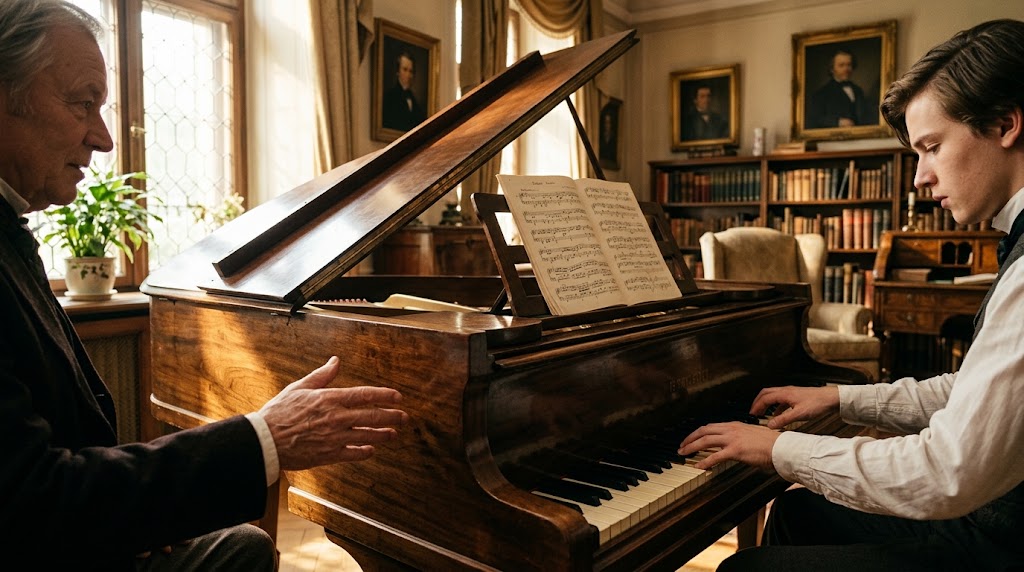
Sometimes, what we need is not another reminder of what we lack, but someone who can see what is already beginning to grow.
Schumann could not know exactly what Brahms would become. He simply recognized his gift and encouraged him to keep developing it. That kind of encouragement can give someone the confidence to keep going.
Brahms’s Long Road Ahead
Brahms did not suddenly become a great composer because Schumann believed in him. He still had years of study, work, uncertainty, and growth ahead of him.
His Symphony No. 1, completed in 1876 after many years of work, is one result of that long journey. The young musician Schumann had encouraged had grown into a mature composer with a voice of his own.
Talent may be recognized early, but it takes time to develop. Encouragement does not remove the work or guarantee success; it simply reminds us that the work is worth continuing.
“Therefore encourage one another and build each other up.” — 1 Thessalonians 5:11
The Bible reminds us that encouragement matters. We are called to build one another up, and sometimes that begins simply by noticing something good in someone and speaking it aloud. We may never know what they will eventually become, but we can be faithful in encouraging the person in front of us.
The Influence We Leave Behind
When we think about great musicians, we often focus on their compositions and performances. Yet behind many accomplished artists are people who taught, encouraged, or believed in them.
Schumann did not try to make Brahms a copy of himself; he helped him develop his own musical voice. Perhaps that is one of the most meaningful things a teacher or mentor can do: help someone become who they are meant to be.
This is just one of many stories in music history that show how deeply one person can influence another. In the stories ahead, we will explore how teachers, mentors, and students shape one another through encouragement, guidance, and example.
Read previous: What Does Music Teach Us About Starting Again? Finding Hope in New Beginnings