How Should Christians Respond to the New Dietary Guidelines?
Cutting back on processed food and added sugar, while thinking carefully about meat and full-fat dairy
 A family pauses to pray before sharing a meal, reflecting gratitude, fellowship, and the Christian understanding that food and health are gifts entrusted to our care.
You've probably seen headlines lately about "new dietary guidelines" — most likely referring to the 2025–2030 Dietary Guidelines for Americans, released by the U.S. Department of Health and Human Services and the Department of Agriculture in January 2026.
Dietary guidelines were never meant to be a trendy short-term diet. They're a long-term direction for eating, based on accumulated research, issued by national and public health agencies.
But the debate around this particular release is worth understanding a bit more specifically. The final guidelines didn't reflect a substantial portion of what the independent Dietary Guidelines Advisory Committee (DGAC) had actually recommended beforehand, relying instead on a separate scientific foundation report. Several medical and nutrition organizations — including the Center for Science in the Public Interest and the Physicians Committee for Responsible Medicine, representing roughly 17,000 doctors — raised concerns that the new guidance conflicts with existing saturated fat recommendations. Dairy and beef industry groups, meanwhile, welcomed the changes.
Two things stand out in this round of guidelines:
First, a recommendation to cut back on highly processed foods and added sugar — an area with fairly broad agreement.
Second, guidance suggesting more room for meat and full-fat dairy than before — an area where the final guidelines and the advisory committee's own recommendations diverged, and where genuine debate continues among experts.
So how should Christians think about guidelines like these? It's worth starting from a different question than simply what to eat or avoid — namely, how do we wisely care for the body God entrusted to us?
Our Bodies Aren't Ours to Use However We Please
Scripture reminds us that our bodies belong, in a real sense, to God.
1 Corinthians 6:19-20 describes our bodies as a temple where the Holy Spirit dwells. That's not a call to worship the body as an idol. It's closer to an instruction not to treat it carelessly, but to care for it as a gift entrusted to us.
Caring for your health was never just about appearance or living longer. A healthy body lets you carry out what you've been given to do, serve family and neighbors, and continue fulfilling whatever calling God has placed on your life.
In that light, healthy eating isn't some secular concern disconnected from faith. It's part of stewarding the body, time, and resources we've been given wisely.
The Recommendation to Cut Processed Food and Added Sugar
Among the new guidelines, the part most experts actually agree on is reducing highly processed food and added sugar.
Processed food has worked its way deeply into how most people eat today — chips and snacks, sugary drinks, fast food, instant meals, and certain processed meats and ready-made dishes are the usual suspects.
Not all processing is equal, of course. Pasteurizing milk or freezing vegetables counts as "processing" in the broadest sense too. The real issue isn't processing itself — it's regularly eating foods that go through multiple rounds of industrial processing and end up high in sugar, sodium, and saturated fat while running low on fiber and essential nutrients.
These foods tend to be convenient and intensely flavored. But convenience was never a guarantee of benefit to your body. Research consistently associates dietary patterns high in ultra-processed food with obesity and worse cardiovascular and metabolic outcomes.
A few reasonably realistic starting points: choosing water or unsweetened drinks over sugary ones, reaching for fruit or nuts instead of chips, choosing whole grains over white bread and refined grains, cooking something simple at home instead of relying on ready-made meals, and actually checking added sugar and sodium on nutrition labels.
If you're looking for an easy way to bring more whole grains into your kitchen, [organic old-fashioned rolled oats] are about as simple and unprocessed as breakfast gets(affiliate link — I may earn a small commission at no extra cost to you).
Healthy eating starts with choices like these — not an elaborate meal plan.
Self-Control Isn't Restriction. It's Freedom.
There's a virtue worth centering in any Christian approach to eating: self-control.
Self-control isn't giving up everything that tastes good. It's freedom from being ruled by any single food.
You can enjoy something sweet without needing sweetness to function. You can eat meat without being locked into a habit of needing an excessive portion at every meal to feel satisfied. You can use convenient food occasionally without every meal depending on it.
Galatians 5 lists self-control among the fruits of the Spirit — and that applies to eating too.
The heart of healthy eating isn't declaring any specific food evil. It's managing appetite beyond what's actually needed, and receiving a reasonable amount with gratitude.
Self-control was never meant to strip away enjoyment. It's actually the freedom that keeps food from ruling over you.
Is Meat Automatically a Bad Food?
Recent nutrition discussions have emphasized the importance of protein intake, and meat's reputation has shifted somewhat more positively as a result — though, as mentioned above, this shift is precisely where the final guidelines and the advisory committee's own recommendations parted ways, leaving real disagreement among experts.
Meat can supply protein, iron, vitamin B12, and other nutrients. Adequate protein intake matters in particular for growing children, older adults, anyone maintaining muscle mass, and people with specific nutrient deficiencies.
But "meat is nutritious" and "more meat is always better" are two different claims. How often, and how, you eat red and processed meat specifically is its own separate question.
Eating a lot of fatty cuts and processed meat can meaningfully increase saturated fat and sodium intake. The American Heart Association explains that saturated fat raises so-called "bad" cholesterol and increases heart disease risk. On the other hand, drawing from a range of protein sources — fish, beans and tofu, nuts, skinless poultry — improves overall dietary balance.
What matters isn't an all-or-nothing rule like "you must eat meat" or "you must avoid meat." Portion size, preparation method, and how the whole diet fits together all matter more than the presence of meat itself.
A grilled meat dish served alongside plenty of vegetables and whole grains isn't really the same thing, nutritionally, as a meal built around processed meat, fries, and a sugary drink — even though both technically "include meat."
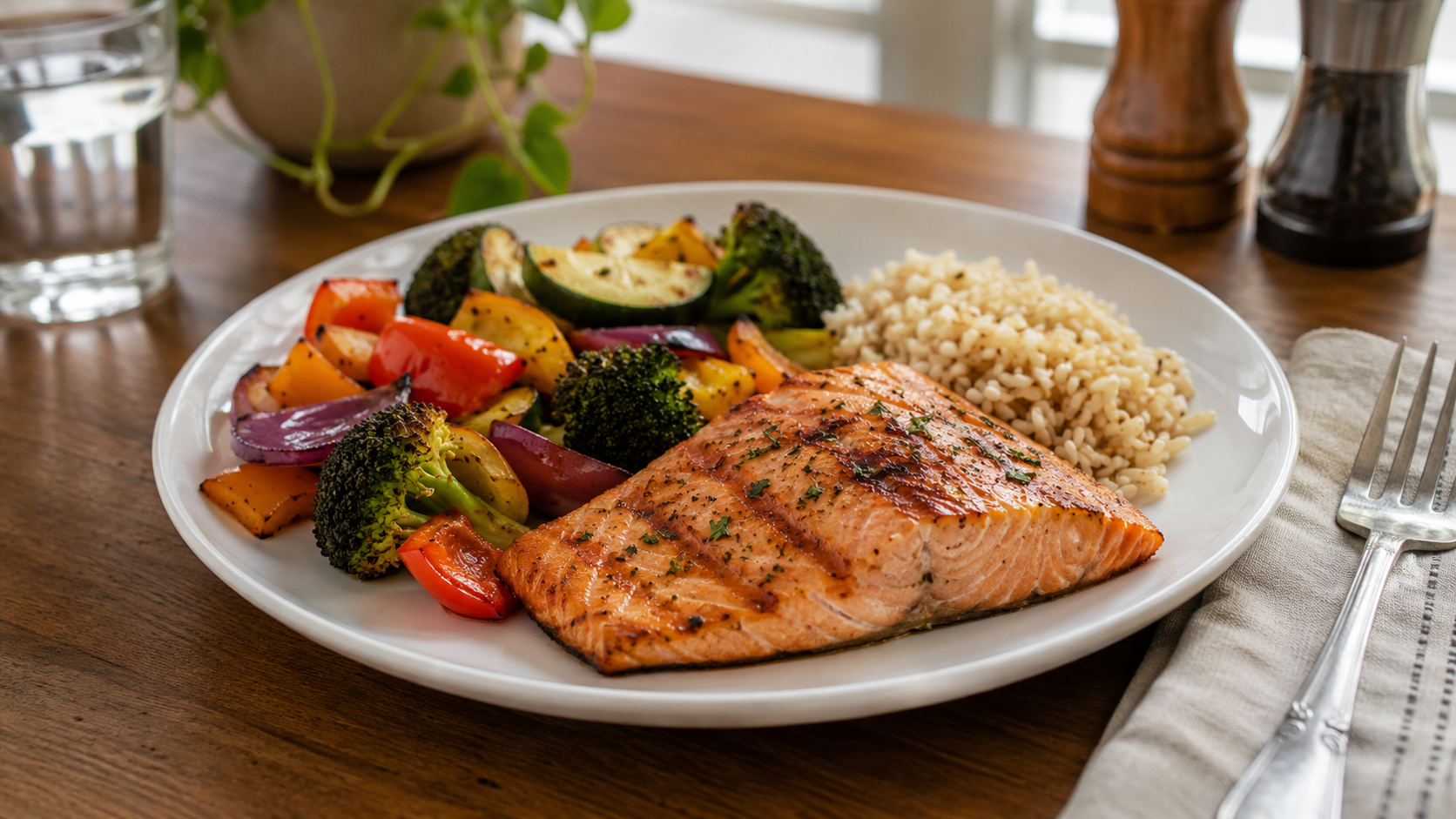 A balanced dinner featuring grilled salmon, roasted vegetables, and brown rice demonstrates how a nutritious meal can combine lean protein, whole grains, and colorful vegetables.
The Debate Over Full-Fat Dairy
Milk, yogurt, and cheese provide protein, calcium, and a range of other nutrients.
Some recent dietary guidance treats full-fat dairy more favorably than before, partly because research doesn't universally support the idea that full-fat dairy is harmful for everyone.
But cardiovascular health experts remain cautious. Full-fat milk, cheese, and butter can carry a lot of saturated fat, so people managing elevated cholesterol or cardiovascular risk are often better off choosing low-fat or fat-free dairy. In fact, following the U.S. announcement, a number of nutritionists and cardiologists specifically pointed out the internal contradiction: recommending both a saturated fat cap (under 10% of total calories) and increased full-fat dairy and butter consumption doesn't hold together well.
On the other hand, full-fat dairy may genuinely help older adults eating too little, or anyone who needs to gain weight.
Rather than concluding "full-fat dairy is good" or "full-fat dairy is bad" outright, this really needs to be judged against your specific health situation and overall diet. Overhauling your entire diet because of one study, or one policy announcement, isn't wise.
Don't Let Fear of God-Given Food Take Over
Christian faith was never meant to sort food neatly into good and evil categories.
1 Timothy 4 speaks of receiving what God created with gratitude. That's not permission to eat without any limit. It's better understood as a caution against turning food itself into an object of fear, or spiritually judging someone based on what they eat.
Some people need to cut back on meat for health reasons. Others genuinely need more meat or dairy to get enough protein. Some people manage diabetes by controlling carbohydrates. Others manage kidney disease by limiting protein and certain nutrients.
Insisting your own diet is the only correct one, without accounting for someone else's health situation, isn't wisdom. The table was never meant to be a place to win an argument — it's meant to be a place of gratitude and fellowship.
What Matters Is the Overall Pattern, Not One Food
Modern nutrition science increasingly emphasizes overall dietary patterns over any single food.
Dietary patterns linked to good health outcomes tend to share common traits: plenty of vegetables and fruit, whole grains and legumes included, a variety of protein sources, low processed food and added sugar, and sodium and saturated fat kept within reasonable bounds.
That's why the Mediterranean diet and the DASH diet come up so often — not because any one food in them works like magic, but because they help people eat a genuinely balanced variety of vegetables, fruit, whole grains, legumes, nuts, and fish.
Your health isn't decided by one slice of cake or one meat-heavy meal on a given day. It's shaped by the direction of your everyday eating, repeated over time.
Just as faith isn't built on one emotional decision but on daily, small acts of obedience, health isn't built on one special diet but on habits sustained over time.
Loving Your Neighbor Extends to the Table
Christian eating was never meant to stop at concern for your own body.
Our tables are connected to our neighbors too. If someone in your family has a health condition, preparing food that actually fits their needs is an act of consideration. Sharing food with a neighbor facing financial hardship matters. So does restraint about buying more than you'll actually use and letting it go to waste. In a place of real abundance, it's worth examining habits of waste that lack any real gratitude.
There was always someone at Jesus's table. A meal was never just about nutrition — it was about welcoming people, fellowship, and sharing love.
A healthy table, then, isn't one with perfect nutrition facts. It's one with gratitude, self-control, consideration, and generosity all present together.
Dietary Guidelines Should Account for Your Actual Health
Applying the exact same diet to everyone doesn't really work. Age, weight, activity level, medications, diabetes or cardiovascular disease, cholesterol levels, kidney and digestive health — all of it varies from person to person.
For some, increasing protein intake matters most. For others, cutting back on saturated fat or sodium is more urgent.
Rather than adopting whatever guideline or government announcement you saw online, start by actually examining your own health. National-level guidelines are a population-wide policy direction — not a personal prescription.
If you have a chronic condition, or you're planning a significant dietary change, it's worth talking to a doctor or a registered dietitian.
Faith was never about refusing expert help. Using the knowledge and medical care God has made available is its own form of stewardship.
Small Changes You Can Start Today
Healthy eating doesn't start with eating perfectly. It starts with repeating slightly better choices.
Cutting back on one sugary drink a day. Adding one more serving of vegetables to a meal. Choosing fruit or nuts for a snack. Swapping some refined grains for whole grains. Eating processed meat a little less often. Saying a genuine prayer of thanks and eating slowly. Not reaching for more out of habit when you're already full.
Small changes like these, stacked over time, can shift the direction of your whole diet.
What we need isn't a fear-driven, flawless meal plan. It's a life of eating with gratitude, choosing with self-control, and steadily caring for the body we've been given.
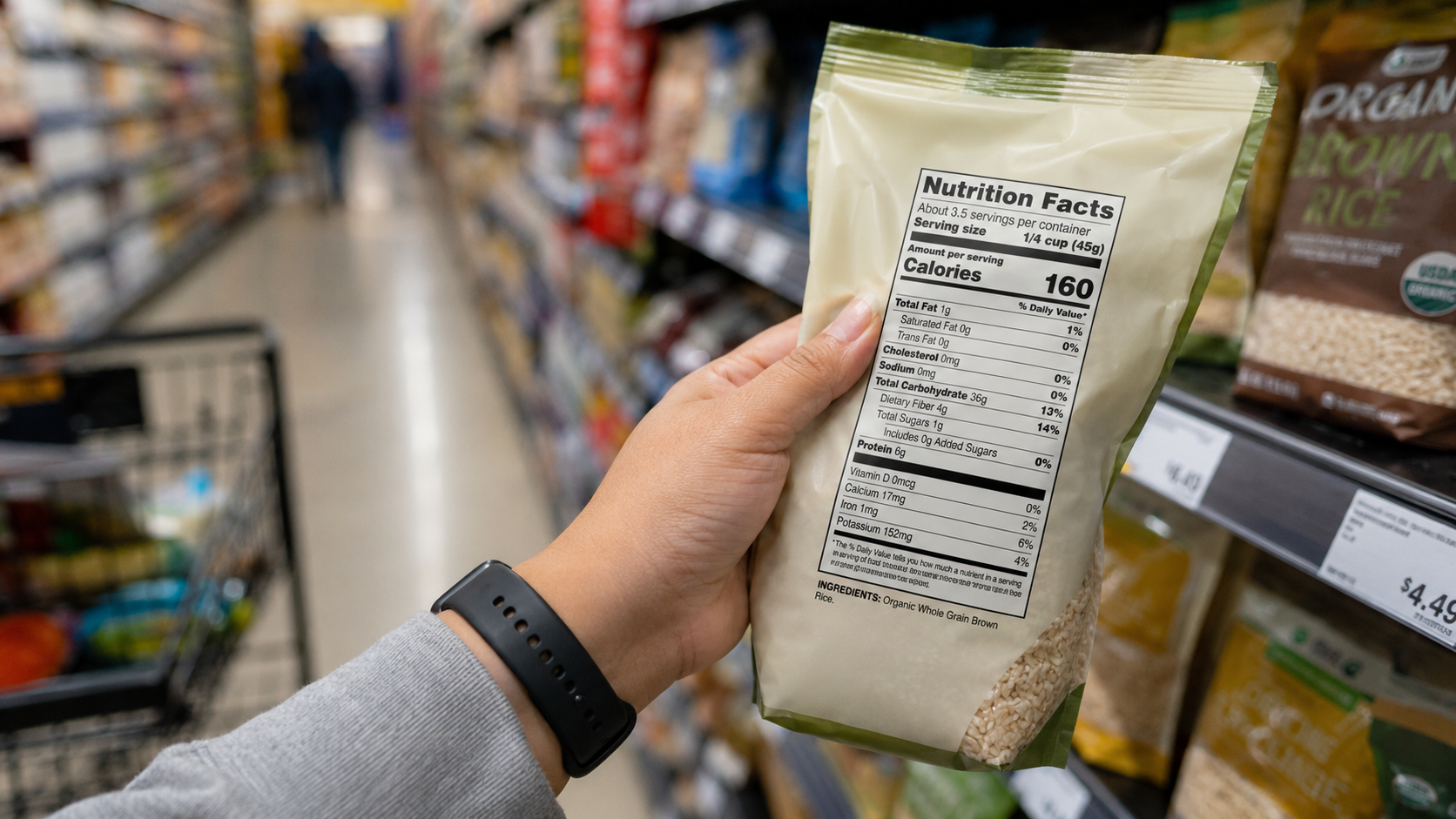 Reading the Nutrition Facts label while grocery shopping can help consumers compare products and make informed choices about added sugars, sodium, saturated fat, fiber, and serving sizes.
The Takeaway
Among the new dietary guidelines, one direction is fairly clear: reduce highly processed food, added sugar, and excess sodium, and choose a variety of less-processed foods instead.
On how much meat and full-fat dairy is actually wise, though, real disagreement continues among experts — precisely because the final policy and the advisory committee's own scientific recommendations parted ways.
So rather than adopting a new guideline just because it's trending, examine your own health and your overall diet together.
Christian health stewardship was never about an obsession with living longer. It's about caring gratefully for the body God entrusted to you, and using the strength that gives you to serve family and neighbors longer and better.
Food can't save us. But gratitude, self-control, and wisdom can genuinely be practiced at every ordinary table.
Healthy eating doesn't start with finding the perfect food. It starts with receiving what's in front of you today with gratitude, eating what you actually need, and caring for both your body and your neighbor in the process.
One line to remember: A table of faith doesn't just ask what to eat. It asks how to care, with gratitude and self-control, for the body God entrusted to you.
This article is intended as general health information and is not a substitute for individual diagnosis or treatment. References to U.S. dietary guidelines reflect the January 2026 announcement and may be revised or updated over time.