How to Choose Olive Oil Capsules
Reading the Numbers Behind the Marketing
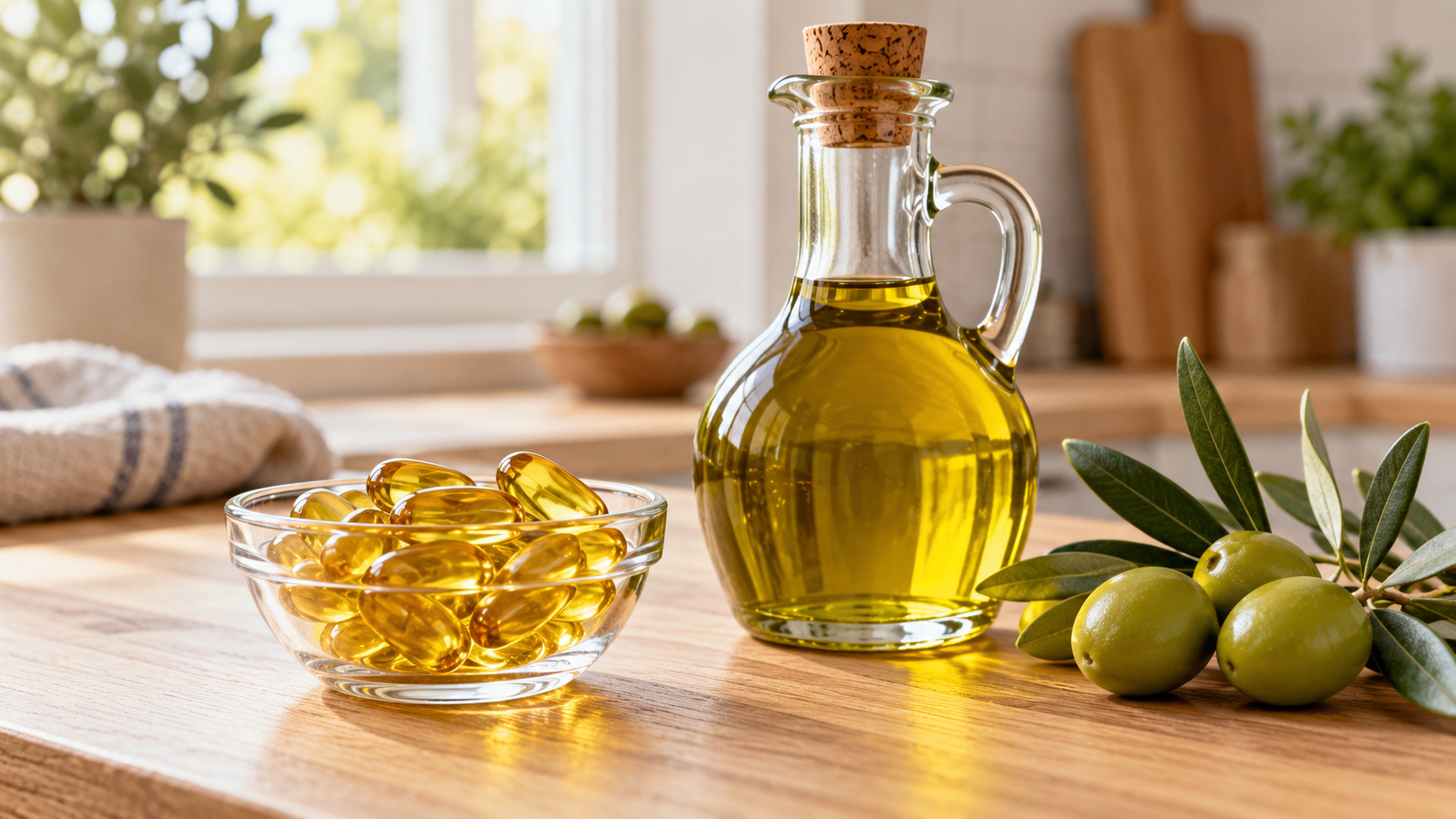 Olive oil capsules offer convenience, but consumers should compare the actual oil content, ingredients, polyphenol information, and quality standards rather than relying only on product claims.
As interest in healthy eating grows, olive oil capsules have become easy to find on store shelves and online. You will see extra virgin olive oil softgels, olive polyphenol supplements, and hydroxytyrosol products. For anyone who finds it hard to work olive oil into their meals every day, a capsule looks like a convenient shortcut. But is it wise to choose one based on words like "premium," "high potency," "extra virgin," or "rich in polyphenols" printed on the bottle?
Paul writes, "Whether therefore ye eat, or drink, or whatsoever ye do, do all to the glory of God" (1 Corinthians 10:31, KJV). What we eat is not separate from our faith. That does not mean we should take more supplements. It is closer to a call for discernment: caring for the body we have been given without being swept along by exaggerated health claims. Choosing an olive oil capsule is no exception.
One or Two Capsules Are Not the Same as Olive Oil on Your Table
The first thing to understand is quantity. Most olive oil capsules contain about 1 gram (1,000 mg) of oil each.
The standards and studies behind olive oil's reputation assume much larger amounts. The FDA allows a qualified health claim that eating about 1.5 tablespoons (20 grams) a day of oils high in oleic acid, such as olive oil, may reduce the risk of coronary heart disease. The evidence behind it is described as supportive but not conclusive. The claim also comes with conditions: the oil should replace fats higher in saturated fat, such as butter, and should not add to the total calories you eat in a day. In the well-known Spanish PREDIMED study of the Mediterranean diet, participants used about four tablespoons of extra virgin olive oil a day in their meals.
To reach the FDA's 20 grams with 1-gram capsules, you would need 20 capsules a day. One or two capsules simply cannot be expected to do what olive oil in your meals does.
There is another point worth noticing. The benefits seen in research come less from adding olive oil and more from a whole diet in which olive oil replaced other fats. Liquid olive oil can take the place of butter in salad dressings, vegetable dishes, bread, and pasta. A capsule cannot do that. If your goal is healthy fat in your diet, cooking with a good extra virgin olive oil is much closer to what the research actually studied.
If you want a good everyday oil for cooking, look for one that shares details such as harvest date and quality data. One example is California Olive Ranch's California Collection, which lists harvest year, bottling date, and chemistry data through a QR code on the bottle. (Affiliate link: the author may earn a small commission if you make a purchase. As an Amazon Associate I earn from qualifying purchases.)
Look Past the Word "Olive" to the Actual Ingredients
Not every product with "olive" on the label is the same thing. They fall into roughly three groups.
Olive oil softgels: Actual olive oil in a capsule. Some use extra virgin olive oil (EVOO).
Olive polyphenol or hydroxytyrosol supplements: Specific polyphenol compounds extracted or concentrated from olives.
Olive leaf extract: Made from the leaves of the olive tree, not the fruit, and built around compounds such as oleuropein. It is a very different product from an oil capsule.
So before reading the claims on the front of the bottle, turn it over and check the Supplement Facts (or Nutrition Facts) panel and the ingredient list. Look past the convenience of "just one a day" to the real numbers. How much is in each capsule? How many capsules make up a daily serving? Does that amount actually match what you are hoping for? Convenient and sufficient are not the same thing.
How to Read "Extra Virgin" and Polyphenol Numbers
Extra virgin olive oil is likely to contain more polyphenols and other bioactive compounds than refined olive oil. But the words "Extra Virgin" alone do not guarantee a high polyphenol content. Even among extra virgin oils, the olive variety, harvest timing, pressing method, storage time, and exposure to light, heat, and air all make a large difference.
If polyphenols matter to you, read the numbers carefully. Two points cause the most confusion.
First, check what is being measured. The European Union allows olive oil to carry a claim that its polyphenols contribute to protecting blood lipids from oxidative stress only if the oil contains at least 5 mg of hydroxytyrosol and its derivatives per 20 grams. The label must also explain that the benefit comes from eating 20 grams a day. This standard measures hydroxytyrosol and its derivatives specifically. That is a different measure from the "Total Polyphenols" figure many products list, so the two cannot be compared directly. And the standard is a condition for one specific claim, not a promise that eating that amount prevents disease.
Second, check the unit. "mg/kg" is a concentration in one kilogram of the source oil. "mg per capsule" is the amount actually in one capsule. Imagine a 1-gram capsule made from oil listed at 500 mg/kg total polyphenols. Each capsule contains about 0.5 mg of polyphenols, not 500 mg. Even if the oil comfortably meets the EU standard, one 1-gram capsule holds only about 0.25 mg of hydroxytyrosol and its derivatives. To reach the EU's 5 mg, you would again need about 20 capsules.
A bigger number does not automatically mean a better product. What matters is knowing what the number means. If your goal is a specific amount of a particular polyphenol, a standardized polyphenol product that lists a clear amount per capsule may fit that goal better than an ordinary oil capsule. Just remember that a concentrated extract is not the same as the olive oil we eat as food.
How to Check Quality
In the United States, dietary supplements are not approved by the FDA for safety and effectiveness before they are sold, the way prescription drugs are. Manufacturers are responsible for what is on the label and for product quality. That is why it helps to look at quality information, not just marketing claims.
Two well-known third-party programs are NSF and USP Verified. These programs can help confirm that what is on the label is actually in the bottle, that the product is free of certain contaminants, and that it was made under proper manufacturing practices. A product without certification is not necessarily a bad product, but you have one less piece of information to go on.
If you want to dig deeper, ask whether the manufacturer provides a Certificate of Analysis (COA). A COA usually includes ingredient test results, the lot number, heavy metal and microbial testing, and oxidation-related quality tests. If a product heavily advertises its polyphenol content, it is worth checking whether that figure refers to the raw oil or the finished product, and how it was measured.
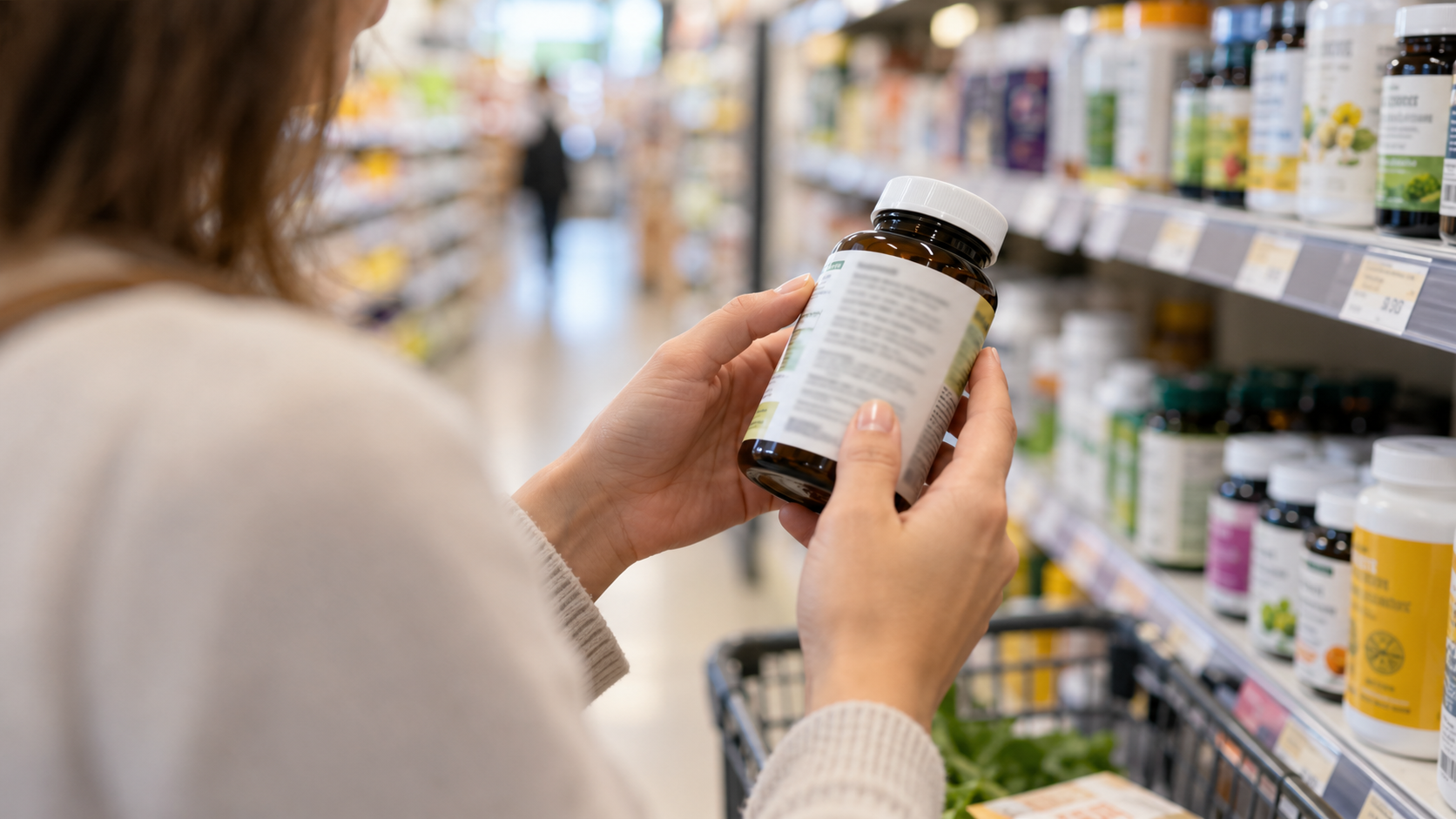 Carefully reading supplement labels can help consumers understand serving size, ingredients, active compounds, and quality information before choosing a product.
Freshness Is Part of Quality
Because olive oil is a fat, long exposure to light, heat, and oxygen causes it to oxidize. As it oxidizes, its flavor changes and its antioxidant compounds decline. Capsules have an advantage over bottled oil because the oil is not exposed to air every time you open the bottle, but they are not immune to oxidation. Check that there is plenty of time before the expiration date, that a lot number is printed, and that the label tells you to store it somewhere cool and dark. Avoid leaving it in a hot car or on a sunny windowsill.
It also helps to understand claims like "0.2% acidity" or "ultra-low acidity." Acidity measures free fatty acids and is a useful quality indicator. But low acidity does not mean the oil has not oxidized. Oxidation has to be judged alongside other measures, such as the peroxide value. No single good number tells you everything about a product.
Be Skeptical of Miracle Claims
Be cautious with products that promise to "clean your arteries," "eliminate cholesterol," "replace your blood pressure medication," or "prevent cancer."
Research on olive oil and its polyphenols is active and promising. But results from people who used extra virgin olive oil consistently as part of their whole diet cannot be transferred to a single capsule as a treatment. No supplement should replace a prescribed medication without your doctor's guidance. And "natural" does not mean safe for everyone.
Talk with Your Doctor or Pharmacist First If You
Plain olive oil capsules are essentially food and carry little risk. Each one has only about 9 calories. Extracts and concentrated products are a different story.
Take blood pressure or diabetes medication: Olive leaf extract can lower blood pressure and blood sugar, which may make your medication's effect too strong. Talk with your doctor before using it.
Are pregnant or breastfeeding: There is not enough data on whether olive leaf extract is safe during pregnancy or breastfeeding. Check with your healthcare provider before using concentrated polyphenol products as well.
Are allergic to olive pollen: You may react to olive leaf extract.
Take several supplements or have surgery or a procedure coming up: Give your healthcare team a full list of what you take.
Follow a vegetarian diet or religious dietary standards: Softgels are often made with animal gelatin, so check the capsule ingredients on the label.
Faith and medicine are not on opposite sides. Entrusting our health to God in prayer and wisely using the medical knowledge and professional help He has made available can go hand in hand.
Closing Thoughts: The Daily Table, Not a Miracle Capsule
If you decide to buy olive oil capsules, check these things in order:
What kind of product is it? Olive oil, a polyphenol concentrate, or olive leaf extract.
How much will you actually take each day? Count grams or milligrams, not capsules.
What do the polyphenol numbers measure? Total polyphenols or hydroxytyrosol, and mg/kg or mg per capsule.
What is the source oil? Extra virgin, refined, or blended with other oils.
Is quality information available? Third-party certification, a COA, and a lot number.
Is it fresh? Check the expiration date and storage instructions.
Paul writes, "For bodily exercise profiteth little: but godliness is profitable unto all things, having promise of the life that now is, and of that which is to come" (1 Timothy 4:8, KJV). Caring for the body has real value, but health itself is not the purpose of life. Keeping a perfect diet and taking the right supplements does not make anyone a more faithful Christian, because health is not a measure of faith. Yet treating the body we have been given carelessly is not wise either.
Our efforts to care for our health are best rooted in gratitude and responsibility rather than fear. Wisely caring for the body we have today, choosing facts over hype, and seeking professional help when needed is what faithful stewardship looks like. Rather than searching for a miracle capsule to replace good meals, taking a patient look at our daily table and habits may be the most realistic place to start.
 Healthy eating can be viewed as part of faithful stewardship—caring for the body with gratitude, wisdom, and balance rather than placing excessive trust in supplements alone.
This article provides general health and nutrition information based on publicly available government sources and research as of October 2026. It does not endorse any product's effectiveness or recommend any product for preventing or treating disease. Dietary supplements in the United States are not approved by the FDA before they are sold. If you have a medical condition, take medication, or are pregnant or breastfeeding, please talk with a doctor or pharmacist before starting a new supplement.