How to Get the Most Out of Tomatoes
Enjoying a Gift from God's Creation — Wisely
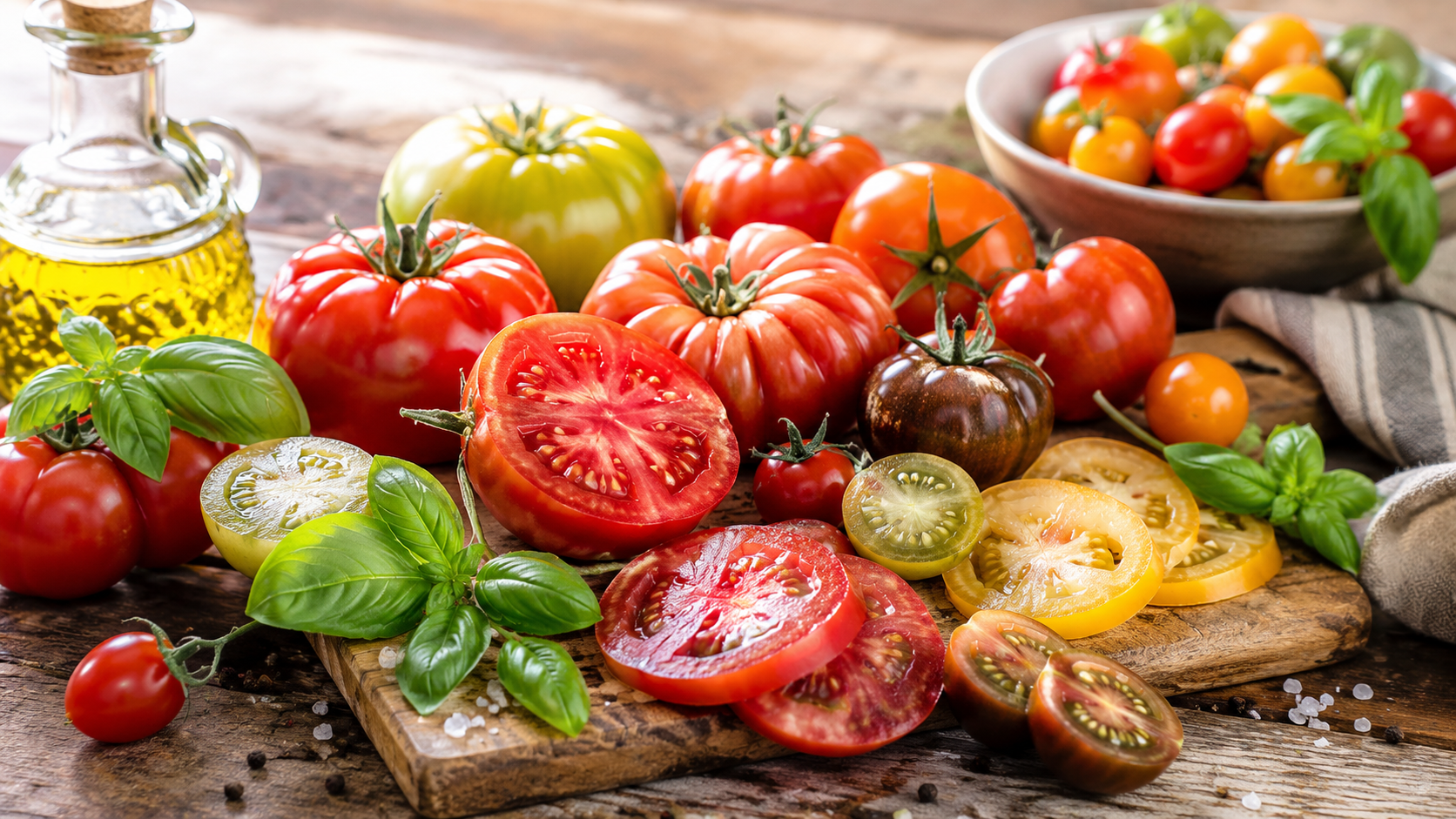 Fresh tomatoes, basil, and olive oil come together on a rustic table, reminding us that simple, wholesome foods can be enjoyed with gratitude and care.
Tomatoes show up in so many forms on our tables: in salads, as juice, in pasta sauce, tossed into stir-fries. They're familiar enough to feel ordinary, and that's part of what makes them easy to overlook.
For those who see the body as something entrusted to our care rather than something we own, even ordinary food choices carry a quiet significance. Eating well is part of how we tend what we've been given. With that in mind, here's a practical look at how to get the most out of tomatoes — nutritionally and in everyday life.
Raw: The Case for Simplicity
The easiest way to eat tomatoes is fresh and raw. No cooking required — just rinse and eat, which makes them a low-effort addition to a busy morning or a simple snack. Raw tomatoes are high in water content and are a solid source of vitamin C, which the body uses for immune function and tissue repair. It's also worth knowing that vitamin C is heat-sensitive: cooking reduces it, so raw is the better choice if that's what you're after.
Why Cooking Raises the Bar for Lycopene
Tomatoes are the richest food source of lycopene, the pigment that gives them their deep red color and an antioxidant that researchers have linked to heart and cellular health. Here's what makes cooked tomatoes nutritionally interesting: heating significantly increases how much lycopene the body can actually absorb.
Two things happen when tomatoes are cooked. First, heat breaks down the tough cell walls of the tomato, physically releasing lycopene from the plant-fiber matrix so the digestive system can access it more easily. Second — and this is the precise part — heat causes a structural change in the lycopene molecule itself, converting it from the hard-to-absorb "trans" form (which tends to crystallize and resist absorption) into a "cis" form that moves much more readily into the bloodstream. So cooking doesn't create more lycopene; it puts the lycopene already there into a form the body can actually use.
Good options include tomato sauce, sautéed tomatoes, oven-roasted tomatoes, tomato soup, and tomato-based stews. Ideally, eating both raw and cooked tomatoes regularly gives you the full range of what they offer.
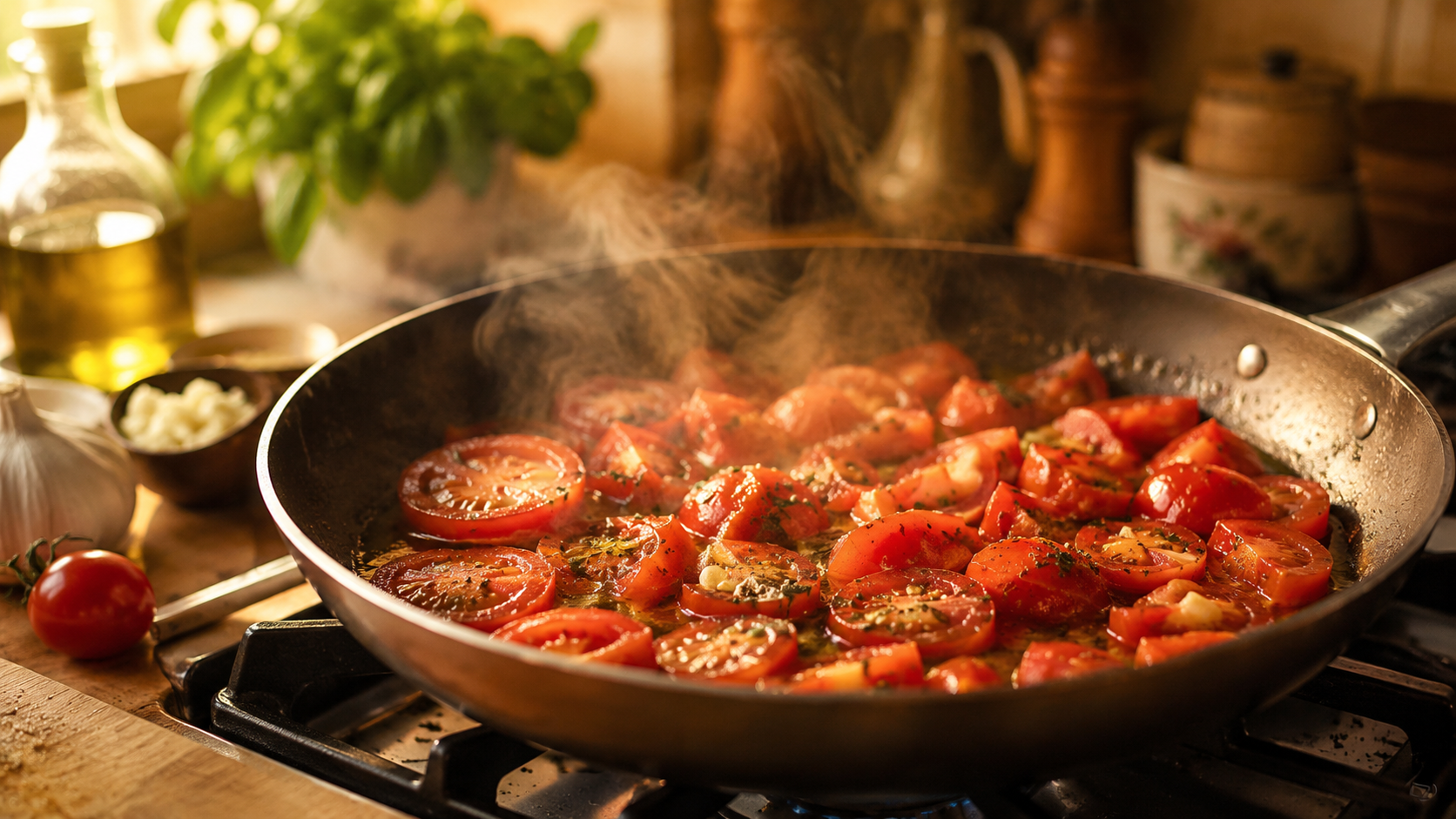 Tomatoes simmer gently in olive oil, filling the kitchen with warmth, aroma, and the simple comfort of wholesome home cooking.
Fat Makes the Difference
Lycopene is fat-soluble, which means it needs dietary fat to be properly absorbed. During digestion, fat forms tiny droplets called lipid micelles that carry lycopene through the intestinal wall and into the bloodstream — without fat nearby, much of it passes through unabsorbed. This applies to both raw and cooked tomatoes.
A few practical combinations worth trying:
- Tomatoes with olive oil (salad dressing or a drizzle)
- Tomato and egg stir-fry
- Pasta with olive oil-based tomato sauce
- Tomato and cheese salad
Healthy eating doesn't have to be complicated. Pairing a few ingredients thoughtfully is often all it takes.
What About Tomato Juice?
Tomato juice is a convenient option when cooking feels like too much. If you're drinking it for health reasons, the main things to watch are added sugar and sodium. Look for no-sugar-added or low-sodium versions, or blend fresh tomatoes yourself. If your stomach runs sensitive, after a meal is easier than on an empty stomach.
The broader point about flexibility: you don't need to be rigid about any single method. Raw when you're in a hurry, cooked with oil when you're cooking anyway, juice when convenience matters. Paired with eggs, cheese, leafy greens, or olive oil, tomatoes fit easily into a varied, balanced plate. The key isn't perfection; it's consistency.
A few practical cautions: eating a large amount of raw tomato on an empty stomach can cause discomfort for some people. If your digestion is sensitive, cooked is gentler. And as with most foods, a steady moderate intake beats occasional large quantities.
A Closing Thought
Tomatoes don't need an elaborate preparation to be worth eating. Raw, they give you vitamin C; cooked, they give you more accessible lycopene; paired with a healthy fat, they give you both in the most usable form. Simple food, wisely used.
From a faith perspective, caring for the body isn't mainly about longevity or optimizing nutrients — it's about being faithful stewards of what we've been entrusted with. A tomato eaten with gratitude is, in its small way, a reminder that even ordinary things come from a generous Creator. When we receive the everyday gifts of creation with thankfulness, an ordinary meal becomes something a little more.
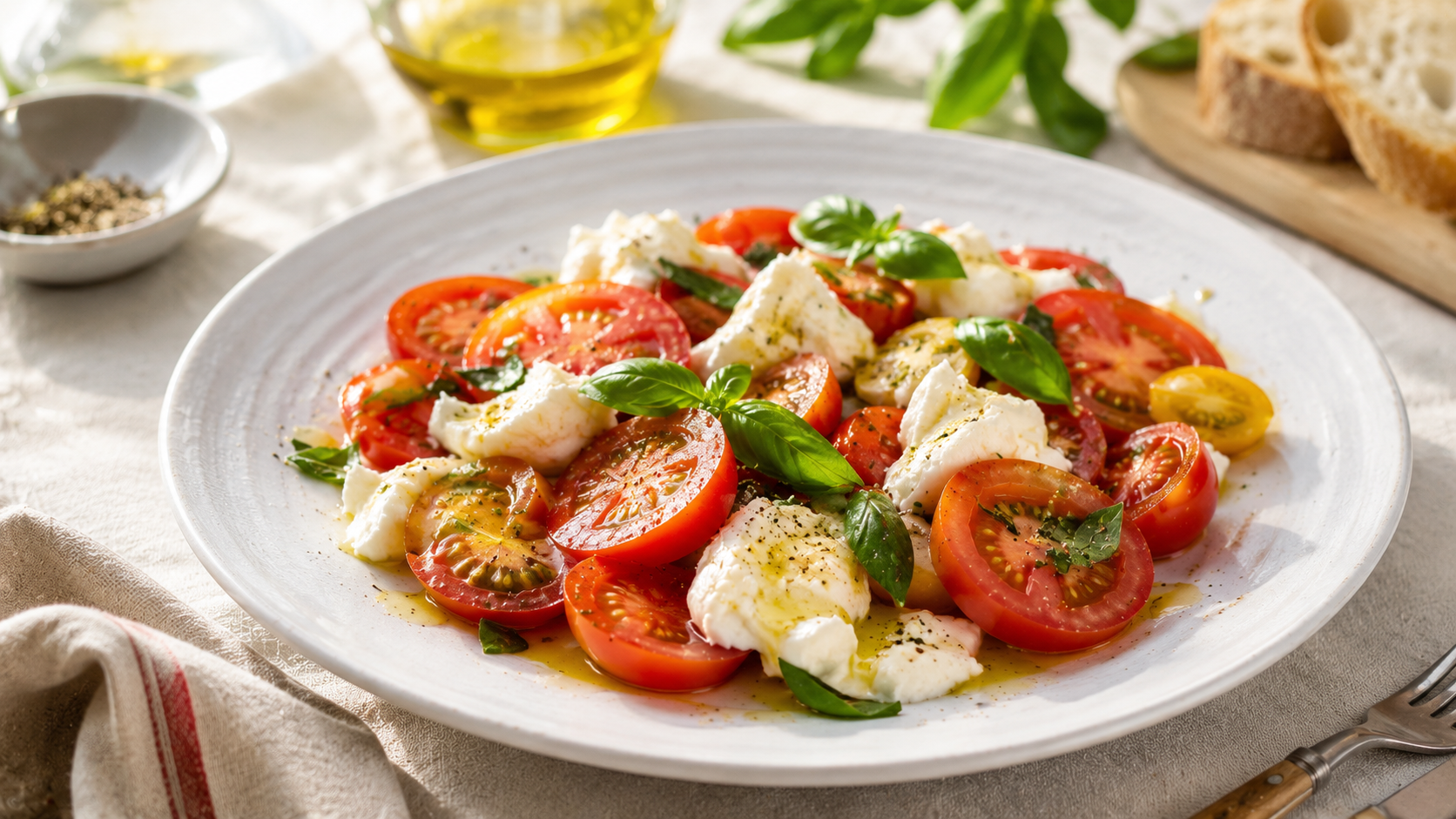 A fresh Mediterranean tomato salad with mozzarella, basil, and olive oil highlights the beauty of simple ingredients prepared with care.
Note: This article offers general health information. Individual nutritional needs vary; if you have specific health conditions, please consult a healthcare professional.