Iron-Rich Foods Are Already on Your American Grocery List
There's a stretch a while back where I kept telling people I was "just tired." Slept enough, still felt heavy in the morning. Walked up one flight of stairs and felt a little winded, a little dizzy. Cold hands. Trouble focusing on anything for more than a few minutes.
I chalked it up to stress for longer than I should have. Turns out it's worth asking a simpler question first: how's your iron?
Not every kind of fatigue comes down to iron — sleep problems, stress, thyroid issues can all look similar. But iron is what your body uses to build hemoglobin, the protein that carries oxygen through your blood, so when it's low, tiredness, dizziness, and shortness of breath are exactly what you'd expect to show up.
Living in the U.S., it's easy to assume getting enough iron means buying supplements or specialty health foods. It doesn't, really. Most of what you need is already sitting in an ordinary grocery cart.
"For everything God created is good, and nothing is to be rejected if it is received with thanksgiving." (1 Timothy 4:4)
An ordinary dinner table doesn't look like much. But eaten with gratitude and a little intention, it can genuinely be a place where you take care of the body God gave you.
 A warm bowl of beef and vegetable stew served with whole-grain bread offers a comforting, iron-rich meal made from simple, nourishing ingredients.
Meat and Seafood: The Iron Your Body Absorbs Best
Beef is usually the first thing people think of, and for good reason. Beef stew, pot roast, meatballs, a basic burger patty — all common on an American table, and all carrying heme iron, the form your body absorbs most efficiently. You don't need a giant steak every night. A modest amount of beef in a stew loaded with vegetables, or a smaller portion alongside whole grains, does the job just fine.
Chicken and turkey work too — dark meat (thighs and legs) carries a bit more iron than white meat. Chicken soup, turkey chili, a spinach chicken salad — nothing exotic, just easy on digestion and reasonably rich in iron at the same time.
If you eat seafood, your options open up further. Clams and oysters are particularly iron-dense. Sardines, tuna, and salmon bring iron along with protein and a few other nutrients worth having. Just watch the sodium on canned fish — check the label and go for the low-sodium version when you can.
Plant-Based Sources: Lower Absorption, Easier to Eat Every Day
If daily meat isn't realistic for you, or you're eating mostly plant-based, beans and lentils are a solid answer. Black beans, lentils, chickpeas, tofu — all easy to find at any grocery store, and easy to build into things you'd probably eat anyway: bean chili, lentil soup, hummus.
Leafy greens beyond spinach help too — kale, collard greens, broccoli all carry some iron. One thing worth knowing: plant-based iron (non-heme) doesn't absorb as well as the iron in meat. Pairing it with vitamin C — oranges, tomatoes, bell peppers, a squeeze of lemon — genuinely helps your body take in more of it.
There's something almost stubbornly ordinary about a bean. No branding, no health-food aisle markup. And yet there's real nourishment built into it — the kind of order in creation that shows up in the least flashy foods on the shelf. Eating well was never really about expensive ingredients. It's about combining ordinary things with a little intention.
Breakfast Is Hiding More Iron Than You'd Think
Iron-fortified cereal and oatmeal are probably the easiest iron sources in an American kitchen. Fortification levels vary a lot by brand, so it's worth actually checking the "Iron" line on the nutrition label instead of assuming.
Here's the part that actually matters: eat fruit alongside it. Oranges, strawberries, kiwi — vitamin C helps your body absorb the non-heme iron in cereal or oatmeal much more effectively than eating it alone. Even on a rushed morning, tossing a few strawberries next to your cereal bowl is a small choice that does something real.
Eggs, pumpkin seeds, sesame seeds, cashews aren't major iron sources on their own, but they add up in small ways — pumpkin seeds sprinkled on oatmeal, peanut butter on whole wheat toast, a boiled egg on a salad.
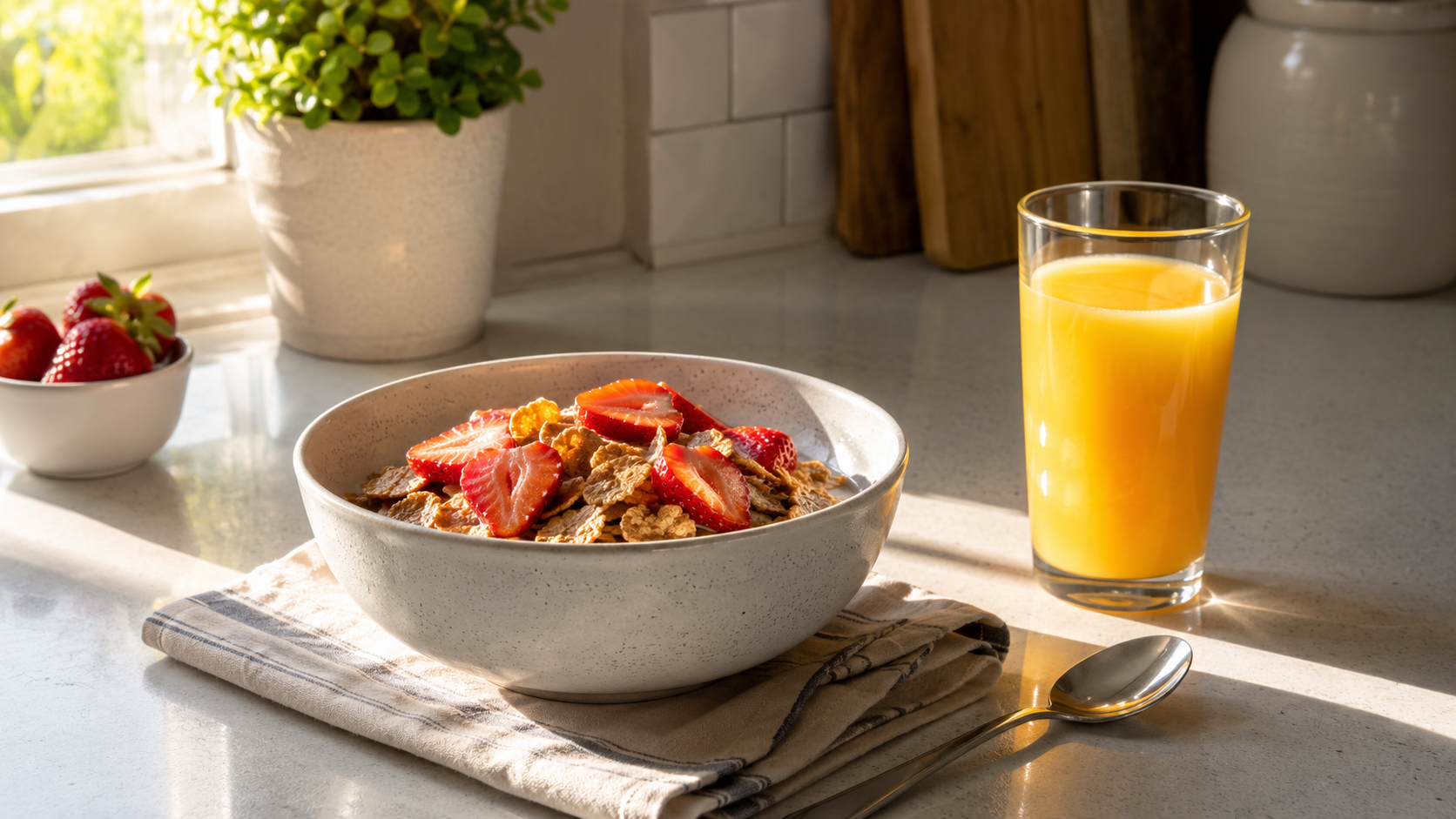 An iron-fortified cereal topped with fresh strawberries and served with orange juice makes a simple, nourishing breakfast. The vitamin C in the fruit and juice can help the body absorb iron from plant-based and fortified foods.
Coffee, Tea, and Calcium — Timing Matters More Than Quitting
If you love coffee or tea, here's the one thing worth remembering: the tannins in both can interfere with how well your body absorbs non-heme iron. So rather than drinking either right after an iron-rich meal, giving it a bit of a gap helps.
Calcium can interfere too. If you're taking an iron supplement, it's generally best not to take it alongside milk or a calcium supplement — worth confirming the exact timing with your doctor or pharmacist rather than guessing.
None of this means quitting coffee. Just shifting the timing a little is usually enough. Self-control was never about banning things outright — it's about being wise about timing and amount so your body actually benefits.
Don't Brush Off What Your Body Is Telling You
Ongoing fatigue, frequent dizziness, getting winded doing very little, cold hands, trouble concentrating — if these show up repeatedly, it's worth paying attention.
Symptoms alone can't confirm an iron deficiency, though — plenty of other conditions look similar. If fatigue is getting worse, or you're dealing with chest pain, shortness of breath, heavy periods, or possible bleeding, that's something to bring to a doctor along with a blood test, not just a grocery list.
Praying doesn't replace seeing a doctor. God can absolutely work through medical care and medical knowledge to look after the life He gave us. Paying attention to a warning sign and actually getting help is its own kind of faithful choice — not a lack of trust.
And on the flip side: don't just start taking high-dose iron supplements because you're tired. Too much iron builds up and causes its own problems — constipation, nausea, stomach pain among them. Get a blood test first, and talk to a doctor or pharmacist before adding a supplement. Caring for your body well isn't about giving it whatever it seems to want. It's about actually finding out what it needs, and responding to that.
Taking Care of Your Body Is Part of Stewardship
It's easy, in a life of faith, to treat the spiritual and the physical as two separate categories. But we're not souls floating around independent of a body. God gave us this body specifically — to serve family, to help a neighbor, to carry out whatever we've been called to do.
"Dear friend, I pray that you may enjoy good health and that all may go well with you, even as your soul is getting along well." (3 John 1:2)
Health was never something we could fully guarantee through our own effort. You can eat well and exercise faithfully and still get sick. That's not a verdict on anyone's faith. What we can actually do is care gratefully for the body we've been given, ask for help when it's struggling, and use the strength we do have to serve others while we have it.
Something as small as paying a little attention to iron in your meals fits into that same picture.
Next time you sit down to eat, maybe look past just the nutrition label for a second and say thanks for the food itself. An ordinary bowl of cereal, a simple pot of bean soup — there's grace holding up your body in both of them. Eating well was never really a health hack. It's a small, repeated act of gratitude for the body you've been trusted with, and for the life you get to live in it today.
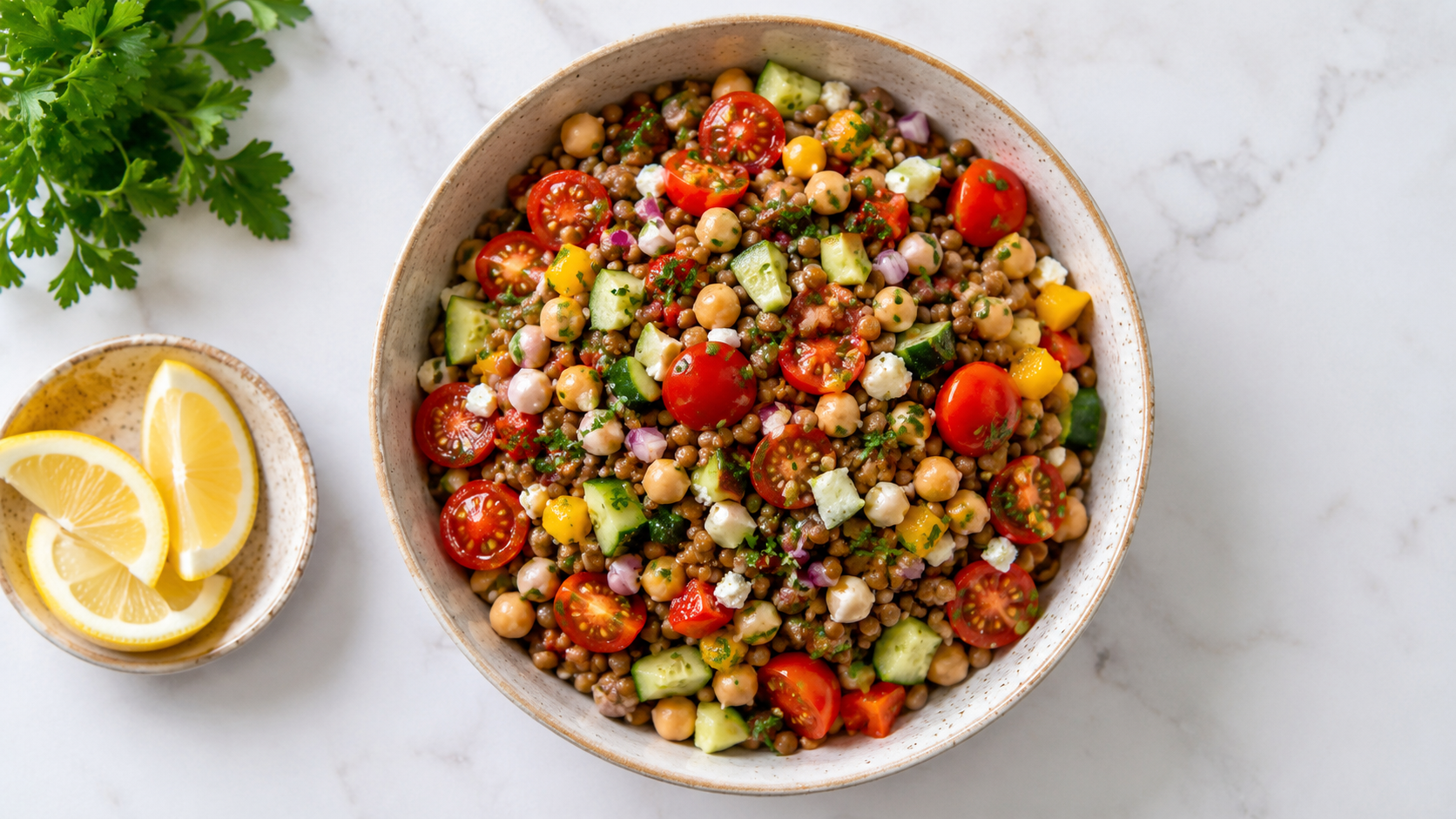 A colorful lentil and vegetable salad with chickpeas, cherry tomatoes, and fresh lemon offers a bright, wholesome meal packed with plant-based nutrients and fresh flavor.