Isn't a Banana Just Something You Eat When You're Hungry?
 A banana makes a simple and convenient morning snack, providing carbohydrates for quick energy.
There's usually at least one banana sitting on the counter at my house.
Skipped breakfast, about to work out, a little hungry but too lazy to actually prepare anything — a banana is the obvious answer every time. Peel it, eat it, done. Sweet enough to feel like a treat, light enough not to feel like a compromise.
But bananas come with a lot of baggage attached, in the form of claims you've probably heard repeated as fact: eat one when you're tired and you'll perk right up. Good for an upset stomach. Helps blood pressure and muscle health. Even supposedly boosts your mood.
Are any of these actually true? Bananas are genuinely nutritious and convenient — but they're not a cure-all for whatever ails you. The point was never to turn a banana into a miracle food. It's to receive it, gratefully, as one of many good things God has given us to eat.
"So, whether you eat or drink, or whatever you do, do it all for the glory of God." (1 Corinthians 10:31)
Even something as small as eating a banana can connect to a life of caring for your body, exercising self-control, and living with gratitude.
1. Quick Energy for Rushed Mornings and Workouts
There are mornings when there's no time for breakfast, so it's just coffee — and somehow that leaves you feeling more jittery and worn out than before. A banana carries natural carbohydrates and sugars: a medium one runs about 105 calories, virtually no fat, with carbs and fiber both included.
That makes it a genuinely convenient option when breakfast didn't happen, when you need something light before exercising, or when you're trying to swap a natural food in for a candy bar or sugary drink. It's the same reason athletes reach for bananas before and after training — portable, easy on digestion, and it comes with potassium built in.
That said, a banana alone doesn't cover everything a real breakfast needs. Pairing it with something that brings protein and fat — yogurt, milk, nuts, an egg — rounds it out. And a banana doesn't prevent every muscle cramp during a workout either. Cramping usually has several causes stacked together: fatigue, dehydration, exercise intensity, posture. Proper hydration, stretching, and a genuinely balanced diet all need to be part of the picture too.
Our bodies are a gift entrusted to us, and our stamina isn't unlimited either. Paying attention to what your body actually needs even on a rushed day — and being honest about your own limits — is its own small act of stewardship.
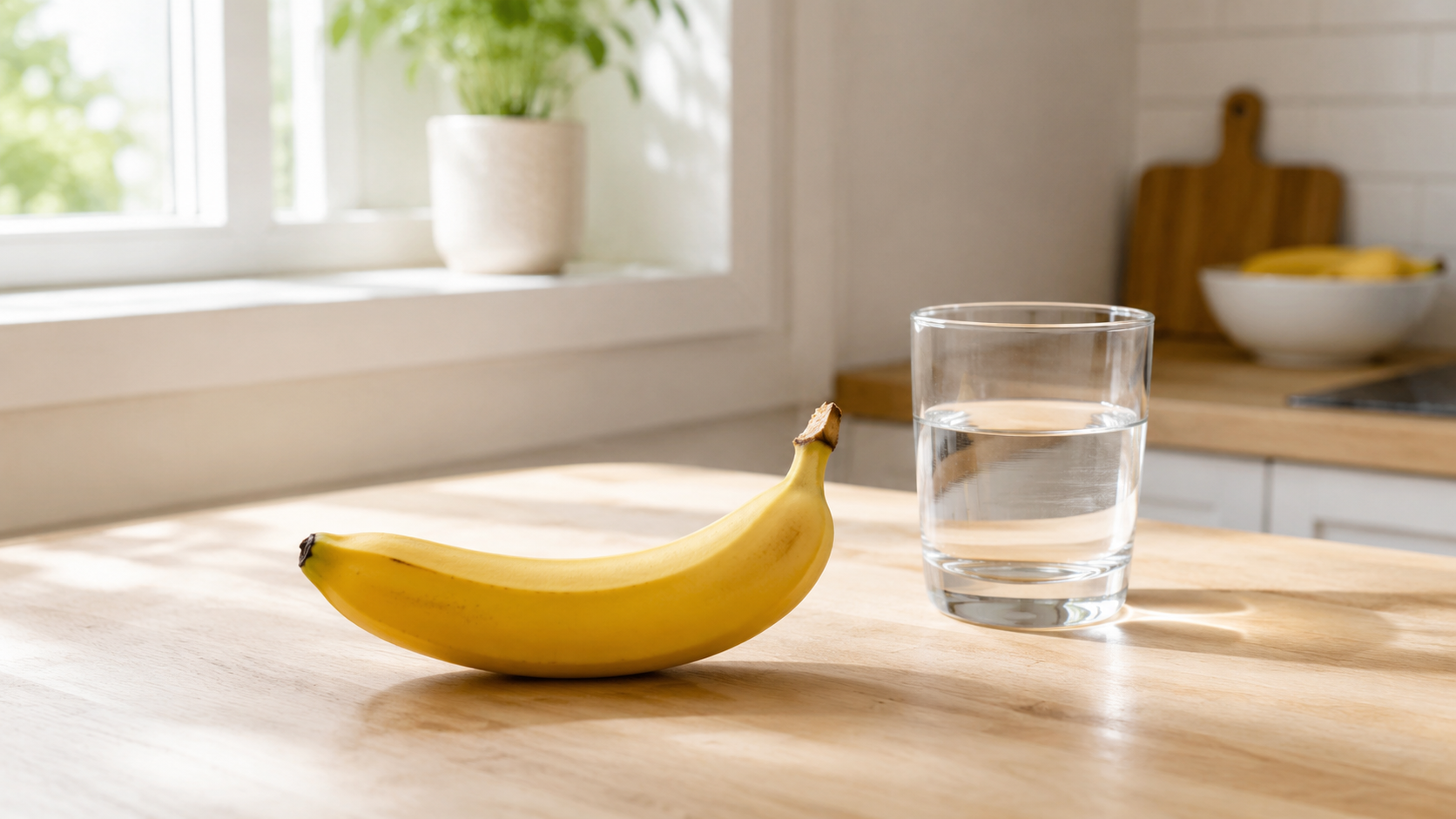 A ripe banana and a glass of water offer a simple and refreshing way to start the morning.
2. Fiber and Digestion — Not a Universal Fix
Bananas contain fiber, and as part of a balanced diet, that fiber can support regular digestion and help you feel full.
But it's not accurate to call bananas a cure-all for both constipation and diarrhea. Everyone's gut responds differently, and how ripe the banana is — along with what else you're eating alongside it — changes the effect. The National Institute of Diabetes and Digestive and Kidney Diseases notes that fiber can help with constipation, but recommends increasing it gradually, since a sudden jump can cause gas and bloating.
During diarrhea, bananas can be one useful way to help replace potassium — but staying hydrated and addressing the actual cause matters more. If symptoms are severe or persist, that's a reason to see a doctor, not to keep eating bananas and waiting it out.
Pushing through discomfort isn't a sign of faith. Resting appropriately and getting medical help when it's needed is also a responsible way of caring for the body God gave you.
3. Potassium and Blood Pressure — One Banana Won't Undo Your Diet
One of the biggest reasons bananas come up so often is potassium. It's an electrolyte that supports normal nerve and muscle function, and it helps offset the effects of sodium. A diet that includes potassium-rich foods can genuinely support healthy blood pressure.
But eating one banana doesn't cancel out a diet that's otherwise heavy on sodium. Managing blood pressure well takes several things working together: cutting back on high-sodium foods, eating a real variety of fruits and vegetables, exercising regularly, maintaining a healthy weight, and not stopping prescribed medication on your own.
If you have chronic kidney disease, or take medication that affects potassium levels, eating a lot of bananas can actually become a problem rather than a benefit — worth discussing an appropriate amount with your doctor or dietitian. Even a food widely considered "healthy" doesn't apply the same way to everyone. That's exactly why moderation and discernment matter.
4. Vitamin B6 Is Real — the "Happiness Fruit" Claim Isn't Quite
Bananas contain vitamin B6, involved in producing neurotransmitters, energy metabolism, and immune function.
They also contain tryptophan, which is where the popular claim comes from — that eating a banana boosts serotonin, the so-called "happiness hormone." But eating one banana doesn't directly resolve depression or stress on its own. Mood and mental health depend on sleep, relationships, exercise, physical health, life circumstances, and psychological state, all working together.
Choosing a banana over a bag of chips or a sugary dessert on a stressful day is a perfectly reasonable choice. But if you're dealing with ongoing depression, anxiety, or a persistent sense of hopelessness, that's not something to try to solve through food alone — talking to someone you trust, or seeking professional help, matters far more.
Church communities, too, need to resist the impulse to attribute someone's struggle to weak faith. Listening to what someone is actually going through, praying alongside them, and connecting them to real, practical help matters more than a quick verdict.
5. It Still Fits Into Weight Management
Bananas are sweet, but they're a natural stand-in for snacks loaded with fat and added sugar — think chips or cake. A medium banana at about 105 calories can absolutely fit into a weight-management plan when it's proportioned to your actual meals and activity level.
That said, "it's healthy so I can eat as much as I want" isn't quite right either — bananas still carry real carbohydrates and sugar. There's no universal rule like "exactly one a day" or "no more than two." Everyone's caloric needs, blood sugar situation, kidney function, and overall diet are different.
Even good food becomes a burden without any restraint, and even an ordinary food becomes genuinely beneficial when eaten with gratitude and balance.
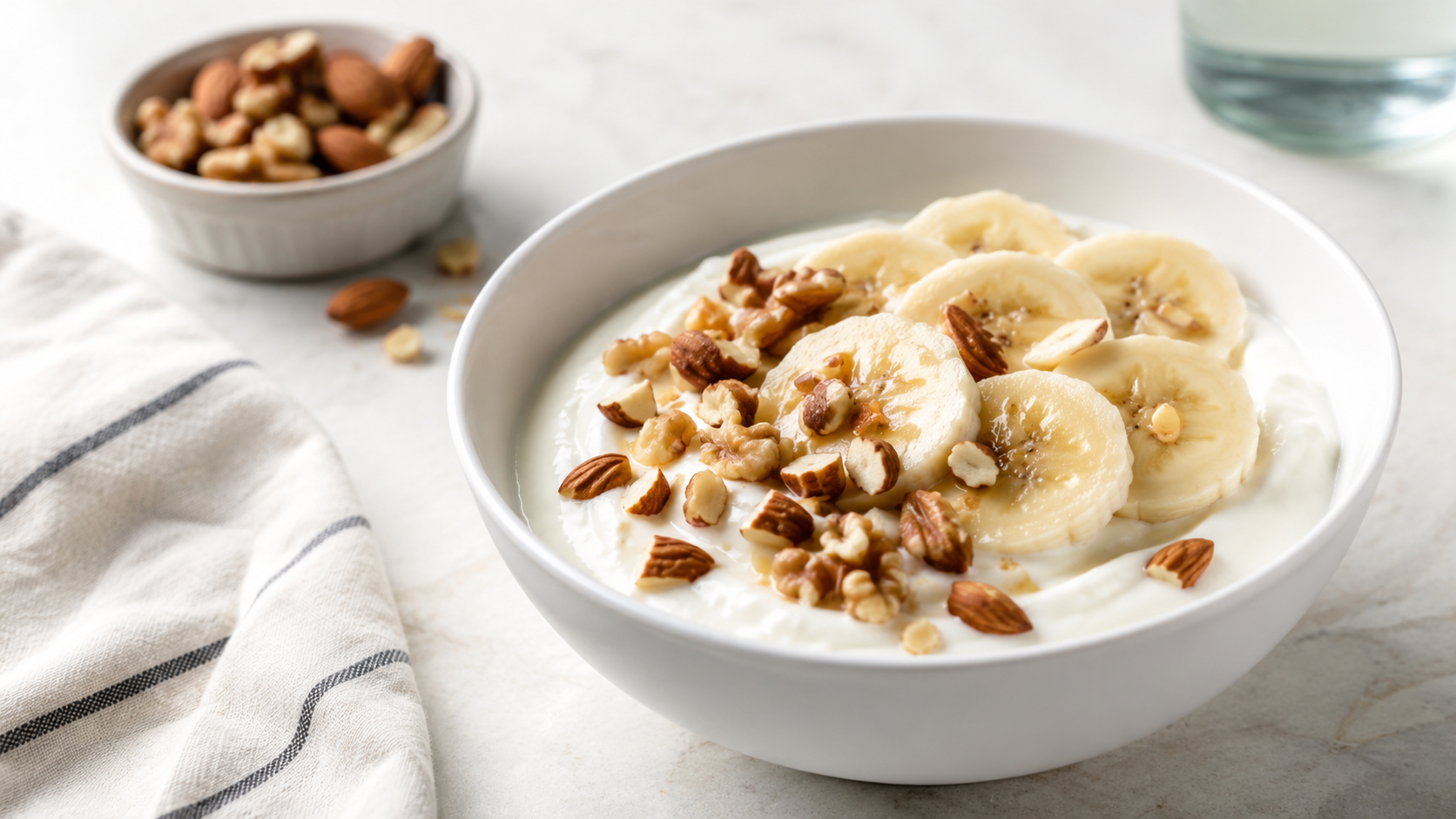 Banana slices, plain yogurt, and nuts make a balanced breakfast with carbohydrates, protein, and healthy fats.
What to Keep in Mind
If you have diabetes, it's worth eating a modest portion rather than several at once, and pairing it with something that brings protein and fat — nuts, or plain unsweetened yogurt. Blood sugar response varies by person, so let your own numbers and your doctor's guidance be the real reference point.
If your kidney function is reduced, potassium can build up too high in your blood, so it's worth checking an appropriate intake of bananas and other high-potassium foods with your doctor or a dietitian.
Bananas don't sit well with everyone's stomach either — depending on ripeness and how much you eat, some people notice bloating, constipation, or general discomfort, so it's worth paying attention to your own response. And since bananas fall short on protein and several essential nutrients, they make a great snack but a poor long-term substitute for an actual meal.
A Banana, Seen Through Faith
We tend to look for God's grace mostly in the big, dramatic things. But there's something worth noticing in the quiet care built into something as small and available as a banana: wrapped in its own protective peel, ready to eat with no preparation at all, delivering real energy and nutrients to a body that needs it.
That doesn't mean turning any specific food into something mystical, or treating health as a measure of someone's faith. A healthy person isn't more faithful, and a sick person isn't less so — that kind of judgment was never accurate to begin with.
For a Christian, caring for your health was never just about wanting to live longer. It's part of preparing this body — the one God gave you — to love and serve the people and calling in front of you.
Even eating a banana can be an occasion for something like this:
Lord, thank You for the food You've provided again today. Help me care wisely for this body, and use the strength You've given me to love and serve the people around me.
If you'd like a simple way to keep bananas ripening well on your own counter instead of bruising in a bowl, this banana hanger is a small, inexpensive way to do that (affiliate link — I may earn a small commission at no extra cost to you).
An ordinary banana, received with gratitude, can become a small kind of grace — enough to carry your body, and your day, a little further.
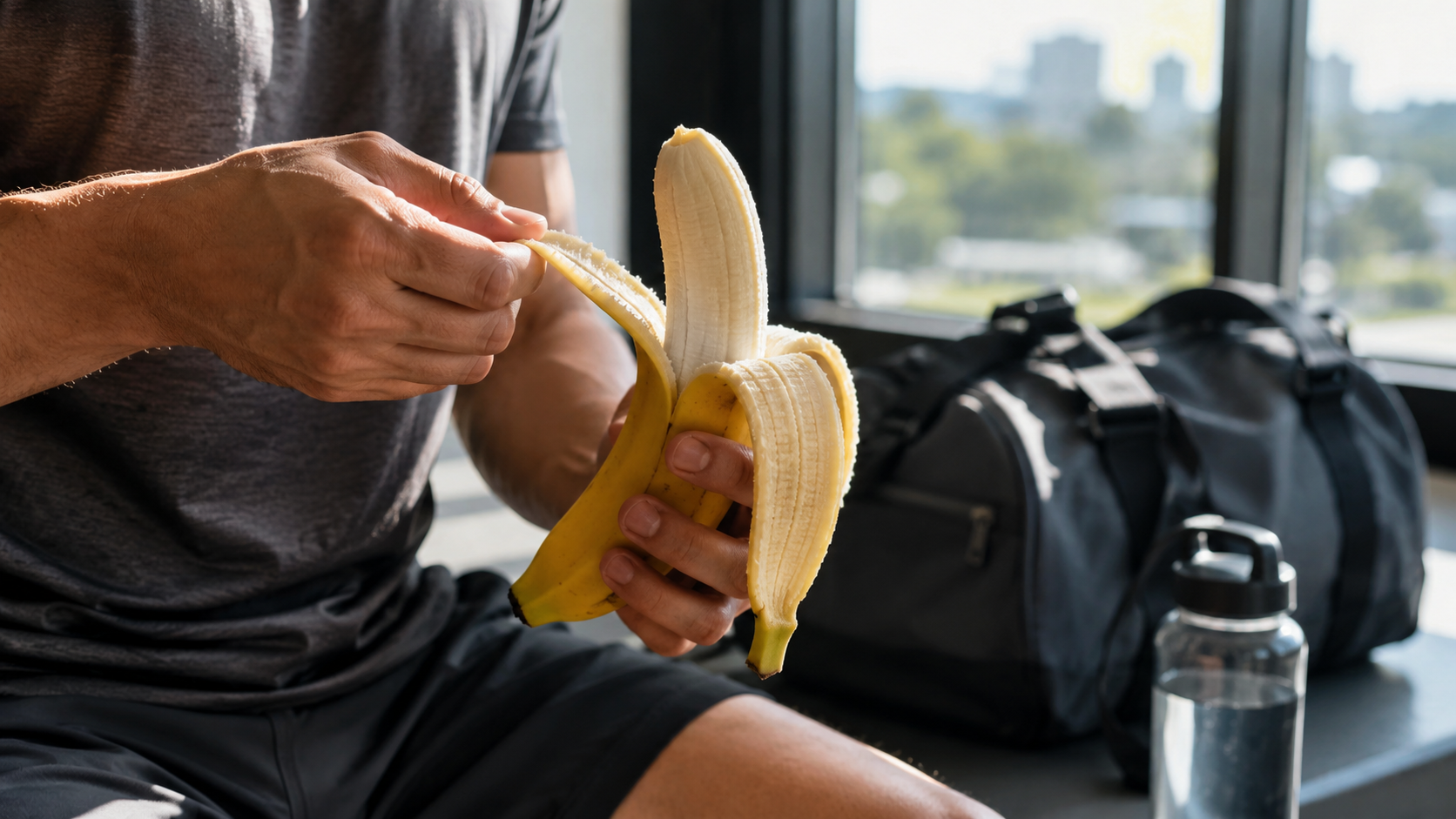 A banana provides a convenient source of carbohydrates before a morning workout.
This article is intended as general health information and is not medical advice for diagnosing or treating any individual condition. If you have diabetes, kidney disease, or ongoing digestive symptoms, please consult a healthcare professional.