Modest Mussorgsky the Civil Servant: Between Work and Music — Night on Bald Mountain
Music was never his official profession, yet it remained at the center of his life.
Modest Mussorgsky (1839–1881) began his career as a military officer and later worked as a civil servant. But alongside his government work, he was developing into one of Russia’s most original composers.
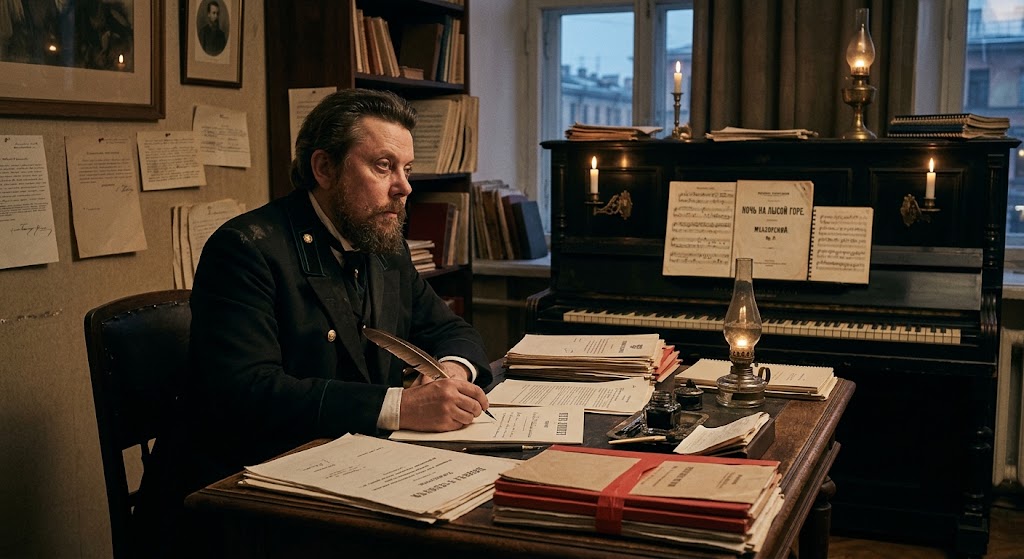
His story is not simply one of leaving one career and finding another. For much of his life, work and music existed side by side, sometimes uneasily.
Between Work and Music
Born into a military family, Mussorgsky trained for an army career. Yet his growing love of music gradually pulled him in another direction.
After leaving the military, he worked in government positions to earn a living while continuing to compose. Music was his deepest passion, but it did not provide the financial security he needed, and balancing work and music was not always easy.
In 1880, Mussorgsky was dismissed from government service and faced serious financial difficulties. His health also declined, and he died the following year at just 42. His life does not fit neatly into the idea of “following your passion.” Sometimes the thing we love most is not the thing that can support us financially.
The Wild World of Night on Bald Mountain
Composed in 1867, Night on Bald Mountain was inspired by Slavic folklore surrounding St. John’s Eve. It depicts a wild gathering of spirits on a mountain at midnight—a striking contrast to his life as a civil servant.
His original orchestral version was never performed during his lifetime. After his death, Rimsky-Korsakov reworked and orchestrated the piece, creating the version that became widely known.
From the frantic strings and powerful brass at the beginning to the distant church bells and peaceful woodwinds at the end, the music moves from darkness and chaos toward the quiet of morning.
Mussorgsky did not always aim for the polished elegance valued by many composers of his time. Instead, he often embraced a raw, direct quality that makes his music feel immediate and alive. The orchestra almost seems to paint a scene in sound.
Work, Calling, and the Gifts We Carry
Many of us know what it is like to carry responsibilities that compete with the things we care about most. We may have a job that pays the bills and a gift that feels deeply personal. Sometimes they fit together. Sometimes they do not.
Mussorgsky’s life shows that a meaningful calling does not always come with a clear career path. His music did not make his life easy or financially secure. There were unfinished works, difficult seasons, and disappointments along the way. Yet his music outlived the circumstances that surrounded it.
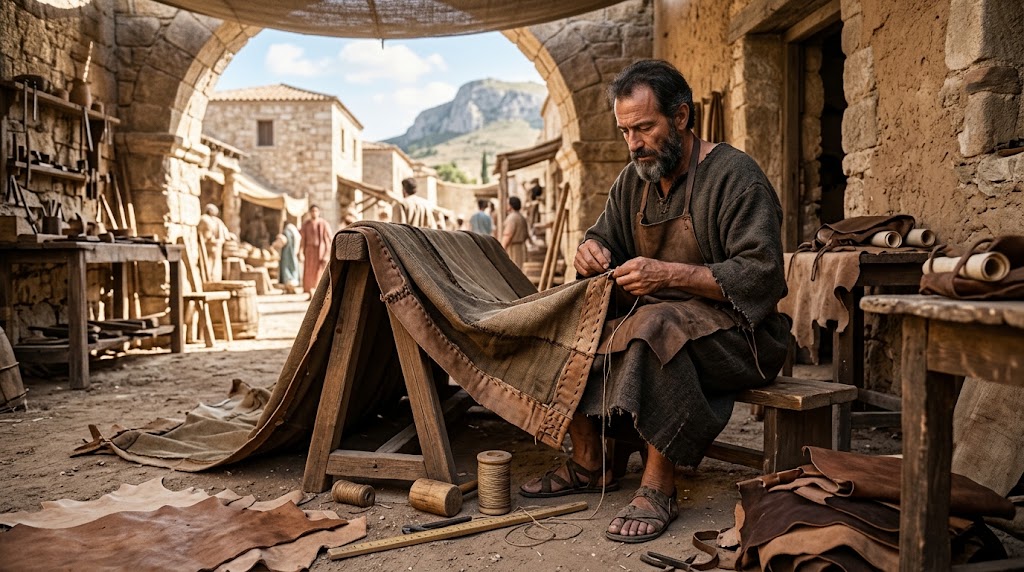
The apostle Paul also carried out his calling while supporting himself through practical work. Acts 18:3 tells us that Paul worked as a tentmaker. His example shows that earning a living and pursuing a deeper purpose can exist side by side.
“and because he was a tentmaker as they were, he stayed and worked with them.” — Acts 18:3
We may not know how the different parts of our lives will fit together. But God sees both the work that sustains us and the gifts He has placed within us. Even when our path feels uncertain or divided, He can use all of it for His purposes in ways we cannot yet see.
Read previous: Alexander Borodin the Chemist: A Life Between Science and Music — String Quartet No. 2