Music & Painting (Part 2): Renaissance Perspective and Polyphonic Harmony
During the Renaissance, artists and musicians looked for order, balance, and beauty in both nature and human creativity. They believed that harmony could be discovered through careful observation and thoughtful design.
This vision shaped both painting and music. Painters used perspective to organize visual space, while composers used polyphony to organize musical space through multiple independent voices.
A New Way of Seeing
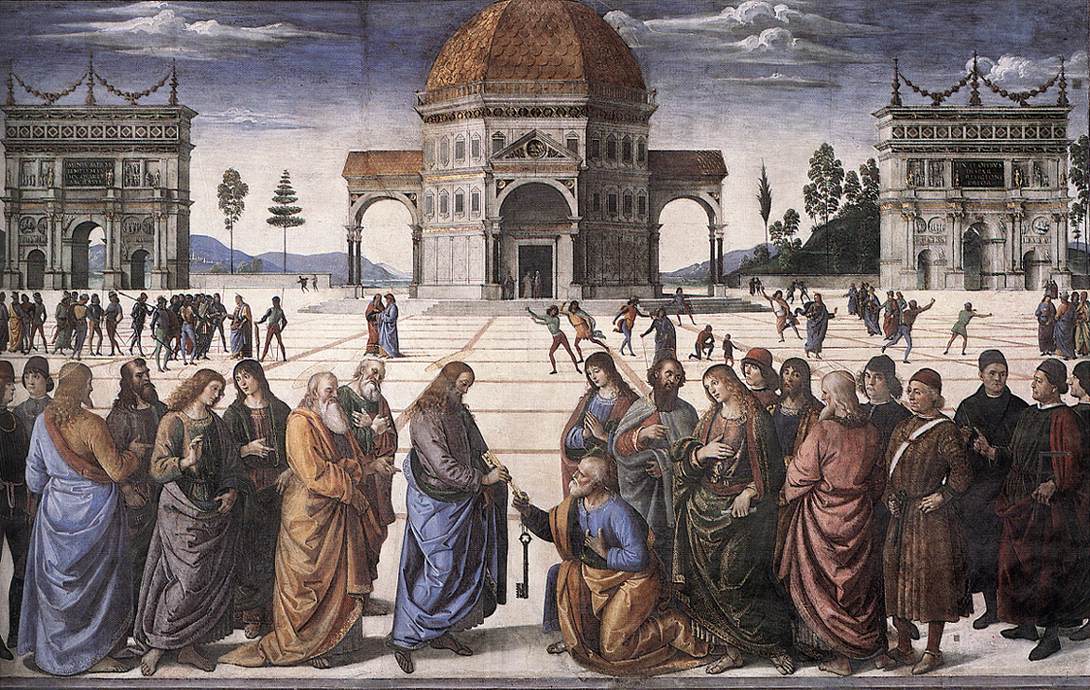 Perugino, The Delivery of the Keys to Saint Peter (c. 1481–1482)
One of the defining achievements of Renaissance painting was the development of linear perspective. By organizing lines around a single vanishing point, artists could create the illusion of depth on a flat surface. Perugino's The Delivery of the Keys to Saint Peter is one of the clearest examples.
The symmetrical architecture and carefully arranged lines guide the viewer's eye toward Christ at the center. Perspective creates a convincing sense of space while also expressing spiritual meaning and divine order.
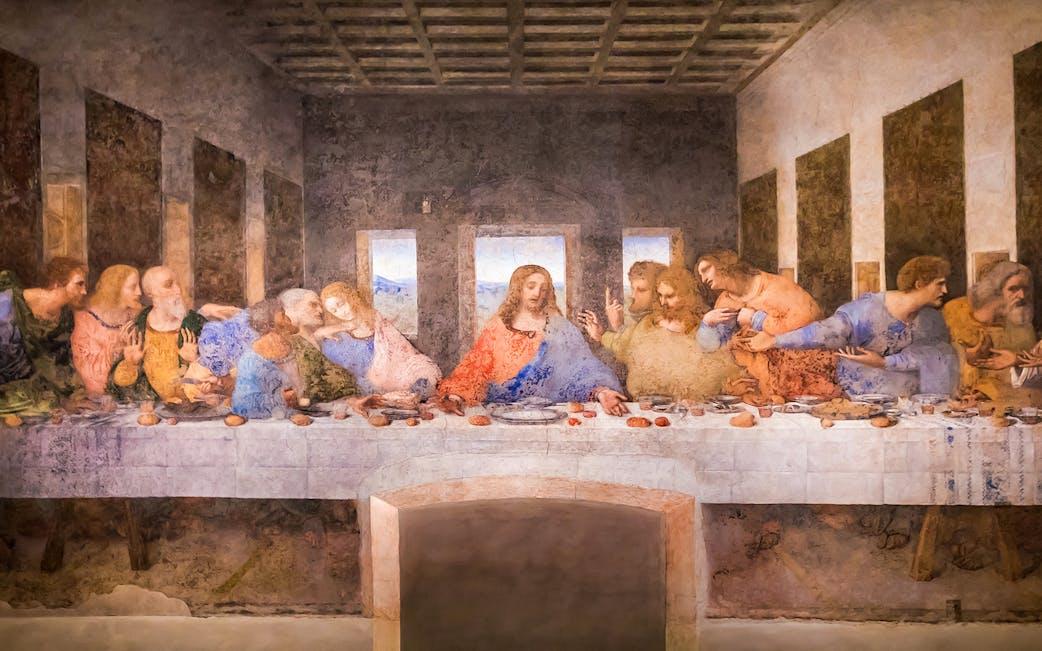 Leonardo da Vinci, The Last Supper (c. 1495–1498)`
A similar approach appears in Leonardo da Vinci's The Last Supper. There, perspective directs attention to Christ, making him the focal point of both the composition and the narrative.
Creating Depth Through Sound
While painters explored visual depth, Renaissance composers created musical depth through polyphony. Multiple voices moved together in balance, forming a rich and unified musical texture.
Josquin des Prez's Ave Maria... virgo serena is a beautiful example. Like perspective in painting, polyphony creates depth through harmony and balance.
Later in the Renaissance, Giovanni Pierluigi da Palestrina refined this style further. In Missa Papae Marcelli, the voices move with remarkable independence while maintaining a sense of unity and order. The result is music where each voice remains clear while contributing to a unified sound.
Harmony and Order
The connection between Renaissance painting and music goes beyond technique. Both perspective and polyphony reflect a belief that order and beauty are woven into creation itself. Artists and composers sought not only to represent the world but also to reveal its deeper harmony.
Influenced by Renaissance humanism, they explored mathematics, proportion, and classical models of beauty, seeing these patterns as reflections of divine wisdom. Through converging lines and interweaving voices, art became a way of discovering harmony within creation.
Why It Still Matters
Modern art and music often emphasize experimentation and personal expression, but the Renaissance reminds us that beauty can also be found in order, balance, and harmony.
Centuries later, these works still invite us to slow down, look carefully, and listen closely. They reveal how many different parts can come together to form a unified whole.
Related: Music & Architecture (Part 2): Renaissance Proportion and the Birth of Tonal Harmony