Schubert’s Trout Quintet: When Instruments Share a Melody
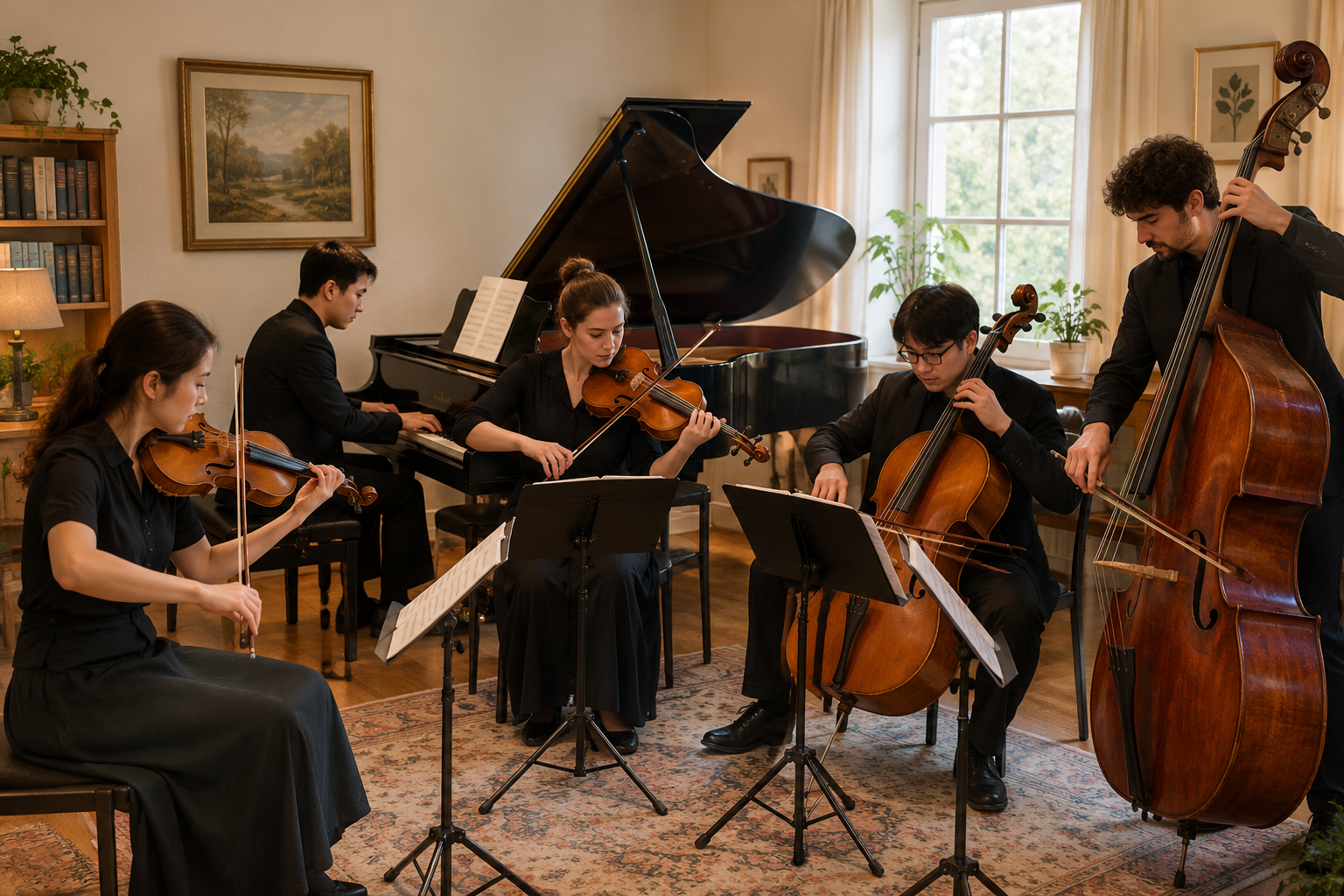
Sometimes an idea becomes more interesting when someone else picks it up and takes it in a new direction. What begins with one person can grow into something neither could have created alone.
Franz Schubert (1797–1828) composed his Piano Quintet in A Major, D. 667 in 1819. Known as the “Trout” Quintet, the work brings together piano, violin, viola, cello, and double bass.
Following a Melody from One Instrument to Another
In the “Trout” Quintet, a musical idea does not always stay with the instrument that first introduces it. The piano and strings take turns presenting and reshaping ideas, allowing a melody to sound different as it moves from one instrument to another.
Listen for how each instrument changes the melody’s color and character. One may introduce an idea, another may develop it, and a third may provide support. The music unfolds as each instrument contributes something new.
One Song, Many Variations
The fourth movement is based on a melody from Schubert’s song Die Forelle (The Trout), which tells of a trout swimming in a stream. Schubert brings the familiar tune into the quintet and explores it through a series of variations.
As the movement unfolds, changes in rhythm, accompaniment, and musical color transform the melody. Different instruments bring out different sides of the tune, while the original remains recognizable throughout.
How We Help One Another Grow
The “Trout” Quintet shows how a musical idea can become something more through the contributions of others. In our own lives, too, we may discover new possibilities when we are willing to consider another person’s perspective.
Sometimes growth begins not with having a better idea ourselves, but with being open to what someone else brings.
“As iron sharpens iron, so one person sharpens another.” — Proverbs 27:17
In Schubert’s quintet, each instrument retains its own voice while contributing to something larger. The music becomes richer through their exchange, showing how our differences can become a source of growth when we work together.
Explore Schubert’s complete Piano Quintet in A Major, D. 667 (“Trout”) here. (affiliate link)
Read previous: Mozart’s Clarinet Quintet in A Major: The Art of Listening to One Another