Tchaikovsky’s Violin Concerto in D Major, Op. 35: Leading and Listening
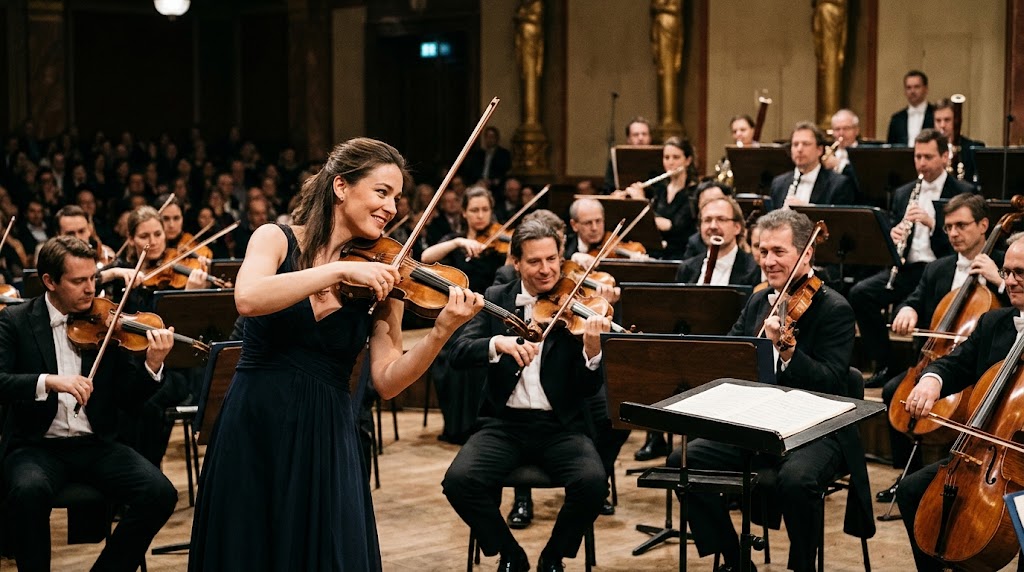
There is a particular kind of tension in a concerto. One player stands at the front of the stage, with an entire orchestra behind them. Who leads? Who follows? In Tchaikovsky’s Violin Concerto in D Major, Op. 35, the answer changes from moment to moment.
Tchaikovsky (1840–1893) brings this relationship to life through expressive violin melodies and lively exchanges with the orchestra. Though the violin takes the spotlight, both voices shape the music.
Listen to the Musical Exchange
A violin concerto is about more than a soloist showing off technical skill. The violin and orchestra work together, exchanging melodies and shaping the music through their responses.
In the first movement, notice how the orchestra sets the scene before the violin steps forward. Later, the orchestra takes up a melody introduced by the violin, giving it a broader, more powerful character. At other moments, the orchestra grows more forceful, and the violin answers with renewed energy.
Listen for when the violin leads, when the orchestra takes over, and how their contrasting voices create tension and release. The music comes alive through their changing relationship.
Leading Without Losing Sight of Others
Tchaikovsky’s concerto shows that cooperation does not always mean staying in the background. Sometimes we need to step forward and take responsibility. At other times, we need to listen and let someone else lead.

The same balance matters in our own lives. Humility does not mean hiding our gifts, just as confidence does not require us to diminish others. We can use our abilities while respecting what others bring.
“Do nothing out of selfish ambition or vain conceit. Rather, in humility value others above yourselves.” — Philippians 2:3
Paul’s words invite us to think not just about whether we lead, but how. We can contribute with confidence without making everything about ourselves, remembering that other people’s gifts matter, too.
In Tchaikovsky’s concerto, the violin shines not in isolation, but through its relationship with the orchestra. Perhaps leadership works in much the same way: knowing when to step forward, when to listen, and when to make room for others.
So far, we have listened to instruments exchange musical ideas. Next, we will hear how their distinctive voices can become characters in a story.
Read previous: Mendelssohn’s String Octet in E-flat Major, Op. 20: When Musical Conversation Grows