The Little Mermaid and Alexander von Zemlinsky: A Story Beyond the Fairy Tale
Many people know The Little Mermaid through modern adaptations. But Hans Christian Andersen (1805–1875) told a much more bittersweet story. Published in 1837, it is a tale of longing, sacrifice, and loss.
More than a century later, Austrian composer Alexander von Zemlinsky (1871–1942) found inspiration in the story’s emotional depth and transformed it into an orchestral work called Die Seejungfrau (The Mermaid).
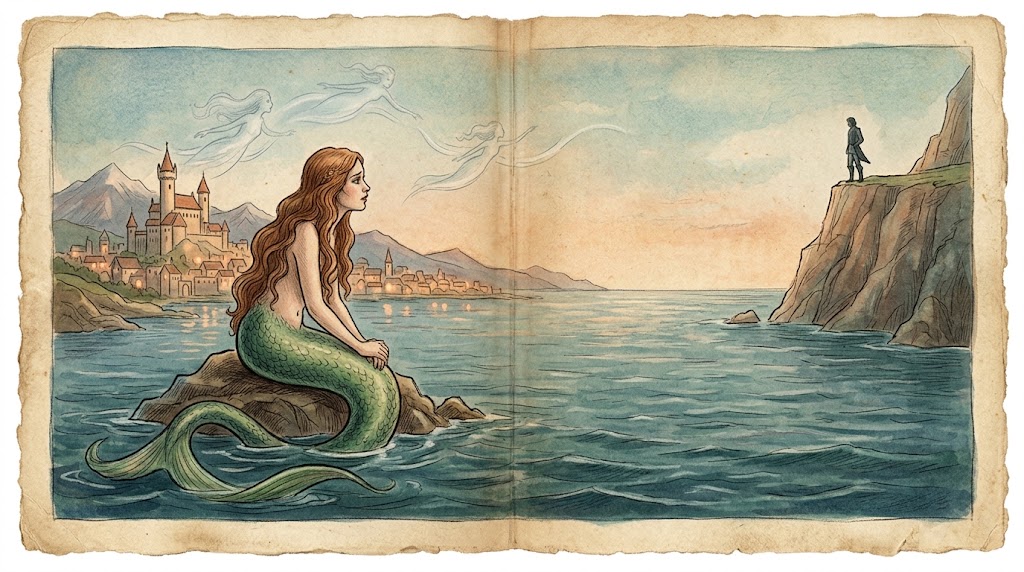
The Story Behind The Little Mermaid
Hans Christian Andersen tells the story of a young mermaid who longs to leave the world she knows behind. Fascinated by the human world, she is willing to sacrifice much in pursuit of love and a different life.
Yet the story is not simply about romance. Beneath its fairy-tale setting are themes of desire, sacrifice, disappointment, and loss. Unlike many modern retellings, Andersen’s story does not have a simple happy ending, and part of its lasting power comes from holding beauty and loss together.
Listening to Die Seejungfrau
Zemlinsky’s Die Seejungfrau unfolds in three movements, following the emotional world of Andersen’s story.
The first movement introduces the Mermaid and her longing for the human world, moving from the mysterious world beneath the sea to the storm and the Prince’s rescue.
The second movement becomes brighter and more festive, reflecting the Prince’s world. It then leads the Mermaid toward the sea witch and the difficult choice ahead.
In the final movement, the music turns more sorrowful and inward as the story moves toward loss and transformation.
As you listen, notice how Zemlinsky uses changing orchestral colors and recurring themes to express these emotions. The music does more than illustrate the fairy tale—it gives voice to the longing, hope, and sorrow at its heart.
Longing, Loss, and Hope
Stories endure because they speak to experiences we all recognize. Most of us know what it is like to long for something we cannot reach, to face disappointment or loss, and still search for meaning, comfort, and hope.
“The Lord is close to the brokenhearted and saves those who are crushed in spirit.” — Psalm 34:18
God draws near to those who are hurting, even when life does not unfold as we hoped. In seasons of disappointment, grief, and longing, we can find comfort in knowing that we are not alone.
Perhaps that is part of what makes Andersen’s The Little Mermaid and Zemlinsky’s Die Seejungfrau continue to resonate. Both give expression to a heart that longs for something more, experiences loss, and still reaches toward hope.
Read previous: Don Quixote and Richard Strauss: When Dreams Meet Reality