The Pilgrim's Progress Part 2 — What If the Road You Refused Is Still Waiting for You?
There is a version of this you know. Someone you loved walked toward something you couldn't follow. Maybe it was faith. Maybe it was God. You watched them go, and you stayed behind, and the staying felt reasonable at the time.
She told herself she had good reasons. The children were small. The neighbors were watching. The road looked harder than it was worth. And now he is gone — really gone — and what she's left with isn't relief. It's a kind of silence she can't explain. Not grief, exactly. More like the echo of a door she chose not to walk through.
There is a weight that comes not from guilt over what we did, but from grief over what we didn't do. Over the person we might have become. Over the road we stood at the edge of and then walked away from. That weight doesn't announce itself loudly. It comes at night. It comes in the middle of ordinary mornings. It asks a question you don't quite have words for.
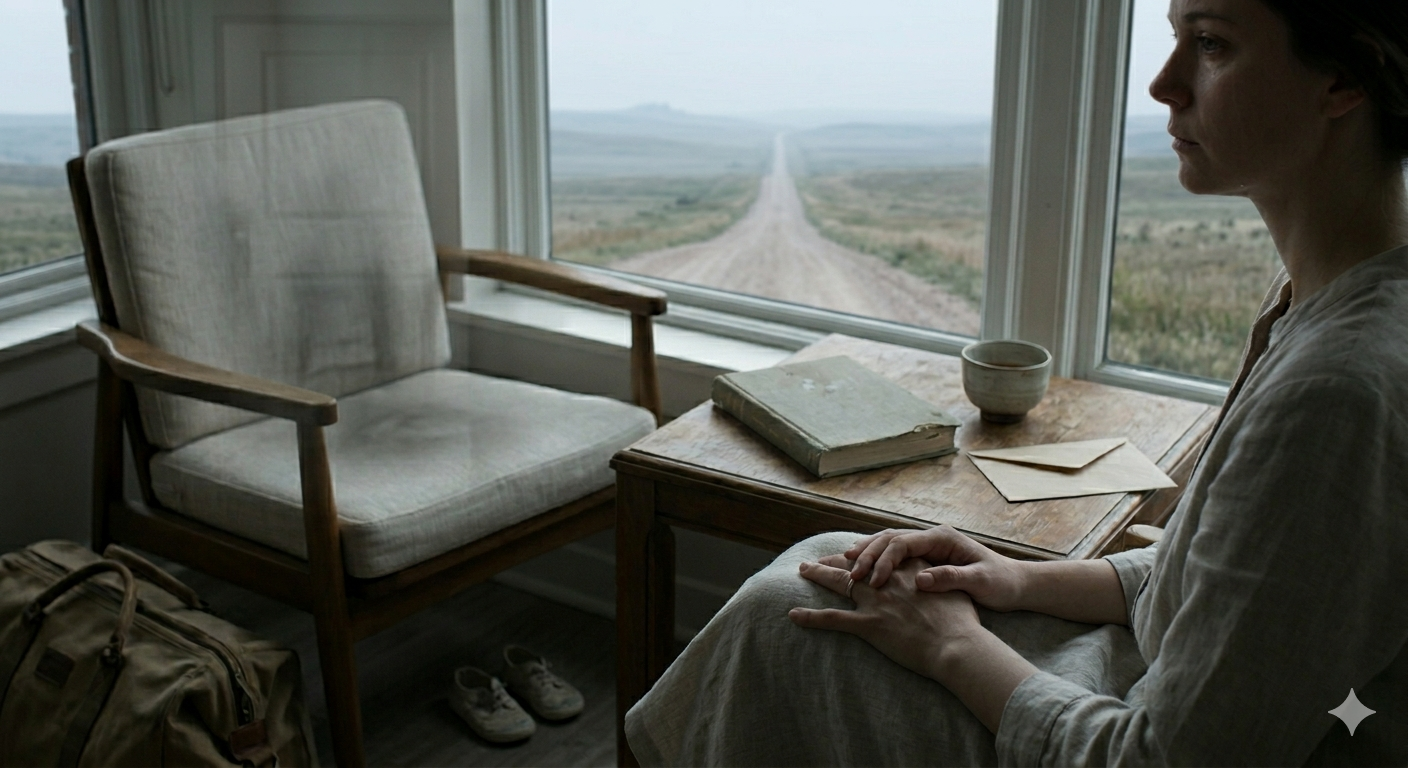 The weight of the road we stood at the edge of and turned away from doesn't announce itself loudly — it comes in ordinary mornings.
He had been gone some time. The neighbors had mocked him when he left — called it madness, called it recklessness, called it abandonment. But now, word had come back. He had made it. He had arrived somewhere real. And she — who had stayed behind, who had turned away when he begged her to come — was standing in the same city she had always stood in, holding the same life she had always held, and something in her had finally broken open.
She had a dream. In it, she saw her life laid out like a scroll, and what was written there undid her. She woke in the dark. She fell back to sleep and dreamed again — and this time, she saw him. Saw where he had gone. Saw the city he had entered.
In the morning, a knock at the door. A messenger, a letter, an invitation. Not a demand. Not a command. Just: you are wanted. There is still time. The road your husband walked — it is still there.
She looked at her four sons. She looked at her neighbor, who had been watching with eyes that held a question of their own. And she made the only decision that still felt like living.
She went.
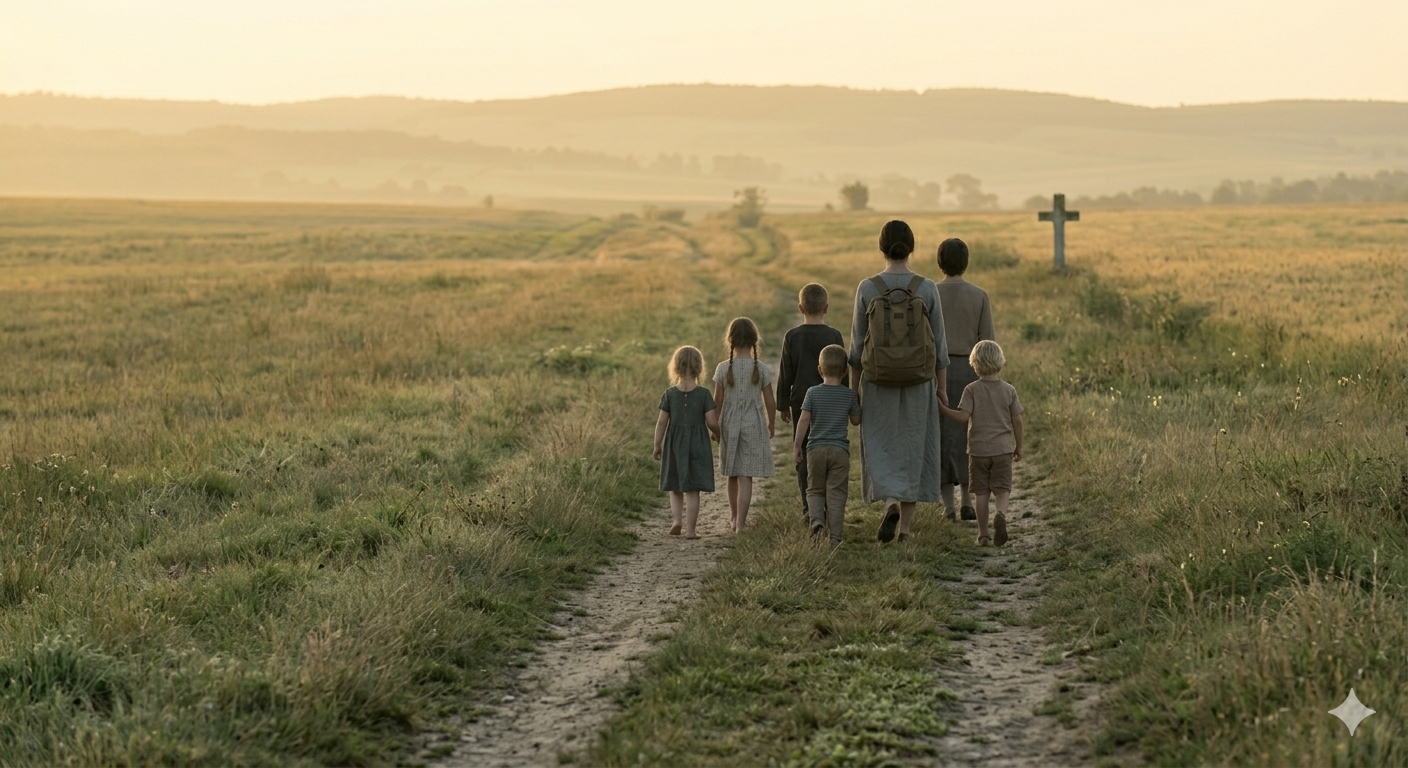 She gathered what she loved and said: come with me.
There is a place on the road — the same road her husband had walked alone — where the burden falls. He had carried his through what felt like forever. For her, it comes at the cross, and she asks the one guiding her to explain it slowly. To let her understand what this means, not just that it has happened. She is not in a hurry. She is learning what it means to walk, not just to arrive.
Along the way, a warrior named Greatheart meets her. He does not replace what she carries — he walks beside it. He fights the giants she cannot face alone. He is the answer to a question she didn't know she was allowed to ask: that the road is not always walked in solitude. That strength can be received, not only earned.
And the castle where Doubting lives — the castle that had oppressed pilgrims for years, the one her husband had escaped but never destroyed — her company tears it down. Stone by stone. It is demolished not by one person's desperate faith, but by a company of people walking together.
"We shall not die but live, and declare the works of the Lord."
What has you convinced it's too late to go?
I read this story thinking I knew it — I had walked with the first pilgrim, I thought I understood the road. But this is a different kind of courage altogether. Not the solitary kind. The kind that gathers what it loves and says: come with me. The kind that moves slowly enough for the children, and still gets there.
This second part of Bunyan's great allegory was published in 1684, six years after the first. Where the first follows a man alone — frantic, driven, burdened — this one follows the family he left behind. It is structured as a dream within a dream, told to Bunyan by an old man named Sagacity, who recounts the journey of Christiana, her four sons, her neighbor Mercy, and the company that gathers around them as they walk the same road. It moves at a slower pace — deliberately so. It is not a lesser work. It is a different one.
The road this story keeps returning to is not the road of desperate conversion but of daily discipleship. The burden still falls at the cross — Christiana's, Mercy's, the children's — but here the story lingers longer on what comes after. On the meals shared at an inn, the marriages that form, the strangers who join the company, the weak pilgrim who nearly stays behind and is gently, firmly urged forward. Doubt is not something one person escapes by climbing out a window in the night. It is a castle that can be dismantled, together, when the time comes. The novel knows that love is a virtue, yes — but so is the slower, harder charity of staying with the ones who are afraid.
Bunyan wrote from inside his own experience: twelve years in a Bedford prison cell for preaching without the crown's permission, and then a second, shorter imprisonment during which The Pilgrim's Progress itself took shape. He knew what it meant to hold to a road others called foolish. He knew what it meant for a family to wait. The second part, written from freedom, carries something the first does not — the permission to walk slowly, to rest, to receive help, to build something together that lasts beyond the crossing of the river.
This book tends to find the person who has been on the road long enough to be tired of walking it alone. Or the one who stood at the edge of something years ago and chose safety instead, and has wondered ever since. Or the parent who wants to bring the people they love with them toward something true and doesn't know if that's still possible. You may find it arrives at exactly the right season — or you may find it opens a door you didn't know was still there.
The road in this story is slower than the first one. There are children on it. There are people who are afraid. There are stops that last longer than they should, and companions who almost don't make it, and a castle that had stood for years finally coming down — not because one person broke free, but because enough people walked together and decided it didn't have to stand anymore.
That is what Bunyan called The Pilgrim's Progress, Part II. Christiana's story. The one about what happens after someone else goes first.
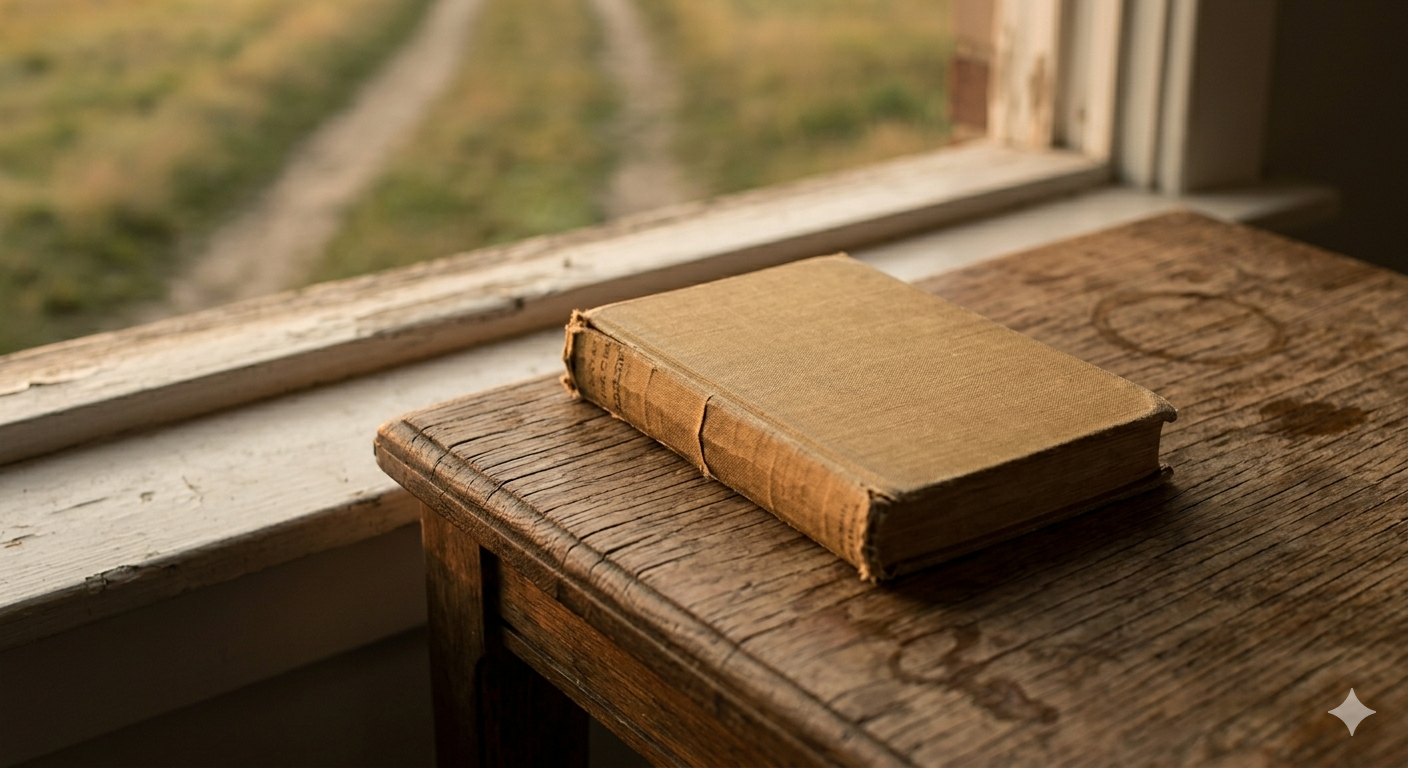 The road in Part II moves at a different pace — slow enough for the children, wide enough for the ones who are afraid.If you'd like to read the book: The Pilgrim's Progress, Part II — John Bunyan (Affiliate Link)
📚You Might Also Like
What If the Life You're Living Isn't the One You Were Made For? — The Pilgrim's Progress
How Many Times Did You Lose Yourself Today? — The Screwtape Letters
What Do You Do When God Stays Silent? — The Brothers Karamazov