When Brahms Loved — Intermezzo, Op. 118 No. 2
Johannes Brahms never wrote love stories in words, but his music feels like one long, restrained confession.
His lifelong affection for Clara Schumann — wife of Robert Schumann, who first recognized his genius — was not a passing emotion, but a lifetime of presence without possession.

From the fiery intensity of his youth to the quiet sigh of his later years, his feelings remained carefully within their boundaries—never fully spoken, yet never abandoned.
In that sense, Brahms’s music is not about fulfillment, but about what remains unsaid.

I often think of this when listening to Intermezzo in A major, Op. 118 No. 2.
The opening melody, which repeats throughout the piece, feels like something reaching upward against gravity, trying to touch something just beyond reach, only to hesitate and fall back into itself.
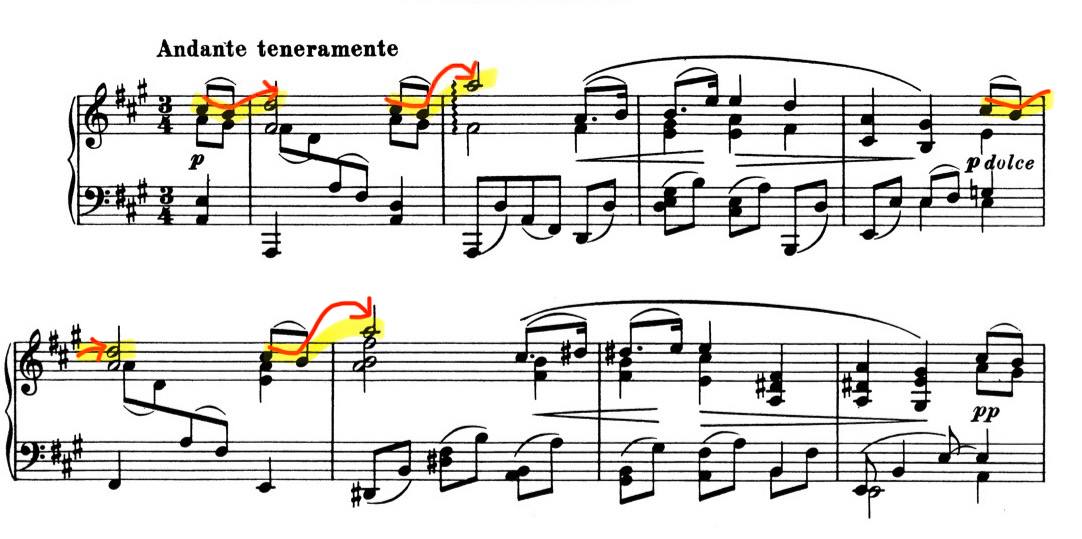 Brahms – Intermezzo in A major, Op. 118 No. 2 (opening)
Written in Brahms’s final years, the piece reflects a more inward voice. He later sent it to Clara, who found comfort in it—not as a declaration, but as something deeply familiar, shaped by years of shared history.
The music never pushes toward a clear resolution. Instead, it circles quietly, each phrase moving forward before easing back. The feeling is not emptiness, but control—a kind of love that stays within its own boundaries.
There is a quiet spiritual posture here—accepting what cannot be held, yet remaining faithful to it. Not possession, but presence. A restraint that feels less like suppression, and more like surrender.

Clara died in May 1896. Brahms followed eleven months later. After her death, he composed very little, as if the reason had left with her. A lifetime of reaching without arriving—perhaps, for Brahms, that was enough.
To hear more of Brahms’s Intermezzi, see here. (Affiliate link)
Read previous: Why Music Heals What Words Cannot