When tiredness won't lift — what your body might actually be saying
On chronic fatigue, tension headaches, and why caring for the body God gave you is an act of faith
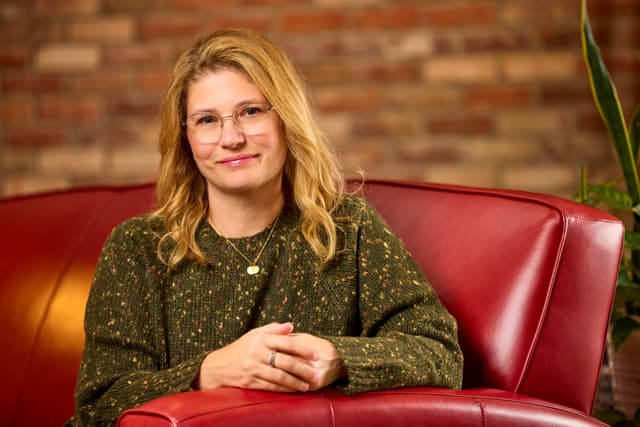
 Some exhaustion is more than being busy — it is the body quietly asking to slow down. In the stillness of late afternoon light, the scene reflects the honest weight of mental fatigue and the human need for rest, care, and recovery.
It usually starts with something small. You wake up already tired — before the day has asked anything of you. By mid-afternoon, the concentration has gone. By evening, there is a dull pressure behind your eyes or at the base of your skull that you've begun to think of as simply normal. You press through it. You add another coffee. You tell yourself that everyone is this tired, and move on.
But fatigue and recurring headaches are not noise to dismiss. They are signals — the body's way of communicating, in the only language it has, that something is not being attended to. And for those who understand the body as something given to them in trust, that communication deserves more than a workaround. It deserves a response.
"What? know ye not that your body is the temple of the Holy Ghost which is in you, which ye have of God, and ye are not your own? For ye are bought with a price: therefore glorify God in your body, and in your spirit, which are God's."
1 Corinthians 6:19–20, KJV
A temple. Not a machine to run until it breaks, and not merely a vehicle for the soul to inhabit until something better comes along. A dwelling place — something that belongs to God, received in trust, and meant to be tended with the kind of care we would give to something that matters. The fatigue that accumulates in a body pushed too hard for too long is not simply an inconvenience. It is, in a very real sense, the temple asking to be maintained.
Why fatigue and headaches arrive together
The connection between persistent tiredness and recurring headaches is physiological and consistent. The body under sustained stress — the kind that modern life generates reliably and without interruption — maintains a state of low-grade muscular tension, particularly in the neck, shoulders, and upper back. That tension is the direct cause of most tension-type headaches. The same stress response also disrupts sleep architecture, reduces the quality of the rest that does occur, and depletes the magnesium and B vitamins most directly involved in both energy production and nervous system regulation.
Dehydration compounds all of it. The brain is approximately seventy-five percent water, and even mild dehydration — the kind most people are running on by mid-afternoon — measurably reduces cognitive performance and increases headache susceptibility. Caffeine manages the symptoms temporarily while contributing to the cycle: it provides short-term alertness at the cost of a later energy crash, and if used habitually, its withdrawal becomes a direct headache trigger.
None of these causes are complicated. But they are cumulative. And they respond not to willpower — which is also depleted by the same conditions — but to consistent, patient attention to the basic conditions the body requires.
The body does not malfunction silently. Fatigue and headaches are the temple's way of asking for the maintenance it needs — and they deserve a faithful response, not just another workaround.
The permission to rest that Scripture already gave
One of the most persistent distortions in Christian culture is the equation of exhaustion with faithfulness. The person who is always available, always giving, always pushing past their limits is quietly admired as committed, sacrificial, serious about their calling. The person who sleeps adequately, protects margins in their schedule, and says no to the fourth obligation of the week is subtly suspected of not trying hard enough.
Jesus did not model this. The Gospel accounts are explicit about the rhythm of His ministry: He withdrew. He rested. He slept in a boat in a storm. He went to deserted places to pray. And — pointedly — when the disciples returned from their mission exhausted and overwhelmed, His instruction was not to push through and keep going:
"And he said unto them, Come ye yourselves apart into a desert place, and rest a while: for there were many coming and going, and they had no leisure so much as to eat."
Mark 6:31, KJV
Come apart and rest a while. The instruction is gentle and direct, and it arrives in the middle of a season of significant ministry — not as a reward for finishing but as a recognition that rest is not the opposite of faithful work. It is the condition that makes it sustainable. The disciples had no leisure so much as to eat — a state that would be intimately recognizable to most people reading this article — and Jesus' response was not to celebrate their productivity. It was to take them away from it.
Resting is not the absence of trust in God. It is the embodied acknowledgment that we are not God — that we have limits, that those limits are not a design flaw, and that honoring them is part of what it means to live faithfully inside a finite human body.
 An unhurried morning walk beneath soft golden light — a quiet reminder that sometimes the mind heals best when we slow down enough to breathe, reflect, and simply keep walking forward.
What the body actually needs — and what helps
The interventions most reliably effective for chronic fatigue and tension headaches are not complicated, but they require consistency rather than intensity. That is, they do not reward sporadic heroic efforts. They reward steady, unglamorous daily practice — which, not coincidentally, is also the shape of most faithful Christian living.
Hydration is the most underestimated factor. Starting the day with water before caffeine, maintaining intake through the afternoon, and recognizing that thirst is already a signal of mild dehydration — these small adjustments make a measurable difference in afternoon energy and headache frequency for most people.
Movement, even brief and gentle, interrupts the muscular tension patterns that accumulate during long periods of desk work. Ten minutes of walking after lunch, a few minutes of neck and shoulder stretching at mid-afternoon — not as exercise but as physical reset — changes the trajectory of the afternoon in ways that a third cup of coffee does not.
Nutritional support matters. B vitamins are directly involved in cellular energy production and nervous system function; deficiency is common in people under sustained stress and presents exactly as the fatigue and mental fog most people are experiencing. Magnesium regulates both muscle tension and nervous system excitability — deficiency is among the most established nutritional contributors to both tension headaches and poor sleep quality. These are not exotic supplements. They are nutrients the body uses in higher quantities during stress and that a typical modern diet often fails to replenish adequately.
Small daily habits that compound
A glass of water before the first coffee. A ten-minute walk after lunch. Neck and shoulder stretches at mid-afternoon. A consistent sleep time, even on weekends. Reducing screen use in the hour before bed. A brief prayer before sleep that names the day and releases it. None of these individually transforms anything. Together, practiced consistently over weeks, they quietly rebuild the physical and mental conditions that make sustained attention, stable mood, and genuine rest possible.
 A simple nighttime routine shaped by stillness instead of noise — warm light, Scripture, and a quiet glass of water beside the bed. A gentle reminder that rest is sometimes less about sleeping quickly and more about slowing down intentionally.
The spiritual practice of attending to the body
There is a form of Christian piety that is suspicious of too much attention to the physical. The soul is what matters; the body is temporary; focus on the interior life and the body will sort itself out. But this is not the biblical anthropology. Scripture consistently treats the physical and the spiritual as integrated — the same person, not two separate compartments. What happens to the body affects the spirit. What neglects the body dishonors the One who made it and called it good.
"Whether therefore ye eat, or drink, or whatsoever ye do, do all to the glory of God."
1 Corinthians 10:31, KJV
Even eating and drinking — the most ordinary physical acts — fall within the scope of what can be done to the glory of God. Which means the choice to drink water instead of a fourth coffee, to go to bed at a reasonable hour, to take a walk in the afternoon sunlight, to eat a meal that actually nourishes — these are not distractions from the spiritual life. Approached with the right understanding, they are expressions of it.
The body that is rested, hydrated, and appropriately nourished is more available — to prayer, to Scripture, to the people around it, to the work it is called to. The person who has pushed past their physical limits for too long is not more faithful. They are less present. And presence — being genuinely, attentively here — is what love and service and worship all require.
If the fatigue is persistent and the headaches are recurring, begin with the honest question: what is this body actually asking for? And then begin with one thing — not everything at once, but one thing, practiced faithfully, that moves in the direction of giving it what it needs. That is where recovery begins. Not in the dramatic gesture, but in the small, consistent, faithful attention that compounds quietly over time.
 Sometimes healing begins with simply sitting still long enough to receive the morning light. A quiet moment outdoors becomes a gentle reminder that rest does not always require words — only space to breathe, slow down, and be present.
A prayer for the weary
Lord, I have been running harder than I should for longer than I know. My body is telling me something I have been too busy to hear. Help me to listen. Give me the wisdom to distinguish between the faithfulness that serves You and the exhaustion that simply depletes what You gave me. Teach me what it means to rest in You — not as a break from my life, but as the posture from which all of it flows. Restore what has been worn down. And in the ordinary choices of tomorrow — the sleep, the walk, the glass of water, the prayer — let me honor the body You have entrusted to me. In Jesus' name, Amen.
This article is for informational purposes only and does not constitute medical advice. Persistent or severe fatigue and headaches should be evaluated by a qualified healthcare provider to rule out underlying medical causes.