Why America Is Paying Attention to Kimchi — and the Wisdom Behind It
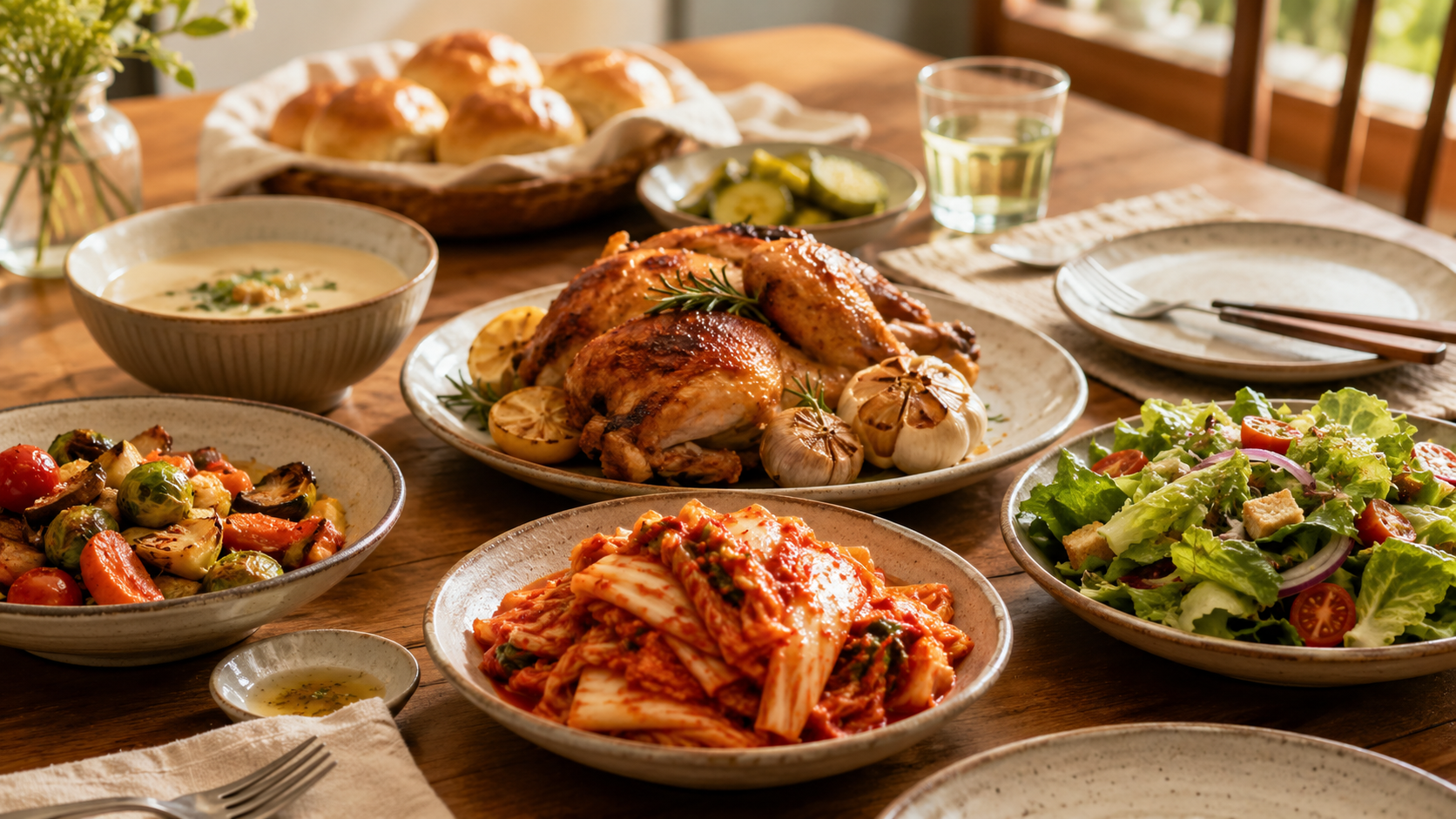 Kimchi brings a bold Korean touch to a Western-style table, pairing beautifully with roasted chicken, fresh salad, vegetables, and warm bread. This inviting meal scene highlights how kimchi can complement a variety of everyday dishes while adding vibrant flavor and character.
Have you noticed that kimchi, Korea's traditional fermented dish, has been getting a fresh wave of attention in the United States lately?
This isn't just a passing food trend. Kimchi recently earned a spot in the U.S. government's Dietary Guidelines for Americans, listed alongside sauerkraut, kefir, and miso as a fermented food that supports gut health by helping maintain a diverse microbiome. Researchers at Stanford found that a diet rich in fermented foods increased gut microbiome diversity and lowered markers of inflammation, and a growing body of work continues to connect fermented foods with gut health, immunity, and inflammation.
For Koreans, of course, kimchi is almost too familiar — a side dish that's been on the table since childhood, so ordinary that it's easy to forget how remarkable it is. But watching the rest of the world take a closer look, a question surfaces: what meaning might there be in the food God has given us?
The Body as a Gift Entrusted to Us
Scripture describes the body not as mere flesh but as a temple where God's Spirit dwells.
"Do you not know that your bodies are temples of the Holy Spirit, who is in you, whom you have received from God?" (1 Corinthians 6:19)
Our culture tends to swing between two extremes — treating health as something to worship on one hand, and neglecting it entirely on the other. Scripture gently warns against both. We aren't called to make health the point of our lives, but to live as stewards who care well for a body that was entrusted to us.
Seen that way, healthy eating is more than self-improvement. It can be a quiet expression of gratitude and faithful care — tending well to something we were given rather than something we made.
The Wisdom Woven into Creation
Part of why kimchi draws attention is precisely that it isn't a flashy processed product. Simple ingredients from the earth — napa cabbage, radish, garlic, ginger, chili pepper — come together and, over weeks of fermentation, become something far greater than the sum of their parts.
The natural world God created holds an order and intelligence that runs deeper than our own. Modern science keeps discovering the beneficial bacteria and bioactive compounds that form during fermentation, but in a sense those discoveries are us catching up to a wisdom God already planted in creation. Science uncovers the principle; God is the One who authored it.
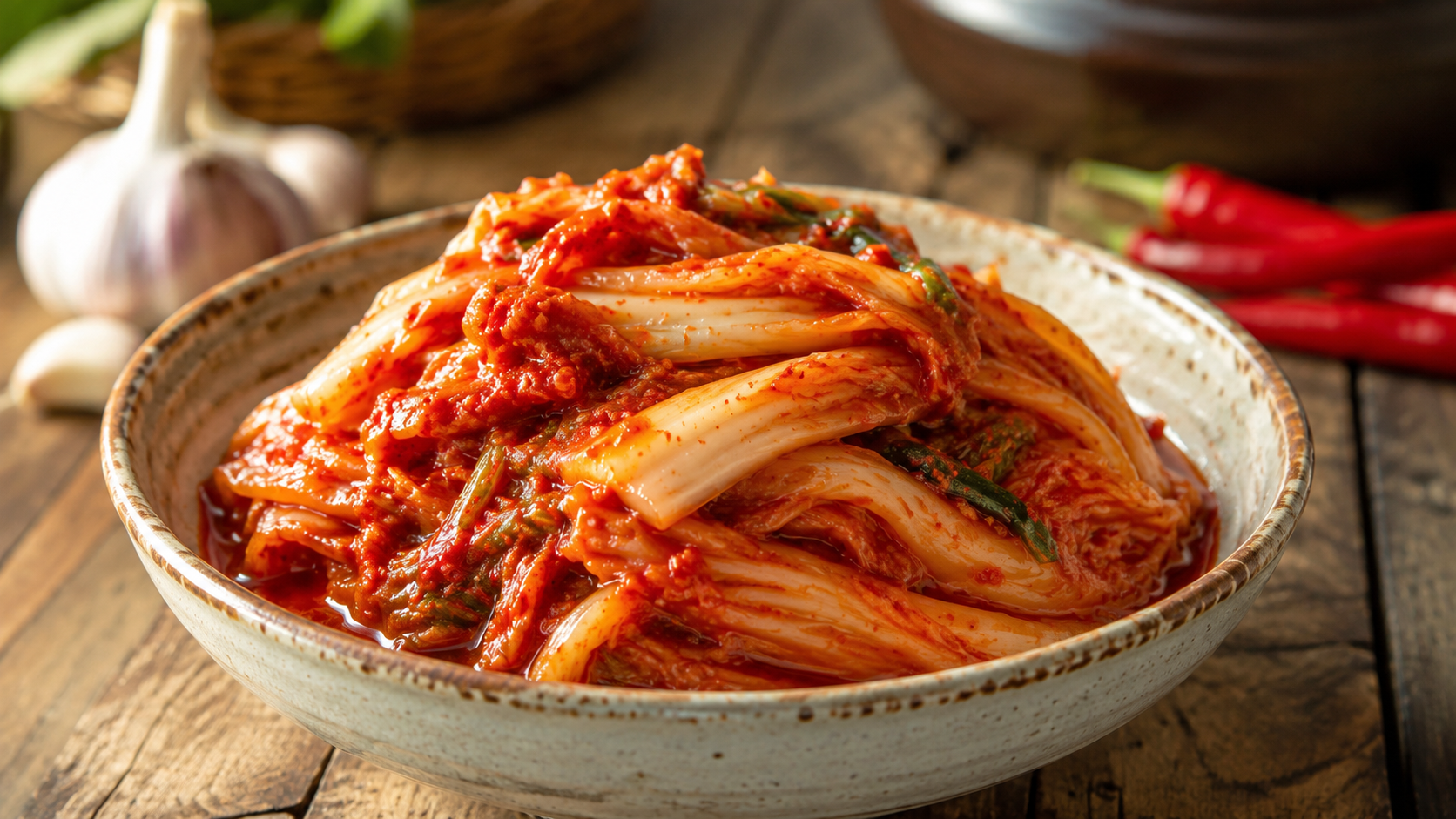 Freshly made Korean kimchi, served in a traditional ceramic bowl, showcases the vibrant flavors and time-honored fermentation traditions that have made this iconic dish a favorite around the world. Rich in color, texture, and cultural heritage, kimchi continues to be celebrated for both its distinctive taste and its potential health benefits.
Health Is Also a Grace
None of this means kimchi cures every ailment. No single food saves us or guarantees perfect health. In the end, health is a gift received within the grace of God.
What's ours to do is care for our bodies through balanced meals, reasonable movement, and enough rest — and then to entrust the outcome to Him. Kimchi and other nourishing foods aren't a means of salvation; they're tools of grace God has woven into the rhythm of ordinary life.
A Table Received with Thanks
Paul urges us to remember that everything comes from God and to receive it with gratitude.
"For everything God created is good, and nothing is to be rejected if it is received with thanksgiving." (1 Timothy 4:4)
A plate of kimchi is no exception. Even the plainest food we eat each day carries God's provision and care. The more we learn about its benefits, the more we're invited not to exalt the food itself, but to give deeper thanks to the One who provided it.
A Final Thought
America's interest in kimchi isn't only about a trend. It reflects real, accumulating evidence for the value of fermented foods. But the more important truth runs deeper: God has entrusted us with our bodies, and He has also provided a wide variety of foods to help us care for them.
So the next time you see kimchi on the table, why not let it be more than a piece of health news? Let it remind you of the God who cares for you and provides for you. Health is a gift from Him, and stewarding that gift well is a beautiful calling entrusted to us.
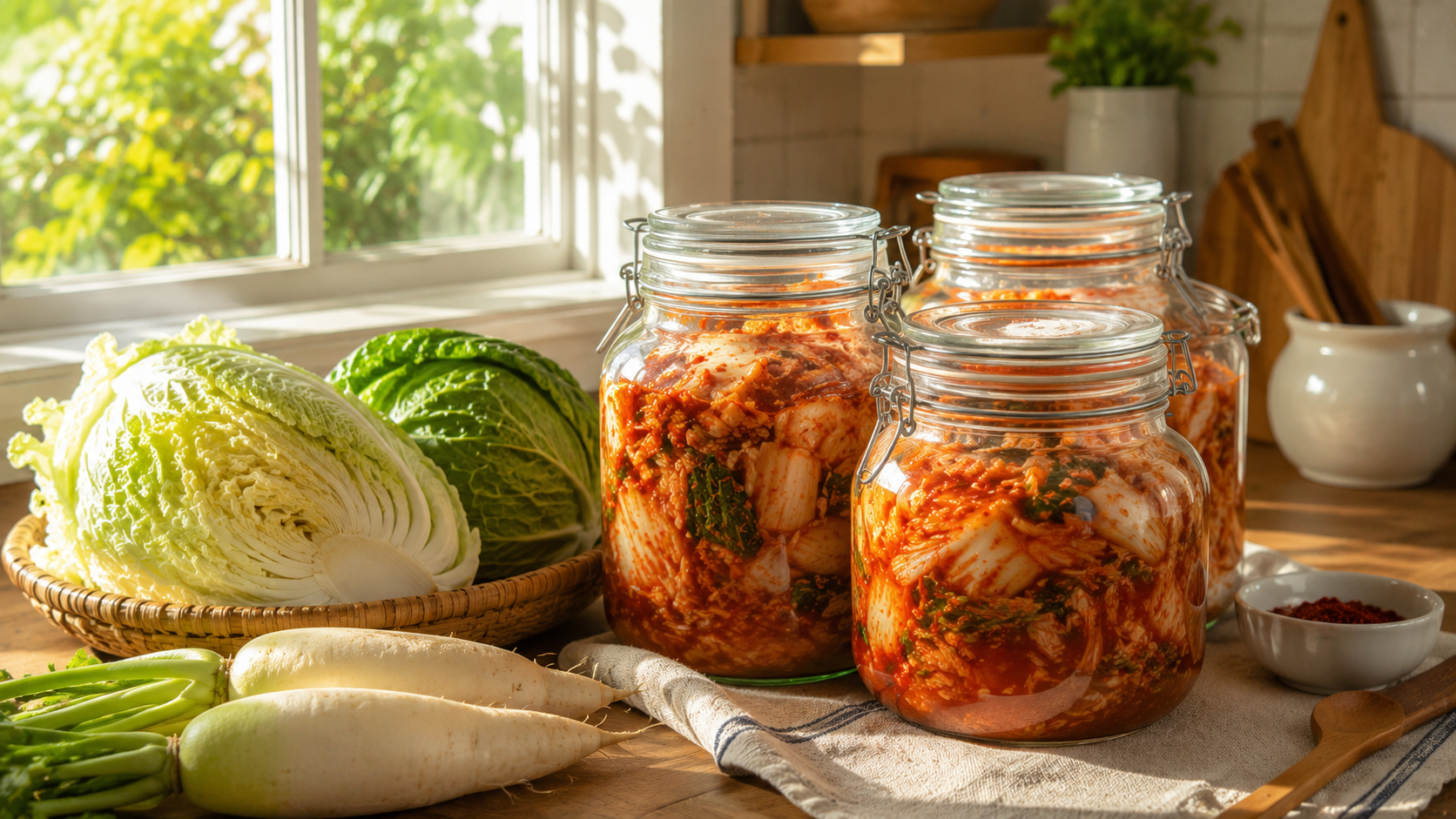 Fresh kimchi ferments in glass jars as morning sunlight fills the kitchen, reflecting the timeless tradition of Korean home cooking. Surrounded by napa cabbage and radishes, this peaceful scene captures the natural process that transforms simple ingredients into one of Korea’s most beloved and flavorful fermented foods.