Why Encouragement Matters More Than We Think: Clara Schumann and Romance in A Minor
Some of the encouragement that shapes us most seems small at the time. A teacher notices potential, a mentor offers advice, or someone believes in us when we doubt ourselves. Yet those moments can stay with us for years.
Clara Schumann (1819–1896) is remembered as a pianist, composer, and teacher whose influence extended far beyond the concert stage. Through her teaching and musical example, she helped guide younger musicians.
Her story raises a simple question: How much can one person's encouragement shape another's future?
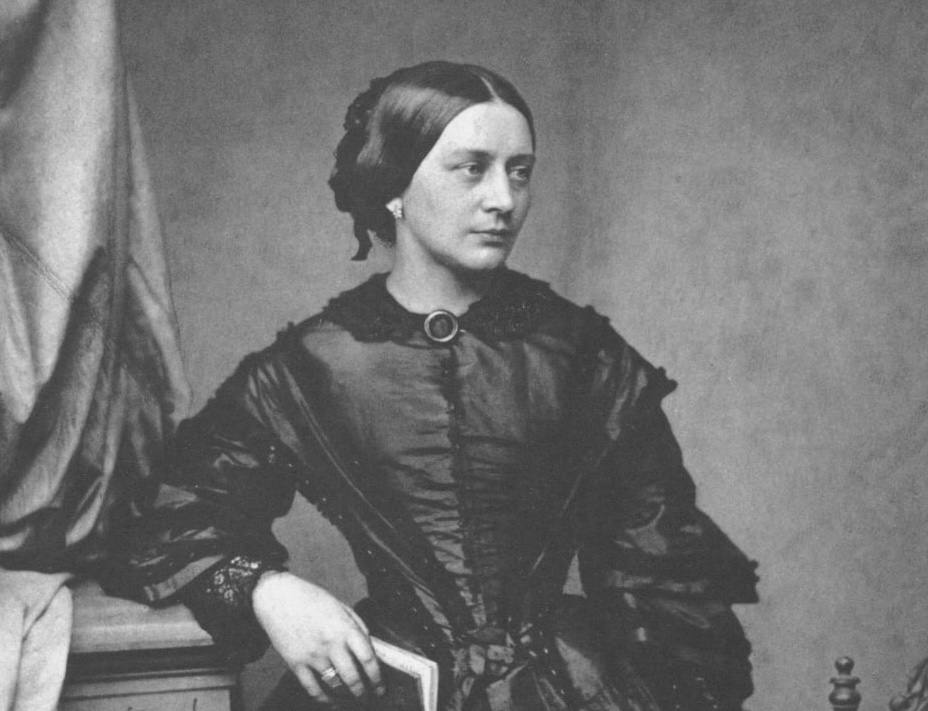 Clara Schumann (1819–1896)
Influence Beyond the Concert Stage
She spent much of her life performing and touring. Yet some of her most lasting influence came through her work away from the concert stage.
As a teacher, Clara helped young pianists develop not only their technique but also their understanding of music. She emphasized careful listening, musical expression, and respect for the score, passing on the standards she had developed through years of study and performance.
Her students carried these lessons into their own musical lives, and some became performers and teachers themselves. In this way, Clara's influence continued through her students—a quiet legacy beyond any single performance.
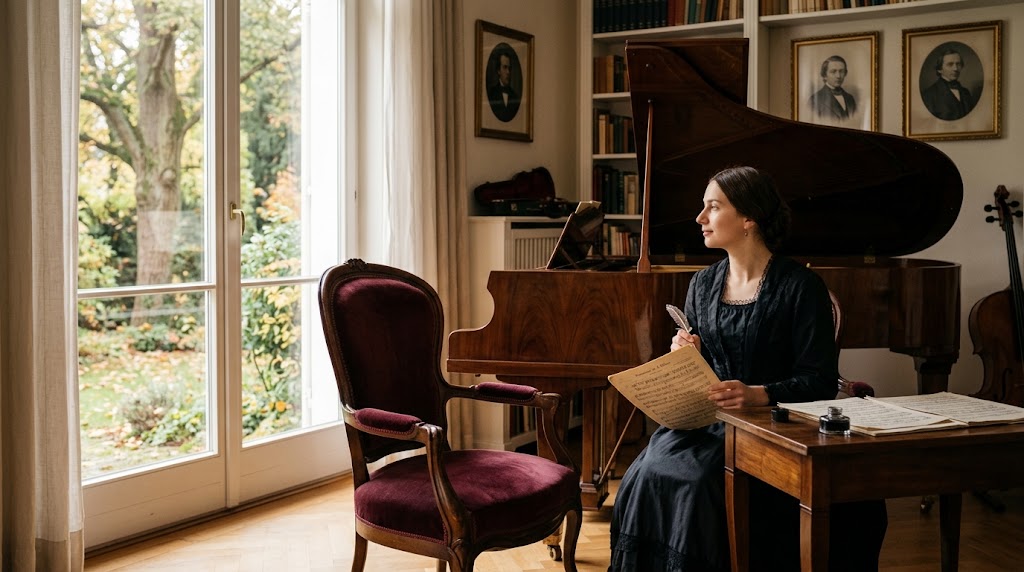
When Encouragement Helps Someone Grow
Encouragement does not always mean praise. Sometimes it means setting a high standard, patiently helping someone reach it, or giving them the confidence to keep going. A teacher may notice an ability before a student recognizes it themselves.
Pianist Adelina de Lara, one of Clara Schumann's students, later remembered the warmth and encouragement she received in her lessons—small moments that profoundly shaped her entire artistic career.
The Music Behind the Influence
Clara Schumann's Romance in A Minor, Op. 21, No. 1 gives us a glimpse into the intimate side of her musical voice. Rather than relying on brilliant virtuosity, the piece draws us in through its expressive melody and subtle phrasing.
In this quiet piece, we can hear the musical sensitivity that shaped Clara's work as a pianist, composer, and teacher. It reminds us that meaningful influence does not have to be loud or visible. Just as a quiet musical phrase can stay with us, words of encouragement can remain long after a lesson is over.
The Work We May Never See
There is something humbling about teaching. We can spend years helping someone grow without ever knowing where that influence will lead or seeing its full harvest.
“Always give yourselves fully to the work of the Lord, because you know that your labor in the Lord is not in vain.” — 1 Corinthians 15:58
Just as a teacher may never fully know what a student will become, or a parent may not immediately see the fruit of years of guidance, what we invest in others is never wasted. It can continue to bear fruit long after we have finished our part.
Clara Schumann's legacy reminds us that influence is not measured only by what we accomplish ourselves. Sometimes it lives on in the lives we help shape.
The full impact of our efforts may not always be visible to us, but the encouragement we offer today may become part of someone else's story for years to come.
Read previous: When a Student Goes Beyond the Teacher: Rimsky-Korsakov, Stravinsky, and Petrushka