10 Magnesium-Rich Foods for the American Table: Caring for the Body God Has Given Us
When an eyelid starts twitching or we feel unusually tired, magnesium is often one of the first nutrients that comes to mind.
That is why magnesium supplements have become so common on store shelves. But magnesium does not have to come from a bottle. Many familiar foods already found in American kitchens—including beans, whole grains, nuts, seeds, leafy greens, and even peanut butter—can provide magnesium as part of an ordinary diet.
From a Christian perspective, caring for our health does not have to mean chasing every new supplement or wellness trend. It can begin with something much simpler: gratefully caring for the body God has entrusted to us through wise everyday choices.
The Apostle Paul reminds believers in 1 Corinthians 6:19–20 that our bodies matter to God. While this passage is primarily about honoring God with our lives, it also offers a helpful principle for daily living: physical health is worth caring for.
Here are 10 magnesium-rich foods that can fit naturally into an American diet.
Why Does Magnesium Matter?
Magnesium is an essential mineral involved in hundreds of processes throughout the body.
It helps support normal muscle and nerve function, contributes to energy production, participates in protein synthesis, and plays a role in maintaining healthy bones.
However, symptoms such as fatigue or occasional eyelid twitching do not automatically mean someone has a magnesium deficiency. Lack of sleep, stress, too much caffeine, dehydration, and eye strain may also contribute to these symptoms.
Rather than assuming one symptom points to one nutrient deficiency, it is often better to look at the overall quality of our diet and lifestyle.
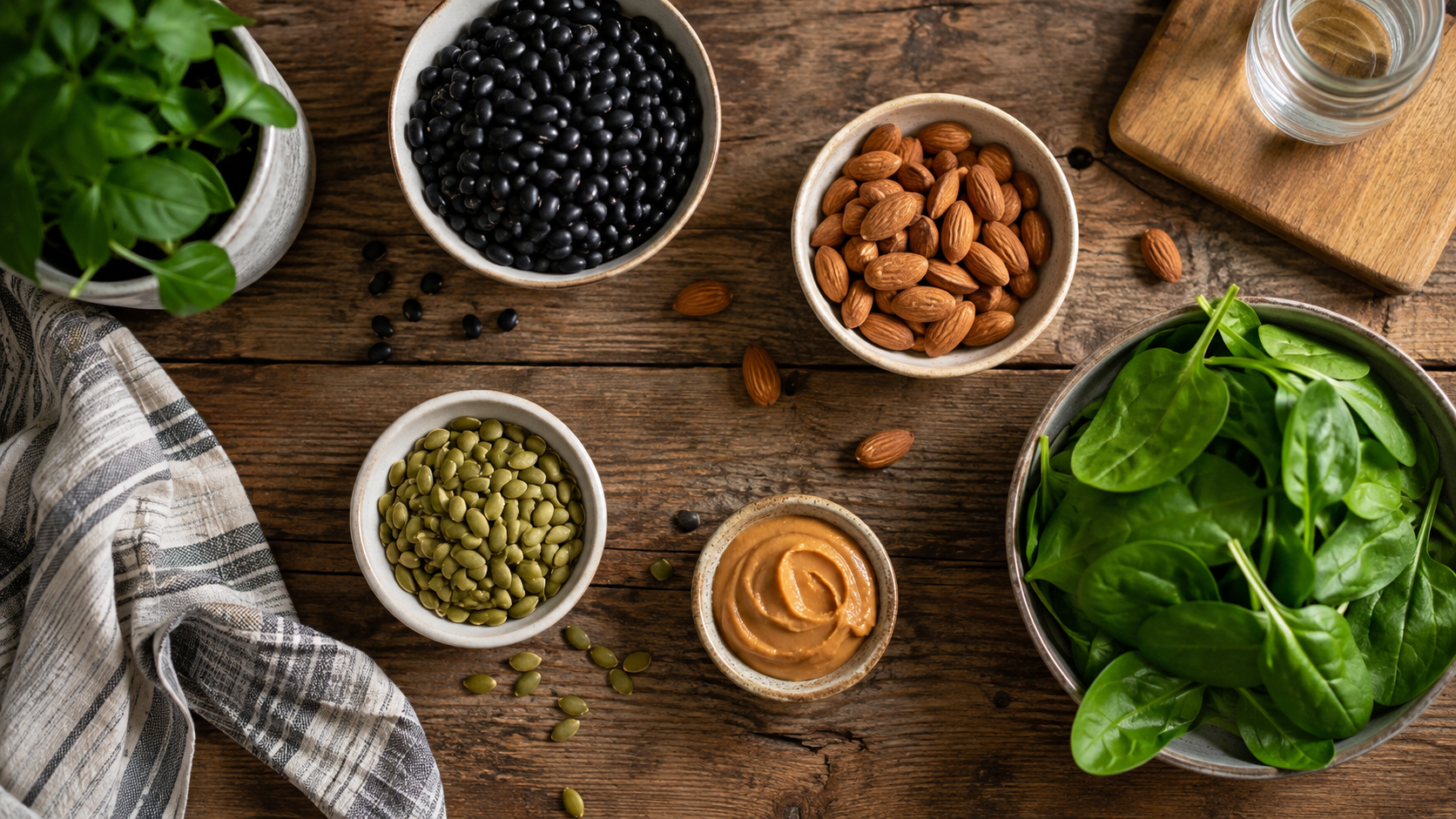 Everyday foods such as beans, nuts, seeds, leafy greens, and peanut butter can help bring magnesium to the American table in a simple, natural way.
1. Black Beans
Black beans are one of the easiest magnesium-rich foods to add to an American meal.
They also provide plant-based protein and fiber, making them useful far beyond their magnesium content.
Try adding black beans to:
- Tacos or burrito bowls
- Chili
- Soups
- Salads
- Brown rice bowls
A simple meal of brown rice, black beans, vegetables, and salsa can provide several nutrient-dense foods without requiring an elaborate recipe.
2. Almonds
Almonds are one of the better-known dietary sources of magnesium.
They are easy to carry, require no preparation, and can replace less nutritious snacks such as cookies or chips.
A small handful can be added to oatmeal, yogurt, or salads.
Because nuts are calorie-dense, however, portion size still matters. Healthy food does not necessarily mean unlimited food.
3. Peanut Butter
For many Americans, peanut butter may be one of the most practical ways to add magnesium to the diet.
A spoonful can be paired with whole-grain toast, oatmeal, bananas, or apple slices.
When shopping, look for peanut butter with relatively simple ingredients and avoid assuming that every peanut butter product is nutritionally identical. Some contain significant amounts of added sugar, salt, or oils.
4. Pumpkin Seeds
Pumpkin seeds, sometimes called pepitas, are especially nutrient-dense and provide magnesium along with healthy fats, protein, and other minerals.
They can easily be sprinkled over:
- Salads
- Oatmeal
- Yogurt
- Soups
- Roasted vegetables
They are a good example of how a small addition to an ordinary meal can improve its nutritional variety.
5. Oatmeal
Oats are an affordable and familiar whole grain.
Instead of a sugary breakfast pastry, a bowl of oatmeal topped with almonds, pumpkin seeds, berries, or peanut butter can create a more balanced breakfast while also contributing magnesium and fiber.
Choosing less processed or lower-sugar varieties is generally preferable to heavily sweetened instant oatmeal.
6. Brown Rice
Many American households rely heavily on refined grains such as white bread, white rice, and regular pasta.
Replacing some of those foods with whole grains such as brown rice can increase the intake of magnesium, fiber, and other nutrients.
There is no need to change everything overnight.
Even mixing brown rice with white rice at first can make the transition easier for people who are not accustomed to its texture.
7. Spinach
Dark leafy greens are among the foods most commonly associated with magnesium.
Spinach is especially versatile because it can be eaten raw or cooked.
Try it in:
- Salads
- Omelets
- Pasta dishes
- Soups
- Sandwiches
- Smoothies
Cooking spinach reduces its volume considerably, making it possible to eat a larger amount of the leafy vegetable in one serving.
8. Avocado
Avocado has become a common part of the American diet, and it contributes magnesium along with fiber and unsaturated fats.
It works well on whole-grain toast, in salads, in tacos, or as part of a grain bowl.
Again, the goal is not to identify one "superfood." Avocado is simply one of many foods that can contribute to an overall nutritious eating pattern.
9. Whole-Wheat Bread and Other Whole Grains
Whole-wheat bread, quinoa, whole-grain cereals, and other minimally refined grains can contribute meaningful amounts of magnesium.
The practical lesson is simple: when possible, choose whole grains more often instead of relying exclusively on refined grains.
Reading labels can help because terms such as "multigrain" or "wheat bread" do not necessarily mean a product is primarily made with whole grains.
10. Dark Chocolate
This one may be a pleasant surprise.
Dark chocolate contains magnesium, particularly varieties with a higher cocoa content.
But that does not turn chocolate into a medicine.
Chocolate can also contain significant calories and sugar, so it is best enjoyed in modest portions rather than used as the main strategy for increasing magnesium intake.
It is a reminder that nutritious eating can include enjoyment as well as discipline. If you'd like to try it, [an organic dark chocolate bar with a genuinely high cacao content like this one] is an easy way to enjoy a small, satisfying treat that also happens to contribute some magnesium (affiliate link — I may earn a small commission at no extra cost to you).
 Dark chocolate can be a satisfying finishing touch, reminding us that healthy eating can include both nourishment and simple enjoyment.
What Could a Magnesium-Friendly American Meal Look Like?
You do not need all 10 foods on the same plate.
A simple breakfast might include:
Oatmeal + peanut butter + almonds
Lunch might be:
Spinach salad + black beans + avocado + pumpkin seeds
Dinner could include:
Brown rice + grilled chicken or fish + vegetables + beans
A snack might be:
Apple slices with peanut butter or a small handful of almonds
The goal is not to obsess over one nutrient.
A better approach is to regularly include a variety of beans, whole grains, nuts, seeds, vegetables, and other minimally processed foods.
Food Before Supplements?
Magnesium supplements can be appropriate for some people, particularly when recommended by a healthcare professional.
But supplements should not automatically be the first response to every symptom.
If a person's daily diet consists mainly of refined grains, processed foods, meat, sweets, and very few vegetables, beans, nuts, or whole grains, improving the overall diet may be a more meaningful place to begin.
God has given us an extraordinary variety of foods.
Beans, grains, vegetables, fruits, nuts, and seeds do not need dramatic marketing claims to be valuable. Often, the healthiest choices are surprisingly ordinary.
If your day-to-day diet could use more of these foods but preparation time is limited, [raw, unsalted pumpkin seeds like these] make it easy to add a handful to breakfast or a salad without extra prep (affiliate link — I may earn a small commission at no extra cost to you).
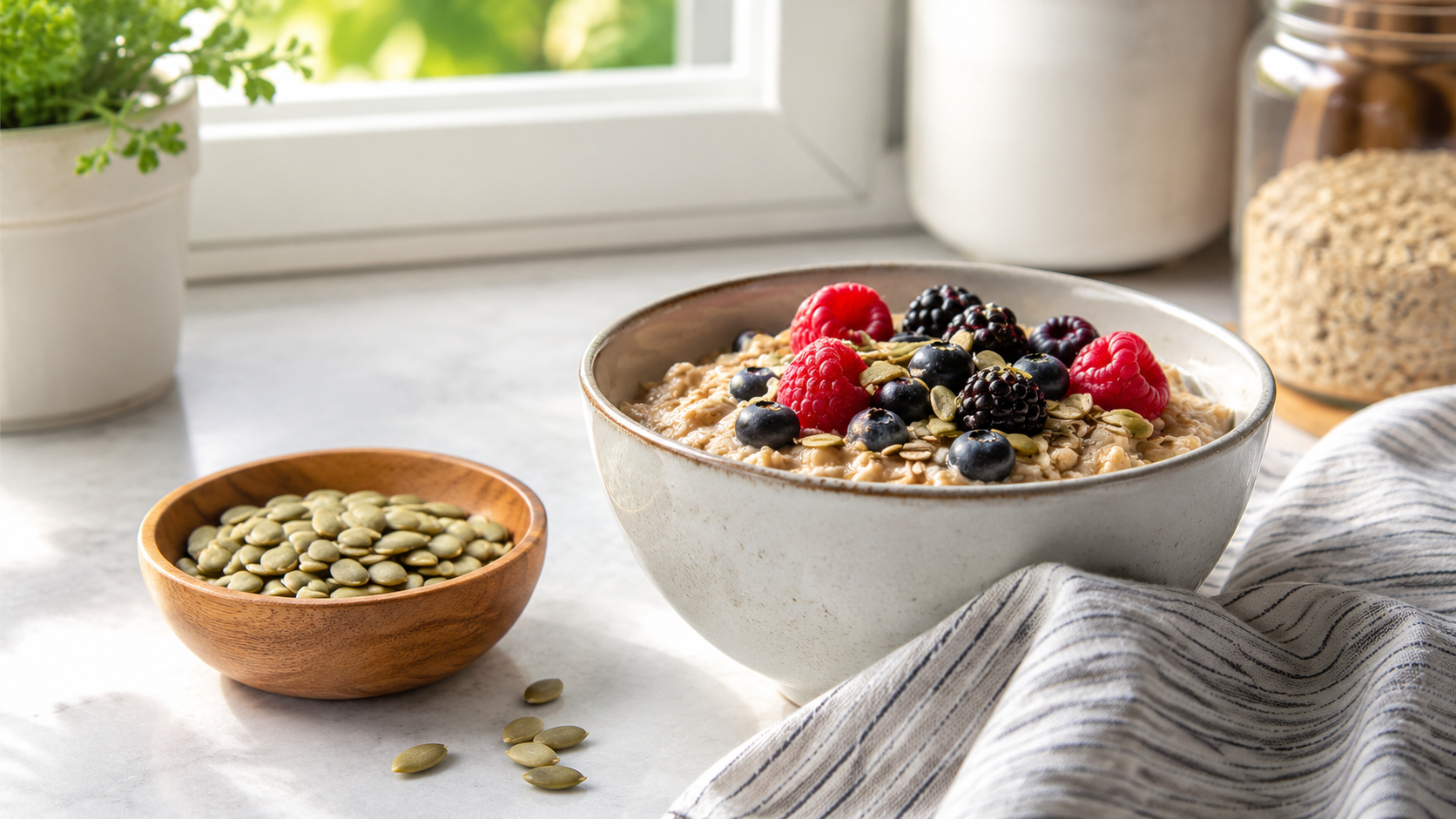 Pumpkin seeds pair easily with a simple breakfast like oatmeal, offering a practical and wholesome way to add magnesium to the day.
A Christian View of Eating: Stewardship Rather Than Obsession
Christians can sometimes fall into either extreme when thinking about health.
One extreme ignores physical health entirely.
The other can turn health, appearance, supplements, or longevity into an obsession.
Scripture points us toward something more balanced.
Our bodies are gifts, but they are not idols.
We care for them so that we can live, serve, worship, work, love our families, and fulfill the responsibilities God has placed before us.
Romans 12:1 (KJV) puts it this way: "I beseech you therefore, brethren, by the mercies of God, that ye present your bodies a living sacrifice, holy, acceptable unto God, which is your reasonable service." That gives everyday habits—including eating, sleeping, exercising, and resting—a deeper perspective.
Choosing healthier food does not make someone more spiritual. Neither does eating perfectly guarantee health.
But wisdom encourages us to care responsibly for what God has entrusted to us.
Sometimes stewardship may look surprisingly simple:
Choosing oatmeal instead of a doughnut.
Adding beans to dinner.
Eating a handful of almonds instead of another bag of chips.
Putting spinach on the plate.
Drinking water instead of another sugary beverage.
Small decisions repeated over time often matter more than dramatic short-term changes.
Be Careful With High-Dose Supplements
More magnesium is not always better.
People with significantly impaired kidney function may have difficulty clearing excess magnesium from the body. Magnesium supplements may also interact with certain medications.
Anyone with kidney disease, ongoing medical conditions, or multiple medications should talk with a physician or pharmacist before taking high-dose magnesium supplements.
Food and concentrated supplements should not automatically be treated as the same thing.
Persistent muscle cramps, unusual weakness, numbness, heart rhythm symptoms, or other concerning symptoms also deserve medical evaluation rather than self-diagnosis based on internet information.
Health Begins With Faithful Daily Choices
When we hear the word "magnesium," it is easy to picture a supplement bottle.
But perhaps the better picture is an ordinary kitchen table.
A bowl of oatmeal.
Black beans beside brown rice.
A spinach salad.
A few almonds.
Pumpkin seeds sprinkled over breakfast.
These foods are not glamorous, but good stewardship rarely depends on glamour.
Caring for our bodies often happens through small, faithful decisions repeated day after day.
We cannot control every aspect of our health, and Christianity does not promise that perfect habits will prevent sickness.
But we can receive our bodies with gratitude, care for them with wisdom, and remember that even something as ordinary as preparing a meal can become part of a life lived faithfully before God.
"Whether therefore ye eat, or drink, or whatsoever ye do, do all to the glory of God." (1 Corinthians 10:31, KJV)
 A balanced meal with lean protein, whole grains, leafy greens, and beans shows how magnesium-rich foods can fit naturally into an everyday American dinner.
This article is intended for general educational purposes and is not a substitute for medical advice, diagnosis, or treatment. If you have persistent symptoms, kidney disease, or take medications that may interact with magnesium supplements, consult a qualified healthcare professional.