Brahms and Clara Schumann: Variations on a Theme by Robert Schumann, Op. 9
One composer supplied the theme. Another transformed it. A third received the dedication.
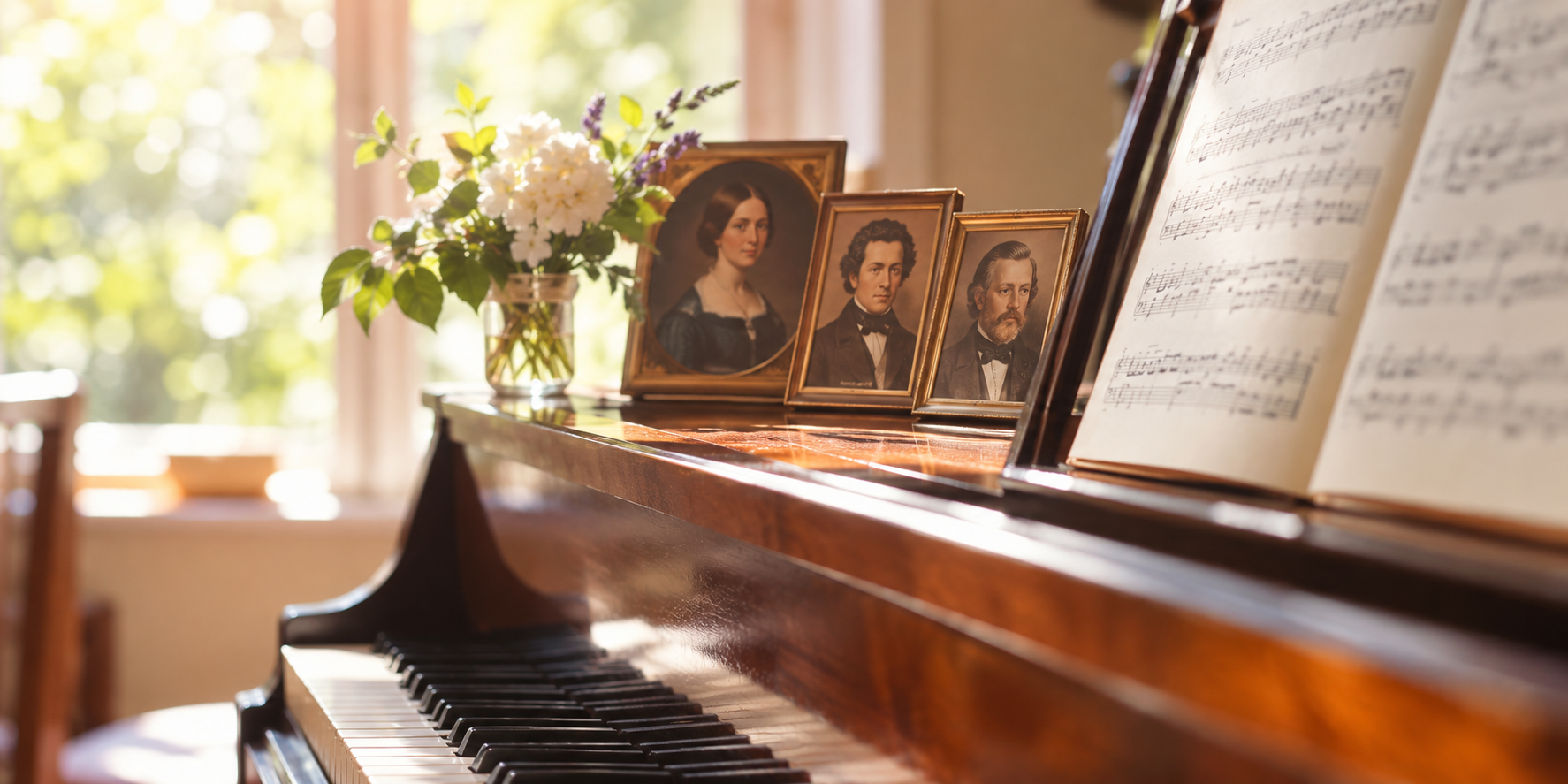
Johannes Brahms (1833–1897) was a young composer when he met Robert Schumann (1810–1856) and his wife, Clara Schumann (1819–1896), in 1853.
Robert and Clara’s music and encouragement became important parts of Brahms’s life. A year later, Brahms wrote a set of piano variations based on a theme by Robert and dedicated the work to Clara.
A Theme Shared by Three Musicians
When Brahms met the Schumanns, Robert was deeply impressed by his talent and publicly praised his music. Brahms soon became close to the family. When Robert’s mental health declined in 1854 and he entered an institution, Brahms stayed in contact with Clara and helped the family through a difficult time.
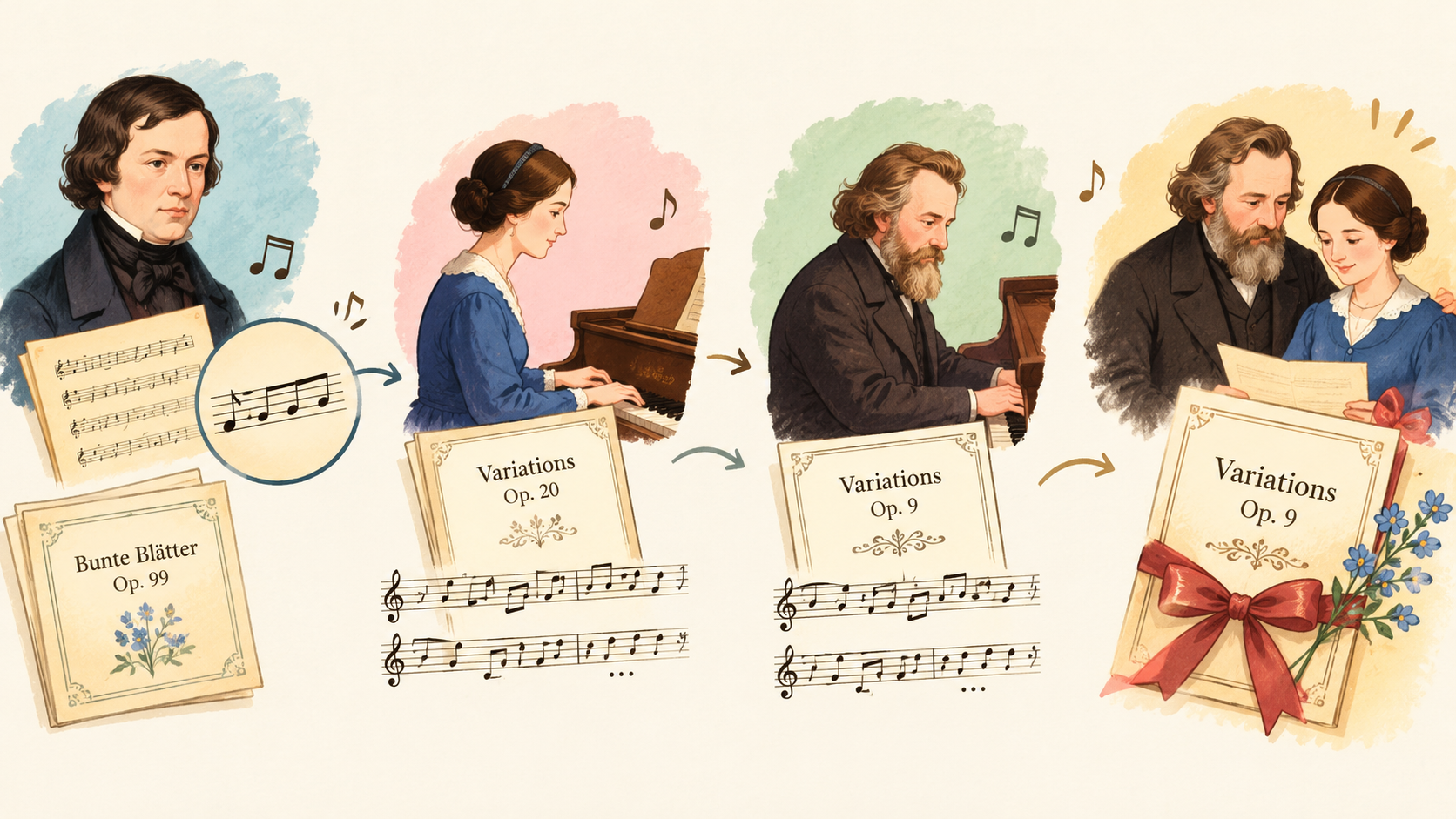
A theme from Robert’s music also connected the three musicians. Clara had already written her own Variations on a Theme by Robert Schumann, Op. 20, based on a melody from the fourth piece of Robert’s Bunte Blätter, Op. 99. After hearing Clara play her variations, Brahms composed his own set using the same theme.
He dedicated the resulting work, Variations on a Theme by Robert Schumann, Op. 9, to Clara.
One Theme, Many Characters
In a theme and variations, a composer reshapes a melody through changes in rhythm, texture, harmony, and mood. The original tune remains the starting point, but each variation gives it a different character.
In Brahms’s Op. 9, the theme is followed by sixteen variations. Some are quiet and reflective, while others feel restless or playful. At times, the melody stands out clearly; at others, it blends into the musical texture.
Through these changes, Brahms creates a work that feels varied yet connected from beginning to end.
The People Behind the Music
We are often shaped by people who encourage us and help us grow. Their influence can stay with us long after a particular season of life has passed.
Gratitude does not always require a grand gesture. Sometimes, it means remembering those who helped us along the way and finding ways to pass their encouragement on to others.
“I thank my God every time I remember you.” — Philippians 1:3
Paul’s words remind us to be thankful for the people God has placed in our lives. Their encouragement can shape us in ways we carry forward, often without even realizing it.
We can honor those who have shaped us by learning from their example and passing their encouragement on to others.
Read previous: Schumann’s Dedication to Mendelssohn: String Quartet No. 1 in A Minor